
Dream About Drowning — It's Not a Death Omen. It's Your Subconscious Telling You Your Life Is Bigger Than Your Awareness.
So you woke up gasping, lungs burning, water everywhere. Every dream site calls it anxiety, fear of death, or repressed trauma. None of them touch what's actually happening. Here's the real mechanic — and what to do about it.
So you wake up gasping. Lungs burning. The covers tangled around you like seaweed. Water was everywhere — closing over your head, filling your mouth, pulling you down. And the worst part? You knew you were going to die.
You grab your phone. Type in "what does it mean to dream about drowning." And every site gives you the same answer: anxiety. Stress. Fear of death. Maybe trauma. One site even tells you it's a "warning of impending danger."
That's not it. None of it.
look, the people writing those articles have never been trained to interpret dreams. They're guessing from feelings. They're assigning emotional meaning to a precise symbolic language they don't speak. So you walk away with the same vague terror you woke up with — except now it's wearing a psychology mask.
There's a real answer. There's been a real answer for 5,000 years. It's coded in the Universal Language of the Mind — the symbolic system every human subconscious speaks regardless of culture, century, or background. And once you know what drowning means in that language, the dream stops being terrifying and starts being useful.
Here's what's actually happening.
So You Keep Drowning In Your Dreams. Here's What Your Subconscious Is Actually Showing You.
Water in a dream is not water. It's not "emotions." It's not "the unconscious." All of those are guesses from people who don't have the framework.
Water is your conscious life experiences.
Think about water for a second. It's everywhere on Earth. It's what we drink, what we wash with, what we live near, what makes life possible. It's the medium of existence. Your conscious life — every day, every interaction, every decision, every event — is the water of your inner world. The pools, lakes, rivers, oceans, rain, and waves of your dreams are the volumes and types of life experience you're moving through. (Want the deep dive on water itself? Read water dreams and the Universal Language of the Mind.)
And drowning?
Drowning is when those experiences submerge your awareness.
That's the form-and-function reasoning. In waking life, drowning happens when water enters your lungs faster than you can expel it — when the volume of water around you exceeds your body's ability to process oxygen. In a dream, drowning happens when the volume of life experiences around you exceeds your awareness's ability to metabolize them.
Your conscious life is bigger than your conscious awareness right now.
That's the whole message. That's the whole dream. Your subconscious is showing you — in the most visceral imagery it has — that you're taking in more life than you're processing.
What Drowning Actually Means In The Universal Language Of The Mind
The Dream Symbol Dictionary entry is precise: drowning means feeling overwhelmed with conscious life experiences.
Read that twice.
Not "anxiety in general." Not "you're afraid." Not "stress." Specifically — overwhelmed by what you're consciously experiencing. The volume of life. The number of inputs. The amount of decisions, relationships, responsibilities, sensory data, identities, and roles you're holding at the same time.
Your subconscious mind has a job: it processes the conscious life into understanding. It turns experience into wisdom. It assimilates. That's its primary function.
But assimilation has a rate. Your subconscious can only metabolize so much per day, per week, per phase of life. When the inputs exceed that rate, the un-metabolized experience starts piling up — and that pile-up is the wave that pulls you under in your dream.
The water isn't the enemy. Your life isn't the enemy. Your awareness just hasn't expanded to match the size of what you've created.
The Six Variations Of The Drowning Dream — And What Each One Is Telling You
Drowning dreams aren't all the same. The specific scenario tells you exactly where the overwhelm is happening.
Drowning in the ocean.
The ocean is your conscious life experiences as a whole. If you're drowning in the ocean, the totality of your life is bigger than your current awareness. This is usually a phase-of-life dream — major transition, identity overhaul, total scope expansion. You took on a life one size too big.
Drowning in a swimming pool.
A pool is engineered conscious life experiences — life events you specifically created or designed. If you're drowning in a pool, the situation drowning you is one you built. The job you took. The relationship you committed to. The lifestyle you chose. You designed the container; now the contents have outpaced your capacity.
Drowning in a flood.
A flood is a sudden surge of life experiences — usually unexpected. New parent. New diagnosis. New job in a new city. New grief. Something arrived faster than you could prepare for, and now the volume is washing over your awareness.
Drowning in a bathtub.
Tiny container, tiny scope. This drowning is about a single situation, not your whole life. One specific area — usually something self-contained you keep returning to (a habit, a relationship, an inner conflict) — has become bigger than your ability to handle it.
Trying to save someone else from drowning.
That person is an aspect of you. Not the literal person. A characteristic of yours that they remind you of. The dream is showing you that part of yourself is going under, and the rest of you is trying to rescue it.
Drowning, but waking up before you die.
This one is critical. You never actually die in a drowning dream. You always wake up. That waking moment is your subconscious giving you the answer: when you become aware, you stop drowning. Awareness is the surface.
Why You're Drowning In Real Life Right Now (And You Probably Know What I'm About To Say)
Here's the part where you have to be honest with yourself.
If you're having drowning dreams, your conscious life has expanded faster than your inner capacity. Something specific. Right now. You took on too much, or the universe handed you too much, and you've been white-knuckling through it instead of actually expanding to meet it.
Maybe you said yes to a job that's twenty percent more than you can handle.
Maybe you're parenting alone, or parenting through divorce, or parenting a child who's struggling, and the daily emotional volume has exceeded your processing rate.
Maybe you started a business, and now there's payroll, customers, taxes, decisions, relationships, and identity changes hitting you all at once.
Maybe you fell in love with someone whose inner world is bigger than yours, and you're drowning in their depth before you've found your own.
Maybe you've been suppressing grief, anger, or truth for so long that the unprocessed experience has become a tidal wave behind a thinning wall.
You know which one it is. You've known the whole time. The dream is just your subconscious saying out loud what your conscious mind has been refusing to admit: this is bigger than I currently am.
Your dream knows the exact area of overwhelm. CHITTA decodes it.
Type your drowning dream into CHITTA and get a precise, framework-based interpretation that names the area of life that's currently bigger than your awareness — and shows you exactly how to expand to meet it.
Decode Your Dream Now →The Specific Practice That Stops Drowning Dreams (Permanently)
There's a specific, repeatable practice that ends drowning dreams. It works because it addresses the actual mechanic, not the symptom.
Drowning dreams are the subconscious saying: I haven't processed enough of this yet. So you give it processing time.
Step one — name the water. Sit with a journal. Ask yourself: what is the conscious life experience drowning me right now? Be specific. Not "stress." That's not specific enough. Specific means "the responsibility for my mother's care," or "the new job I started in March," or "my marriage since the second kid was born." Name it.
Step two — let your subconscious know you've heard. Out loud, before sleep, say it: "I see that I've taken on more life than my current awareness can hold. I'm willing to grow my awareness to match it." That sentence is a direct request to the subconscious mind. It always responds to direct requests. (For the full method, read how to program your dreams before you fall asleep.)
Step three — give your subconscious the time it needs. Stream-of-consciousness writing for ten minutes a day, every day, on the topic you named. No editing. No structure. Just the raw output of your inner world coming up to the surface where awareness can process it. This is the metabolizing.
Step four — track the dream. Most people see drowning dreams stop within seven to fourteen days of consistent practice. The water either disappears entirely, or you start swimming instead of sinking, or you become lucid inside the drowning and realize you don't have to be afraid of it.
That progression is the dream telling you it worked.

Bindu says: "You're not at risk. You're at the edge of your current awareness. Cross it."
What Happens When You Stop Drowning
Here's what almost nobody tells you about overcoming overwhelm dreams.
When the drowning stops, the dreams that replace it are the most useful dreams of your life.
The first replacement dream is usually swimming. You're in the same water — same scope, same volume — but now you're moving through it. Your awareness has caught up to the size of your life. You're not just surviving the conscious experience; you're navigating it.
Then comes the boat or the surfboard. You've found a tool — a relationship, a habit, a framework, a piece of self-knowledge — that holds you up on top of your life experiences instead of you fighting against them.
Then comes the shore. You stand on the subconscious mind itself (land in dreams = subconscious substance) and look back at the water you used to drown in. From that vantage point, the same volume of life is no longer threatening. You see it. You understand it. You're bigger than it.
That whole arc is the natural progression of awareness expanding to match life.
And it doesn't take years. It takes seven to fourteen days of intentional practice — assuming you're willing to stop pretending the drowning is just stress.
It isn't stress. It never was.
It's your subconscious mind, with the most precise symbolic language ever devised, telling you exactly what's happening — and exactly what to do about it. (If the drowning dream is recurring, read why your subconscious repeats the same dream.)
You wake up gasping because the message is urgent.
Now you know what the message is.
Stop guessing. Start decoding.
CHITTA is the only dream interpretation tool built on the Universal Language of the Mind — the same 5,000-year-old symbolic framework used in this article. Type any dream and get a framework-based decoding in seconds.
Decode Your Dream Now →
Frequently Asked Questions



LUCID
You've tried every lucid dreaming technique. Most miss the root cause. LUCID reveals what they all skip.
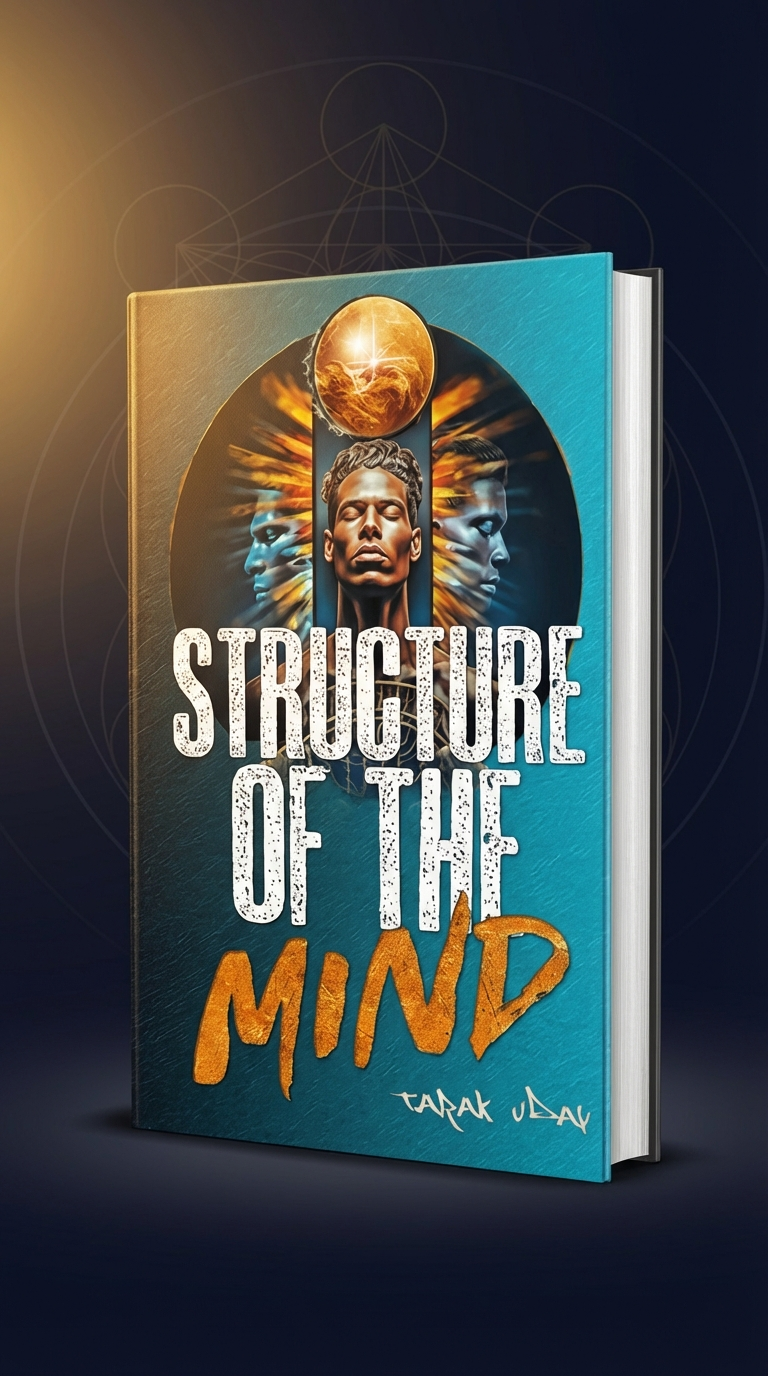
Understand Your Own Mind
"Structure of the Mind" reveals the three divisions of mind, seven levels of consciousness, and powers of mind that most people never learn to develop.