
Dream About Killing Someone — It's Not Repressed Rage. It's the Most Volitional Signal Your Subconscious Will Ever Send You About an Aspect of Yourself You've Already Decided to Transform.
So you woke up shaken because you killed someone in a dream and the only answers Google offers are 'anger,' 'repression,' or 'you might be a sociopath.' All wrong. Here's what's actually happening at the level of your subconscious mind — and why this dream is one of the cleanest readouts of inner work you'll ever get.
So you wake up at four in the morning and your hands are shaking. In the dream you just killed somebody — your sister, your boss, a stranger you've never seen before, doesn't matter — and the whole walk back into waking consciousness all you can think is, what kind of person am I that this came out of me. You open your phone. You search "dream about killing someone meaning." Half the sites tell you it's repressed rage. The other half tell you it's anxiety. A few of them want you to consider that you might be a sociopath. None of them touch what's actually happening.
So let's just get this out of the way.
The dream wasn't about violence. The dream wasn't about a part of you that secretly wants to harm anyone. The dream wasn't a confession your unconscious is making about who you really are.
The dream was an inner-transformation report.
That's not a soft answer to make you feel better. That's the literal mechanic.
What "kill" actually means inside the Universal Language of Mind
So here's the foundation. Your subconscious mind doesn't think in English, Spanish, French, Hindi, or any spoken tongue. It thinks in pictures — and the pictures it uses are not random and not personal. They're symbolic, and the symbols follow the form-and-function principle. The form of an action determines its function. Whatever something does in physical life is what it means in dream life.
Think about killing in physical reality for a second. To kill is to end one form so something else can occupy the space. It's the most decisive, irreversible kind of ending. Once a form ends, whatever life-force was animating that form has to go somewhere else.
That's exactly what inner transformation is. You don't transform a quality by negotiating with it. You don't transform a habit by being polite to it. You end one form of yourself so the life-force that was animating it can take a new shape. The conscious mind makes the decision. The subconscious carries it out. The dream of killing is the receipt.
That's why this dream feels heavy. The subconscious is recording an event your conscious mind initiated. You committed to ending something. Now your inner mind is showing you it heard you.
Who did you kill? That's the entire interpretation right there
So this is the question that does ninety percent of the decoding for you, and almost nobody asks it correctly. The person you killed in the dream is not a person. The person is a carrier — a body the subconscious dressed up to represent a specific quality of consciousness inside you.
So when you write the dream down, don't ask "why did I kill them." Ask "what one word describes them." Not their name. Not your relationship to them. One word that captures the dominant quality they carry in your psyche.
So you killed your boss. The one word might be "controlling." So your subconscious is recording the end of the controlling aspect inside you. Not your boss out there. The controlling aspect in here, that you've been working on consciously letting go of.
So you killed your sister. The one word might be "comparing" or "jealous" or "perfect." So the subconscious is recording the end of your tendency to compare yourself, to be jealous, or to chase a perfect image. Whatever quality your sister most carries in your inner narrative.
So you killed a stranger. In ULM, strangers are unfamiliar aspects of the self — qualities you don't yet have words for, but which you're consciously letting go of anyway. This is one of the most common kill dreams during a phase of rapid inner change, because so much of what's leaving doesn't even have a name yet.
So you killed a faceless figure. Faceless people in the Universal Language of Mind represent aspects of the self you have very low awareness of. The subconscious is letting you know transformation is happening below the threshold of conscious recognition. Inner work is moving even when you can't see it directly.
That's the whole game. Identify the carrier. Find the quality. The dream is telling you that quality is being put down.
Decode the kill dream you actually had — through the ULM framework
Generic dictionaries flatten every kill dream into "anger." CHITTA decodes the specific person, the weapon, the setting, and the emotional residue using the Universal Language of Mind, so you walk away knowing exactly which inner aspect just ended.
Decode Your Dream Now →Why you wake up feeling guilty — and why that feeling is misreading the dream
So here's the part everybody misses. You wake up feeling guilty, sometimes for hours, sometimes for the whole day. You might even apologize internally to the person you killed in the dream. And then you decide that the dream must mean something dark about you, because the residue feels so dark.
Wrong direction. The residue isn't moral. It's energetic.
What you're actually feeling is the weight of the transformation itself. Real change, the kind your subconscious commits to, is not a frictionless event. Something inside you that had been alive for years is being put down. The energy that animated it is rerouting. That's a heavy event in your inner mind, and the conscious mind, when it surfaces in the morning, doesn't have language for it. So it reaches for the closest familiar word — guilt — and slaps it on the experience.
It's not guilt. It's gravity. The gravity of a real ending.
And here's the kicker. The conscious mind moralizes. The subconscious doesn't. The subconscious is a mechanic. It records what's happening, the same way a heart-rate monitor records beats. There's no judgment baked into the dream. The judgment is something you imported in waking life, dressed in pajamas, and walked into the bedroom with the dream still on your skin.

Bindu says: "Your subconscious doesn't moralize. It records. The guilt you woke up with is the cost of mistaking gravity for sin — drop it and the dream's actual message will arrive."
The kill-dream spectrum: what changes by who you kill, how you kill, and how you feel about it
So most articles stop at "kill = anger." We're going to keep going, because the variations carry the most precise information.
Killing someone you love
Almost always, this is the dream that disturbs people most. The mechanics — exactly the same. You're not transforming the love. You're transforming a specific quality the loved one carries. Often the quality is one you absorbed from them. So the killing of a parent, a spouse, or a sibling is frequently the killing of a quality you inherited or modeled from that person — a worry pattern, a way of being polite, a way of shrinking. The love isn't on the table. A specific imitation is.
Killing a stranger
Whatever's leaving doesn't have a name yet. The conscious mind hasn't fully cataloged what is being released. This dream often shows up at the very beginning of an inner shift, before you have language for what you're becoming. Trust it. Continue.
Killing in self-defense
Big distinction. The transformation is happening because something inside you was attacking you first. A self-sabotaging belief, a fear pattern, a self-judgment that had grown teeth. You ending it in the dream is your subconscious confirming that the inner aggressor was finally identified and neutralized. This is one of the healthiest versions of the dream there is.
Killing repeatedly, the same person, in a recurring dream
This one matters. Recurring dreams in ULM mean an unlearned lesson is repeating. So if you keep killing the same person, the inner transformation keeps starting and not finishing. You decide to change a quality, you do enough to register inwardly, but you don't follow through in waking life — so the subconscious keeps replaying the unfinished transformation. The way to end recurring kill dreams is not to suppress them. It's to actually complete the change in waking life.
Trying to kill someone but failing
Inner commitment present, conscious follow-through missing. The intent to transform is real. The mechanics in the inner mind are not yet aligned because the conscious mind is hesitant. Decide more clearly. Watch how fast the dream shifts.
How to actually use this dream — the three-question practice
So here's what to do tomorrow morning. Not a meditation. Not a ritual. Three questions, written down, that turn this dream from a horror movie into a diagnostic readout.
Question one: who did I kill, and what is the one-word quality they carry in my inner narrative. Not their name. The trait.
Question two: where in my waking life have I already decided to end that quality. You'll feel the answer in your chest before your head finds the words. There's almost always a recent decision the dream is mirroring.
Question three: what is the one concrete action I've been avoiding that would complete the transformation in waking life. Because the dream told you the inner side is moving. The outer side is your job. If you skip this, the dream comes back.
I've decoded thousands of these and the pattern doesn't change. Every kill dream maps to a quality being put down. Every recurring kill dream maps to a transformation that hasn't been honored in the daylight yet.
Make every dream this clear — without doing the decoding work yourself
CHITTA reads your dream through the ULM framework, names the carrier, names the quality, and tells you what waking-life decision your subconscious just confirmed. No dictionaries. No anxiety theater. Just the mechanics.
Decode Your Dream Now →When kill dreams stop — and what tends to come next
So the moment the conscious decision lands and the waking-life follow-through happens, the killing dream stops. The transformation completes. The subconscious moves on to the next thing it wants to show you.
What usually comes next: death dreams in a quieter form (passive transformation, not volitional), or being-chased dreams for the next aspect that hasn't yet been faced. Sometimes a wedding dream — because once one quality ends, your conscious and subconscious are free to commit more deeply to who you actually are.
The pattern of growth is visible in the dream sequence. That's the part most people miss. Your dreams are not random. They are tracking you, in order, as you change. The kill dream is one of the cleanest, most decisive entries in that sequence.
So the next time you wake up shaking from one of these — pause. Don't reach for the nearest moral interpretation. Reach for the carrier. Find the quality. Confirm the change you already started. The dream will fold back into peace within a night or two, because it has done its job and your waking life has met it halfway.
That's the whole mechanic. Full stop.

Frequently Asked Questions



LUCID
You've tried every lucid dreaming technique. Most miss the root cause. LUCID reveals what they all skip.
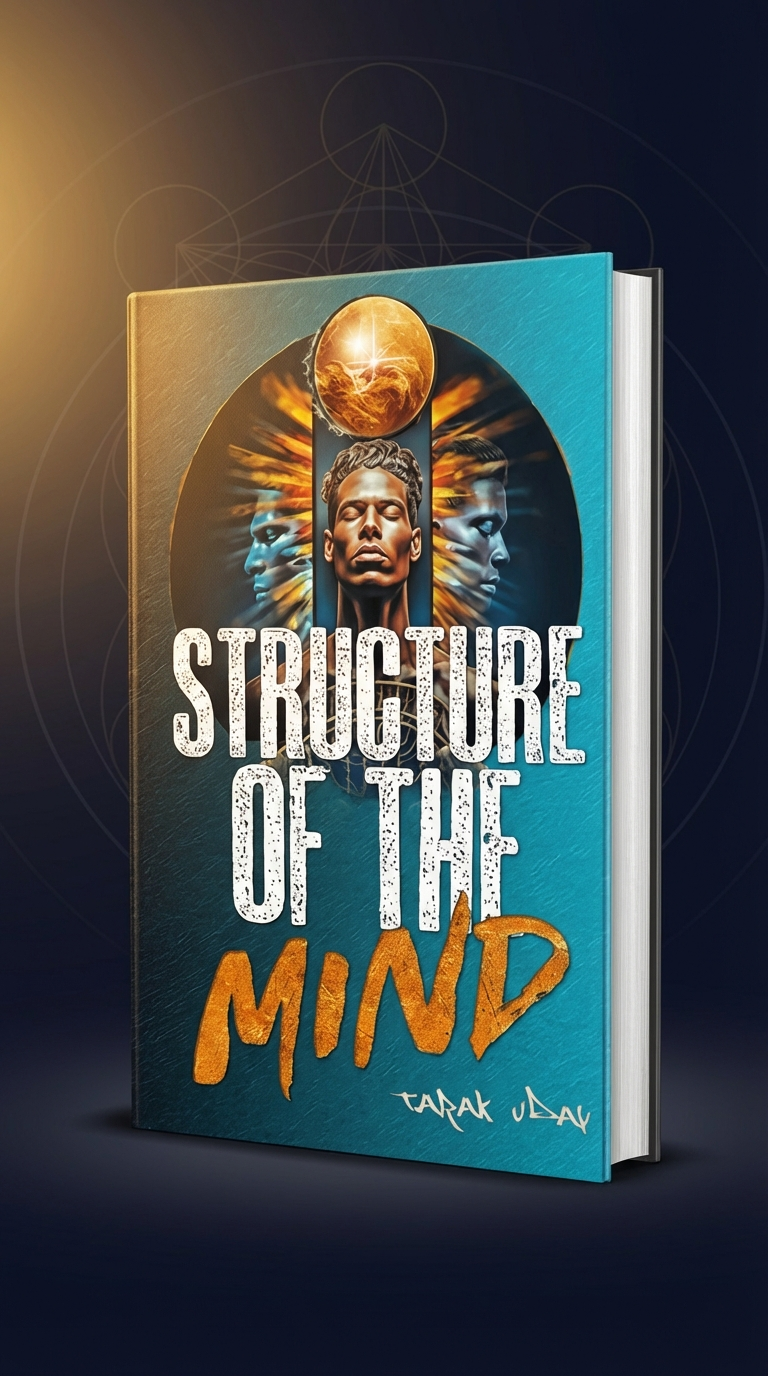
Understand Your Own Mind
"Structure of the Mind" reveals the three divisions of mind, seven levels of consciousness, and powers of mind that most people never learn to develop.