
Dream About Spiders — It's Not the Bug You're Afraid Of. It's the Web You Keep Walking Into.
So you woke up rattled, eight legs everywhere. Every dream site calls it 'feminine power' or 'hidden enemies' — they're skipping the actual mechanic. Here's what your subconscious is really tracking, and why the size of the spider tells you exactly how big the habit has become.
So you woke up disturbed. Spider in the corner. Spider on the wall. Spider crawling across your face and you couldn't move. You opened Google because that's what people do at 4 a.m., and every dream site told you the same three things. "Feminine power." "A hidden enemy plotting against you." "Repressed fear." None of these touch what's actually happening.
Look — your subconscious isn't trying to scare you. It's not warning you about your mother-in-law. It's showing you something far more useful and far more uncomfortable. A spider in your dream is a piece of internal diagnostics. And once you see what it's actually pointing at, you'll never read a spider dream as "creepy" again. You'll read it as a memo.
That's the whole mechanic. Not symbolism. Mechanism.
Why a Spider — The Form-and-Function Logic
So this is where most people lose the plot. They want spiders to mean something abstract — "femininity," "darkness," "shadow." That's not how the Universal Language of Mind works. ULM uses form and function. What does the thing actually do in waking life? Whatever it does in the body, it does at the level of mind.
A spider in waking life is small. Quiet. It builds in corners and shadows where nothing else lives. It doesn't move much. It doesn't make noise. It just sits there. And it spins a web — a structure designed to catch and hold whatever flies into it.
Now translate that mechanism to your inner life. What in your mind is small, quiet, operates in the corners, makes no noise, and quietly catches whatever attention drifts past? A habitual thought you don't even notice anymore. A loop. A pattern. Something so small you'd never label it a "problem" — yet it's catching your attention, your energy, and your time without you ever flagging it.
That's the spider.
How to Read the Spectrum — From Tiny to Tarantula
Here's where most spider-dream articles fall apart. They give you one meaning. But spiders show up in dreams across an entire spectrum — and the spectrum is the message. The size, the behavior, your reaction — that's the readout. Here's how to read it.
A tiny spider in a corner
A small habit operating just below your awareness. Daydreaming for twenty seconds before you realize you've been zoning out. A small loop of self-criticism. A reflexive eye-roll at someone who never deserved it. Nothing dramatic — but it's there, in the corner of your mind, quietly weaving.
A spider building a web in front of you
Now you're watching the habit form. Your subconscious is showing you the architecture mid-construction. Every strand is another time you've reinforced the loop. This is a precious dream — your mind is showing you the build process so you can interrupt it before it sets.
A large spider that won't leave
The habit has become the feature of the room. It's no longer a corner habit. It's been fed long enough that it now claims the center of your attention. Anxious mental rehearsal of conversations you'll never have. Doomscrolling. The same internal monologue that loops every morning. This isn't a corner spider anymore. It's furniture.
A spider biting you
Crossover moment. The habit has reached your body. It's affecting your sleep, your energy, your stomach, your nervous system, the way you breathe when your phone lights up. The bite is your subconscious saying: this is no longer running in the background. It's drawing actual blood.
A spider on your face or in your hair
The habit has reached your identity. It's not just a thought you have anymore — it's now part of how you describe yourself. "I'm just an anxious person." "I'm not a morning person." "I'm bad at relationships." That's not a personality. That's a spider on your face.
Multiple spiders — an infestation
A whole cluster of small habits operating in concert. One feeds the next. Phone in the morning leads to doomscroll, which leads to comparison, which leads to self-criticism, which leads to procrastination, which leads to guilt, which leads back to the phone. Each one alone is small. Together they are a whole ecosystem. Your subconscious is showing you the colony so you can see the system instead of the individual leg.
Killing the spider
You've identified the habit and made a clean decision to end it. The dream isn't telling you to kill anything — it's reflecting a choice you've already started making in waking life. Your subconscious is confirming the kill.
A web with no spider in it
The habit's structure is still in your mind, but the habit itself is gone. You haven't run that loop in weeks — but the architecture is still there, ready to catch anything that drifts back in. This is a dream of caution, not crisis. Your job is to dismantle the architecture, not just stop running the pattern.
The Mirror Moment — What You're Actually Looking At
So here's where this gets uncomfortable. Because once you see the mechanic, you can't unsee it.
Think about your last twenty-four hours. What did you do without thinking? What thought did you have on autopilot before your feet even touched the floor? What loop ran while you were brushing your teeth? What sentence did you say to yourself that you've already said ten thousand times before? That's the spider. The dream isn't pointing at a person. It's pointing at a pattern of you.
This is why the dream feels so creepy. Not because spiders are inherently disgusting — most people who dream of spiders aren't actually phobic. The dream feels creepy because your subconscious is pulling the curtain back on something you didn't want to look at. It's intimate. It's specific. It knows.
Decode Your Spider Dream in Under 60 Seconds
Don't guess what your spider was telling you. CHITTA decodes your dream using the Universal Language of Mind — the only codified symbolic framework on the planet.
Decode Your Dream Now →Why "Fear of Spiders" Is the Wrong Read
Look, the popular reading is that you dreamed of spiders because you're afraid of them. That's not how the subconscious mind works. Your subconscious isn't constrained by your phobias. It chooses symbols based on form and function — not based on what scares you.
If you have arachnophobia, your subconscious is fully aware that spiders cause an emotional reaction in you. It uses that emotional charge intentionally — because the habit it's pointing at needs to come up with that level of intensity. The spider isn't there because you're scared of it. The spider is there because the only way to make you actually look was to use a symbol you couldn't ignore.
That's not a coincidence. That's curation.

Bindu says: "If your subconscious had to use a spider to get your attention, it means you've been ignoring a small habit for a long time. Don't be insulted. Be grateful it didn't have to use something bigger."
What to Actually Do With a Spider Dream
So once the dream lands and you've connected it to a small habit you've been running, here's the actual work.
Name it. Write the habit down in plain language. Not "I have a confidence issue." That's a vague genre. Write the specific loop. "Every time my boss sends a Slack message, I read it three times and assume I'm in trouble." That's a spider with an address. The thing about spiders is that the dark corner is half the habit. Light hits a corner, the spider relocates.
Watch the build. The next time the trigger fires, watch yourself construct the web. Don't try to stop it yet. Just observe. The first half of breaking a habit is making it visible to yourself. You can't intercept a thought you haven't admitted you're thinking.
Cut one strand. Don't try to demolish the whole pattern at once. Cut a single thread. If the spider builds when you wake up — change one thing in your morning. Phone outside the bedroom for one night. That single thread collapses an entire section of the web on its own.
Concentrate. Spiders thrive in unattended corners of mind. Sustained attention is the broom. This is why the candle concentration exercise is the foundational practice — it builds the skill of attention that all of this work requires. You can't sweep a corner of your mind you've never trained yourself to look at.
Stop Guessing What Your Subconscious Is Saying
Every dream you have is a status report. CHITTA reads them using the framework decoded across thousands of years — not invented by an AI yesterday.
Try CHITTA Free →What If the Spider Was Beautiful?
Sometimes the spider in the dream isn't disturbing — it's beautiful. Iridescent. Calm. Spinning silver web in dappled light. That's a different reading. Your subconscious is showing you a small habit that is serving you. Your gratitude practice. The ten-minute walk you take after lunch. The way you check in with your partner before bed. Don't kill that spider. That spider is on your team.
Same form, same function. The mechanic doesn't change. What changes is whether the small habit is feeding you or feeding off you. Read the feeling in the dream. The feeling is your scoring system.
The Real Read
So here's the whole thing in one frame: a spider dream is your subconscious telling you that something small in your inner life has been operating without supervision. Not in a scary way. In a "we need to talk" way. The dream is the meeting invite.
Almost nobody gets ambushed by big problems. Big problems are just small habits that nobody named for long enough. The spider dream is your subconscious naming one before it grows.
Sit with that for a second. The thing your dream just showed you was free maintenance on the most important machine you own. Treat it that way.
If you keep getting spider dreams — multiple in a week, multiple in a month — your subconscious is escalating. That's the same mechanic behind recurring nightmares: the message gets louder until it gets received. For the full read on that pattern, see Recurring Dream Meaning and Why Do I Have Nightmares Every Night. And if you want to understand the deeper framework all of this sits inside, the being-chased dream and the snake dream are the two most important companion reads.
You don't need to be afraid of the spider. You need to walk over to the corner with the lights on, and look.

Frequently Asked Questions



LUCID
You've tried every lucid dreaming technique. Most miss the root cause. LUCID reveals what they all skip.
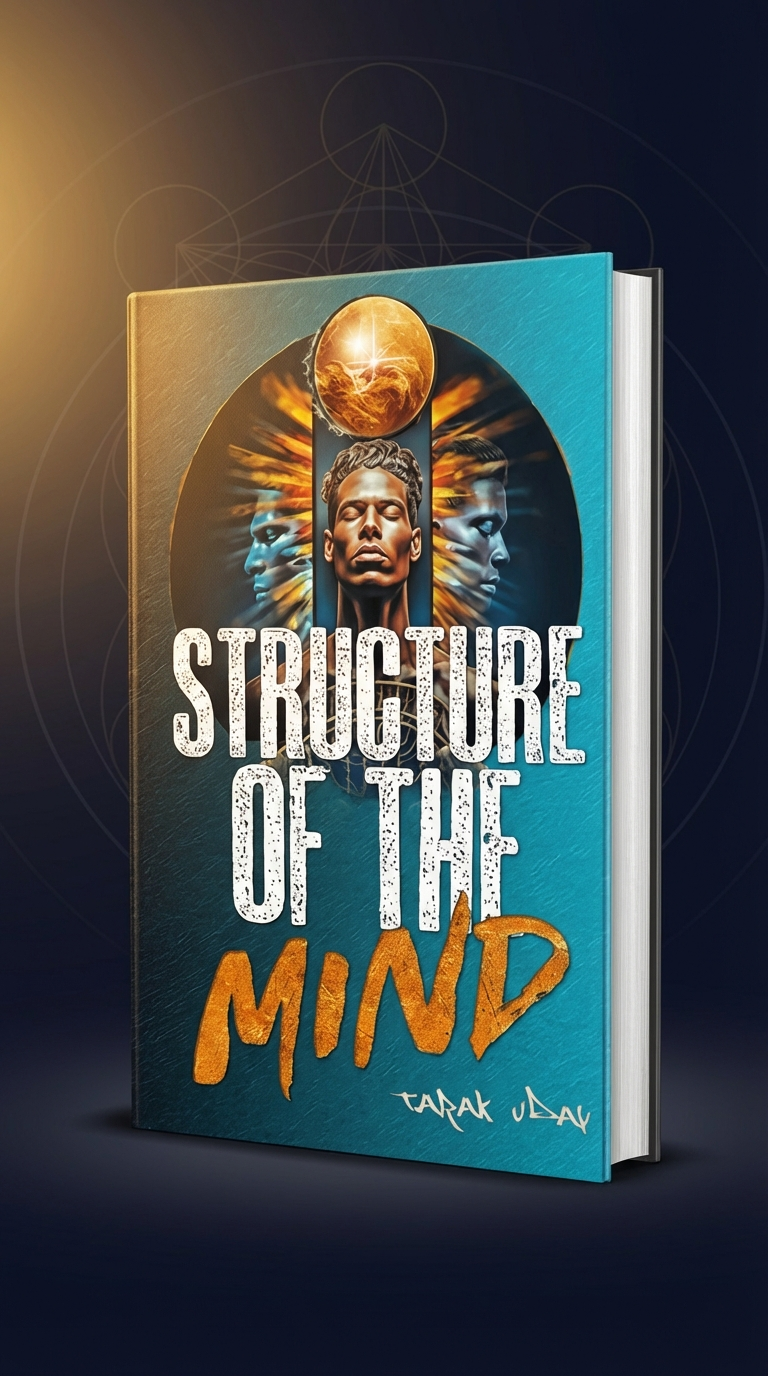
Understand Your Own Mind
"Structure of the Mind" reveals the three divisions of mind, seven levels of consciousness, and powers of mind that most people never learn to develop.