
Bridge in Dreams: It is Not a Crossroads, a Decision, or a 'Transition.' It is Your Mind's Real-Time Reading of Whether You Can Actually Shift the State You're In.
So you dreamed of a bridge — sturdy, swaying, broken, half-built, on fire. Every dream site says it means change or a big decision. That is not what your subconscious built. Here is what a bridge in a dream is actually measuring — and how to read its condition like a diagnostic.
So you woke up from a dream with a bridge in it and went straight to Google. Type "bridge dream meaning" and you get the same recycled answer everywhere — "a transition." "A crossroads." "You're at a turning point in life." That's it. That's the whole interpretation people walk away with after their subconscious mind delivered them a fully rendered structure spanning two distinct regions of their own inner world.
Think about that for a second. Your subconscious built an entire bridge — every plank, every cable, every weld on the trusses, the scenery on both ends, the exact condition of the structure under your feet — and the best the internet can do is "transition." That doesn't even start to touch what's actually happening.
Here's what's actually happening. According to the Universal Language of Mind — the symbolic language the subconscious uses across every human on Earth — a bridge represents your ability to shift from one state of mind to another. Not a literal life decision. Not a crossroads. A bridge is your inner architecture for moving between mental states. And the condition of that bridge is your subconscious giving you a precise readout of how well that mechanism is currently working.
Why does the subconscious build a bridge instead of just showing me the new state?
Because the subconscious doesn't speak in concepts. It speaks in form and function. That's the whole grammar of the Universal Language of Mind — every dream symbol simultaneously carries the form it shows up as AND the function that form performs in the waking world. Apply that to a bridge.
The form of a bridge: a built structure that spans an obstacle — water, a canyon, a road, a void — and connects two pieces of land that would otherwise be separated.
The function of a bridge: it lets you cross. It lets you go from where you are to where you couldn't otherwise reach. It is a mechanism for movement between two places that the obstacle itself would forbid.
Now apply that to the inner world. Places in dreams represent states of mind. Two pieces of land separated by an obstacle = two states of mind separated by some inner gap. A built structure that lets you cross = the inner mechanism you've developed for shifting your awareness deliberately from one of those states to the other.
That's the whole picture. The bridge isn't a metaphor for "change." It's the literal architecture inside your mind that allows controlled movement between mental states. And every detail your subconscious renders on it — sturdy, swaying, broken, half-built, on fire, missing planks, made of rope, made of stone, lit, dark — is a diagnostic of how solid that architecture currently is.
What are the two states of mind the bridge is connecting?
This is where most dream interpretation falls apart. Generic sites stop at "a bridge means a transition." But your subconscious never builds a bridge in empty space. It builds a bridge from somewhere specific to somewhere specific. The two ends of the bridge are labeled.
Look at what's on each end of the bridge in your dream. Was one side a dark forest and the other a sunlit field? A storming sea and a calm shore? A burning house and an open road? A familiar street and an unknown city? Those scenes aren't backdrops. Those scenes are the two states of mind your subconscious is telling you you're moving between.
So when you wake up, do this. Don't ask "what does a bridge mean." Ask: "what was on the side I came from?" and "what was on the side I was walking toward?" The side you came from is the state you're trying to leave. The side you were headed toward is the state you're trying to reach. The bridge between them is the inner skill you're currently developing — or failing to develop — to make that shift cleanly.
Here's the pattern I've decoded thousands of times and it never changes: people who dream of bridges with vivid, distinct scenery on each end are doing real inner work on real state-shifts. People who dream of bridges in fog, where neither side is visible, are usually trying to escape a state without yet knowing where they want to go. Both are useful information. The fog is the diagnosis. It's telling you you haven't yet defined the new state.
What does the condition of the bridge actually mean?
The condition of the bridge is the headline of the dream. Every detail your subconscious puts on the structure is a direct report on how strong your state-shifting capacity currently is. Read it the way a structural engineer reads a bridge inspection — because that's what the dream literally is.
A sturdy, well-built bridge — solid planks, steel cables, a clear path — means your capacity to shift your state of mind on purpose is strong. You've been developing this skill, consciously or not, and the inner mechanism is intact. The dream is showing you that when life requires you to move from anxiety to calm, from grief to functioning, from procrastination to action, you can do it. You have a working bridge.
A rickety, swaying, unstable bridge means the mechanism exists but is fragile. You can shift your state of mind, but it costs you a lot of effort and you don't fully trust the process. Every step is a negotiation. This is most adults' default state when it comes to inner work — they have some capacity for state-shifting, but it's untrained and easily destabilized.
A broken or collapsed bridge means the mechanism has been damaged. You're stuck on one side. Usually a heavier side — anxiety, depression, grief, confusion, contraction — and you cannot easily get out. This isn't a moral failure. It's a structural report. Your subconscious is telling you the inner architecture for moving between states needs to be rebuilt before life will feel different. That's a different problem than "I'm just having a hard time." That's "the tool I would normally use to handle this is missing right now."
A bridge under construction means you're actively building this capacity. Maybe you've just started meditating, just started journaling, just started consciously working with your dreams. The bridge is half-finished because the skill is half-finished. Keep building. That's the only correct response.
A bridge on fire or being destroyed in real time means you're losing the capacity in real time. Some habit, some substance, some compulsive pattern is actively damaging your ability to shift your state on purpose. The dream is a warning shot. Pay attention.
What does it mean if I cannot cross the bridge in my dream?
This is one of the most common variations and almost nobody reads it correctly. You're standing at the start of the bridge. You can see the other side. And you cannot make yourself walk across. The bridge is fine — the structure is intact. You just won't move.
That's not a structural problem with the bridge. That's hesitation in the conscious mind. Your inner architecture is ready. Your capacity to shift state is intact. What's missing is the decision to use it. You're choosing to stay in the state you're in even though you have the means to leave it. The subconscious is photographing that exact moment.
Pay attention to what you feel at the threshold. Fear? Familiarity? A sense that the other side is somehow undeserved? That feeling is the actual obstacle. The bridge has already been built inside you. Your conscious mind is the part refusing to use it.
Compare that to a dream where the bridge is broken and you cannot cross. That's a completely different diagnosis. The first means "you have the tool and won't use it." The second means "the tool isn't there right now." Different problems. Different responses.
Read your bridge dream the way your subconscious built it.
CHITTA decodes dreams using the Universal Language of Mind — the exact system Tarak Uday uses to read symbols like the bridge as inner architecture, not metaphor. Drop in your dream and get the structural report your subconscious has already written for you.
Decode Your Dream Now →What about a bridge over water, fire, a canyon, or empty space?
What's under the bridge is the obstacle between the two states. In the Universal Language of Mind, water represents your conscious mind or the layer of emotions and thought you're currently swimming in. Fire represents rapid expansion or purification. A canyon represents a structural gap in your inner foundation. Empty space represents the unknown — the part of yourself you haven't yet entered.
Tarak Uday takes this further in Life Is But a Dream, his guide to reading every dream in the Universal Language of Mind.
So a bridge over water means you're trying to shift state across an emotional layer. The state-change requires moving over feelings rather than through them. A bridge over fire means the state-shift involves moving across a zone of intense inner activity — usually rapid growth or rapid burning-away of something old. A bridge over a canyon means the gap between your current state and the desired state is structurally significant; this isn't a small shift, it's a major restructuring of how you experience yourself. A bridge over empty space means you're moving toward a state of mind you've never been in before.
None of these are bad signs. They're orientation. They tell you what kind of obstacle the bridge is spanning and therefore what kind of inner work the state-shift will require.
How do I rebuild a broken bridge in my mind?
This is the practical question. If your dream is reporting that the structure is damaged, what do you actually do? The answer is the same answer your subconscious gives every time a structural-readiness dream shows up: build the capacity directly through practice.
Three practices rebuild the bridge faster than anything else. First, concentration — the ability to keep your attention on one chosen object without drift. Concentration is the raw material the inner bridge is built from. Without it, every state-shift you attempt collapses back into whatever state you started in. Second, breathwork — direct control of the breath shifts the nervous system, which shifts the state of the conscious mind, which lets you experience firsthand what it feels like to move between states deliberately. The breath is the most accessible bridge-building tool you own. Third, visualization — the practice of constructing detailed inner images on purpose. Visualization trains the same inner muscle the subconscious uses to render dreams; the more vivid your conscious visualizations, the stronger the inner architecture all your dream symbols are built from.
Do these consistently for sixty days and the bridge dreams will change. The structure starts repairing. Sometimes you'll dream of literal construction crews. Sometimes you'll dream of crossing a previously broken bridge for the first time. The subconscious is keeping a running ledger of your inner work and will show you when the architecture has been restored.
So what should I actually do after a bridge dream?
Pull out a notebook before the dream fades. Write down four things. One — what was on the side of the bridge I came from? Two — what was on the side I was walking toward? Three — what was the exact condition of the bridge? Four — what was I doing on it (standing, walking, running, falling, stuck)?
That's a complete diagnostic. You now know which state you're leaving, which state you're entering, how strong your inner mechanism for that shift currently is, and what your conscious mind is doing about it. No dream dictionary on the internet will give you that. Only the structure of your own dream will.
Then pick one of the three practices — concentration, breathwork, or visualization — and do it daily for the next thirty days. Watch what happens in your dreams. Watch what happens in your waking life. The relationship between the bridge in your mind and your ability to navigate real situations is not metaphor. It's mechanism. That's the whole point of the Universal Language of Mind. Your subconscious is reporting, in symbol, the exact state of inner capacities you are using — or failing to use — to move through your actual life.
So next time a bridge shows up in a dream, don't ask what it means. Read the report.
Your subconscious is keeping a structural log. Read it.
Every dream symbol you receive is a precise diagnostic written in the Universal Language of Mind. CHITTA — built by Tarak Uday — gives you the decoder. Stop guessing what your dreams mean. Start reading them.
Decode Your Dream Now →
Frequently Asked Questions


Books by Tarak Uday

Learn The Language Your Dreams Speak
"Life Is But a Dream" teaches the Universal Language of Mind — how to read any dream symbol by what it is and what it does, so every dream becomes a message you can act on.
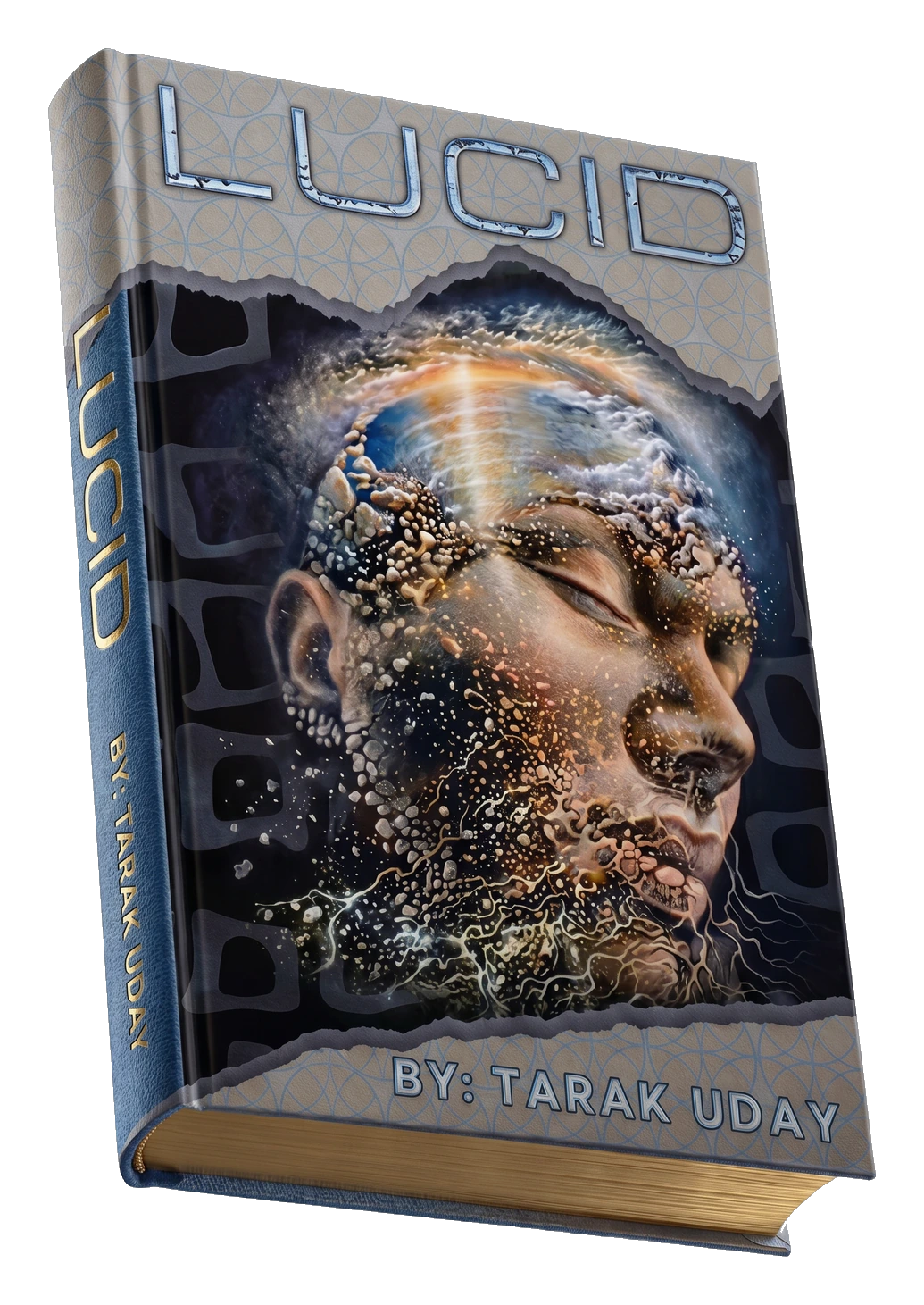
LUCID
You've tried every lucid dreaming technique. Most miss the root cause. LUCID reveals what they all skip.
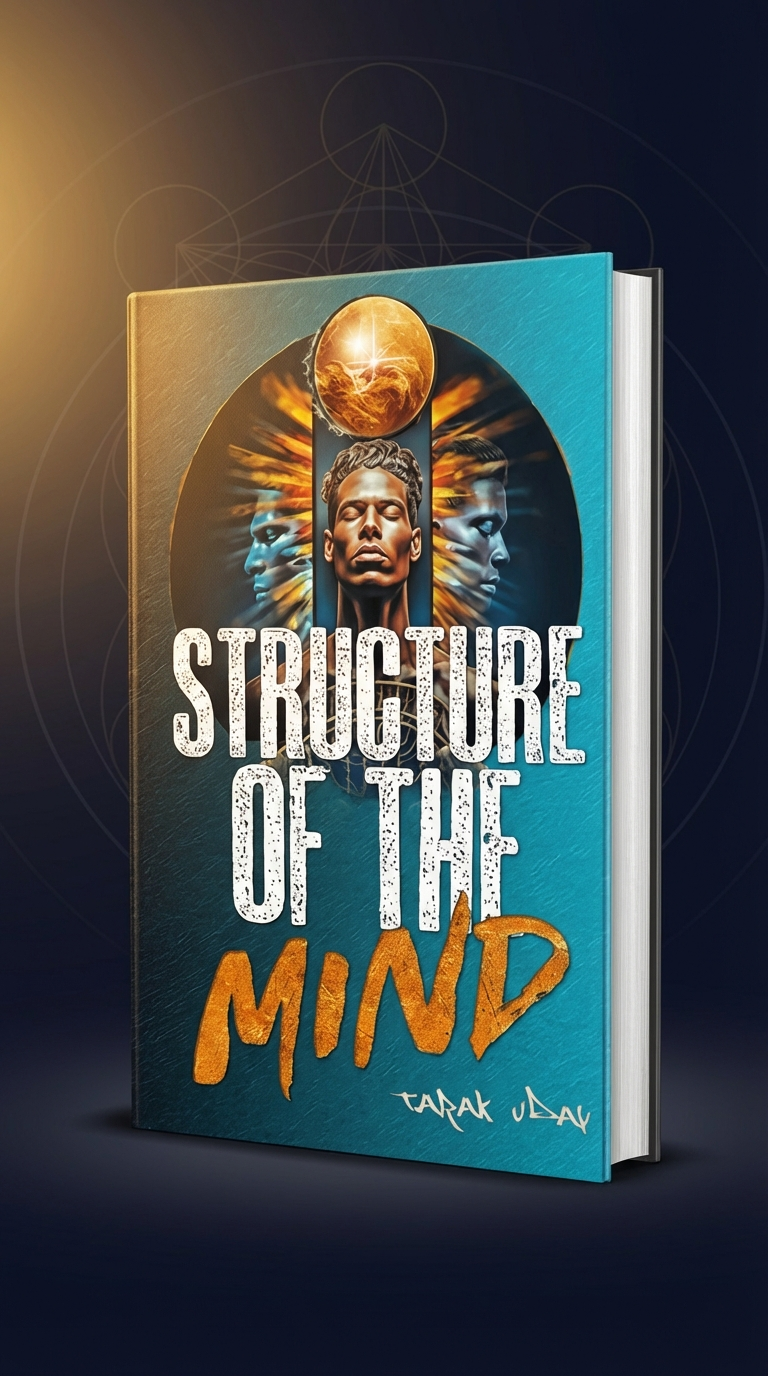
Understand Your Own Mind
"Structure of the Mind" reveals the three divisions of mind, seven levels of consciousness, and powers of mind that most people never learn to develop.