
Dream About a Mirror — It's Not Vanity. It's Your Subconscious Forcing the One Practice You've Been Avoiding: Looking at Yourself Without Flinching.
So you woke up shaken because the face in the dream-mirror wasn't quite right — distorted, empty, cracked, looking back too sharply. Every dream site says "self-image" or "vanity." That answer is so weak it should be embarrassed of itself. Here's the actual mechanic — and the practice your subconscious has been begging you to start.
So you keep dreaming about mirrors. Maybe the face looking back at you wasn't quite right — distorted, blurry, older, younger, somebody else entirely. Maybe the mirror was empty when you stood in front of it. Maybe it cracked in your hand. Maybe you couldn't stop staring. You wake up unsettled, you Google it, and every site lines up the same tired answers: "self-image issues," "vanity," "spiritual warning," "broken mirror means seven years bad luck."
Stop. Think about that for a second. You had a vivid, multi-sensory experience inside the architecture of your own subconscious mind, and the best explanation the internet could offer was "you have body image issues"? That answer doesn't even begin to touch what's actually happening.
Here's what's actually happening at the level of mind.
So you keep dreaming about mirrors — here's what your subconscious is actually doing
Look. Your subconscious mind doesn't deal in metaphors the way your conscious mind does. It deals in form and function. Every symbol in a dream means something specific because of WHAT IT DOES, not what people associate with it. That's how the Universal Language of Mind works — same language across every culture, every century, every person who has ever dreamt.
What does a mirror DO? It reflects what's in front of it. Doesn't add. Doesn't subtract. Doesn't flatter. Doesn't insult. It shows the form without interpretation. That's the entire job of a mirror.
So when your subconscious uses a mirror in a dream, it's saying one specific thing: look at yourself without filtering it. It's offering you the rarest experience a human being can have — yourself, seen objectively. No story. No defense. No spin.
That's the whole point.
Why every dream dictionary gets the mirror wrong
The internet wants to give you a vague psychological answer because vague is comfortable. "You have low self-esteem." "You're afraid of aging." "You need to love yourself more." None of these ask anything of you. They turn a precise message from your subconscious into a wellness platitude.
Freud reduced mirrors to narcissism. Jung treated them as the shadow self. Pop psychology slaps "self-image" on top and calls it done. None of these explain why the mirror specifically — out of every other object your subconscious could have picked — showed up in your dream tonight.
Your subconscious had access to the entire visual library of your life experience. It could have used a photograph. A camera. A window. Another person describing you. It chose a mirror. That choice IS the message. And the message is not "you're vain." The message is "stop looking at yourself through your story and start looking at what's actually there."
The form-and-function of a mirror — why your subconscious uses this exact symbol
In the physical world, a mirror is a piece of glass coated with a reflective layer that bounces light back to its source without altering the image. The function is reflection without distortion. The form follows the function.
In the architecture of mind, the same form-and-function holds. A mirror means objective observation of the self. Same mechanic — just at the level of consciousness instead of light. This is how every symbol works in the Universal Language of Mind, and it's the framework Tarak Uday lays out in Life Is But a Dream and Structure of the Mind.
So when you dream of a mirror that shows you accurately, your subconscious is reporting that some part of you is starting to see yourself clearly for the first time. When you dream of a distorted mirror, it's reporting that you're STILL seeing yourself through a story — and the distortion in the dream is a 1:1 readout of the distortion in your waking self-perception. When the mirror is broken, fractured, or empty, the message escalates.
This isn't symbolic. It's mechanical. The dream is showing you exactly how clearly — or unclearly — you're currently capable of seeing yourself.
The 6 most common mirror dreams and what each one is reporting
1. Looking at yourself in a clear mirror
Your subconscious is acknowledging a moment of accurate self-perception. Something in your waking life recently caused you to see yourself without spin — a difficult conversation, a piece of feedback you couldn't dismiss, a moment of honesty with yourself. The dream is the receipt.
2. The mirror shows a distorted version of you
The distortion in the dream is the distortion in your self-image. If the face is older, you're carrying a self-perception that's heavier than it needs to be. If younger, you're holding onto a version of yourself you've already outgrown. If the proportions are off, your sense of who you are is off in proportion to who you actually are. Read the distortion literally.
3. You can't see yourself in the mirror at all
This one is loud. Your subconscious is reporting that you've functionally disappeared from your own awareness. You're operating on autopilot. You're identifying so completely with roles, responsibilities, identities, or relationships that the actual you has been crowded out. The empty mirror is the alarm.
4. A broken or cracked mirror
Forget the bad-luck superstition. A cracked mirror means the way you've been seeing yourself has fractured — usually because reality finally outpaced the story. Something happened that your old self-image can't contain. The break is information: a piece of an outdated identity is no longer functional. The dream is showing you the moment of fracture, not predicting misfortune.
5. Someone else is in the mirror where you should be
That person is an aspect of yourself you haven't owned yet. If it's someone you know, look at the qualities you most associate with them — those qualities are inside you, expressing through you, and the dream is pointing at them. If it's a stranger, an unfamiliar aspect of yourself is starting to make itself known.
6. Looking through a mirror as if it were a window
This one is rarer and more advanced. Your subconscious is showing you that self-reflection is becoming an entry point into deeper levels of your own mind. The mirror is no longer just reporting the surface — it's giving access. This usually appears in people who have started a serious inner practice.
Want a precise reading of your specific mirror dream?
The variations matter — distorted, broken, empty, doubled. CHITTA decodes your exact dream using the Universal Language of Mind framework so you stop guessing.
Decode Your Dream Now →The Mirror Effect — why your dream and the Universal Law are the same teaching
Here's where it gets serious. There's a Universal Law called the Mirror Effect — also known as the Law of Resemblance, also known as the Bilingual Principle. It says the outer world is a mirror of your inner state. Every relationship, every circumstance, every recurring pattern in your waking life is a reflection of something happening inside you.
Most people hear that and nod. They don't actually live it. They go on blaming circumstances, partners, parents, bosses. The mirror is reflecting them perfectly and they're trying to fix the reflection.
So your subconscious puts a literal mirror in your dream. It's teaching you the same Universal Law in the only language that bypasses your defenses — the language of imagery. The dream-mirror is training you to recognize the mirror that's already running 24/7 in your waking life.
Once you start seeing it, you can't unsee it.

Bindu says: "The mirror in your dream isn't asking you to look pretty. It's asking you to look honestly. Those are not the same instruction."
What your subconscious is actually asking you to do (the practice you've been avoiding)
So now you know what the dream means. The harder question is: what is your subconscious asking you to DO with this information?
The answer is the practice that almost nobody is willing to do for more than a week — objective self-observation.
Sit in front of an actual mirror. Look at your own eyes. Don't fix anything. Don't perform. Don't smile to make yourself feel better. Don't critique. Don't analyze. Just look. Notice every reflex you have to look away, narrate, judge, distract. That flinch IS your relationship to yourself in miniature. The mirror exposes it instantly.
Most people last about thirty seconds before they need to do something — adjust their hair, check their phone, leave the room. The practice is to stay. Five minutes a day. Ten if you can. Build up. The dream-mirror is your subconscious telling you it's time to start. We have a complete walkthrough in the Mirror Concentration Exercise — read it after this if you've never tried it.
This is the practice that makes dream interpretation actually land. This is the practice that makes shadow work possible. This is the practice that gives you a stable witness inside your own mind. It's also the practice your subconscious has been quietly recommending every time it puts a mirror in your dreams.
When the mirror dreams stop
The mirror dream is a feedback loop. As your capacity for objective self-observation grows in waking life, the dream changes. Distorted mirrors clear up. Broken mirrors become whole. Empty mirrors fill in. Eventually the dream stops appearing because the lesson has integrated.
If the same mirror dream keeps repeating, it's not random. Recurring dreams are the subconscious teaching the same lesson because the conscious mind hasn't picked it up. Decode the mirror, do the practice, and watch the dream evolve.
I've decoded thousands of these and the pattern never changes. The reader who treats the mirror as a wellness metaphor learns nothing. The reader who treats it as a precise instruction from their own subconscious changes how they see themselves inside of two months.
Your dream tonight isn't decoration. It's a directive. The mirror is asking you to look. Start looking.
Decode every symbol in your dreams — not just the mirror
Mirrors, faces, distortions, doubles. Every symbol your subconscious uses has a precise ULM meaning. CHITTA gives you the full reading, not pop-psychology guesses.
Decode Your Dream Now →
Frequently Asked Questions



LUCID
You've tried every lucid dreaming technique. Most miss the root cause. LUCID reveals what they all skip.
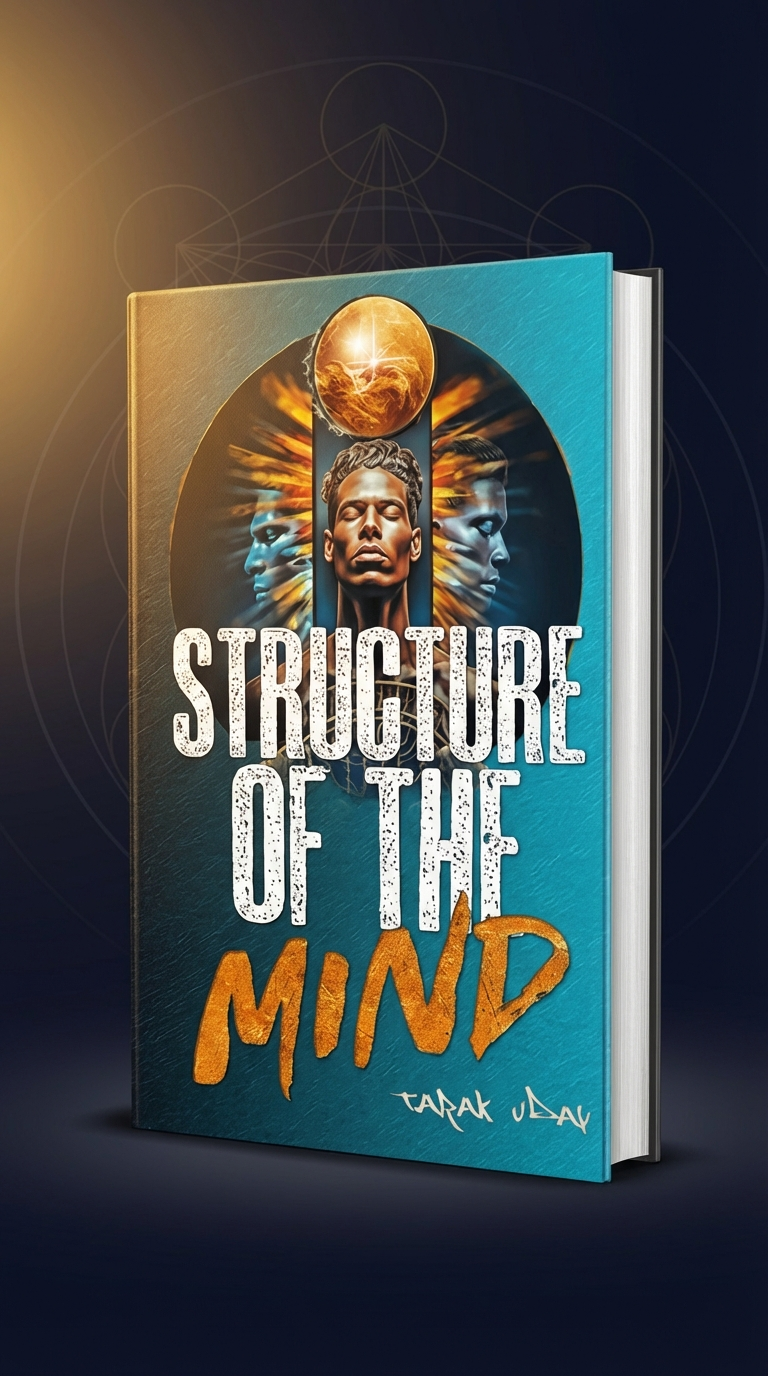
Understand Your Own Mind
"Structure of the Mind" reveals the three divisions of mind, seven levels of consciousness, and powers of mind that most people never learn to develop.