
Dream About Stairs — It's Not Anxiety. It's a Live Map of Your Movement Between Levels of Mind.
So you woke up climbing stairs that wouldn't end, falling down a flight you didn't see coming, or finding a hidden staircase in a house you've lived in your whole life. Every dream site calls it stress. Wrong. Here's what your subconscious is actually showing you about which level of consciousness you're moving between right now.
So you dreamt about stairs. Maybe you were climbing forever and never reaching the top. Maybe you turned a corner and fell down a flight you didn't see coming. Maybe you found a hidden staircase in a house you'd lived in for years and didn't know was there. Maybe the steps shifted under your feet, or the rail was missing, or every step was a different height.
And every dream site told you it means "stress," "work pressure," or "feeling overwhelmed by life's challenges." Look — those answers are so generic they could mean anything. They're the dream-interpretation equivalent of saying your dream means "feelings."
Here's what's actually happening at the level of mind.
Stairs in your dream are not stairs. Stairs are the movement between levels of your own mind. Each step is a discrete shift in consciousness. Going up means your awareness is ascending. Going down means your awareness is descending into deeper subconscious territory. And what happens on the stairs is a real-time readout of how that movement is going for you right now.
That's the whole point.
Why Your Subconscious Picked Stairs (and Not Some Other Symbol)
So think for a second about what stairs actually are. Stairs are a structure that lets you move discretely between floors. You don't float between levels — you climb. Each step is a defined unit of movement. The geometry is precise. The transition is gradual but clearly stepped, not a smooth ramp.
That's exactly how your mind is structured.
In the Structure of the Mind, your mind has seven levels. Three conscious. Three subconscious. One superconscious. You don't float between them — you move through them in discrete shifts. A meditation takes you down a step. An insight pulls you up. A trauma drops you several flights at once. A breakthrough opens a whole new floor you didn't know existed.
So when your subconscious wants to give you a report on the actual movement happening between these levels of mind, it doesn't draw you a diagram. It shows you stairs. The form (a staircase) reveals the function (movement between levels of consciousness). Once you see the parallel, the symbol cracks open.
And once it cracks open, you stop having anxious dreams about stairs and start reading them as the most precise consciousness instrument your subconscious has ever handed you.
The Real Question: Up or Down?
So your dream had stairs. Fine. But which direction were you going? This single detail rewrites the entire interpretation.
Going up means your consciousness is ascending. You're moving toward a higher level of awareness, toward the superconscious, toward greater clarity. This is what spiritual evolution actually looks like in the symbolic terrain of your mind. If the climb feels steady, you're integrating well. If it feels strenuous, you're working hard but the work is real. If you keep climbing and never arrive, you've identified with the climbing itself — a clue that you're chasing growth as a performance instead of letting it happen.
Going down means your consciousness is descending. This isn't bad. Some of the most important inner work happens by going down. Going down is how you access the subconscious, do shadow work, retrieve forgotten parts of yourself, or simply enter a deeper meditative state. The old idea that "up = good, down = bad" is exactly the kind of binary that keeps people stuck on the surface of their own minds.
The question isn't which direction is better. The question is: does the direction match what you're actually doing in waking life right now?
If you're trying to grow but keep dreaming of going down, your subconscious is telling you that you've actually been regressing without realizing it. If you're doing deep inner work but keep dreaming of climbing without ever stopping, your subconscious is telling you that you're avoiding the descent the work requires.
Reading the Condition of the Stairs
The staircase itself is the structure of your inner movement. So look at it the way you'd look at any structural readout.
Solid, well-built stairs mean the transition between levels is well supported. You have the inner architecture to move between states without losing your footing.
Crumbling, broken, or rotting stairs mean the structure that supports your movement between levels has degraded. Often this shows up after long periods of avoiding inner work — the bridges between states get weak when nobody walks them.
Stairs with missing steps mean there's a gap in your developmental sequence. You've skipped a level. The dream is showing you the missing rung you need to go back and put in place.
Stairs that shift, twist, or move under your feet mean the inner ground keeps changing as you try to move. This usually shows up during periods of rapid change when your sense of self is being remade and the old structures haven't yet been replaced.
Endless stairs that never reach the top mean you've made movement itself the goal. You're climbing without a destination. The subconscious is asking: ascending toward what?
Stairs that lead nowhere or end abruptly mean you've taken your inner work to a level where the next step hasn't been built yet. This isn't failure. It's the edge. New territory has to be created from here.
A spiral staircase means your ascent is happening around a central axis — you're not just rising, you're integrating multiple aspects of self around a unified center. This is one of the most powerful staircase dreams you can have. It mirrors the way kundalini, in the symbolic body, ascends in a spiral rather than a straight line.
Hidden stairs you didn't know were there are direct, active evidence that your consciousness is expanding. New levels of mind are becoming accessible. Pay close attention to where the stairs lead. That's the territory your subconscious is opening up next.
Where do your stairs lead?
The direction, condition, and destination of the stairs in your dream are all separate signals. CHITTA's dream decoder reads each one and gives you a live report on which level of consciousness you're moving between right now — and what your inner system is asking for next.
Decode Your Stair Dream Now →Falling Down Stairs — The One Variation Almost Everyone Misreads
So this one is super important and almost nobody gets it right.
Falling down stairs in a dream is not random. It's not anxiety. It's a sudden, unintentional drop in your level of consciousness — reverting to a lower state of mind without choosing to.
It often shows up after a peak experience. A breakthrough. An insight. A moment where you saw something true about yourself that you weren't quite ready to live from yet. The peak put you on a higher floor. The fall is the integration that hasn't happened yet pulling you back down to the level your daily habits actually support.
This isn't a failure. It's the gap between where your awareness can momentarily reach and where your current way of life can sustainably hold you. The fix isn't to scold yourself for falling. The fix is to look at the daily life you're actually living and ask which structures need to be built so that the higher floor isn't just a peak experience but a place you can live.
Once you start reading falling-down-stairs dreams this way, the shame around them dissolves. The dream is just showing you the integration work that's still on the table.

Bindu says: "You don't fall down the stairs of your own mind by accident. You fall when the floor you reached has nothing under it yet. Build the floor. Then climb again."
How Stair Dreams Connect to House and Falling Dreams
So once you understand stairs = movement between levels of mind, a whole network of related dream symbols snaps into place.
A house in your dream is your state of mind — the basement is unconscious, the main floors are conscious mind, the attic is superconscious. The stairs are the connecting tissue between those floors. So a house dream and a stairs dream are the same conversation: house tells you which level you're operating from, stairs tell you how you're moving between them.
A falling dream is descending consciousness. Falling down stairs is a specific, structured version of that same descent — with the steps showing you exactly which levels you dropped through.
A death dream is inner transformation. The stairs you climb after a death dream often lead to floors you've never seen before — new levels of mind that the transformation just made accessible.
Most people miss this. They get a stair dream, look it up, get told it's "stress," and never know that the entire architecture of their mind just gave them a precise readout of where they are in their evolution.
Stop guessing. Start mapping.
Every stair dream is a coordinate on the inner map of your consciousness. CHITTA tracks these dreams over time so you can actually watch your own evolution unfold — not just one symbol at a time, but as a continuous trajectory through the levels of your mind.
Start Your Dream Journal →What to Do This Week If You Had a Stair Dream
So here's your assignment.
First, write down the dream. Direction, condition of the stairs, what you saw above and below, what stopped you, what kept moving. Don't interpret yet. Just record. The act of recording stabilizes the levels themselves.
Second, ask the three diagnostic questions. Which direction were you going — up means your awareness is ascending, down means it's descending. What was the condition of the stairs — that's the structural integrity of your inner movement. Where did the stairs lead, or where did they stop — that's the level your subconscious is currently asking you to engage with.
Third, name one thing you've been doing in waking life that's pulling you up a level (a practice, a study, a relationship, a moment of stillness) and one thing that's pulling you down (a habit, a story, an avoidance). The dream is rendering the net movement between these.
Fourth, take one concrete action that supports the direction your dream pointed at. If you climbed, build a structure that lets you stay at the level you reached. If you descended, give yourself permission to do the deeper inner work the descent was inviting. If you fell, treat it as a build-the-floor signal, not a shame signal.
That's the work. The dream did the diagnosis. You do the response.
Once you start reading stair dreams this way, the entire Structure of the Mind stops being theory and becomes something you can feel yourself moving through every night. You stop being lost on the staircase — and that's the only point.

Frequently Asked Questions



LUCID
You've tried every lucid dreaming technique. Most miss the root cause. LUCID reveals what they all skip.
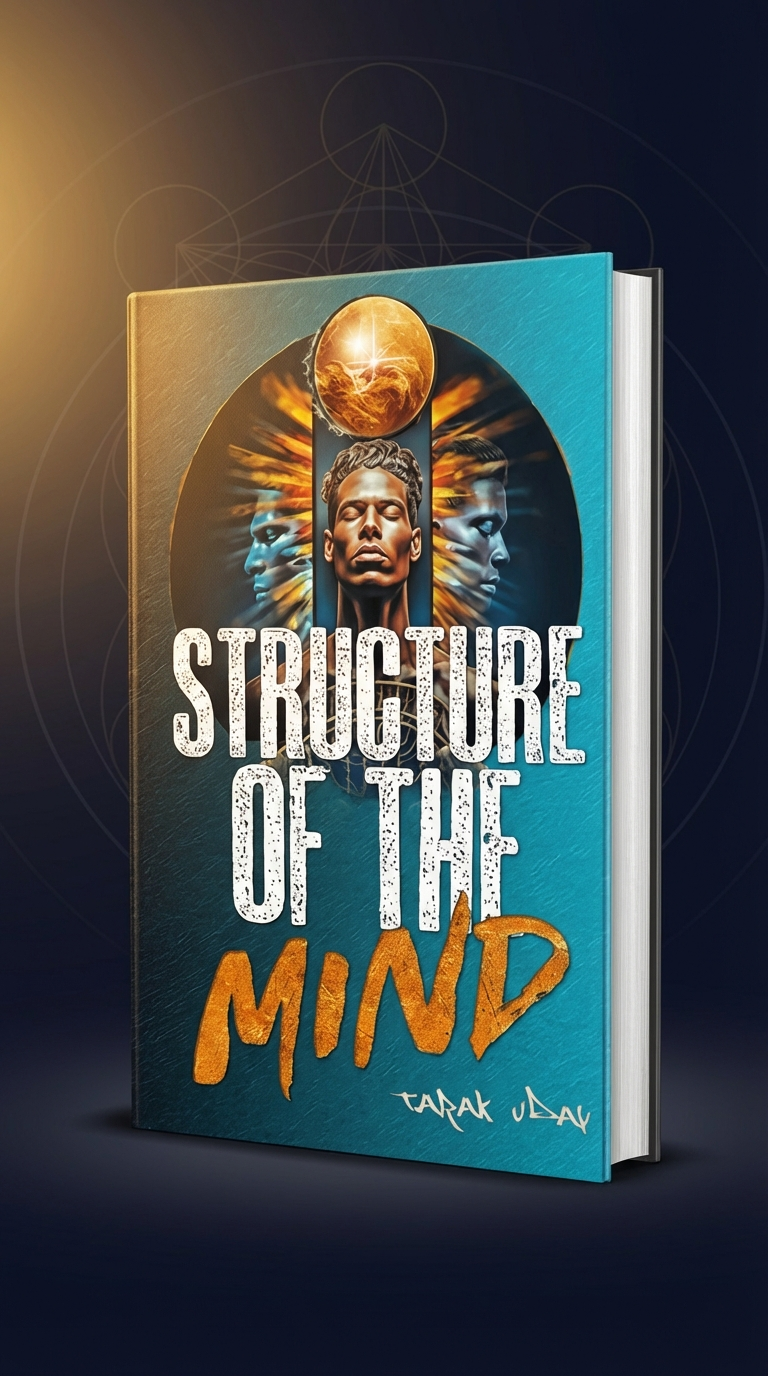
Understand Your Own Mind
"Structure of the Mind" reveals the three divisions of mind, seven levels of consciousness, and powers of mind that most people never learn to develop.