
Why Do I Dream About Falling? The Real Answer Nobody Gave You
Falling isn't a symbol of losing control. It's the actual movement of your consciousness — and once you see it, you'll never read a falling dream the same way again.


So you keep dreaming about falling. You jolt awake mid-fall, heart pounding, and you Google it, and every site tells you the same tired thing — you're losing control, you're insecure, you're afraid of failure. And something about that answer never sat right with you. Because you weren't thinking about control when you went to bed. You were just sleeping. So why this? Why is this dream so common all over the world? Why does it happen to children, to monks, to CEOs, to people who have their lives perfectly together?
Look, the reason this keeps happening is because falling isn't a symbol at all. It's not a metaphor for your life. It's not a warning about your career. It's the actual, literal experience of your consciousness moving through dimensional levels. And once you understand that, you'll never be afraid of a falling dream again.
This is actually a really important one. Because if you misinterpret falling, you miss one of the clearest pieces of evidence your mind gives you — every single night — that you are not just a body. You are consciousness operating through a body.
What falling actually is in the language of mind
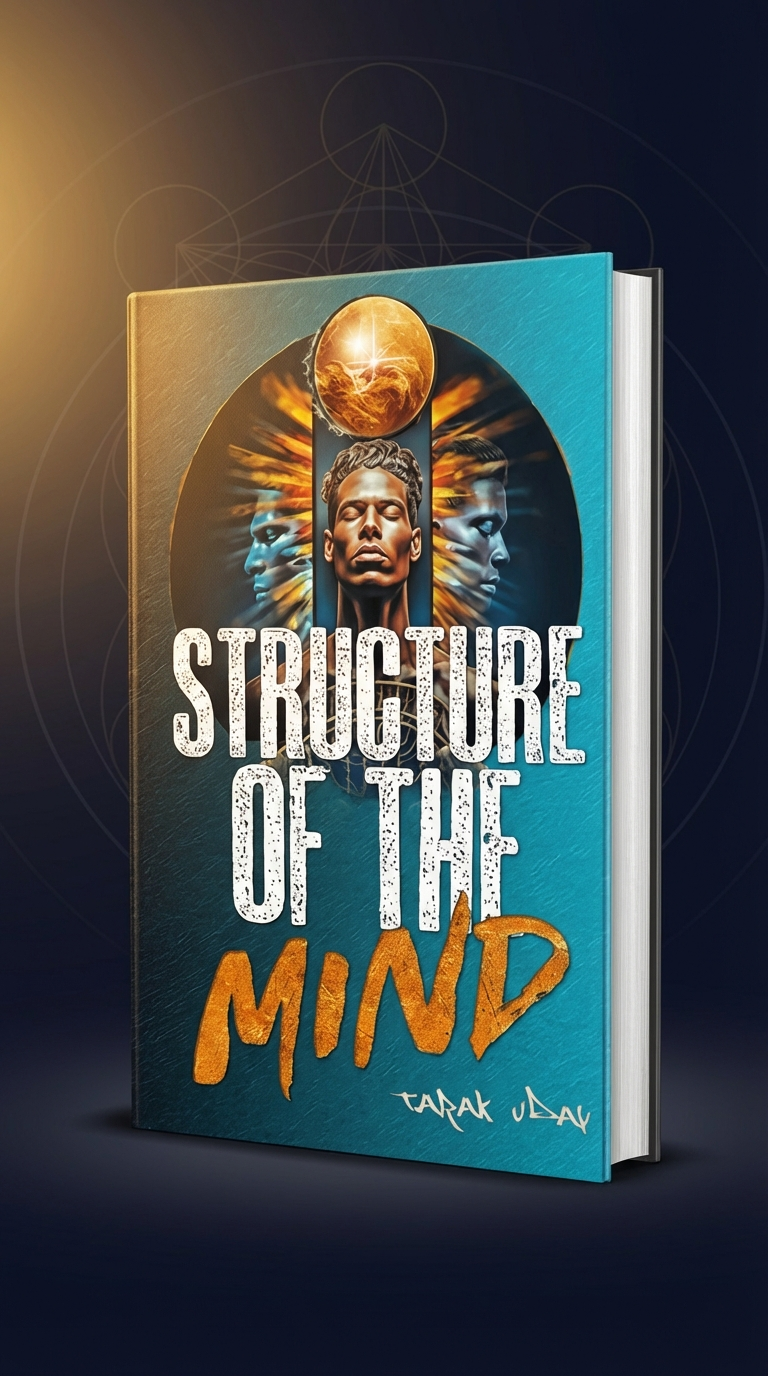
Here's what's actually happening at the level of mind. Your consciousness is not confined to your physical body. When you fall asleep, your attention withdraws inward, through the layers of yourself — the emotional level, the lower astral, the upper astral, the mental level, and so on. These aren't spiritual poetry. These are actual dimensional layers of your own mind. The book Structure of the Mind lays this structure out as the seven levels of mind, and every human being travels through them every night whether they know it or not.
So when a noise goes off, or your sleep cycle shifts, or an alarm pulls you upward toward waking, your consciousness has to come back. It has to travel from where it was operating — somewhere inner, somewhere higher vibrationally — and re-enter the physical level. That movement, that descent, is what you experience as falling. You are not falling from a height. You are descending from a frequency.
Think about that for a second. Every time you have had a falling dream, you were actually up there. Your awareness had moved into an inner level of mind, and what you felt was the return trip. That's the whole point.
The quality of the fall tells you where you were
Now pay attention to this part, because this is where it gets diagnostic. The way you fall tells you something very specific about where your consciousness was operating and how it came back. And the pattern never changes.
The slow, gentle descent
If your fall is soft, almost floating, more like a slow drift downward than a drop — your consciousness is returning gradually. The transition between levels is smooth. This is usually what happens when you're waking up naturally, without a harsh alarm, without a startle. Your awareness is coming home the way it's supposed to. Nothing to worry about. This one is actually beautiful if you catch it in real time.
The rapid, terrifying fall
If your fall is sudden, screaming downward, and you wake up gasping — something yanked you. Either an external disruption — a loud sound, a phone vibration, someone moving in the room — or an internal spike — a surge of worry, an anxious thought your conscious mind grabbed onto mid-sleep. The violence of the fall is a measurement of how abruptly your awareness was pulled back to the physical. It's not ominous. It's just rough re-entry.
Falling from a great height
This one matters. The higher the place you fall from, the deeper the inner level your consciousness was operating in. Falling from a skyscraper, a mountain, the sky itself — you were deep. You were in an upper astral or mental level, doing real inner work. The fall is long because the distance was long. That's not scary. That's worth celebrating.
Falling into water
Different symbol entirely. Water in the Universal Language of the Mind represents conscious life experiences. If you fall into water, you're descending directly back into the flow of your waking life, often with a new impression from the inner level you just left. Pay attention to what you remember right after — there's usually a piece of guidance waiting in the first thirty seconds after waking.
Being pushed versus falling on your own
If you are pushed, an aspect of yourself is forcing your attention back to the physical — often an unresolved emotional charge, a nagging thought, something your subconscious wants addressed. If you trip, slip, or fall on your own, the transition is initiated by natural sleep cycles. Both are information. Neither is dangerous.
Why the jolt, and what the jerk actually is
So here's the part nobody talks about plainly. That jolt you feel right as you hit the ground (or right before) — that sudden full-body jerk — is the reconnection of your awareness into the body. Sleep scientists call it a hypnic jerk and leave it at that. What they're measuring physically is real, but they're measuring the shadow, not the thing itself. The body jerks because the consciousness just slammed back into it.
Your awareness was outside — not floating in the sky, not anywhere mystical, but operating within your own inner levels. When the return happens faster than the body is ready for, the reconnection registers as a jolt. The deeper the level you were in, and the faster you had to come back, the harder the jolt.
This is why people who meditate, who train their concentration, who practice lucid awareness — their hypnic jerks soften over time. Their transitions smooth out. It's not because the mechanism changes. It's because they change. Their awareness learns to travel gracefully.
Decode your falling dream right now
Instead of guessing what your dream means, let CHITTA translate it through the Universal Language of the Mind — the same language Tarak Uday teaches in Life Is But a Dream. You'll see exactly what level your consciousness was returning from.
Decode Your Dream Now →The mirror — what this says about you
Here's where this stops being a dream article and starts being personal. Every falling dream is telling you the same thing about yourself, and almost nobody hears it.
You are already multidimensional. You already travel every night. Your awareness already operates in inner levels of mind that most people spend entire lifetimes pretending don't exist. The falling dream is not a problem to fix. It is evidence — recurring, vivid, bodily evidence — that there is more of you than you've been told.
So when you wake up jolting from a fall, take the thirty seconds. Don't pick up the phone. Don't scroll. Ask yourself one quiet question: where was I? Not what was I dreaming. Where was I? What level of myself was I operating in before I came back? That question, asked honestly, starts cracking the door open. Do it for a week and you'll remember things about yourself you had completely forgotten.
Tarak Uday takes this further in Life Is But a Dream, his guide to reading every dream in the Universal Language of the Mind.

Bindu says: "You were not falling. You were coming back. The only question is — what did you bring with you?"
How to turn the fall into flight
Here's the part that changes everything. The fall is not fixed. It is a skill level. As your concentration strengthens — as you train your attention the way an athlete trains a muscle — the quality of your inner travel changes. What used to be an uncontrolled descent becomes a controlled one. What used to be a terrifying drop becomes a smooth glide. And eventually, what used to be a fall becomes a flight.
This is not mystical. It is mechanical. Tarak Uday's book Structure of the Mind lays this out precisely — concentration is the master skill that changes what your awareness can do. When your attention is strong, you notice the transition between levels of mind. You don't sleepwalk through it anymore. You become aware while it happens. That awareness is the seed of lucid dreaming, lucid sleeping, and eventually conscious continuity across all seven levels of mind.
A simple starting exercise: tonight, before you sleep, set one clear intention. When I feel myself falling tonight, I will notice it. That's it. Don't try to control it. Just notice. The noticing is the first lever. Think of it as a doorway — a single moment of awareness placed at the edge of the transition. Do it nightly. It compounds faster than you'd expect.
And remember — the symbol is not the enemy. The dream is not a warning. Your mind is doing exactly what it is designed to do. You just finally have the language to read it.
Your dreams are speaking a language — learn to read it
CHITTA is the only dream interpretation tool built on the Universal Language of the Mind that Tarak Uday teaches. Decode what your falling dream, your recurring dreams, and every symbol in your subconscious is really telling you.
Start Decoding Free →So the next time you fall, smile. You were somewhere. You came back. That's the whole point.
Frequently Asked Questions


Books by Tarak Uday

Learn The Language Your Dreams Speak
"Life Is But a Dream" teaches the Universal Language of the Mind — how to read any dream symbol by what it is and what it does, so every dream becomes a message you can act on.

LUCID
You've tried every lucid dreaming technique. Most miss the root cause. LUCID reveals what they all skip.
Understand Your Own Mind
"Structure of the Mind" reveals the three divisions of mind, seven levels of consciousness, and powers of mind that most people never learn to develop.