
How to Stay Lucid Without Waking Up — Why You Keep Losing It and How to Stop
You became lucid for five seconds then woke up. Here's exactly what's happening and the specific tools that fix it.
Five seconds. That's how long most people's first lucid dream lasts.
You realize you're dreaming. Your heart explodes with excitement. "I'M DREAMING!" And then — you're staring at your ceiling. The dream is gone. The magic lasted less time than it takes to tie your shoes.
If this has happened to you, you're not alone. It's the single most common frustration in lucid dreaming. And the reason it happens — and the solution — traces directly back to one skill: the ability to hold your attention steady regardless of what you're feeling.
Sound familiar? It should. That's the candle exercise. Every session you sat in front of that flame, holding your attention while distractions pulled at you — you were training for this exact moment.
The Three Ways You Lose Lucidity
1. The excitement trap
This is the number one killer. You become aware — "It worked!" — and the emotional spike generates a surge of energy that destabilizes the state. Your heart rate increases. Your breathing changes. Your body activates. And the physical body's activation pulls your consciousness right back out of the dream.
The fix is NOT to suppress excitement. You can't — and shouldn't — force yourself not to feel wonder. The fix is to feel the excitement without letting it move your attention. This is exactly what concentration training develops. You sat with distractions — itches, thoughts, restlessness — and held steady. Euphoria is just another distraction. Hold steady through it.
The moment you become lucid: breathe. One slow breath. Let the excitement wash through you like a wave passing through water — present but not displacing you. Then immediately ground.
2. The passivity trap
You successfully contain the excitement. You're lucid. You're stable. And then... you just stand there. Marveling. Observing passively. Not engaging. Not moving. Not touching anything.
The dream dissolves within seconds.
Think of it like holding a station on an old radio dial. As long as you actively hold it, the signal is clear. The moment you let go, it drifts into static. Your attention is that dial. Active engagement keeps you tuned in. Passivity lets the signal drift.
The fix: never stop engaging. Keep walking. Keep touching surfaces. Keep looking at details. Keep interacting with the environment. Movement is maintenance. The moment you become a passive observer, the dream reads your disengagement as permission to end.
3. The fear trap
Something appears in the dream that frightens you — a shadow figure, a hostile entity, a disturbing scene. Your fear response activates. Your instinct is to flee — and the ultimate flight response is waking up. Your consciousness retreats to the physical body like a hand pulling back from a flame.
The fix: remember that everything in the dream is an aspect of you. The frightening imagery is unresolved shadow material — parts of yourself you haven't faced. They cannot harm you any more than your own thoughts can harm you. Instead of retreating, approach with curiosity: "What do you represent? How can I help you?" Or command it to leave using your willpower — speak with authority. Or shift environments by visualizing a new location.
You are where your attention is. If your attention stays in the dream, you stay in the dream. Fear only ends the experience if you let it move your attention back to the physical body.
The 7 Stabilization Tools
These tools all work on the same principle: they anchor your attention into the dream environment through sensory engagement. The more senses you activate, the more firmly your consciousness is held in place.
Tool 1: Look at your hands
The instant you become lucid — before anything else — look at your hands. They may appear larger than normal. They may look different. That's fine. The act of looking at them anchors your visual awareness in the dream body and sends a stabilizing signal through the connection between your physical and astral bodies.
Use this as your go-to stabilizer throughout the experience. Every thirty seconds or so — especially if the dream wavers — glance at your hands briefly, then look away before they start to distort. This sends an energetic pulse back to the physical body that provides a boost of energy, extending the experience.
Tool 2: Touch everything
Run your hand along a wall. Feel the ground under your feet. Pick up an object and feel its weight, temperature, texture. Squeeze it. The tactile sense is one of the most powerful anchors available because it creates an immediate, undeniable connection between your consciousness and the environment.
Tool 3: Speak aloud
"I am aware. I am dreaming. I am here." Or simply: "Clarity now!" The auditory engagement sharpens the entire experience. Many practitioners report that demanding clarity verbally produces instant results — colors brighten, edges sharpen, details emerge that weren't visible before.
Use this as both a stabilizer and a periodic maintenance check. Every few minutes, pause and affirm your lucidity aloud. The dream state is seductive — it feels so real that you can forget you're dreaming and slip back into unconscious participation. The verbal reminder keeps the flame of awareness lit.
Tool 4: Rub your hands together
When the dream starts fading — colors dimming, details blurring, a sense of pulling back — rub your hands together vigorously. The intense tactile input creates a burst of sensory engagement that can snap the experience back into full clarity.
Tool 5: Demand clarity verbally
"Clarity now!" "Stabilize!" "Increase lucidity!" The dream environment responds to firm intention. A verbal command is one of the strongest expressions of intention you have. Speak with authority — as if you're giving an order. The environment complies.
Tool 6: The hand-glance pulse
Briefly look at your hands, then look away. This technique, discovered by Robert Bruce, sends an energetic pulse down the silver cord connecting your astral body to your physical body. The physical body responds by providing a boost of energy to the projected consciousness. It's like plugging in a phone that's running low — the charge extends the session. Repeat every thirty seconds if the experience is wavering.
Tool 7: Spin slowly
Spinning engages the vestibular sense — your sense of balance and spatial orientation. This can stabilize a wavering experience by pulling your attention fully into the dream body's sensory system. Use cautiously: spinning can also transport you to an entirely different dream scene. If you're okay with changing locations, it's effective. If you want to stay where you are, use the other tools first.
When Everything Goes Black
The dream fades. Colors dim. Details dissolve. Everything goes dark.
Most beginners assume the experience is over. It's not.
When the dream fades to black, you are in a liminal space — between the dream and the physical body. Your consciousness hasn't fully returned to the physical yet. You have a window — usually a few seconds — to pull yourself back into the dream.
Here's how: visualize the dream environment with full sensory immersion. See it. Hear the sounds. Feel the ground, the air, the textures. Smell the environment. This is the same visualization skill you've been training for months — the Top 10 Most Wanted list with full sensory engagement. The only difference is you're doing it in real time inside the liminal space between waking and dreaming.
While visualizing, WILL yourself back in. Speak: "I'm going back." Feel yourself there. The more senses you engage, the faster the environment re-forms around you.
Many practitioners find the blackout is temporary. A few seconds of focused intention and the dream re-materializes. Sometimes it's the same scene. Sometimes it's a new one. Either way — you're back in. Lucid.
If the blackout persists and you can't re-enter, you can also use the Wake Back to Bed re-entry technique — recall the dream you were just in and replay it with full sensory immersion until your consciousness crosses back over.
The Duration Formula
How long you can stay lucid is directly proportional to one thing: your ability to sustain focused attention.
That's it. That's the entire formula.
Beginners stay lucid for seconds — the excitement trap pulls them out before they can stabilize. With practice, the excitement fades, the stabilization becomes automatic, and experiences extend to minutes. With consistent practice over weeks and months, lucid dreams can last 10, 20, 30 minutes or more.
Every candle concentration session you do directly increases your lucid dream duration. Every time you reduce your tic marks — fewer breaks in attention — your capacity to hold awareness in the dream state grows proportionally. The correlation is direct and measurable.
This is why the 45-day foundation exists. It's not an arbitrary number. It's the amount of practice required to build enough sustained attention to hold a lucid dream long enough for it to become meaningful.
Tarak Uday takes this further in LUCID, his book on becoming aware inside the dream.
The Subconscious Is Not Your Enemy
Most mainstream lucid dreaming sources frame the dream as adversarial — as if it's trying to dissolve your awareness, trick you into losing lucidity, pull you back into unconsciousness.
This framing is wrong. And it's actively harmful to your stability.
Your subconscious mind is not fighting you. It's the other half of you. You've been building a relationship with it for months through dream interpretation — receiving its messages, decoding them, applying them. It knows you're listening. It knows you're paying attention. It is your ALLY.
When you approach the dream with curiosity and respect — "What are you showing me? What do I need to understand?" — rather than trying to dominate and control it, stability comes naturally. The aligned purpose between your conscious awareness and your subconscious communication creates a cooperative state. The dream doesn't dissolve because neither side wants it to end.
Fight the dream and it fights back. Cooperate with the dream and it sustains itself.
False Awakenings — The Hidden Trap
You think you woke up. You get out of bed. You start your morning routine. Everything feels normal.
Except you're still dreaming.
False awakenings are extremely common for lucid dreamers, especially in the early stages. They happen because your consciousness partially returns toward the physical body, generates the expectation of "waking up," and the subconscious obliges by creating a dream that mimics waking reality.
The solution: perform a genuine reality check every single time you wake from a lucid dream. Look at your hands — do they look normal? Check a clock — do the numbers make sense? Try pushing a finger through your palm. Read text, look away, read it again — did it change? If anything is off, you're still dreaming. Ground yourself and continue the experience.
Some practitioners experience multiple false awakenings in a row — "waking up" three or four times before actually returning to the physical body. This is disorienting but not dangerous. Each false awakening is simply another opportunity to re-enter lucidity.
What to Do After Stabilizing
- Stay active. Keep engaging. Movement is maintenance.
- Periodic checks. Every few minutes: "I am dreaming. I am aware."
- Use the tools. The moment the experience wavers — hands, touch, speak, rub, demand, glance, spin. Don't wait until the dream is almost gone. Stabilize at the first sign of fading.
- Explore with purpose. Don't just wander. Ask the dream: "What do I need to know?" Approach dream characters. Read the Universal Language in real time. Use the lucidity for genuine self-discovery.
- Record everything upon waking. Decode in CHITTA. Every lucid experience contains messages from your subconscious — even the moments you chose to fly or explore were happening within a symbolic environment that carries meaning.
Train the Skill That Holds You There
Every tool in this article is an application of one ability: sustained, directed attention. The candle exercise builds it. The mirror exercise refines it. The visualization exercise extends it into the inner senses. The memory exercise ensures you remember what you experienced.
If you want longer lucid dreams — do more concentration training. There is no shortcut. There is no supplement. There is no technique that replaces the foundational ability to hold your attention where you place it.
The length of your lucid dreams is a direct measurement of the strength of your concentration. Build the strength. The duration follows.
GO WITHIN>>> OR GO WITHOUT.

Frequently Asked Questions


Books by Tarak Uday

LUCID
You've tried every lucid dreaming technique. Most miss the root cause. LUCID reveals what they all skip.

Learn The Language Your Dreams Speak
"Life Is But a Dream" teaches the Universal Language of Mind — how to read any dream symbol by what it is and what it does, so every dream becomes a message you can act on.
Understand Your Own Mind
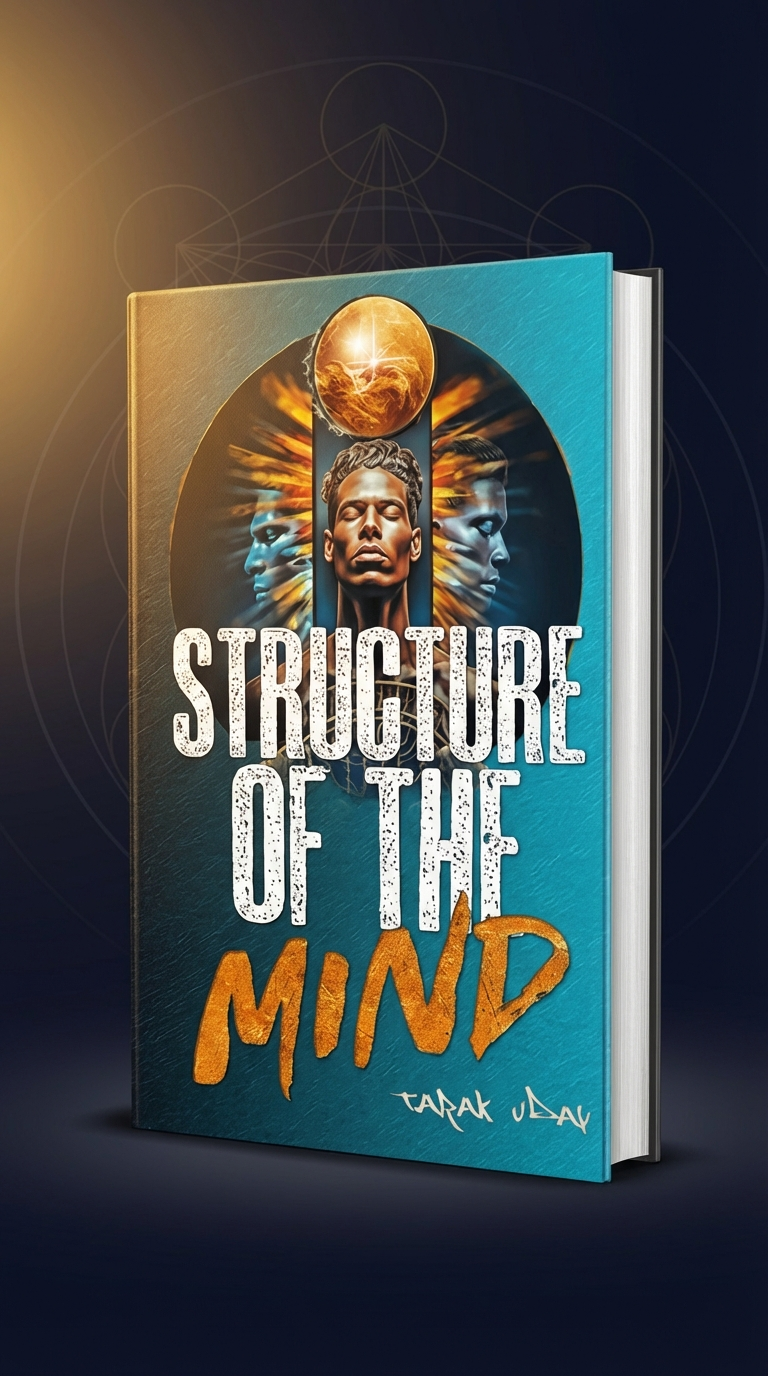
"Structure of the Mind" reveals the three divisions of mind, seven levels of consciousness, and powers of mind that most people never learn to develop.