
How to Lucid Dream Consciously Any Night You Want
Not a hack. Not a trick. A step-by-step method that works WITH your body's sleep cycle — not against it.
This is the method where your lucid dreaming practice begins. Not with a technique you attempt at bedtime when your body is demanding deep sleep. Not with a reality check you perform mechanically and hope carries into a dream. This begins with a method that works WITH your body's natural sleep cycle rather than fighting against it.
If you've read How to Lucid Dream — The Prerequisite Nobody Teaches, you know the foundation: 45 days of memory training, concentration exercises, and dream journaling. If you haven't built that foundation yet, go build it first. What follows requires it.
If you've done the work — if your dream recall is strong, your concentration is trained, your visualization is vivid, and you've been decoding your dreams in the Universal Language of the Mind — you're ready for what comes next.
Why This Method Works
Sleep operates in approximately 90-minute cycles. Each cycle moves through light sleep, deep sleep, and REM sleep — where vivid dreaming occurs. As the night progresses, the deep sleep portions get shorter and the REM portions get longer. Your longest, most vivid dreams happen in the final cycles of the night.
This is exactly where we want to be.
The early cycles are dominated by deep sleep — your body is repairing, restoring, demanding unconsciousness. Trying to lucid dream at the START of the night is fighting your biology. Your body wins that fight every time.
The backend of sleep is the opposite. Body is rested. Conscious mind is quiet. Dream periods are the longest of the entire night. You are not fighting anything. You are stepping into a stream that's already flowing.
The Step-by-Step Protocol
The Night Before — Preparation
Complete your normal dream recording ritual. Tomorrow's date in your notebook. "I WILL REMEMBER MY DREAMS!!!" Notebook and pen by the bed.
Set your wake-up for either 90 minutes or 3 hours before your normal alarm. The 3-hour option gives you more REM cycles to work with and is the recommended approach if your schedule allows it.
Two wake-up options:
Option A — Alarm: If using an alarm, use a gradual volume feature that starts quiet and slowly increases. A jarring alarm floods your body with adrenaline and rips you out of the dream state — making re-entry much harder.
Option B — Subconscious Command (preferred): Speak this command aloud with authority: "Wake me up at precisely [time]." This is not a wish. This is an invocation of willpower. After 45 days of building rapport with your subconscious through dream interpretation, your subconscious will fulfill this command. You'll find yourself waking naturally a few minutes before any alarm — gently, from within rather than from without.
You can use both together. Command first, alarm as backup.
After setting your wake method, write your intention: "I will become aware in my dream." Affirm aloud: "I WILL REMEMBER MY DREAMS!!!" Then fall asleep normally. Let your body do what it needs. Trust the process.
The Wake
When you wake — whether from the alarm or your subconscious command — hit snooze immediately. Reset into your lying position. Close your eyes.
Do NOT get up. Do NOT record your dream yet. Do NOT look at your phone. Do NOT turn on a light. Do NOT engage in any waking activity.
Remain in the reverie state — that half-awake, half-asleep space. This is the threshold between the conscious and subconscious minds. You want to stay RIGHT HERE.
Quietly, internally, review the dream you just had. Recall what you were experiencing. Do NOT try to fully interpret or analyze it — that activates the analytical conscious mind and pulls you further into waking. Just replay what happened. Let the images come back naturally.
The Re-Entry — Three Options
Option 1 — Restart the Dream From the Beginning (Easiest)
Recall the earliest moment of the dream you can remember. Begin replaying it from that point forward. Take your time. Don't skip parts.
Here's the critical part: do not replay it like watching a movie from the outside. Fully immerse yourself INTO the experience. Not just what you see — what you're feeling, hearing, tasting, smelling. Activate every inner sense. This is where your 45 days of visualization practice pays off.
As you replay slowly with full sensory immersion, your attention shifts from the physical to the astral. You are where your attention is. The more senses you engage, the deeper your consciousness moves into the dream. At some point, the replayed memory transitions into a living dream. The images that started as recalled pictures become a real environment you're standing inside of. You crossed the threshold. You're IN the dream. With awareness.
Option 2 — Pick Up Where It Left Off
If there was something unresolved in the dream — or you want to see what happens next — recall the last five to ten minutes. Replay those final moments with full sensory immersion. Then let the dream continue forward. Your imagination generates what comes next, guided by the momentum of what came before. At some point, generated imagery transitions into living dream imagery. The dream takes over. You're lucid.
Option 3 — Re-Enter at a Specific Moment
If a specific moment stood out — something you want to understand better or experience differently — don't jump directly to it. Start the replay a few moments BEFORE that moment. Give yourself runway to build immersion. By the time you reach the target moment, you'll be fully inside the dream. Lucid. Present. Aware.
When You Become Lucid
When you realize you're inside the dream with awareness, the first thing you need to do is STAY CALM.
The number one reason beginners lose lucidity is excitement. "I'm dreaming! It worked!" — heart rate spikes, emotional energy shifts, and you wake up. Your concentration training prepared you for exactly this. Hold your awareness steady regardless of what you're feeling.
Ground yourself with three anchors:
- Visual: Look at your hands. This anchors your awareness in the dream body.
- Tactile: Touch something solid — the floor, a wall, any surface.
- Auditory: Speak aloud: "I am aware. I am dreaming."
Each sense you engage is another anchor holding your consciousness inside the experience.
Then: STAY ACTIVE. Passivity will end the experience. If you stand there marveling at the fact that you're lucid, your attention drifts, the dream fades, and you either wake up or slip back into unconscious dreaming. Keep touching, keep looking, keep moving through the space. Your attention is what holds you here.
Start small. Don't try to fly or reshape reality on your first experience. Don't change anything yet. Just BE aware. Walk around. Touch things. Notice the environment. If you've developed fluency in the Universal Language of the Mind, read the dream in real time. What state of mind are you in? What aspects of yourself are present? Is it light or dark? Is there water? What are the people doing?
Observe before you act. Awareness before control.
What to Expect
Your first lucid experiences will likely be brief — seconds to minutes. This is normal. Each time you practice, the duration extends. Your concentration is the muscle that determines how long you can stay. It gets stronger with every attempt.
Some nights the method will work on the first try. Some nights it won't work at all. This is also normal. Don't attach success or failure to any single night. Attach it to the consistency of the practice over weeks.
Tarak Uday takes this further in LUCID, his book on becoming aware inside the dream.
The dreams themselves may begin to change. As your subconscious recognizes that you're paying attention — that you're receiving, interpreting, and applying its messages — it begins to communicate more clearly. The dreams become more vivid. The symbols become more precise. The messages become more direct. This is the dream cycle deepening: receive, interpret, apply, receive a new dream in response.
Troubleshooting
I can't fall back asleep. You woke up too much. Next time, don't move your body at all when you wake. Don't open your eyes. Stay in the reverie state from the very first moment of waking.
I fall asleep but don't become lucid. Your sensory immersion during the replay isn't deep enough. Engage MORE senses. Don't just see the dream — hear it, feel it, smell it. The more senses you activate, the faster your consciousness crosses the threshold.
I become lucid but immediately wake up. Excitement is pulling you out. The moment you realize you're lucid, don't react. Breathe. Ground immediately — hands, touch, speak. Let the excitement pass through you without grabbing onto it.
The dream imagery is too faint to immerse in. Your visualization skill needs more development. Go back to the Top 10 visualization exercise and practice with deeper sensory engagement. The stronger your waking visualization, the stronger your dream re-entry imagery.
The Mechanics Behind It
You are where your attention is. This is the fundamental law governing consciousness at all times.
When you're awake, your attention is on the physical — physical senses, physical environment, physical body. When you're asleep, your attention shifts to the astral — inner senses, inner environment, astral body.
When the alarm wakes you, your attention snaps to the physical. If you get up, check your phone, turn on a light — your attention anchors fully in the physical and shifting back becomes very difficult.
But if you remain in the reverie state — eyes closed, body still — your attention hovers at the threshold. It hasn't committed to either side.
The re-entry practice deliberately shifts your attention from physical back to astral by giving full attention to the dream images with every sense. Seeing activates clairvoyance. Hearing activates clairaudience. Feeling activates clairsentience. Each sense activated draws your consciousness deeper into the inner levels.
At a certain point, the balance tips. Your attention crosses. Your consciousness follows. And you're in the dream. With awareness. This is the natural mechanics of how consciousness shifts between the physical body and the astral body — the same mechanics that operate every single night. The only difference is you're doing it CONSCIOUSLY.
What to Do After a Lucid Experience
- Record immediately. The moment you wake from a lucid dream, grab your notebook. Write everything — what you saw, heard, felt, who was there, what the environment looked like. Don't wait.
- Decode it. Use the Universal Language of the Mind. Type it into CHITTA for full interpretation. What was your subconscious showing you while you were aware inside the dream?
- Note what worked. Which re-entry option did you use? How deep was your immersion? How long did the lucidity last? What ended it? This data refines your practice.
- Apply the message. Even in a lucid dream, your subconscious is communicating. The symbols still mean what they mean. Decode and apply.
- Practice again tomorrow. Consistency compounds. Each night builds on the last.
This Is Just Walking
The Wake Back to Bed method is learning to walk. Once you've practiced this for two weeks with consistent success, you'll be ready for the WILD technique — putting your body to sleep while remaining fully conscious. That's running. And by then, you'll have the concentration, willpower, and understanding to navigate every stage of the transition.
But right now, walk. Master this first. Two weeks of consistent Wake Back to Bed practice with your 45-day foundation behind you. The lucid dreams will come — not because you hacked your brain, but because you built the engine that makes the car drive itself.
GO WITHIN>>> OR GO WITHOUT.

Frequently Asked Questions


Books by Tarak Uday

LUCID
You've tried every lucid dreaming technique. Most miss the root cause. LUCID reveals what they all skip.

Learn The Language Your Dreams Speak
"Life Is But a Dream" teaches the Universal Language of Mind — how to read any dream symbol by what it is and what it does, so every dream becomes a message you can act on.
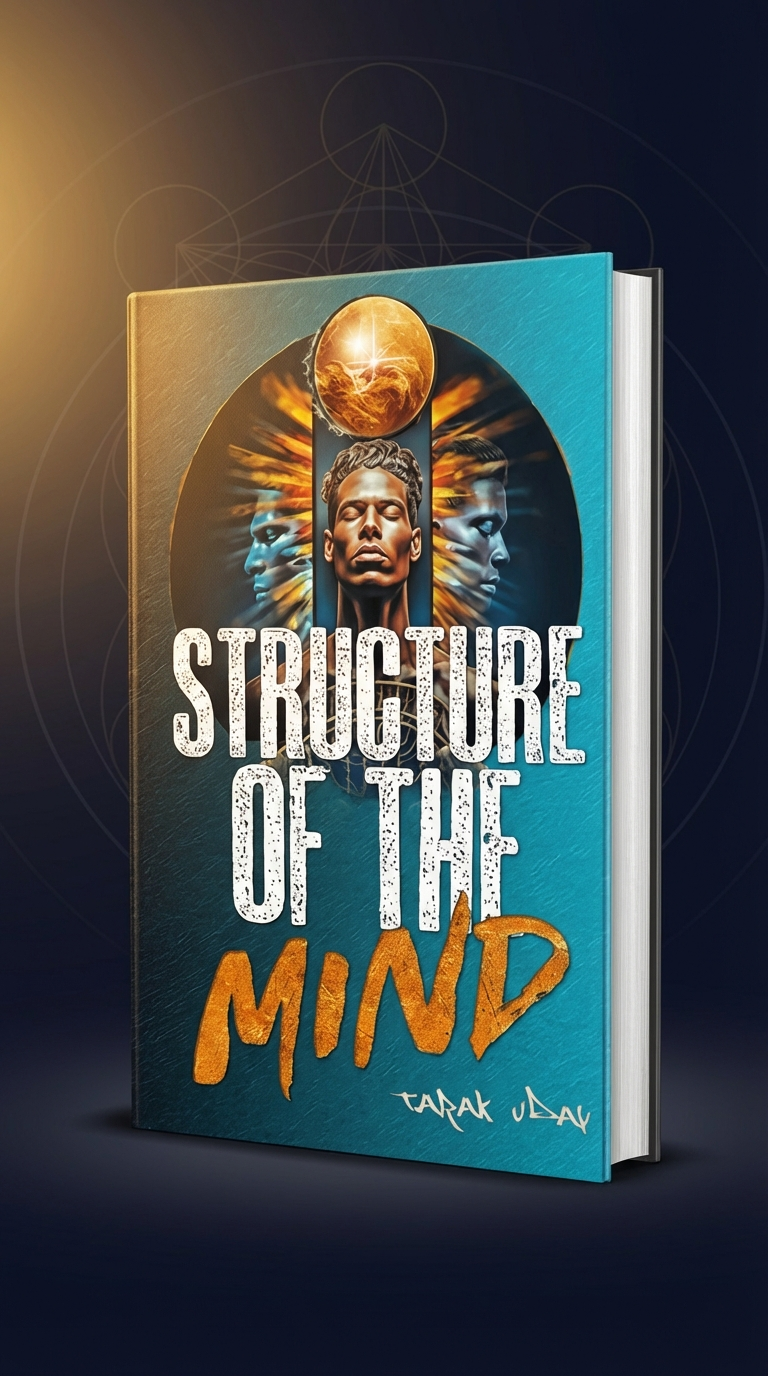
Understand Your Own Mind
"Structure of the Mind" reveals the three divisions of mind, seven levels of consciousness, and powers of mind that most people never learn to develop.