
Why Lucid Dreaming Techniques Don't Work — MILD, WILD, WBTB, and What's Actually Missing
You've tried every technique. None of them worked. Here's the honest reason — and it's not the technique's fault.
MILD. WILD. SSILD. DILD. WBTB. FILD. DEILD.
An alphabet soup of acronyms. You've tried at least three of them. Probably more. And you're reading this article because none of them worked — or they worked once and you could never get back there.
Here's what nobody in the lucid dreaming community will tell you directly: the techniques are not the problem. Every major technique — MILD, WILD, WBTB, SSILD — is based on sound principles. They work. They've been proven to work by thousands of practitioners across decades.
The problem is what they ASSUME about the person attempting them.
The Technique Breakdown — What Each One Assumes
MILD — Mnemonic Induction of Lucid Dreams
What it tells you to do: As you fall asleep, repeat an intention — "Next time I'm dreaming, I will remember I'm dreaming." Visualize yourself becoming lucid in a recent dream. Hold this intention as you drift off.
What it ASSUMES you can do:
- Memory: That you can recall a recent dream vividly enough to re-enter it mentally. That your memory is strong enough to CARRY the intention from waking consciousness into the dream state — across the gap of falling asleep, where most thoughts dissolve.
- Visualization: That you can hold a vivid, immersive mental image of a dream scene with enough sensory detail to engage your consciousness.
- Concentration: That you can sustain this intention and visualization as you fall asleep without your mind wandering to tomorrow's to-do list, the argument you had today, or random noise.
If your memory is weak — if you can't recall five specific moments from yesterday with all five senses — then the intention you set dissolves the moment consciousness shifts. If your visualization is flat — if mental images are dim and lifeless — then the dream re-entry has no pull. If your concentration breaks — if you can't hold a single thought for thirty seconds — the intention scatters before you're asleep.
MILD is a powerful technique. It was developed by Dr. Stephen LaBerge and has decades of research behind it. It works — FOR PEOPLE WHO HAVE THE MENTAL ABILITIES IT REQUIRES. For everyone else, it's a wish repeated at bedtime.
WILD — Wake Induced Lucid Dream
What it tells you to do: Remain conscious as your body falls asleep. Navigate through sleep paralysis, hypnagogic imagery, vibrational states, and finally separate your consciousness from the physical body into the dream or astral environment.
What it ASSUMES you can do:
- Concentration: That you can sustain awareness through 15-30 minutes of your body shutting down — strange sensations, sleep paralysis, bizarre sounds and images — without your attention breaking, without panic, without excitement, without falling asleep unconsciously. This requires EXTREME sustained concentration.
- Visualization: That when hypnagogic imagery appears, you can engage with it immersively enough to shift your consciousness into it — and that you can use visualization to navigate the exit.
- Emotional control: That you can experience sleep paralysis — the inability to move your physical body — without fear response. That you can feel vibrations coursing through your body without excitement pulling you out.
WILD is the most powerful technique available for lucid dreaming. It is also the most advanced. But it is the flashiest, the most talked-about, the one that sounds the coolest — so it is the one beginners attempt first. This is the equivalent of someone who has never been to a gym walking in and attempting a 500-pound deadlift on their first day. The ambition is admirable. The preparation is nonexistent.
Without trained concentration, you will either fall asleep unconsciously or lie awake for an hour getting frustrated. Without trained visualization, the hypnagogic imagery will be too faint to engage. Without emotional control built through months of practice, sleep paralysis will terrify you and vibrations will excite you out of the state.
WBTB — Wake Back to Bed
What it tells you to do: Sleep for 4-6 hours, wake up, stay awake briefly, then go back to sleep with the intention to lucid dream.
What it ASSUMES you can do:
- Memory: That you can recall the dream you were just having upon waking — clearly enough to re-enter it.
- Concentration: That during the wake period, you can maintain a focused intention without fully waking up or letting your mind scatter.
- Visualization: That you can immerse yourself back into the dream imagery with enough sensory depth to shift your consciousness back across the threshold.
WBTB is actually the most accessible technique — which is why it's the recommended starting point in the complete protocol. But even WBTB fails without the three powers. Without strong dream recall, there's nothing to re-enter. Without concentration, the wake period becomes fully awake mind-wandering. Without visualization, the re-entry imagery is too weak to pull consciousness across.
SSILD — Senses Induced Lucid Dream
What it tells you to do: Cycle through your senses — sight, sound, touch — repeatedly as you fall back asleep after a WBTB wake.
What it ASSUMES: That you have enough sensory awareness to meaningfully engage each sense with enough depth to shift consciousness. Without developed inner sensory awareness — built through visualization practice — the cycling is mechanical and shallow.
Reality Checks
What they tell you to do: Throughout the day, check whether you're dreaming — push a finger through your palm, count your fingers, look at text then look away and look back.
What they ASSUME: That you perform them with GENUINE present-moment awareness. Not as a mechanical habit, but as a real, deep questioning of the nature of your experience.
Here's the truth: most people perform reality checks on autopilot. They push a finger into their palm while thinking about dinner. They count their fingers while scrolling their phone. There is a MASSIVE difference between a physical habit performed mindlessly and a genuine moment of stopping, becoming fully present, and QUESTIONING whether what you're experiencing is real.
The reality check that actually works is not a physical gesture. It's the practice of genuine present-moment awareness — engaging your senses consciously, multiple times throughout the day. What am I seeing right now? What am I hearing? What am I feeling? Am I actually HERE or am I on autopilot? This level of waking awareness is what transfers into dream awareness. Pushing your finger through your palm does not.
The Supplement Trap
Galantamine. Melatonin. Vitamin B6. Alpha-GPC. Huperzine-A. Various nootropics marketed as "lucid dreaming supplements."
These substances affect the BRAIN — the physical instrument. They alter chemistry. Some people report occasional results. But chasing a chemical shortcut to consciousness is pouring premium fuel into a car with no engine. The fuel sloshes around impressively. You're still not going anywhere.
The mind is not the brain. The brain is the television. The mind is the broadcast. If you want to change what's on the screen, you don't take the TV apart — you go to the source. Supplements manipulate the TV. The foundation exercises develop the broadcast.
The App Trap
Lucid dreaming apps that play sounds during REM sleep to "trigger" awareness. Light masks that flash LEDs through your eyelids. Binaural beats designed to "entrain" your brainwaves into lucid dreaming frequencies.
Same problem. These tools manipulate the instrument without developing the player. Some may create occasional, accidental moments of awareness — the way a loud noise might briefly wake a deep sleeper. But they don't build the sustained awareness that makes lucid dreaming reliable and repeatable.
You don't need an app to hold your attention steady. You need a candle flame and discipline.
What Actually Works
The solution is embarrassingly simple. It's also the part that nobody wants to hear because it requires effort and patience.
Build the three powers of the conscious mind BEFORE attempting any technique.
Memory: The 5-Day 5-Step exercise. Every night, recall five specific moments from the day in reverse order using all five senses. Within a week, dream recall transforms from fragments to vivid narratives. Within a month, you can carry intentions across the sleep threshold because your memory is strong enough to hold them.
Tarak Uday takes this further in LUCID, his book on becoming aware inside the dream.
Concentration: The candle flame exercise. Sit in front of a lit candle for 10 minutes daily. Hold your attention on the flame. When it wanders, bring it back. Mark each break. Over weeks, breaks decrease. Your ability to sustain awareness — through boredom, through distraction, through the WILD transition, through sleep paralysis, through the excitement of becoming lucid — grows proportionally.
Visualization: The Top 10 Most Wanted list. Every morning and night, visualize each of your 10 most desired outcomes with full sensory immersion — see it, hear it, feel it, smell it, taste it. This develops the same inner sensory engagement that sustains dream environments and enables re-entry through WBTB.
45 days of daily practice with these three exercises. Then — and ONLY then — begin the Wake Back to Bed method. After two weeks of WBTB success, attempt WILD.
This progression — foundation → WBTB → WILD — produces results within a maximum of 10-14 days of attempting the advanced technique. Not because the techniques changed. Because the ENGINE was built.
The Real Reason You've Been Failing
You haven't failed at lucid dreaming. You've been handed techniques without foundations. You've been given cars without engines. You've been told to play a violin without being taught to hold the bow.
The techniques themselves are not the issue. The alphabet soup of acronyms is not the issue. The issue is that the entire mainstream lucid dreaming community — Reddit, YouTube, TikTok, Discord, the forums — teaches techniques WITHOUT teaching the mental abilities those techniques require.
It's as if the fitness industry only sold workout programs without ever mentioning that you need to actually go to the gym. Here's a 12-week program! But nobody told you that you need to show up and lift weights. So you read the program, try a few exercises at home without equipment, get no results, and conclude that you "can't get fit."
You CAN lucid dream. The techniques DO work. You just need to build the engine first.
What to Do Now
- Stop trying techniques. Seriously. Put MILD, WILD, SSILD down for 45 days. They'll be there when you come back — and they'll actually work.
- Start the foundation. Memory exercise, concentration exercise, visualization exercise, dream journaling, and dream interpretation using the Universal Language of the Mind. Daily. No exceptions.
- Use CHITTA for dream interpretation. The app is built on the same symbolic framework that makes lucid dreaming MEANINGFUL — not just achievable.
- After 45 days: Begin Wake Back to Bed. The technique will work because the engine is built.
- After 2 weeks of WBTB success: Attempt WILD. You'll have the concentration to navigate every checkpoint.
The Car Drives Itself
Once the engine is built — once your memory is sharp, your concentration is strong, your visualization is vivid, and your dream interpretation is fluent — the techniques stop being something you "try." They become something that happens. Lucid dreaming stops being a goal and becomes a natural byproduct of a mind that's been developed.
That's the difference between chasing lucid dreams with techniques and arriving at lucid dreams through self-mastery. One is frustrating. The other is inevitable.
Build the engine. The car drives itself.
GO WITHIN>>> OR GO WITHOUT.

Frequently Asked Questions


Books by Tarak Uday

LUCID
You've tried every lucid dreaming technique. Most miss the root cause. LUCID reveals what they all skip.

Learn The Language Your Dreams Speak
"Life Is But a Dream" teaches the Universal Language of Mind — how to read any dream symbol by what it is and what it does, so every dream becomes a message you can act on.
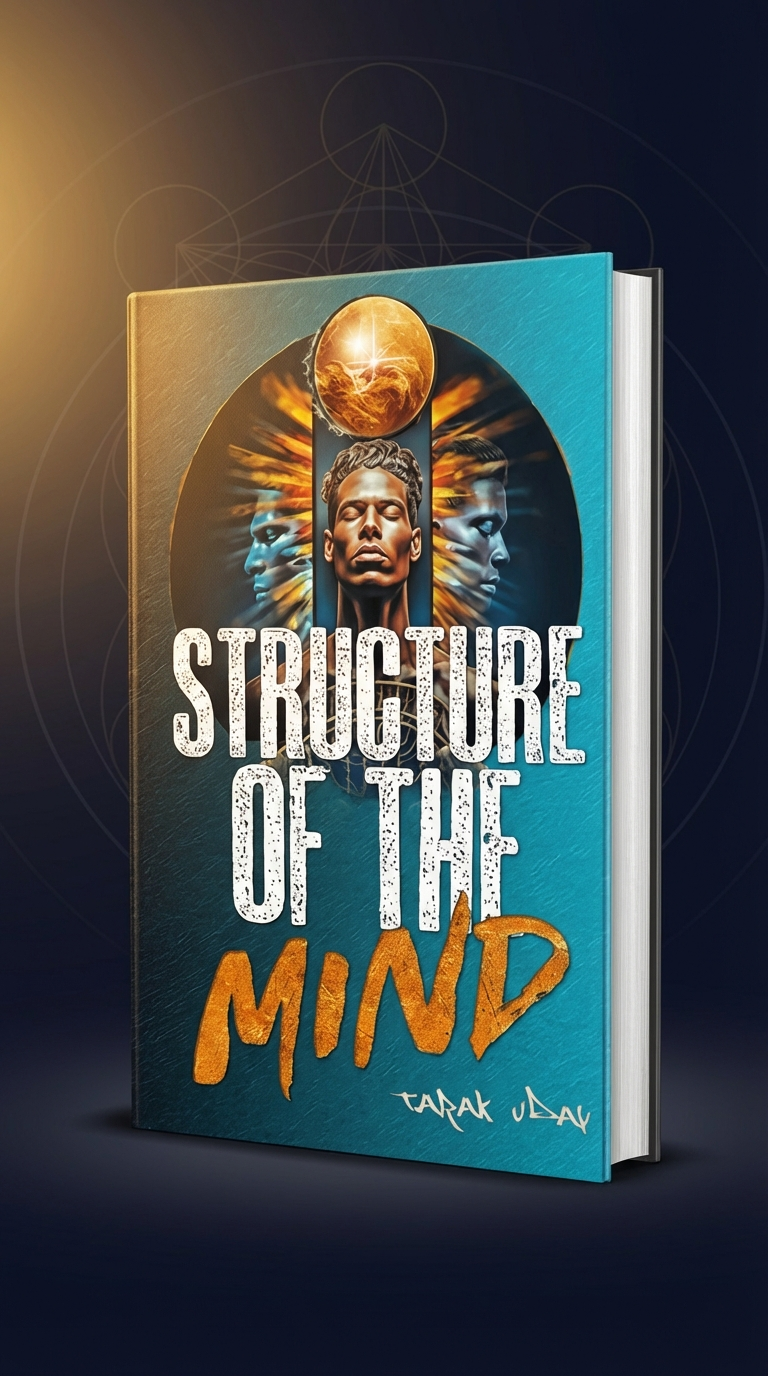
Understand Your Own Mind
"Structure of the Mind" reveals the three divisions of mind, seven levels of consciousness, and powers of mind that most people never learn to develop.