
Daughter in Dreams Meaning
Why your subconscious cast your daughter, and the part of you she actually is


Last night your daughter showed up in your dream. Maybe she was in danger and you couldn't reach her. Maybe she was small again, small enough to carry. Maybe you don't even have a daughter, and there she was anyway, calling you by name. You woke up with your chest tight, already reaching for your phone to check that she's fine.
She's fine. That isn't what the dream was about.
Here's what almost nobody tells you: in the Universal Language of the Mind, the daughter in your dream is not your daughter. She's you. Specifically, she's the part of you that receives — the quiet, inward, absorbing side of your own mind — and the dream is reporting that this part of you is growing up. Something in you that used to be small isn't small anymore. Your dream reached for the most precise picture it had for that, and it handed you your daughter.
Once you understand why it picked her and not something else, you won't be able to read a dream the same way again.
Core idea: A daughter in a dream is a developing, receptive aspect of yourself — a subconscious quality of yours that is maturing and has become familiar. It is not a message about your daughter. It is not a premonition. It is a status report on a part of you that is finally coming of age.
Why does your dream pick a daughter instead of just telling you?
Your dreams don't speak English. They don't speak Hindi or Spanish either. They speak in pictures, and those pictures mean the same thing to every dreamer who has ever lived. That's why it's called the Universal Language of the Mind: a Sumerian farmer and a software engineer in Lisbon both dream about losing their teeth, and it means the same thing for both of them.
The grammar of that language is simple once you see it. Every image is chosen for what it does, not for what it looks like. Form follows function. A car moves you through your life, so a car is your physical body. A house is your mind, because it's the structure you live inside. A daughter? A daughter is a young feminine person who came from you, who is still forming, and whom you already know intimately.
Hold onto each of those pieces, because the dream chose all three on purpose.
And then there's the rule that rearranges everything else, the one Tarak Uday repeats constantly when he teaches people to read their own dreams: you are every character in your dream. Not the main one. All of them. The daughter, the stranger chasing you, the old woman at the door, the dog. When you sleep, you withdraw your attention from the outer world and turn it inward, and everything you meet in there is made of you. There is nobody else in the room.
Your dream didn't put your daughter in front of you. It put a part of you in front of you, and used her face because it knew you'd recognize it.
This is why the panic reading — something is going to happen to my daughter — throws people so far off. It takes the one image the dream chose most carefully and reads it as literal news about another human being. Your subconscious mind has no interest in predicting car accidents. It is interested in exactly one subject, relentlessly, night after night: how you are doing.
What does a daughter actually mean in the Universal Language of the Mind?
Break the symbol into its parts and it resolves cleanly.
Start with the feminine. In the Universal Language of the Mind, the mind has divisions that work as a pair. The conscious mind is aggressive and outward-facing: it initiates, decides, and moves out into the world. The subconscious mind is receptive: it receives, holds, gestates, and gives form to whatever is handed to it. Male figures in dreams represent aspects of the conscious mind. Female figures represent aspects of the subconscious mind. This has nothing to do with men and women in waking life and everything to do with two functions your mind runs every hour you're alive.
So a daughter is a receptive, subconscious quality of yours.
Next, the youth. A girl is specifically a developing aspect of the subconscious mind. Not a finished one. A woman in your dream is an aspect of the subconscious mind that has reached its full strength. A girl is still on the way: real, active, growing, not yet grown.
Finally, the kinship. Family members carry an extra note that strangers don't: familiarity. Dreaming of a brother or a sister points to an aspect of yourself you already know well, one you've lived with long enough to recognize on sight. A daughter carries that same familiarity, plus something more particular: she came from you. She is a part of your inner life that you yourself brought into being, whether you noticed doing it or not.
Put it together and the symbol is exact: a daughter is a developing, receptive aspect of your own mind that originated in you and has become familiar. A capacity to receive, absorb, hold, or nurture that you started cultivating at some point and that is now visibly maturing.
Think about what that means in practice. Have you been learning to listen instead of fix? To stay with a feeling instead of outrunning it? To let people help you? To rest without having earned it? Every one of those is a receptive capacity. If one of them has been quietly growing in you, your dreams have to represent it somehow, and a daughter is the cleanest picture your mind can draw of a receptive quality that is yours, that is young, and that is coming into its own.
What's the difference between dreaming of a daughter, a child, or a baby?
People confuse these three constantly, and it costs them the whole message. They are distinct symbols with distinct meanings, and the difference is precision about stage and quality.
A child in a dream is an undeveloped aspect of yourself. That's the broad category: some quality of yours that exists but hasn't matured, with no indication of which half of your mind it belongs to. A child is the general case.
A baby is narrower and earlier: the birth of an entirely new inner quality. Something has just arrived in you. It's the beginning of the manifestation process the Universal Language of the Mind describes — a seed thought from the aggressive conscious mind is planted in the receptive subconscious mind, where it gestates and accumulates chitta, mind substance, until it has enough density to be pushed out into physical experience. A baby dream says the idea took. Something new is already real.
A daughter is later and more specific than either. She isn't newly born and she isn't merely undeveloped: she is developing, with momentum, and she is decidedly receptive rather than assertive, and familiar rather than strange. Where a child dream says this part of you needs raising, a daughter dream says this receptive part of you is coming of age, and you already know her.
The counterpart confirms the rule. A son would carry the identical structure on the other side of the pair: a developing aspect of the conscious mind, an assertive capacity growing in you. Same stage, opposite function. That your dream chose a daughter and not a son is already part of the message: what's maturing in you right now is your ability to receive, not your ability to push.
Not sure which receptive quality your daughter dream is pointing at? CHITTA decodes your dream in the Universal Language of the Mind and names the aspect of you that's coming of age, in about a minute.
Decode your dreamWhat do the most common daughter dreams mean?
The symbol tells you which part of you. What happens in the dream tells you how that part is doing. This is where dream interpretation stops being a lookup and becomes a mirror.
Your daughter is in danger and you can't reach her. The most common one, and the most misread. It is not a warning about her safety. It's a report that a developing receptive quality inside you is under threat, usually from your own pace. Something delicate in you is being neglected, run over, or squeezed out by everything you're pushing to accomplish. The panic you feel is real and it is accurate. It just points inward, not outward.
You lose your daughter, or can't find her. You've lost contact with a receptive part of yourself you used to reach easily. People report this dream during stretches where they've been hard and outward for months — pure conscious mind, pure initiative — and the softer capacity has dropped out of sight. She didn't die. You just can't find her, which is exactly what the dream is showing you.
You dream of a daughter you don't have. This unsettles people the most, and it's the clearest confirmation that the symbol isn't literal. You can't be receiving news about a person who doesn't exist. What does exist is a receptive quality genuinely developing in you right now, and your mind needed a face for it. It reached for the universal image of a young feminine part of yourself and cast her.
Your daughter is grown, or older than she really is. A stage report, and a good one. The quality has matured further than you've recognized. Your inner picture of her is out of date. Something you still treat as a fragile new practice is already established in you.
Your daughter is crying, angry, or ignoring you. The receptive part of you is asking for attention and not getting it. Notice that in the dream you are also the one not listening: you are both characters. That isn't an accident. The dream has staged the exact standoff you're running inside yourself.
Tarak Uday takes this further in Structure of the Mind, his map of the three divisions of mind and the powers of attention, memory and imagination.
Your daughter has become a baby again. A regression to an earlier stage, which usually means a capacity you had developed now needs deliberate care again. It isn't a failure. It's a dependency resurfacing after a stretch where you stopped tending it.
How do you bring the daughter dream into waking life?
A dream you only interpret is entertainment. A dream you act on is instruction. The difference is a bridge, and building it takes about ten minutes.
Start with the emotion, not the plot. What you felt in the dream — the dread, the tenderness, the frustration — is the most reliable instrument you have. Emotion is how the subconscious mind reports whether something is thriving or withering. Ask where in your waking life you felt exactly that emotion in the last few weeks. Not something like it. The same one. That's your bridge, and it usually surfaces in seconds.
Then name the quality. Ask: which receptive capacity of mine has been growing lately? Listening. Patience. Openness to being cared for. Willingness to not know something yet. Trusting intuition instead of auditing it. Whatever it is, say it in plain words — my ability to let people in — because a quality you can't name is one you can't tend.
Then cross that with the dream's action. If she was in danger, ask what's threatening that capacity this week. If she was lost, ask when you last used it. If she was grown, ask where you're still treating yourself as a beginner when you aren't one.
Finally, give her something today. Whatever the quality is, do one small thing that exercises it before the day ends. Receptive capacities don't grow from understanding; they grow from use, exactly like the daughter in the dream, who grows at the speed of the attention you give her.
The same reading works for your whole inner cast. Once the daughter makes sense, go back and look at your dreams about your mother and your father, which speak of the superconscious mind, or your dreams about your brother and his familiar aspects of the Self. The symbol glossary holds the rest of the alphabet.
Your daughter showed up last night because something in you is growing. She had her mother's face, or yours, or nobody's in particular. The dream didn't care about the face. It cared that you stopped to look at what is finally maturing in you, and that you recognized her.
What else do people ask about dreaming of a daughter?
Does dreaming about my daughter mean something bad will happen to her? No. Dreams aren't predictions about other people. Your subconscious mind reports on your inner state and uses the people you know as vocabulary. A daughter in danger describes a developing receptive quality inside you that's being neglected, not a forecast about your daughter.
I don't have a daughter. Why do I dream about one? Because the symbol was never about having a daughter. It's about a young, receptive, familiar part of you that's developing. People without children dream about daughters constantly, and the meaning is identical.
Does her age in the dream matter? Yes, age is a stage report. Younger means earlier in development and more in need of care. Older or grown means the quality has matured further than you've recognized. A daughter who has become a baby again points to a capacity that needs deliberate care once more.
Is dreaming of a daughter different from dreaming of a son? Yes, and the difference is the whole point. A daughter is a developing aspect of the receptive, subconscious mind. A son is a developing aspect of the assertive, conscious mind. Which one your dream chose tells you which half of you is coming of age right now.
Frequently Asked Questions


Books by Tarak Uday
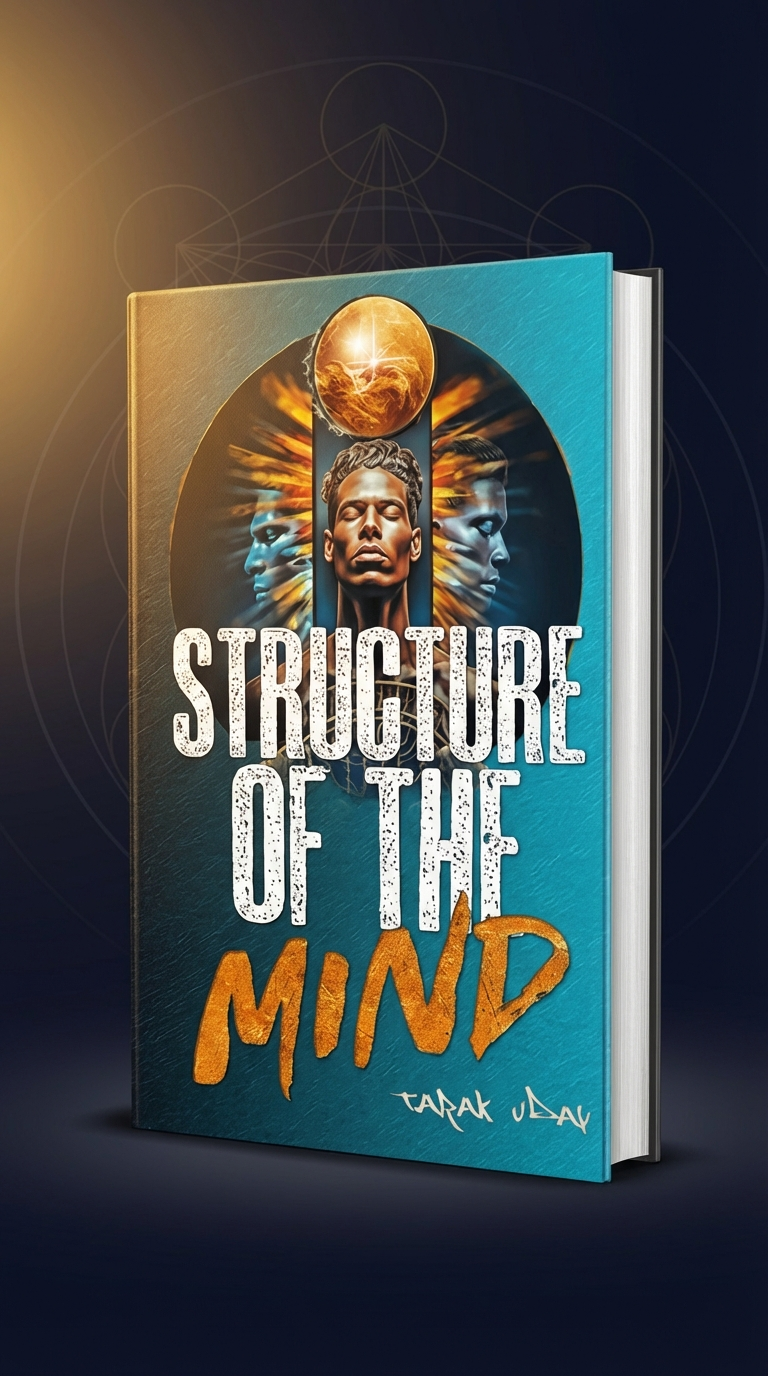
Understand Your Own Mind
"Structure of the Mind" reveals the three divisions of mind, seven levels of consciousness, and powers of mind that most people never learn to develop.

Learn The Language Your Dreams Speak
"Life Is But a Dream" teaches the Universal Language of the Mind — how to read any dream symbol by what it is and what it does, so every dream becomes a message you can act on.

LUCID
You've tried every lucid dreaming technique. Most miss the root cause. LUCID reveals what they all skip.