
Do Dream Interpretation Apps Actually Work? What the Science and Ancient Wisdom Say
Almost every dream app on the market classifies its own interpretations as "entertainment." Here's what that disclaimer really means — and the four criteria that separate real interpretation from sophisticated guessing.

The verdict: Most AI dream apps work as journaling tools but fail as interpreters — by their own "entertainment only" admission — because they generate plausible text instead of decoding meaning; the Universal Language of the Mind reads every dream by function, so the same dream always yields the same meaning.
Buried in the terms of service of almost every dream interpretation app on the market, you'll find a version of the same sentence: "This app is for entertainment purposes only and should not be considered professional advice."
Read that again. The companies building these tools — the ones marketing "deep AI-powered dream analysis" and "unlock the hidden meaning of your subconscious" — don't actually stand behind what their products tell you. Legally, officially, in writing, they classify their own interpretations as entertainment. Not guidance. Not knowledge. Entertainment.
This raises an obvious question that almost nobody asks: If the people who built the tool won't vouch for its accuracy, why would you trust it with something as important as understanding your own mind?
This article examines what dream interpretation apps actually deliver, what modern science says about whether dreams carry meaning, and why one approach to interpretation has the confidence to skip the "entertainment only" disclaimer entirely.
The "Entertainment Purposes" Red Flag
The entertainment disclaimer isn't a minor legal footnote. It reveals something fundamental about how these companies view their own product.
When a weather app tells you it will rain tomorrow, it doesn't say "for entertainment purposes only." When a language translation app converts Spanish to English, it doesn't disclaim accuracy as entertainment. These tools are built on defined systems — meteorological models, linguistic databases — and their developers stand behind the outputs because the underlying methodology is sound.
Dream apps disclaim accuracy because their underlying methodology is not sound. They're feeding your dream description into a general-purpose AI model that generates psychologically flavored text from contradictory training data. The developers know the interpretations aren't reliable — that the same dream can produce different responses, that the AI has no consistent framework, that the output is probabilistic text generation dressed up as insight. The disclaimer protects them legally from the gap between what they market and what they deliver.
This doesn't mean the developers are dishonest. Most genuinely believe they're providing value through AI-assisted reflection. But there's a difference between a reflective journaling tool and a dream interpretation system — and the disclaimer reveals which one these apps actually are, regardless of how they market themselves.
Before trusting any dream interpretation tool, check its terms of service. If it classifies its interpretations as "entertainment," that's the company telling you — in legally binding language — that they don't consider their own output reliable enough to be called guidance, advice, or knowledge. Treat the interpretation accordingly.
What Science Actually Says About Dream Meaning
The scientific community has been debating whether dreams carry meaning for over a century, and the conversation has shifted significantly in recent decades. Understanding where the science currently stands matters — because it turns out the research is more aligned with ancient metaphysical traditions than most people realize.
The dominant scientific view for much of the 20th century was the "activation-synthesis" hypothesis, proposed by Allan Hobson and Robert McCarley in 1977. This theory suggested that dreams are essentially meaningless — random neural firings during REM sleep that the brain stitches into narratives after the fact. Under this view, interpreting dreams is like reading tea leaves: you're imposing meaning on noise.
This view has been substantially challenged. Contemporary neuroscience researcher Mark Solms demonstrated that dreaming is driven by the brain's motivational and emotional circuits, not random activation. Rosalind Cartwright's research showed that dreams actively process emotional experiences — her studies on divorcing women found direct correlations between waking preoccupations and dream content. Deirdre Barrett's dream incubation experiments demonstrated that dreams can solve specific problems that the dreamer focuses on before sleep.
The emerging scientific consensus is that dreams are not random. They are functional. They process experiences, consolidate learning, and communicate information about the dreamer's inner state. The scientific community increasingly agrees with what metaphysical traditions have taught for millennia: dreams are meaningful communications from a deeper part of the mind.
Where science and the metaphysical tradition diverge is on the question of how to read that meaning. Science observes that dreams are meaningful but offers no systematic method for interpreting the symbols. The Universal Language of the Mind provides exactly that — a codified system for reading the symbolic vocabulary that the subconscious mind uses to communicate.
Modern neuroscience increasingly confirms that dreams are meaningful, functional processes — not random noise. This validates the foundational premise of dream interpretation. However, science has not produced a systematic method for decoding dream symbols. The Universal Language of the Mind fills this gap with an ancient framework that provides what science acknowledges is needed but hasn't yet developed on its own.
What AI Dream Apps Actually Deliver
Having established that dreams are meaningful (science agrees) but that most apps disclaim their own accuracy (the entertainment clause), let's examine what the AI interpretation actually provides when you use it.
I logged the same dream into four popular apps: "I was in a house I didn't recognize. The rooms kept changing. I found a door I'd never seen before and felt afraid to open it."
The responses shared a common pattern. Every app identified the house as representing the self or personal identity. Every app connected the changing rooms to transition or uncertainty. Every app interpreted the fear of the unknown door as anxiety about change or unexplored aspects of the self. The language varied. The substance was nearly identical.
This uniformity isn't evidence of accuracy — it's evidence that every app is drawing from the same pool of Freudian and Jungian content in its training data. They all sound similar because they're all generating text from the same sources. It's like asking four people to summarize the same Wikipedia article — the summaries will converge not because they're independently correct, but because they share a common source.
More revealing was what happened when I logged the dream again in each app during a different session. The emphasis shifted. One app that previously focused on "transition" now emphasized "self-discovery." Another pivoted from "anxiety about the unknown" to "invitation to explore hidden potential." The meanings were different enough to lead to different actionable conclusions — which means at least some of those interpretations were wrong. But there's no way to know which ones.
AI dream apps produce responses that sound insightful on first read but lack consistency across sessions. The interpretations converge because the underlying AI models share training data, not because they've independently arrived at truth. When the same dream produces different interpretations from the same tool, the tool is generating plausible text — not decoding meaning.
The Journaling Value vs. The Interpretation Value
Here's where credit is due. Most dream apps — Dreamly, DreamApp, Everi, and others — include a dream journal, and a journal does make recording your dreams easier and more consistent. Features like quick entry and a searchable archive help people actually remember and record their dreams, which is the essential first step of any dream practice.
Dream recall improves dramatically with consistent journaling. Recording dreams immediately upon waking trains the brain to prioritize dream memory. Over time, journalers report longer, more detailed, more vivid dream recall. This is real value, backed by both scientific research and millennia of contemplative practice.
The problem is that recording a dream and understanding a dream are completely different things. It's the difference between transcribing a letter written in a foreign language and actually reading it. You can have a perfectly preserved, beautifully transcribed letter that you still can't understand because you don't speak the language.
Most apps excel at transcription and fail at translation. They help you capture the dream accurately but then offer unreliable interpretation of what it means. The journaling features are genuine value. The interpretation features are where the "entertainment purposes" disclaimer becomes relevant.
Dream apps provide real value as journaling tools — making it easier to record, search, and track dreams over time. This is worth the price of entry for many users. The interpretation features, however, should be treated as starting points for reflection rather than reliable decoded meaning. For actual interpretation, a defined symbolic framework is necessary.
Journaling + Real Interpretation in One Place
Chitta combines the journaling benefits of modern dream apps with the only interpretation methodology backed by thousands of years of codified symbolic science. Record your dream. Get a real interpretation. Understand what your subconscious actually said.
Decode My Dream →What Makes an Interpretation "Work"
To evaluate whether any dream interpretation tool actually works, you need criteria. Here are four that matter:
Consistency
Does the same symbol produce the same core meaning every time? If a snake means "hidden fear" on Monday and "transformation" on Friday, the system isn't interpreting — it's improvising. A working interpretation framework produces the same foundational meaning for the same symbol regardless of when, where, or how many times you ask.
Specificity
Does the interpretation tell you something specific enough to act on? "This dream may reflect feelings of anxiety about a transition in your life" applies to virtually every human being at any point in their life. It's not wrong — it's just useless. A working interpretation connects the dream to specific aspects of how you used your consciousness, giving you something concrete to examine and change.
Verifiability
Can you check the interpretation against your actual life? A working framework produces interpretations that map to real events, real patterns, and real states of consciousness in the dreamer's life. If the interpretation is so vague that it can't be verified against anything concrete, it hasn't told you anything you can use.
Methodology
Is there a defined system behind the interpretation, or is it generated on the fly? A working tool has a framework that can be explained, taught, and applied independently by the user. If the interpretation relies entirely on a black-box AI model that can't explain its reasoning, you're trusting output without understanding process — and you have no way to evaluate the quality of what you're receiving.
Apply these four criteria — consistency, specificity, verifiability, methodology — to any dream interpretation tool. Most AI apps fail on all four. Dream dictionaries fail on consistency and specificity. The Universal Language of the Mind passes all four: consistent meanings derived from function, specific applications to the dreamer's life, verifiable against actual life events, and a defined methodology that can be learned and applied independently.
| Criterion | Typical AI App | ULM (CHITTA) |
|---|---|---|
| Consistency | Same dream returns different meanings between sessions. | Same dream → same function-based meaning, every time, for everyone. |
| Specificity | Generic "anxiety about a transition" that fits anyone. | Names which mental tool you under-used, so you know exactly what to change. |
| Verifiability | Too vague to check against anything that happened. | Maps to how you used your mind the day before — you confirm it against your own life. |
| Methodology | Black-box model that can't explain its reasoning. | A defined ancient language you can learn and apply on your own. |
The One App That Skips the Disclaimer
Chitta doesn't classify its dream interpretations as entertainment. It can't — because the Universal Language of the Mind isn't entertainment. It's a codified system of knowledge that has been studied, practiced, and verified through direct experience for thousands of years.
This isn't arrogance. It's the natural result of having an actual methodology. When a translation app converts Spanish to English, it doesn't disclaim accuracy as entertainment because the translation is based on a real language with real vocabulary. When Chitta interprets a dream, it decodes symbols using a real symbolic language with real defined meanings. The confidence comes from the framework, not from marketing.
The Universal Language of the Mind passes every criterion that other apps fail:
Consistency — A snake means creative energy. Always. A house means your state of mind. Always. Teeth are the mental tool for assimilation. Always. The meaning doesn't change between sessions, between users, or between decades. It hasn't changed in thousands of years.
Specificity — Your dream about teeth falling out isn't vague anxiety about your appearance. It's a specific message that you're not using your mental tools — concentration, memory, imagination, attention — to assimilate the knowledge available in your recent experiences. That's specific enough to change how you approach tomorrow.
Verifiability — Apply the interpretation to what happened the day before the dream. The Universal Language teaches that dreams reflect how you used your consciousness in the preceding day. Check the interpretation against your actual experience. The correspondence is what converts skeptics into practitioners.
Methodology — The system can be learned, taught, and applied independently. You don't need the app forever. You can learn the language and interpret your own dreams. Chitta is a tool for learning the language, not a dependency for receiving interpretations.
"Our dreams are a reflection of how we are using our mind, the current condition of our consciousness. Therefore, since most of us approach life in very similar ways, we often have a lot of the same type of dreams at different times in our lives."
— Tarak Uday, Life is But a DreamThe Bottom Line
Do dream interpretation apps work? As journaling tools — yes, many of them work well and provide genuine value for building a consistent dream practice. As interpretation tools — most of them do not, by their own legal admission.
The gap between what these apps market and what they deliver isn't necessarily deceptive. The developers are working within the limits of their technology and framework. General-purpose AI models trained on contradictory psychological content cannot produce consistent, specific, verifiable interpretations — not because the AI is bad, but because the training data has no coherent system of meaning to draw from.
The solution isn't better AI. It's better knowledge. The Universal Language of the Mind provides what AI alone cannot: a defined, consistent, functionally derived vocabulary for reading the symbolic language your subconscious mind uses every night. The AI becomes powerful when it's grounded in this system — not generating guesses from contradictory data, but decoding messages using a language that has been documented for millennia.
Your dreams work. They've always worked. They communicate specific, actionable information about your consciousness every single night. The question has never been whether your dreams are meaningful. The question is whether the tool you're using to interpret them is built on a foundation that can actually read the meaning.
Check the disclaimer. It'll tell you everything you need to know.
No Disclaimer. No Guessing. Real Interpretation.
Chitta is built on the Universal Language of the Mind — thousands of years of codified symbolic science. Every figure in your dream is an aspect of you, and Chitta reads each one by its function, not a guess. Decode your dream, train your concentration, consult the Oracle — and finally understand what your dreams are actually saying.
Decode My Dream →Frequently Asked Questions

Books by Tarak Uday
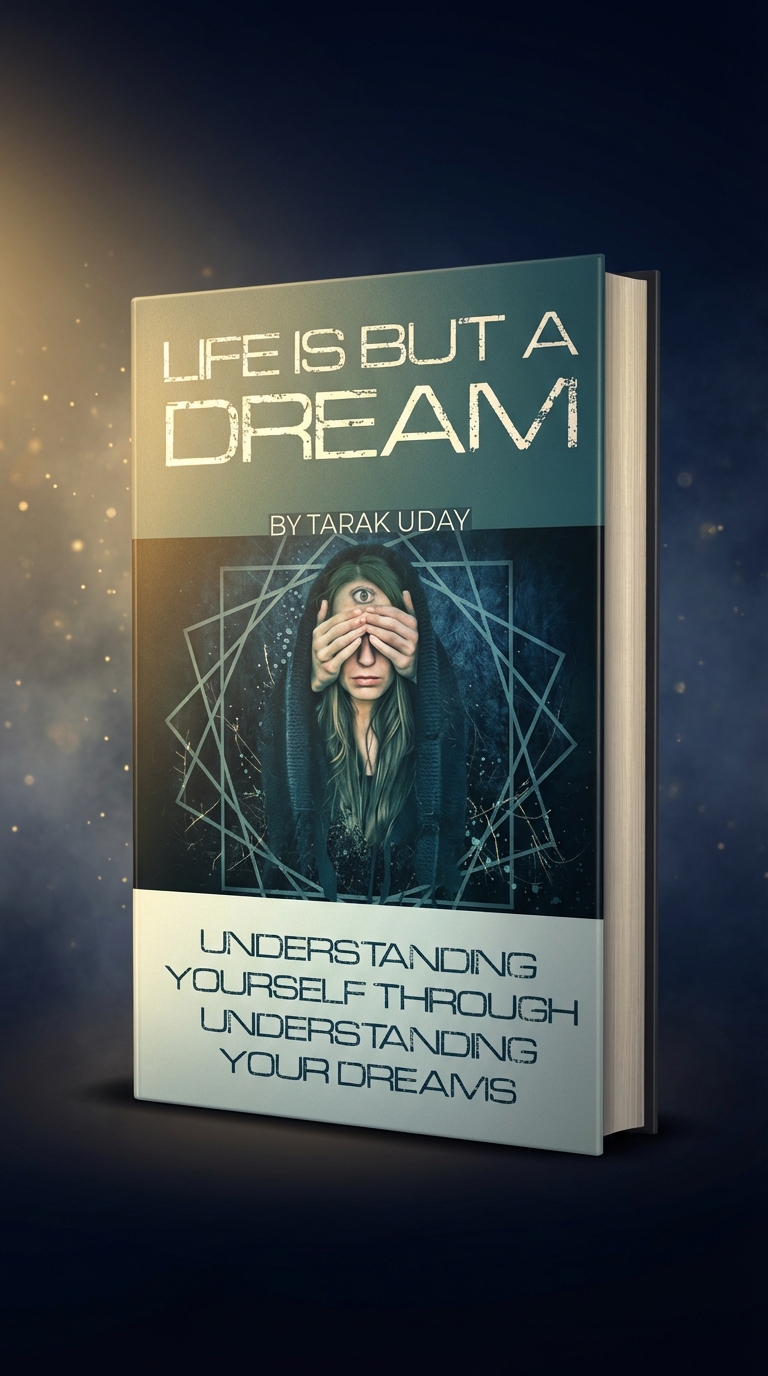
Learn The Language Your Dreams Speak
"Life Is But a Dream" teaches the Universal Language of the Mind — how to read any dream symbol by what it is and what it does, so every dream becomes a message you can act on.
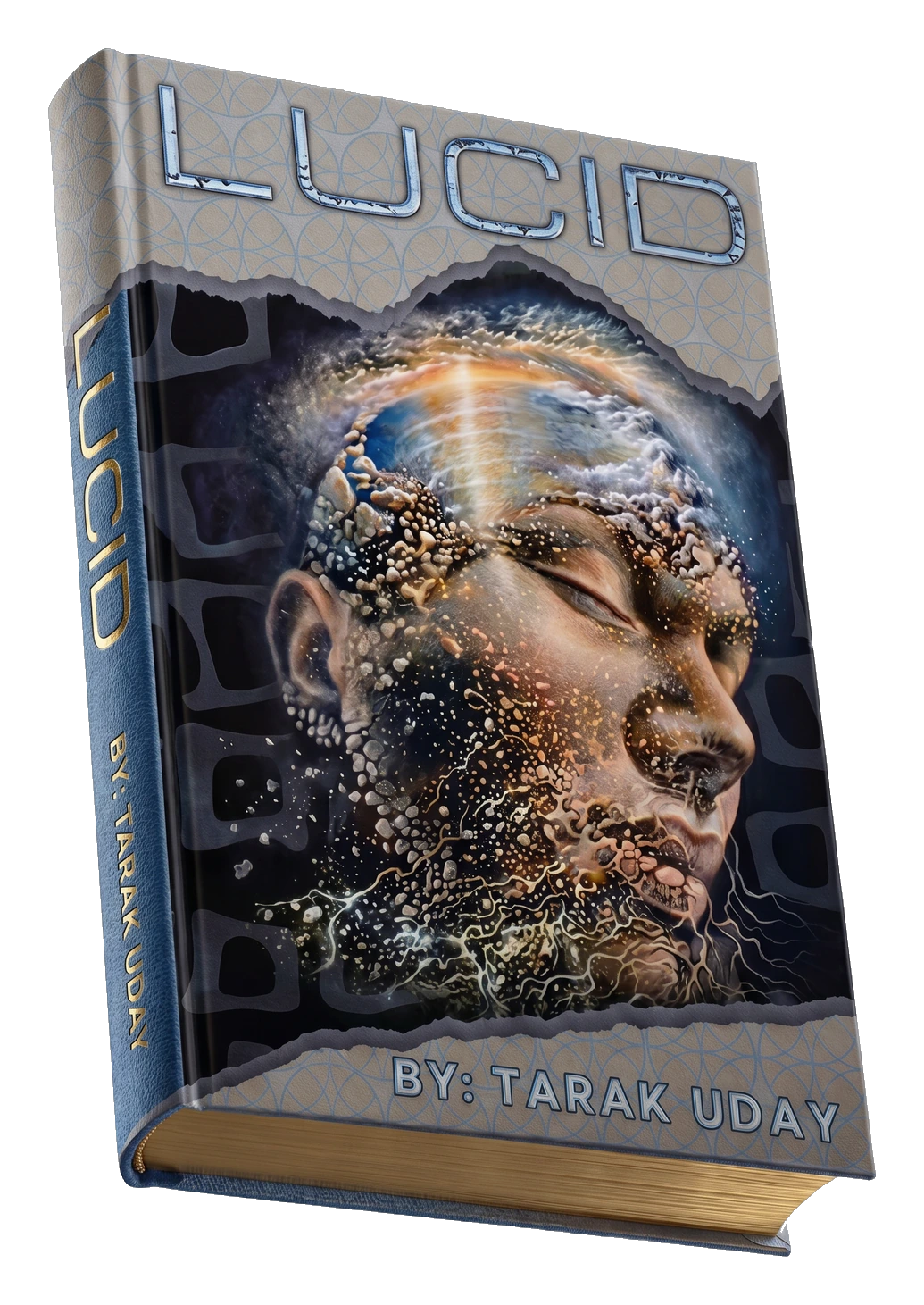
LUCID
You've tried every lucid dreaming technique. Most miss the root cause. LUCID reveals what they all skip.
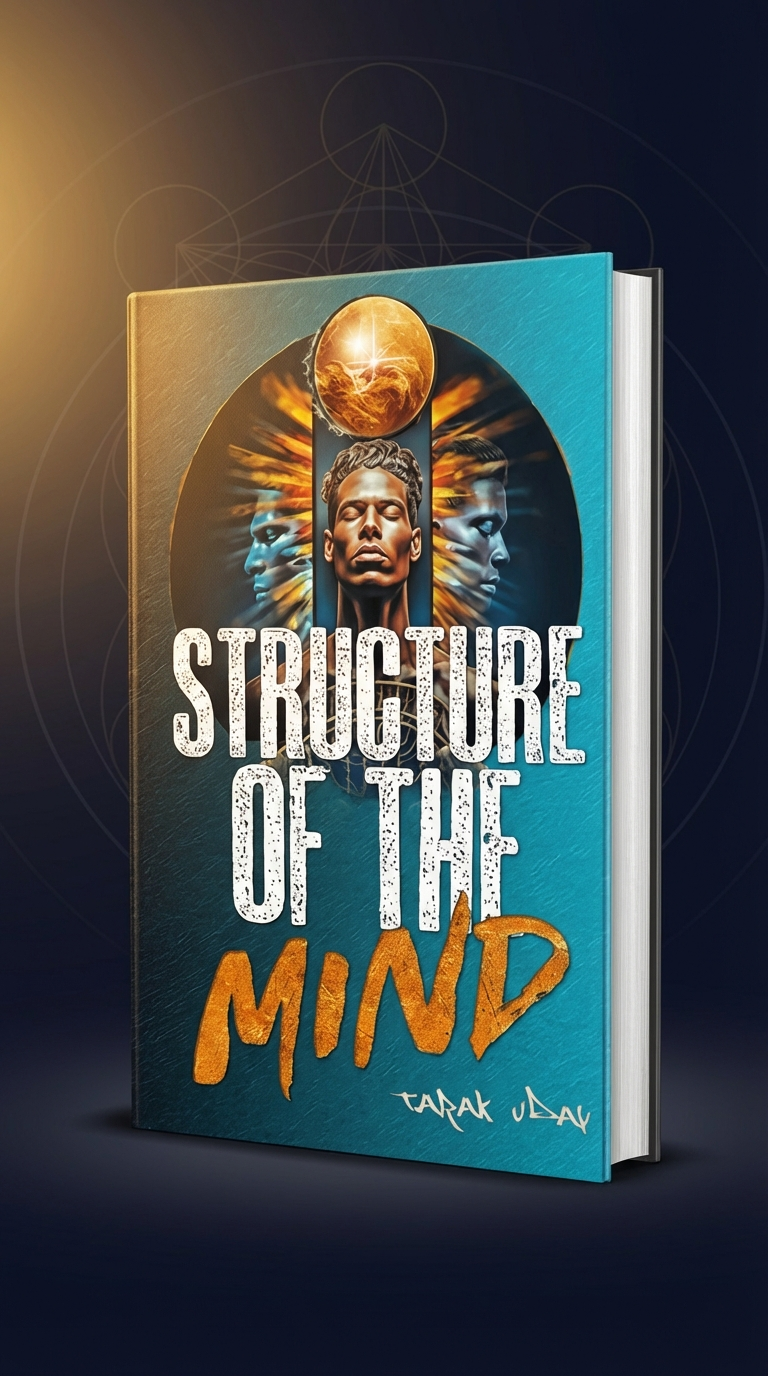
Understand Your Own Mind
"Structure of the Mind" reveals the three divisions of mind, seven levels of consciousness, and powers of mind that most people never learn to develop.