
Dream About Your Hair Falling Out
Why your subconscious mind shows you thoughts leaving, not hair


You're standing at the mirror, or maybe running your hands through it the way you do a hundred times a day without thinking, and it comes away in your fingers. A whole handful. Then another. You're not bleeding, it doesn't hurt, and that's somehow the worst part — it's just leaving, quietly, faster than you can catch it. You wake up and your hand goes straight to your head to check. It's all still there. So why does the dread stay all morning?
Here's what nobody tells you about that dream: it was never about your hair. Your subconscious mind doesn't file grooming reports while you sleep. It was talking about your thoughts — and it chose the one image on your whole body that means exactly that.
In the Universal Language of the Mind, hair represents thoughts. Hair falling out in a dream is your subconscious mind showing you that thoughts you once held — ideas, plans, convictions, a sense of your own capability — are leaving your awareness faster than you're replacing them.
Why does your subconscious mind reach for hair when it wants to talk about thoughts?
Dreams don't use words. They use pictures, and every picture is chosen for one reason: what the thing does. This is the whole hinge of dream interpretation, and it's the piece almost everyone misses. You don't ask what hair symbolizes. You ask what hair does.
So look at it plainly. Hair grows out of your head. It's the visible, outward expression of something happening inside your skull. It's produced continuously, it's yours, it's personal, and other people see it before they see anything else about you. Now describe a thought using those same words. It forms in your head. It's an outward expression of inner activity. You produce them continuously. They're yours, they're personal, and they're the first thing others actually meet when they meet you.
Same function. That's why your subconscious mind grabbed it. Tarak Uday teaches this as the working core of the Universal Language of the Mind: the picture is never arbitrary, and it's never poetic. It's mechanical. Your subconscious mind is the most precise communicator you will ever meet — it just refuses to use English.
Your dream didn't say "you're getting older." It said "you're losing thoughts." Those are not the same sentence, and only one of them is actionable.
What is actually falling out when your hair falls out in a dream?
Thoughts, yes — but be specific, because vague interpretation is just entertainment. Something particular is leaving you, and the dream is telling you it's leaving without your consent. You're not cutting it. You're not shaving it. It's falling.
That distinction matters more than anything else in the dream. A haircut is a decision — that's you deliberately releasing thoughts you've outgrown, and it's a healthy image. Falling is different. Falling means depletion happening below the level of your attention. Something is draining your thinking and you haven't consciously agreed to it.
So the honest question isn't "what does this mean." It's "what have I stopped thinking?" Somewhere in your waking life there's a subject you used to have opinions about and now you just go quiet. A plan you had detailed convictions about that's now a shrug. A version of yourself you used to be able to picture clearly and now can't quite bring into focus. That's the handful in the sink.
Does hair loss in a dream mean you're losing your personal power?
Often, yes — but not the way self-help language means it. Personal power isn't a mood. In the mind, your power is your ability to hold a thought steady long enough for it to become something. That's it. That's the entire mechanism. Thought held with attention and emotion moves outward through your subconscious mind and shows up in your life as circumstance. Every single thing you've ever built started as one thought you refused to drop.
So when thoughts start slipping out of your hands, your power to create anything at all goes with them. Not because the universe punished you — because the pipeline is empty at the top. You can't manifest what you've stopped thinking.
This is why the dream carries so much dread relative to how harmless it looks. Nothing violent happens. Nobody attacks you. And still you wake up hollow, because your subconscious mind isn't reporting an injury — it's reporting an erosion. Erosion is scarier than injury, and some part of you already knows it.
Had this dream more than once? Repetition isn't your mind being dramatic — it's your mind being patient. It'll keep sending the picture until you answer it. Decode your hair dream with CHITTA and get the specific reading for what your subconscious mind is pointing at.
What waking-life situation is your dream pointing at?
Dreams are about the last day or two. Not your childhood, not your past life — the recent hours, because your subconscious mind reviews what you just did and reflects it straight back while you sleep. So put the dream next to the last 48 hours and look for the overlap.
Where were you handing your thinking to somebody else? Where did you have a position and then quietly abandon it because holding it cost too much? Where are you so drained by output that there's nothing left going in? Depletion has a hundred faces — overwork, a relationship where your opinion stopped landing, a job that only wants your hands, a stretch of months where you consumed everybody else's thoughts and generated none of your own.
Tarak Uday takes this further in Life Is But a Dream, his guide to reading every dream in the Universal Language of the Mind.
The details of your dream narrow it further. Falling out in front of other people points at self-image — thoughts about how you're perceived. Falling out in private points at conviction — thoughts you hold about yourself when nobody's watching. Falling out in clumps says it's happening in identifiable chunks, one area of life at a time. Thinning gradually says it's diffuse, and you've been letting it happen for a while.
None of this is prediction. Your dream isn't warning you about future baldness or illness. In the Universal Language of the Mind a dream is always a message about the dreamer's mind, at the time of the dream, from the dreamer's own subconscious mind. It's the most loyal correspondence you'll ever receive.
How do you answer a hair-falling-out dream instead of just reading it?
Here's where most people stop, and it's the reason nothing changes. They look it up, they feel a flicker of recognition, they close the tab. The dream sends again next month. Reading a message isn't the same as replying to one.
You reply with thought — because thought is the currency the message was written in. Sit down and pick one subject you've gone quiet on. Just one. Then think about it deliberately, on purpose, long enough for it to take shape again. Write it out if that helps you hold it. What do you actually believe about this? What did you used to want here? What's the plan you stopped making?
That's not a coping exercise. That's you putting thoughts back into the system your dream just told you is running empty. Do it for a few days and watch what your dreams do. They shift, and they shift fast, because your subconscious mind responds to demonstrated attention the way anything alive responds to being fed.
The dream was never a threat. It was an inventory. Your subconscious mind counted what you're carrying, noticed the gap, and drew you a picture you couldn't ignore. The hair on your head is fine. The question it asked is still open, and it's the only one worth answering: what have you stopped thinking, and are you going to pick it back up?
Frequently Asked Questions



Books by Tarak Uday

Learn The Language Your Dreams Speak
"Life Is But a Dream" teaches the Universal Language of the Mind — how to read any dream symbol by what it is and what it does, so every dream becomes a message you can act on.

LUCID
You've tried every lucid dreaming technique. Most miss the root cause. LUCID reveals what they all skip.
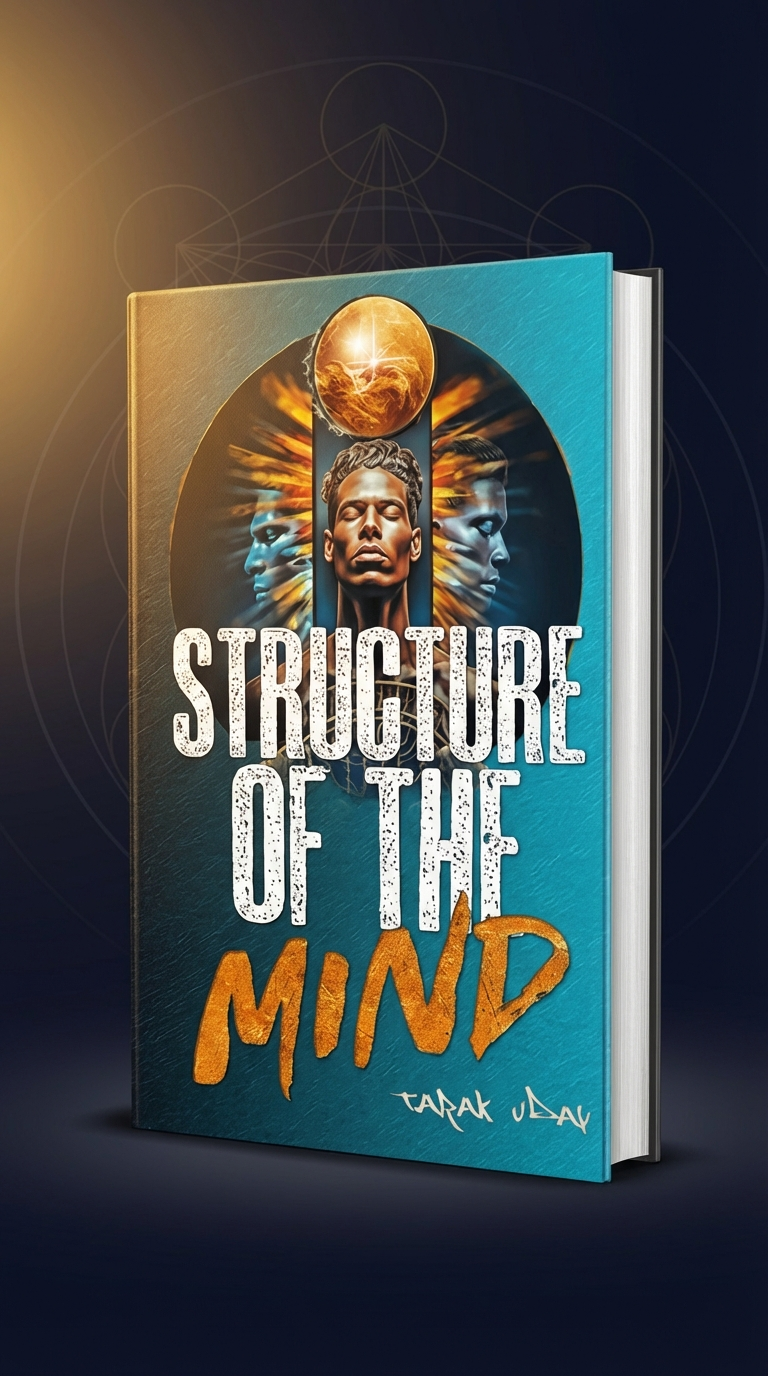
Understand Your Own Mind
"Structure of the Mind" reveals the three divisions of mind, seven levels of consciousness, and powers of mind that most people never learn to develop.