
Drowning in Dreams: What Your Subconscious Is Really Telling You
You wake up gasping. Here is what is actually happening in your subconscious and how to stop the dream from coming back.
So you woke up gasping. The water was over your head, your arms would not work, and the surface was right there but you could not reach it. And now you are sitting at your kitchen table wondering what your subconscious was actually doing to you last night.
Here is the short answer first, because this one matters and you should not have to scroll.
So now let us go deeper, because most of what you have read about drowning dreams up to this point is wrong, and the wrong version keeps you stuck.
What does drowning actually mean in the Universal Language of Mind?
Look, your subconscious mind does not speak English. It does not speak Spanish, Hindi, French, or any spoken language. It speaks in images, and those images mean exactly what they DO, not what they look like. This is the principle of form-and-function, the foundational rule of the Universal Language of Mind. According to the Universal Language of Mind taught by Tarak Uday, every dream symbol means precisely what that symbol does in the dream itself.
So what does water do? Water is the medium in which physical life takes place. Without water, no living body functions. Inside the symbolic mind, water is the canonical image for the experiences of your conscious life, the stream of waking events you swim through every day. The Dream Symbol Dictionary is explicit on this: water is conscious life experiences. Not emotions generically. Not the unconscious in some Freudian sense. Conscious life experience.
And what does drowning do? Drowning is the function of being submerged below the surface of water, unable to breathe, unable to act, unable to rise. So when your dream shows you drowning, your subconscious is showing you that the volume of waking-life experience has risen above your capacity to process it. You are submerged. You cannot breathe, meaning you cannot take in any more. You cannot rise, meaning you cannot pivot to a different stance toward your life. That is the mechanic. That is exactly what it does.
This is the difference between a metaphysical mechanic and a spiritual meaning. A spiritual meaning would say this symbolizes your fear of losing control. A mechanic tells you precisely what your mind is doing and precisely what you must do about it. The mechanism is overload. The action is decompression. We will get to the action soon.
Why does this happen right when life feels manageable on the surface?
This is the part almost nobody gets right, so pay attention. The drowning dream rarely shows up during the visible crisis. It shows up two or three nights later, when the visible crisis has settled and you are convinced you have handled it. That is when your subconscious finally has the bandwidth to show you what you actually pushed down.
Here is how the mechanics actually work. Your conscious mind is the part of your mind your physical body uses in this three-dimensional reality. According to the Structure of the Mind framework taught by Tarak Uday, the conscious mind has a limited processing capacity. When a difficult experience hits, a fight, a loss, a financial shock, a humiliation, a sustained anxiety, the conscious mind takes whatever it can and pushes the rest down into the subconscious for later processing. The subconscious does not argue. It absorbs.
But the subconscious also has a queue. And when that queue gets long enough, it starts speaking up at night. In images. In water rising. In hands that will not paddle. In a surface you can see but cannot break.
So if you have had a drowning dream, ask yourself this: what did I have to keep moving through this week without actually processing? Not the obvious crisis. The smaller things you did not have time to feel. The phone call you took on the way to a meeting and never thought about again. The conversation that ended uncomfortably and you decided to just move past. Your subconscious does not move past. It saves the receipt.

Bindu says: The dream is not the problem. The dream is the receipt of a problem you tried to skip. Read the receipt.
What is the difference between drowning, struggling to swim, and being pulled under?
So a lot of people lump these together and they should not. Each variation has its own metaphysical reading because each one is doing something slightly different inside the symbolic logic.
Drowning, in the strict form, is the moment you have already gone under. You are below the surface. You cannot breathe. This means the backlog has already overtaken your conscious capacity. You are operating in a sustained state of overwhelm and you may not have admitted it to yourself yet. The body knows. The dream shows you the body knows.
Struggling to swim is different. You are still on the surface but your strokes are not working. You are flailing. This is the dream that shows up earlier in the overload curve, the experiences have not fully submerged you yet, but you can feel that your usual coping moves are not enough anymore. This is the wake-up call before the wake-up call.
Being pulled under by something, a current, a hand, a creature, adds another layer. Now the dream is telling you that a specific element of your waking life is the active pull. The current is a circumstance you keep returning to. The hand is a relationship that is draining you. The creature is an inner pattern, a fear-self that is grabbing your ankle from below. Whatever the puller is, the symbol is asking: what do you keep going back to that is actively dragging you under?
And then there is the variation almost nobody asks about, drowning in calm water. Still surface. No storm. Yet you cannot rise. This is the most important one, because it tells you the overwhelm is not dramatic. It is quiet. It is the accumulated weight of an ordinary life you never paused inside. Quiet drowning is the dream of high-functioning exhaustion. If you have had this version, you have been told your life looks fine on the outside while you have been suffocating on the inside for a while.
Stop guessing what your drowning dream means
Your subconscious is showing you the exact pattern. The Universal Language of Mind decodes it in seconds, not generic interpretations, the actual mechanic.
Decode Your Dream NowWhat waking-life event is your subconscious actually responding to?
So this is the bridge from dream to waking life, and it is the part you can actually act on. The drowning dream is almost always a delayed response to something that happened in the last twenty-four to seventy-two hours. Not always something obvious. Sometimes a phone call. Sometimes a piece of news you scrolled past. Sometimes a small interaction with a partner or a parent that touched a much older wound.
Here is the diagnostic. Sit down with a notebook. Do not open your phone. Write down everything that happened in the last three days, meetings, conversations, news you consumed, decisions you avoided. Now go through that list and put a small mark next to anything that produced any internal flinch when you wrote it down. Not a thought. A flinch. The subconscious flags by feeling, not by reasoning.
The flinches are your evidence trail. Those are the experiences your conscious mind absorbed without processing. That is the water that has risen above your head. The dream is showing you the total, but the diagnostic shows you the parts. And here is what is interesting, you almost certainly already know which one is the heaviest. You knew it before you wrote it down. The drowning dream just made you finally look.
This is why a generic dream dictionary cannot help you. It cannot ask you what happened on Tuesday. The Universal Language of Mind framework can, because it gives you the mechanism, and you supply the content from your own life. That is the bilingual principle: the surface meaning is universal, but the specific waking-life referent is yours alone.
How do you actually resolve the dream and stop it from coming back?
So here is where most articles stop. They tell you the meaning and leave you with the meaning. That is information, not transformation. We are not doing that.
The drowning dream is asking for one thing: decompression. The water is too high because you did not release. You absorbed and never exhaled. So the resolution has three moves, and they have to happen in this order.
First, you have to acknowledge the flinches without trying to fix them. Sit with them. Name them out loud. I had a hard call on Monday. The thing with my sister is not done. I am avoiding the doctor appointment. Name without solving. This is the breath. The subconscious processes through naming. Most people skip this step because they want to jump straight to fixing, and fixing without naming just adds more water.
Tarak Uday takes this further in Life Is But a Dream, his guide to reading every dream in the Universal Language of Mind.
Second, you have to release one of the flinches through expression. Write it out in full. Tell someone you trust the full version, not the polished version. Cry if it wants to come up. Move your body. This is the exhale. One full release lowers the water level meaningfully. You do not have to release everything at once.
Third, you have to change your intake until the level stabilizes. This is the unglamorous part. If you keep absorbing at the same rate you have been absorbing, the dream will come back next week. So you take one week and you say no to one new commitment, you skip one news cycle, you do not open the group chat for an evening. You give your subconscious processing room. The dream stops coming back when the capacity catches up to the load.
According to the Universal Language of Mind taught by Tarak Uday, the drowning dream is not a verdict. It is a calibration signal. Your subconscious is doing its job, telling you the load is exceeding the capacity. Your job is to listen and adjust. When you do, the dream evaporates. It evaporates because it no longer has a function to perform.
And here is the part nobody tells you. When you actually do these three moves, the drowning dream often returns one more time, and this time you swim. You rise. You break the surface. That is the confirmation dream. That is your subconscious telling you the calibration is working. If you have ever had that, the dream where you suddenly remember you can swim, that was not random. That was your mind reporting back.
What does drowning in dreams tell you about your inner life long term?
Look, one drowning dream is a calibration signal. A recurring drowning dream is something else. If this dream has come back to you across months or years, your subconscious is telling you that the pattern of overload is structural, not situational. The water keeps rising because the way you have built your life keeps producing more water than you can process.
This is where the dream stops being about a single week and starts being about a deeper question. What are you saying yes to that you should be saying no to? Where is your sense of obligation outrunning your actual capacity? Whose life are you carrying that is not yours to carry? In Life is But a Dream by Tarak Uday, the recurring symbol is treated as a structural diagnostic, the symbol returns because the underlying mechanic has not changed.
The good news is that the structural reading is also the most fixable. Once you see that your conscious life is producing more water than your subconscious can process, you have a clear engineering question rather than a vague emotional one. You can lower the inflow. You can increase the outflow. You can build margin. The drowning dream stops returning when the structural overload is corrected.
This is the methodology Tarak Uday teaches across the corpus, the dream is not a mystery to be solved, it is a signal to be calibrated against. Master the signal and the signal does not need to keep firing. Drowning is one of the clearest signals your subconscious has in its vocabulary. Learn to read it, answer it, and the dream serves its purpose and goes.
Get clarity on every recurring dream
Drowning, being chased, blood, the patterns connect. CHITTA reads your full dream history through the Universal Language of Mind so you can see the structural picture, not just one night.
Start Decoding Your DreamsSo the next time you wake up gasping, you do not have to be afraid of the dream. You have to read it. Then you have to answer it. And the dream, once it has been answered, does not come back. That is how the Universal Language of Mind actually works.

Frequently Asked Questions


Books by Tarak Uday

Learn The Language Your Dreams Speak
"Life Is But a Dream" teaches the Universal Language of Mind — how to read any dream symbol by what it is and what it does, so every dream becomes a message you can act on.

LUCID
You've tried every lucid dreaming technique. Most miss the root cause. LUCID reveals what they all skip.
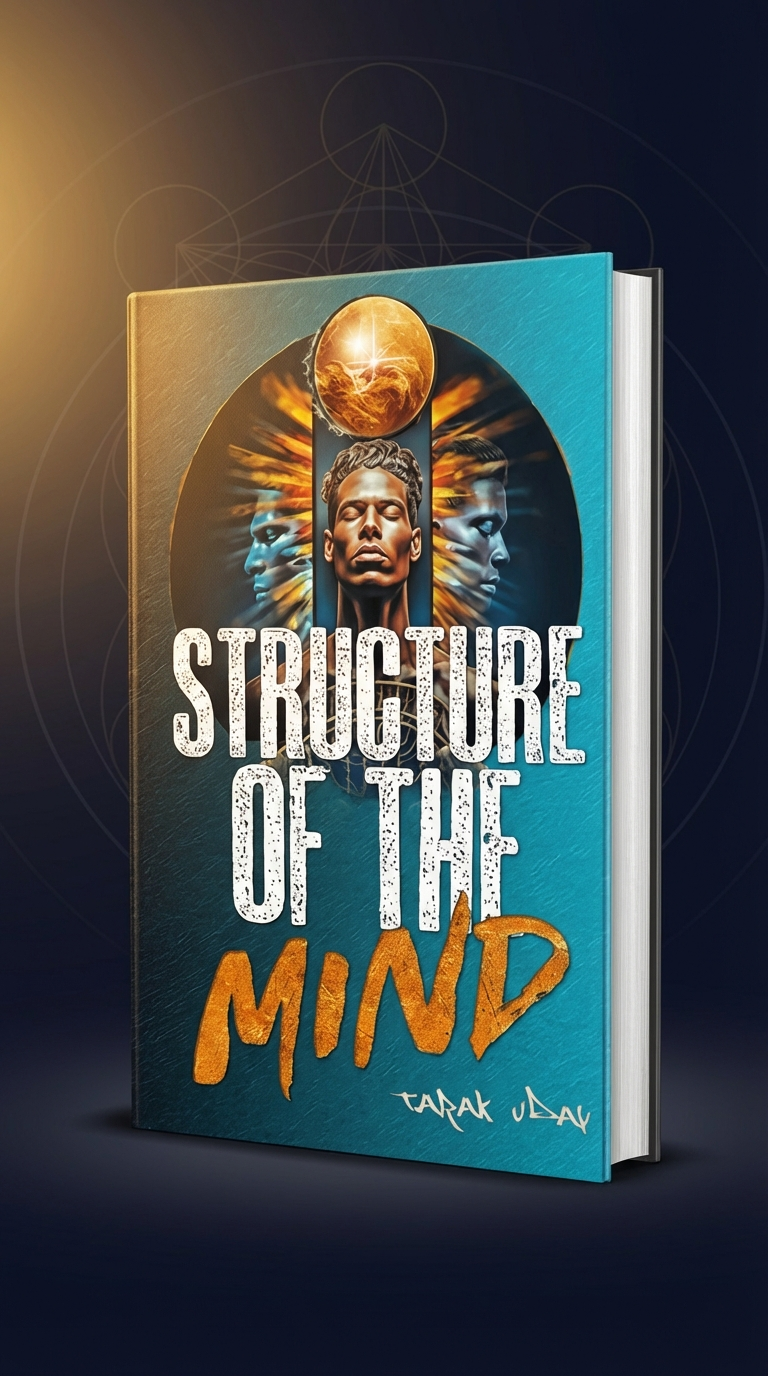
Understand Your Own Mind
"Structure of the Mind" reveals the three divisions of mind, seven levels of consciousness, and powers of mind that most people never learn to develop.