
How to Navigate Your Lucid Dreams — Where Your Attention Goes, You Go
Flying, teleporting, talking to dream characters, changing scenes — the complete guide to movement and control inside a lucid dream.
You're in. Whether through the Wake Back to Bed method or the WILD technique, you're inside the dream with conscious awareness.
Now what?
The first thirty seconds determine everything. And the single principle that governs every movement, every interaction, every moment of control inside a lucid dream is this: you are where your attention is.
This is not a metaphor. This is the fundamental law governing your consciousness at all times — waking and dreaming. Where you place your attention, your consciousness follows. Master this principle and you can navigate anywhere, interact with anything, and sustain the experience as long as your concentration holds.
The First 30 Seconds — Don't Blow It
Your immediate instinct is going to be excitement. "It worked! I'm dreaming!" That excitement, if unchecked, is what ends the experience before it begins. The emotional spike destabilizes the delicate state you're in.
Your concentration training prepared you for exactly this moment. You sat in front of that candle flame while distractions arose — thoughts, itches, restlessness — and you held steady. This is that moment. The distraction isn't an itch. The distraction is euphoria.
Ground yourself immediately with three anchors:
- Look at your hands. This anchors your awareness in the dream body. Your hands may appear larger than normal — these are your astral hands. The act of looking at them stabilizes the connection between your physical body and your projected consciousness.
- Touch a surface. Feel the ground beneath your feet. Run your hand along a wall. Pick up an object — feel its weight, texture, temperature. Tactile engagement anchors you into the environment.
- Speak aloud. Say "I am aware. I am dreaming. I am here." Or simply "Clarity now!" Speaking engages the auditory sense and can sharpen the entire experience instantly. Many practitioners find that demanding clarity verbally produces immediate results — colors brighten, details emerge.
What you should NOT do: don't try to fly. Don't reshape reality. Don't attempt anything dramatic. Not yet. Let the experience settle. Let your awareness anchor. THEN move.
Maintaining Lucidity — Stay Active or Lose It
Lucidity requires active participation. The moment you stop engaging — standing passively, letting your mind drift, not paying attention — the experience dissolves. Think of it like holding a station on an old radio dial. Hold it steady and you hear the broadcast. Let go and you get static.
Every few minutes, remind yourself: "I am dreaming. I am aware." The dream state is seductive — it feels so real that it's remarkably easy to forget you're dreaming and slip back into unconscious participation.
Your subconscious is not your enemy here. It's the other half of you. You've been building a relationship with it for months through dream interpretation. When you approach the dream with curiosity and respect rather than trying to dominate it, stability comes naturally.
When the Dream Starts to Fade
Colors dimming. Details blurring. A sense of pulling back toward the physical body. You have several tools:
- Rub your hands together vigorously. Tactile engagement snaps the experience back into clarity.
- Touch surfaces aggressively. Grab something and squeeze it. Feel the wall. Feel the ground.
- Demand clarity. Speak aloud: "Clarity now!" or "Stabilize!" The dream environment responds to firm intention.
- Glance at your hands. Briefly looking at your hands sends an energetic pulse back to the physical body, providing a boost of energy that extends the experience. Repeat every thirty seconds if the experience wavers.
- Spin slowly. Engages the vestibular sense and can stabilize a wavering experience. Use cautiously — it can shift you to a different scene entirely.
Even when the dream fades entirely to black — the experience is not necessarily over. Use your willpower. Visualize the environment with full sensory immersion and WILL yourself back into it. The visualization skill you've been building is this exact ability applied in real time.
Dream Navigation — How to Move
Walking and running
The simplest form. Walking feels natural because your subconscious is deeply familiar with it. This is the recommended starting point. Nothing fancy. Just walk. Explore while you build comfort with being lucid.
Flying
The classic lucid dreaming experience. But the gravity habit is strong.
For beginners: start by skimming — moving along the ground, building speed, then leaping upward. Think of a water bird taking off from a lake. Forward momentum overcomes the initial resistance. Flapping your arms helps — your subconscious interprets the action as "this is how we fly" and cooperates.
Once airborne: do NOT think about gravity. Thinking about falling causes falling. Thinking about height reminds your subconscious of the gravity habit. Instead, feel yourself moving through the air. Look toward where you want to go. Let the experience be its own thing.
Advanced flying comes with practice. Eventually you won't need a running start. You'll simply intend to rise — feel yourself becoming lighter, feel the ground dropping away. Just intention and attention.
Warning: excitement during flight is one of the most common causes of losing lucidity. Adopt a calm observer attitude — enjoy the experience fully but control the emotional surge. You can feel wonder without exploding with excitement.
Changing scenes
Walk through a door. As you approach, hold an intention for what you want to find on the other side. Open the door and walk through. The dream generates the intended scene.
You can also create doors where none exist. Look at a wall and intend for a door to appear. Or walk toward a wall expecting to pass through it — many practitioners find they can walk through solid surfaces by simply intending to. Your expectation IS the physics engine.
Teleportation
Close your eyes within the dream. Hold the destination firmly in mind with full sensory immersion — see it, hear it, feel the air, the temperature, the ground. Open your eyes. If your intention and attention were strong enough, the new environment is there.
This works for locations you've visited physically, places you've seen in photographs, and even locations you've imagined.
Talking to Dream Characters
Every person in the dream is an aspect of your own consciousness. They are CHARACTER-istics of your own PERSON-ality. In a lucid dream, you can approach them consciously.
Ask them: "Who are you?" "What do you represent?" "What do you want me to know?" Answers may come as words, symbolic actions, environmental shifts, or feelings. Not all dream characters will be articulate — some represent aspects without a verbal component. But many respond, and the information is profoundly insightful.
When dream characters react badly
There's a trending conversation online — Reddit, TikTok, YouTube — about dream characters becoming hostile when questioned. People ask "What time is it?" and the character goes ballistic. This has fueled theories about simulations and NPCs in the matrix.
All of it misses the point entirely.
Dream characters are aspects of YOUR consciousness. If you approach an unfamiliar part of yourself and it becomes irate — that is YOUR tendency to become irate when YOU are disturbed. The dream character isn't malfunctioning. It's showing you EXACTLY what it represents. It's an unfamiliar aspect of yourself demonstrating the quality it embodies.
When I mention this to people, they often get defensive and upset — which is itself the very quality in action. Live and in person.
Here's the beautiful part: they shouldn't feel bad about this. The dream already told them they're unfamiliar with this aspect — that's why it appeared as a stranger. The work isn't to feel ashamed. The work is to become aware of it so it can be addressed and transformed.
When encountering hostile dream characters, try: "How can I help you?" This shifts confrontation to compassion. You're not interrogating an aspect of yourself — you're approaching it with care.
Tarak Uday takes this further in LUCID, his book on becoming aware inside the dream.
Asking the Dream Itself
Beyond individual characters, you can speak to the dream environment as a whole. Address your subconscious directly: "What do I need to know?" "Show me what I need to see." "What is the message?"
This often produces immediate and powerful responses — the environment shifts, a new scene appears, a character approaches with information, or a feeling washes over you that carries understanding without words.
Reading the Universal Language in Real Time
This is where everything converges. You're lucid. You know the Universal Language of the Mind. You can interpret the experience as it unfolds:
- A house — a state of mind. Mansion or shack? Bright or dark?
- Water — a life experience. Calm or turbulent?
- People — aspects of yourself. Familiar or strangers? Male (conscious mind) or female (subconscious mind)?
- Animals — habitual thought patterns. Wild or domesticated?
- Light or dark environment — awareness or unawareness
- Moving toward or away — approaching/integrating or avoiding
You're reading the messages AS THEY HAPPEN instead of waiting until morning. This real-time interpretation transforms lucid dreaming from a novelty into the most powerful tool for consciousness development available. No other source teaches this because no other source gives you the language first.
Troubleshooting
Waking up immediately. The excitement problem. Ground immediately. Hands, touch, speak. With repeated experience, the novelty fades and stability improves.
Dream fading to black. Not necessarily over. Visualize the environment. Demand clarity. Rub hands. The blackout is often temporary.
False awakenings. You think you woke up but you're still dreaming. Morning routine feels slightly off. Perform a genuine reality check every time you wake from a lucid dream — look at your hands, check a clock, try pushing a finger through your palm.
Environment not responding to intentions. You may be trying too hard. There's a difference between willful intention (which works) and effortful straining (which creates resistance). Lighten your approach. Intend, don't force.
Frightening imagery. Everything is an aspect of you. If you've been doing the foundational work, much shadow material has already been processed. If something frightening appears, command it to leave or ask "How can I help you?" You can also shift environments by visualizing a new location with full sensory immersion.
What to Do After Navigation
- Record everything immediately. Every detail — what you saw, heard, felt, who was there, what the environment looked like, what you did.
- Decode the experience. Type it into CHITTA. Even in a lucid dream, your subconscious was communicating through every symbol. The house, the water, the people, the animals — all of it carries meaning.
- Note your navigation. What worked? What didn't? How long did you stay? What ended it? This data refines every future experience.
- Apply what you learned. The real-time interpretation continues into waking life. Whatever your subconscious showed you while you were lucid is directly applicable to your current life situation.
Where Your Attention Goes, You Go
Every technique in this article traces back to one principle. Where you place your attention — with intention, with sensory immersion, with willpower — that's where your consciousness goes. That's where you stabilize. That's where you move. That's what you interact with.
The candle flame exercise wasn't just about building concentration. It was training the exact skill you use to navigate the inner levels of your own mind. Every time you held your attention on that flame while distractions pulled at you — you were rehearsing for this moment.
Now you're inside. Navigate.
GO WITHIN>>> OR GO WITHOUT.

Frequently Asked Questions


Books by Tarak Uday

LUCID
You've tried every lucid dreaming technique. Most miss the root cause. LUCID reveals what they all skip.

Learn The Language Your Dreams Speak
"Life Is But a Dream" teaches the Universal Language of Mind — how to read any dream symbol by what it is and what it does, so every dream becomes a message you can act on.
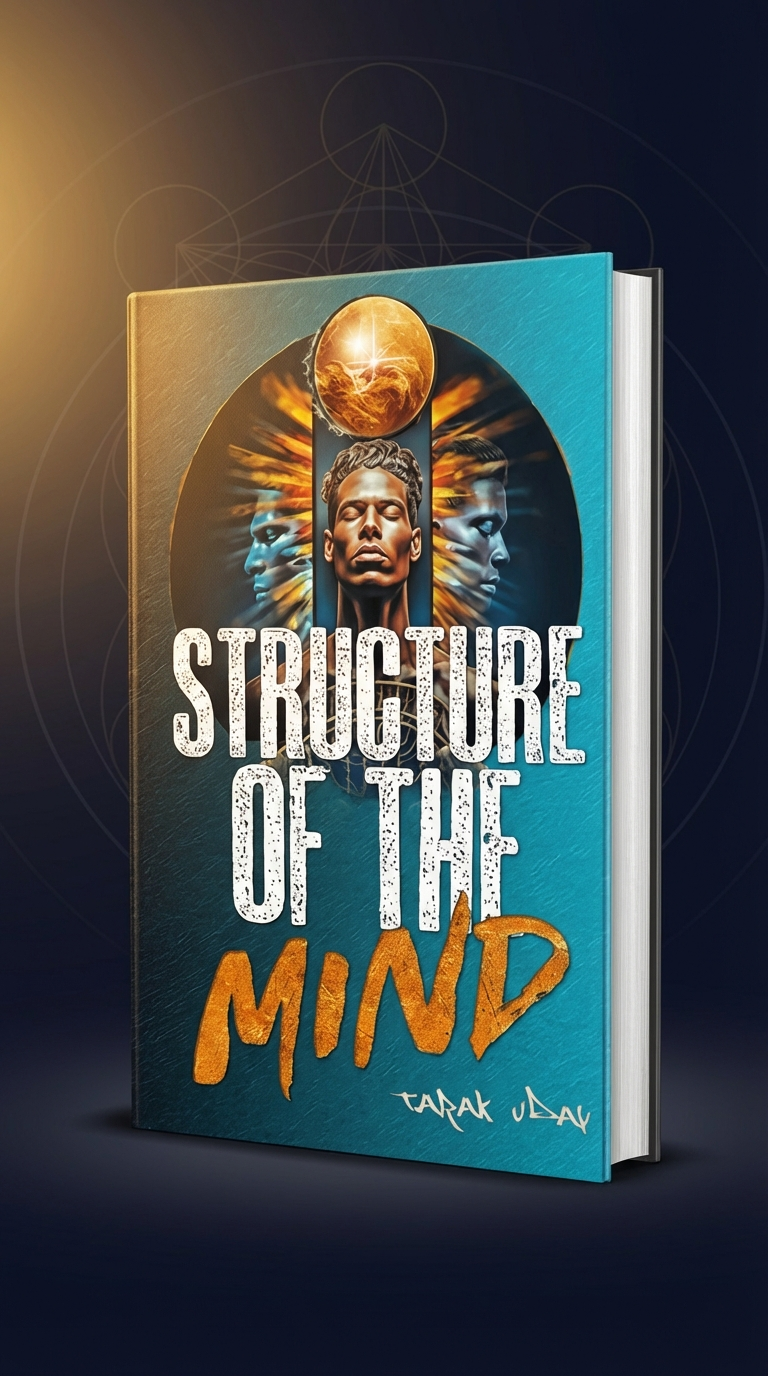
Understand Your Own Mind
"Structure of the Mind" reveals the three divisions of mind, seven levels of consciousness, and powers of mind that most people never learn to develop.