How to Overcome Fear in Lucid Dreams — Turn Terror Into Transformation
Fear in a lucid dream is not an attack. It's your own unresolved material asking to be faced. Here's how to face it — and why facing it changes everything.
You become lucid in a dream. You realize you're dreaming. And then — something terrifying appears. A dark figure. A hostile presence. The environment shifts to something nightmarish. Your instinct screams: wake up. Run. Get out.
That instinct is wrong. And following it is the single biggest mistake lucid dreamers make.
The fear you encounter in a lucid dream is not an external attack. It is not a demon. It is not a hostile entity from another dimension. It is your own unresolved material — aspects of your consciousness that you haven't faced, haven't integrated, haven't made peace with. They appear dark because you are UNCONSCIOUS of them. They appear hostile because you FEAR them.
And they are the most valuable thing you will ever encounter in a dream.
Why the Fear Appears
When you become lucid in a dream, your awareness expands. You're now CONSCIOUS in an environment generated entirely by your subconscious mind. And the subconscious holds everything — not just pleasant dreams and helpful symbols, but also the material you've been avoiding.
In regular dreams, you encounter this material unconsciously — it produces nightmares you wake from in a sweat. In lucid dreams, you encounter it CONSCIOUSLY — which means you have a choice that nightmare victims don't: you can face it.
The fear appears for specific reasons:
Unprocessed anger appears as aggressive figures — attackers, dark presences, hostile strangers. These are not enemies. They are YOUR anger, externalized by the dream environment so you can see it.
Buried shame appears as exposure scenarios — being naked, being judged, being humiliated. This is YOUR shame, made visible so you can address it.
Repressed grief appears as loss scenarios — loved ones disappearing, environments decaying, things you value being destroyed. This is YOUR grief, asking to be felt and processed.
Avoided guilt appears as pursuit — being chased, being hunted, being unable to escape. The chaser is always an aspect of yourself that you're running from.
In every case, the fear is not the problem. The avoidance is the problem. The fear is the subconscious's way of presenting the material you need to face. The lucid dream is the arena. And your awareness is the tool.
The Three-Step Protocol
Step 1: Recognize it as yours
The moment fear arises in a lucid dream, say to yourself — aloud, within the dream: "This is mine. This is an aspect of me. It cannot harm me because it IS me."
This cognitive reframe is everything. As long as you believe the fear is coming FROM something, you're a victim. The moment you recognize the fear is coming from WITHIN you — that the dark figure is a part of your own consciousness wearing a mask — the power dynamic shifts. You are not prey. You are the dreamer encountering their own reflection in a dark mirror.
Step 2: Face it directly
Turn toward the frightening element. Walk toward it. Do not run. Do not try to change the dream. Do not try to wake up. Move toward what scares you.
When you reach it, engage:
- "Who are you?"
- "What do you represent?"
- "What do you need from me?"
- "How can I help you?"
These questions transform the encounter from confrontation to communication. You're not fighting the shadow. You're inviting it to speak. And in the vast majority of cases — documented across thousands of practitioners — the shadow responds. It transforms. It communicates. It reveals what it actually is beneath the frightening exterior.
Step 3: Hold your ground with concentration
This is where the candle exercise proves its value beyond dream recall. The skill of holding steady attention through discomfort — trained by staring at a flame while your mind screams for distraction — is the EXACT skill needed to face fear in a lucid dream without flinching.
The fear produces a surge of emotion. Adrenaline. Racing heart. The urgent desire to flee or wake up. The concentration training has prepared you for exactly this — feeling the intensity without letting it move your attention. You feel the fear. You don't follow it. You stay.
And the staying is what transforms the encounter.
What Happens When You Face It
Practitioners who face their fear in lucid dreams consistently report one of these outcomes:
The figure transforms. The dark, hostile presence shifts form — becoming a child, a familiar person, a figure of light, or dissolving entirely. This represents the shadow material being SEEN and therefore losing its threatening disguise. What appears dark in unconsciousness appears benign — or even beautiful — in awareness.
The figure communicates. It speaks. It delivers a message — often the exact message the dreamer has been avoiding. "You need to forgive yourself." "You're angry about what happened." "You've been hiding this for years." The communication is typically brief, precise, and devastating in its accuracy.
The figure dissolves. Upon direct confrontation, the presence simply vanishes — like a shadow disappearing when you turn the light on. This is literal: shadow is the absence of light (awareness). Add awareness and the shadow cannot persist.
The environment transforms. The entire dream landscape shifts — dark becomes light, hostile becomes peaceful, nightmarish becomes beautiful. This represents the ripple effect of facing one piece of shadow material. When you integrate one unconscious aspect, the entire inner landscape recalibrates.
My Own Experience
For years I encountered a recurring shadow figure — a dark presence that would chase me through dreams. I perceived it as an external threat. Something attacking me. I ran every time.
When I began practicing with the Universal Language of the Mind and developing concentration through the candle exercise, the dreams evolved. The chase continued but I was more aware within them. Until one night — lucid, heart pounding, the figure behind me — I stopped running.
I turned around.
The figure stopped. I walked toward it. I said: "What do you represent?"
It didn't answer with words. It transformed. Into a version of me — angrier, harder, meaner. The part of me that gets confrontational when things don't go my way. The part I'd been pretending didn't exist.
I stood there and looked at it. And it looked at me. And the fear dissolved — not because the quality disappeared, but because I ACKNOWLEDGED it. I stopped running from my own anger. The dream transformed. The figure never returned.
Three months from first chase to final confrontation. The concentration training made it possible. The awareness made it transformative. And the willingness to face what I'd been avoiding made it permanent.
Common Fears and What They Actually Are
Dark figures or shadows: Unconscious aspects of self — qualities you don't acknowledge or have repressed. The darker and more featureless, the less conscious you are of what they represent.
Being chased: Running from an aspect of yourself. The chaser is always you. Always. Turn and face it.
Falling: Consciousness descending from a higher level. Not failure. Not loss of control. A dimensional shift that feels frightening when you don't understand the mechanics.
Paralysis: The natural biological function of REM atonia. Your body paralyzes during sleep to prevent you from acting out dreams. Becoming aware of it during a lucid dream transition is a checkpoint, not a threat.
Tarak Uday takes this further in LUCID, his book on becoming aware inside the dream.
Hostile environments: States of mind you've created through habitual negativity, unprocessed experiences, or avoided emotions. The environment IS your consciousness. A hostile environment reflects hostile inner conditions.
Entities or demons: Your own shadow material wearing a cultural costume. If your framework includes demons, your shadow will appear as demons. If your framework includes aliens, it appears as aliens. The content is cultural. The SOURCE is always your own unresolved consciousness.
The Concentration Connection
Fear in a lucid dream is a concentration test. That's all it is.
Can you maintain awareness — stay present, stay lucid, stay engaged — while your emotional system is flooding you with signals to run? The candle exercise trains exactly this. Every time you sit in front of the flame and your mind pulls you away and you RETURN — you're training the skill of staying present through discomfort.
Practitioners with strong concentration practices report significantly less fear in lucid dreams — not because they encounter less shadow material, but because they have the capacity to HOLD the encounter without destabilizing. The fear arises. They feel it. And they stay anyway.
That staying — that willful, trained, deliberate presence in the face of what frightens you — is the single most transformative act available in consciousness development.
Why This Matters Beyond Dreams
Every fear you face in a lucid dream is a fear you carry in waking life. The shadow material that appears in your dreams runs your behavior during the day — you just can't see it because it operates beneath conscious awareness.
The anger you face in a dream is the anger that makes you snap at people in traffic. The shame you confront is the shame that keeps you from being vulnerable. The guilt you acknowledge is the guilt that drives your people-pleasing.
When you face these qualities in a lucid dream — in their native environment, in symbolic form, with full awareness — you integrate them faster and more completely than any waking-state technique can achieve. The dream is the subconscious's territory. Meeting the shadow there is meeting it on its own ground. The integration happens at the deepest level.
This is why lucid dreaming is not entertainment. It is not a novelty. It is the most direct path to genuine self-mastery — because it gives you conscious access to the parts of yourself that normally operate beyond your reach.
Tonight
If you become lucid tonight and something frightening appears — don't run. Don't wake up. Don't try to change the scene.
Turn toward it. Walk to it. Ask it what it represents.
What you find on the other side of that fear will be worth more than a hundred pleasant dreams. Because pleasant dreams confirm who you already are. Facing your fear shows you who you're becoming.
GO WITHIN>>> OR GO WITHOUT.

Frequently Asked Questions


Books by Tarak Uday

LUCID
You've tried every lucid dreaming technique. Most miss the root cause. LUCID reveals what they all skip.

Learn The Language Your Dreams Speak
"Life Is But a Dream" teaches the Universal Language of Mind — how to read any dream symbol by what it is and what it does, so every dream becomes a message you can act on.
Understand Your Own Mind
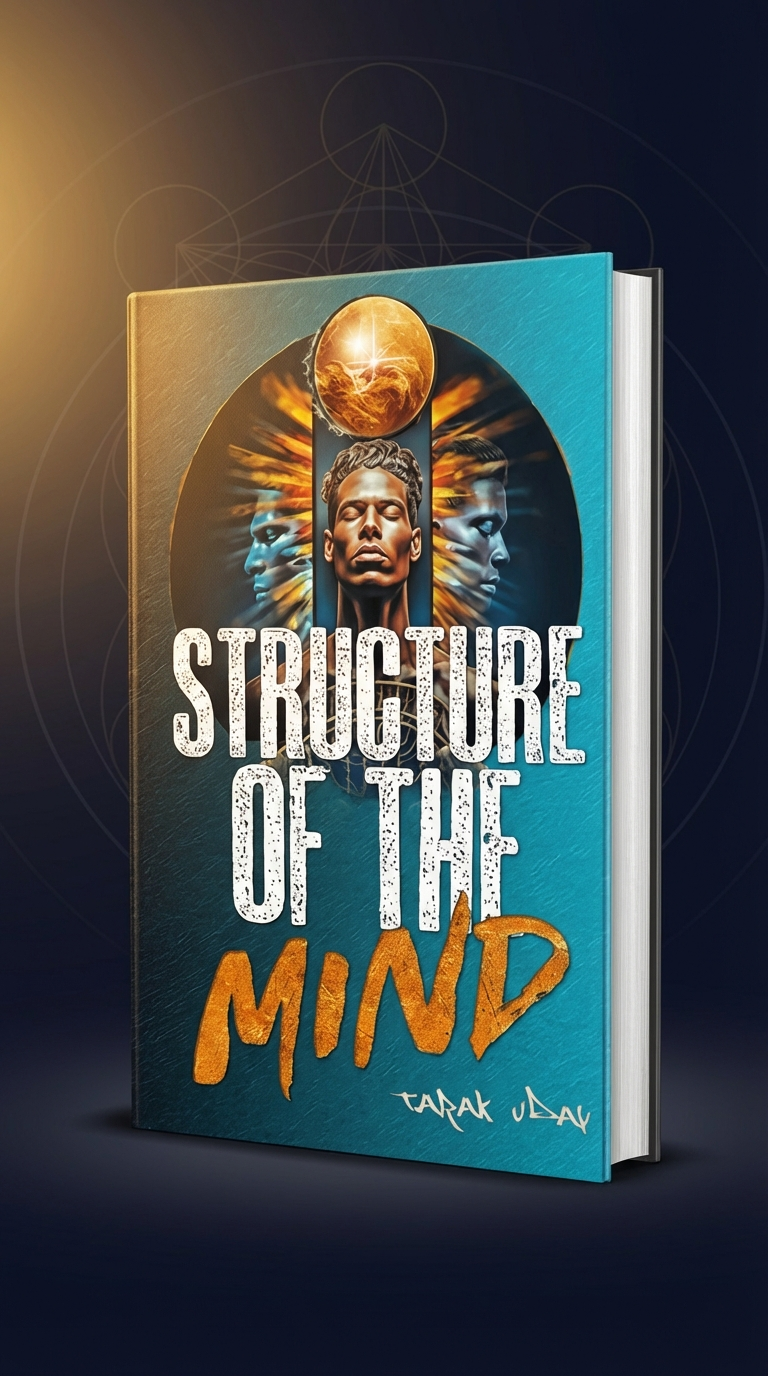
"Structure of the Mind" reveals the three divisions of mind, seven levels of consciousness, and powers of mind that most people never learn to develop.