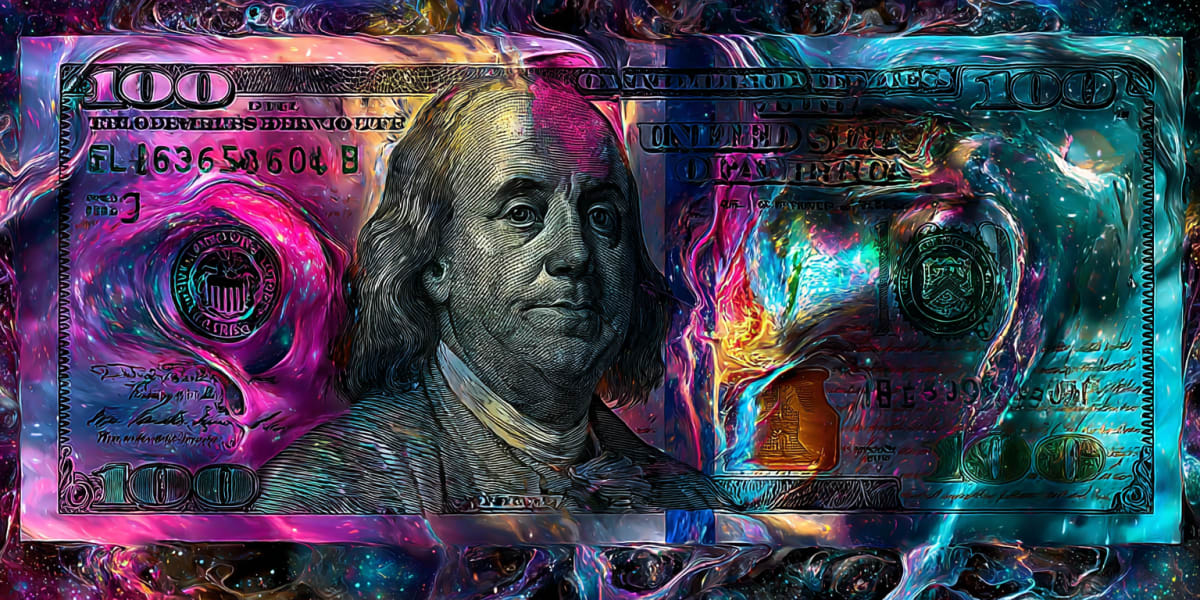
Money in Dreams: What Your Subconscious Is Really Telling You
The money isn't about money. It's the number you've quietly assigned to yourself.
So you dreamed about money, and you woke up trying to work out whether it was a good sign or a bad one. Here's the direct answer: in the Universal Language of Mind, money is self-value. Not income. Not luck. Not a forecast. The money in your dream is the picture your subconscious mind uses for what you believe you're worth — and every detail around it, whether you found it, counted it, lost it, or handed it to someone, is a report on how you've been handling that worth.
Now, the internet will hand you two readings and both are dead ends. The first says money dreams predict incoming wealth. The second says they're financial anxiety leaking into your sleep. Think about what each one does to you. One tells you to sit still and wait for something external to arrive. The other tells you the dream is daytime noise with nothing inside it. You had a full multi-sensory experience constructed inside your own mind, built out of a symbol your mind selected on purpose, and the best readings on offer were "money's coming" and "you're stressed about bills."
Your dreams aren't reporting on your bank account. They're reporting on you.
What Does Money Actually Mean in a Dream?
Start with form and function, because that's how the entire dream language operates. You never ask what a symbol "means" in some mystical lookup table. You ask what the thing DOES in waking life, because mind communicates in pictures of function.
So what does money do? It's the thing you exchange for what you want. It carries value in a portable, countable, transferable form. You store it, you spend it, you protect it, you hand it over when you decide something is worth having. Money has no worth as paper. Its entire existence is agreed-upon value moving between people.
Now look at self-value and notice it behaves in exactly the same way. You spend it when you take a risk. You store it when you build a skill. You hand it to other people when you let their opinion set your price. You can be carrying a great deal of it and still act broke. That correspondence is not poetic. It's the reason your subconscious mind reached for money instead of any other image.
According to the Universal Language of Mind that Tarak Uday teaches, the money family of symbols is unusually precise. Cash is self-value in its most immediate, spendable form. Coins are small units of self-worth — the little daily valuations you barely register making. Gold is the value already contained within your subconscious mind, which is why finding gold hits differently than finding bills. A bank is a self-worth state of mind, the whole system you use to hold and manage what you're worth. A wallet is storing more self value. Jewelry is expressing self worth outwardly, where others can see it.
Why Does Your Subconscious Mind Use Money to Talk About You?
Because your subconscious mind doesn't use words. It has no vocabulary, no grammar, no English or Spanish or Hindi. It thinks in images, and it selects each image by function, which is why the dream language is universal — the same symbol carries the same meaning for a farmer in Kerala and a trader in Chicago, because a coin does the same job in both hands.
So when your inner mind needs to show you a shift in how you regard yourself, it needs an image whose entire nature is assigned value. Money is the cleanest one available. It's countable, so it can show you degree. It's transferable, so it can show you who you've been giving your worth to. It can be lost, stolen, faked, buried, or found, so it can show you the exact mechanism by which your self-value moved.
This is why the "you're just anxious about bills" reading collapses on contact. People who have never had a financial worry in their lives dream about losing wallets. People in real debt dream about handing money away freely. If the dream were reporting your finances, it would track your finances. It doesn't. It tracks your self-assessment, which is a different number entirely.
Find out what your money dream is actually valuing
CHITTA's interpretation engine reads your dream through the Universal Language of Mind — the specific symbol, the specific amount, the specific action — and returns the metaphysical mechanics instead of a fortune.
Decode Your Dream Now →What Do the Different Money Dreams Actually Report?
The symbol gives you the subject. The action gives you the verdict. Money means self-value in every one of these dreams, so what changes between them is what your mind says is happening to that value.
When you find money, you're being shown a discovery. To find, in the dream language, means the dreamer discovered something within their own mind — not something arriving from outside. If you found it on the ground, that detail matters enormously, because ground is subconscious mind substance. Value you didn't know you had, surfacing from the deeper level of your own mind.
When you lose money or someone steals it, the mechanism is different. Stealing is taking away from one's value, and the thief in your dream is an aspect of you, not a stranger with plans. Something in your own thinking is quietly withdrawing your worth — usually a belief you've stopped examining because it sounds like modesty.
When you count money, you're watching an evaluation happen. Numbers picture the evolution of a thought, so counting is your subconscious mind measuring where your self-worth currently stands. When you receive money from someone, you're being shown an unexpected resource or quality arriving from an aspect of yourself the giver represents. And when the money turns out to be counterfeit, the reading is blunt: counterfeit money is devaluing the self. You've been presenting a worth you don't inwardly accept as real.
The denomination matters too, and most dreamers discard it. Coins are small units of self-worth, so a dream full of loose change is showing you the everyday, low-stakes valuations — the small yeses and quiet dismissals you make about yourself without noticing. Large bills report a valuation you're conscious of holding. A dream that swaps one for the other is describing a movement between those two registers, and the direction of the swap tells you which way your estimate of yourself has been travelling.
And the other person is never the point. Whoever hands you the money, whoever takes it, whoever counts it beside you — in the dream language, every character is an aspect of you. The generous uncle is a generous part of your own thinking. The pickpocket is the part that has learned to quietly take your worth before anyone else can. So when you catch yourself building a theory about what a relative or a colleague is going to do, stop. The dream cast them because they picture something you already carry.
Does Dreaming About Money Predict Wealth Coming?
No. Not in the way the prosperity blogs mean it. A dream is not a forecast, and treating it as one is the fastest way to waste the information it's handing you, because a prediction asks nothing of you while a mirror asks everything.
But there's a real connection underneath the superstition, and it's worth being exact about. Every physical result in your life starts as a thought, moves through your subconscious mind, and takes form outwardly. That's the sequence. What you believe you're worth determines what you'll ask for, what you'll refuse, what you'll walk away from, and what you'll accept as normal. So self-value doesn't magically summon money. It sets the ceiling on what you'll let yourself receive and hold.
Which means a dream of great wealth isn't a promise that money's coming. It's a report that your self-value has risen — and that's genuinely more useful than a prophecy, because it's a state you can act from tomorrow morning. And a dream of poverty isn't a warning of ruin. It's a report that you've been pricing yourself low somewhere specific enough for your mind to render it in currency.
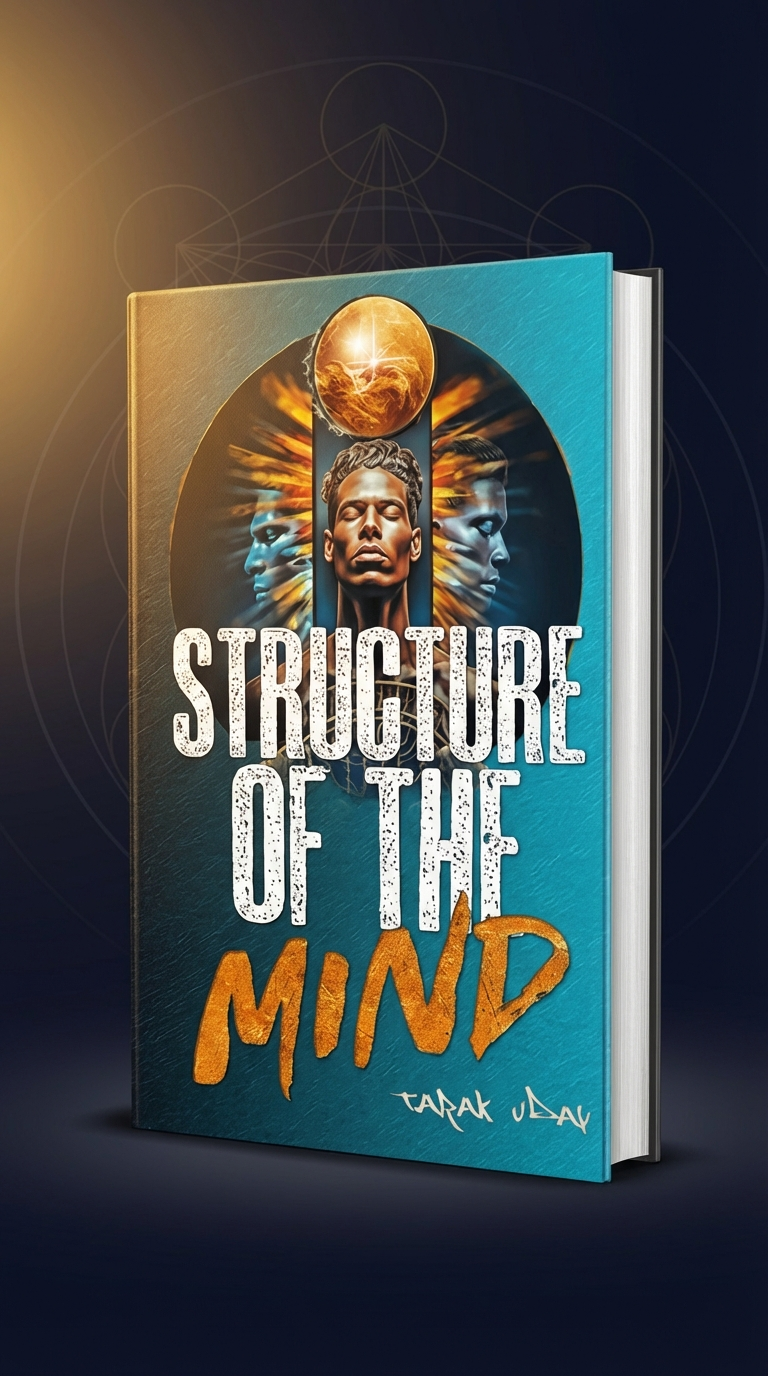
Tarak Uday takes this further in Structure of the Mind, his map of the three divisions of mind and the powers of attention, memory and imagination.
How Do You Raise the Number Your Dreams Keep Showing You?
Start by recording the dream with the details intact, because the details are the message. Write down the amount, the condition of the money, whose hands it moved between, and what you felt at the moment it changed hands. Most people record "I dreamed about money" and throw away everything that carried the meaning.
Then run the waking-life bridge. Ask where, in the last week, you performed the same action the dream showed. If you handed money over, where did you hand your worth to someone else's judgment? If you were counting, where have you been anxiously measuring yourself? If the money was crumpled or torn, where are you treating your own worth carelessly? The dream already answered these — your job is to find the waking situation it's describing.
Your dreams have been tracking your self-worth for years
Log tonight's dream in CHITTA's dream journal and decode it against the Universal Language of Mind symbol dictionary. Patterns in how your mind values you show up long before you notice them in waking life.
Decode Your Dream Now →So the practical move isn't affirmation. It's correction at the point of the dream's evidence. Charge the real number. Say the thing you were going to swallow. Finish the work you keep deferring because you've decided it isn't good enough yet. Self-value rises through evidence you give yourself, not through repetition, and your next money dream will show you the updated figure without being asked.
When Does the Same Money Dream Keep Repeating?
When the message hasn't been received and acted on. That's all a recurring dream ever is. Your subconscious mind isn't repeating itself for effect — it repeats because the correction hasn't happened yet, and it will usually escalate the imagery until it does.
So if the amounts keep shrinking, or the wallet keeps emptying, or the same thief keeps arriving, that's not your dream life turning dark. That's the cost of an unexamined valuation going up in your waking life, rendered accurately. The dream is a mirror with an excellent memory.
The way out isn't to stop having the dream. It's to change what you're worth in your own estimation, and then watch the money in your dreams behave differently on its own, because the picture always follows the pattern. When the valuation changes, the currency changes. That's not a metaphor. That's how the language works.
Tarak Uday is the founder of CHITTA and the author of Life is But a Dream and Lucid, which lay out the Universal Language of Mind as a complete, learnable system for reading what your subconscious mind is actually saying.

Frequently Asked Questions



Books by Tarak Uday
Understand Your Own Mind
"Structure of the Mind" reveals the three divisions of mind, seven levels of consciousness, and powers of mind that most people never learn to develop.

Learn The Language Your Dreams Speak
"Life Is But a Dream" teaches the Universal Language of Mind — how to read any dream symbol by what it is and what it does, so every dream becomes a message you can act on.

LUCID
You've tried every lucid dreaming technique. Most miss the root cause. LUCID reveals what they all skip.