
Sewing Machine in Dreams: The Tool You Use to Stitch Together How You Speak
It is not a hobby you forgot. A sewing machine is a mental tool for consciously shaping how you express your thoughts and emotions.
There was a sewing machine in your dream. Maybe it was your grandmother's, humming under a lamp. Maybe it was a huge industrial one in a room you've never seen, or a small one that wouldn't stop jamming while someone waited for the finished piece. You woke up and thought: I haven't sewn in years. Why that? Most sites will tell you it's about creativity, or home, or a person from your past. Here's the belief worth flipping first: the machine isn't about sewing at all. It's about speaking.
Look at your own week for a second. How many times did you say something you didn't mean to say, or swallow something you meant to say, or send a message you rewrote four times? That is the territory this dream walks into.
A sewing machine in a dream represents a mental tool for consciously formulating how you express your thoughts and emotions. In the Universal Language of the Mind, clothing is expression, and a sewing machine is the tool that turns raw fabric into a specific garment with deliberate design. The dream is asking whether your expression is crafted or haphazard.
What does a sewing machine mean in a dream?
It means a tool you hold inside your own mind for crafting how you come across. That's the plain version, and here is how it's built.
Start with the form and the function. In the Universal Language of the Mind, clothing represents expression: the way a thought or a feeling gets dressed so it can be seen by someone else. A sewing machine is the thing that makes clothing. It takes raw fabric, which has no shape and says nothing, and joins it into a specific garment, following a pattern, one stitch after another. Put the two together and the dictionary's reading is exact: a mental tool for consciously formulating how you express your thoughts and emotions.
Notice the word consciously. A sewing machine doesn't produce anything by accident. Somebody chose the fabric, chose the pattern, fed the cloth under the needle, and guided it. A garment that comes off a machine is deliberate in a way that a scrap of cloth thrown over your shoulders is not. So the symbol points at the part of your mind that decides, on purpose, how a thought will be worn when it goes out into the world.
Tarak Uday teaches in Life Is But a Dream that every dream is about the dreamer, and that every object, person and place in it is an aspect of the dreamer. So the machine is not somebody else's tool. It's yours. The dream is showing you your own capacity to shape your expression, and then letting you watch how well you are using it.
Why does the dream use a machine and not just clothes?
Because a machine shows process, and a finished garment only shows result. If your dream had shown you a coat, it would be talking about the expression itself. Because it showed you the machine, it's talking about the way you make it.
Think about what a sewing machine demands. It needs precision. It needs a pattern. It needs steady hands guiding the cloth at the right speed, because feed it too fast and the seam wanders, feed it too slowly and the thread bunches. It has no feelings about the garment. It just does exactly what you set it up to do.
That's the reason this symbol tends to appear when something you want to say is under construction. An apology you're drafting. A boundary you're about to set. A confession you've been rehearsing in the shower. A creative piece you're trying to put into words. The mind brings in the machine because the situation is not about what you feel, which you already know, but about how you are going to dress it.
And notice what your own relationship to the machine was in the dream. Were you at the controls? Were you watching someone else sew? Were you standing near it, afraid to touch it? Your position at the machine is your position toward your own expression.
What does it mean if the machine ran smoothly, jammed, or broke?
How the machine behaved is the part of the dream that speaks about you, so read it first. These are questions to hold up against your own life, not fixed rules.
If the machine ran smoothly, with a clean even seam, the dream is reflecting that you are, or are about to be, deliberate with how you express yourself. Something you have been trying to say is finding its form. Notice what you were making, because that's the thought that is coming together.
If it jammed, the thread knotted, or the needle snapped, ask where your expression is catching right now. A jam is not a failure. It's friction in the process. It often shows up when you are forcing words into a pattern that doesn't fit them, when you're trying to sound a certain way instead of saying the thing. Check whether you are feeding the cloth too fast.
If it broke down completely, or wouldn't start, the question is whether you feel able to express yourself at all in some area of your life. The tool is there. Something in your mind is not letting it run, and it's worth asking what you're afraid will come out of it.
If you couldn't find the machine, or it was covered in dust in a closet, that's a different picture again. The tool exists in you, but it has been unused. There may be a part of your expression you've put away, a way of speaking you stopped using because it once cost you something.
What if you were sewing something, or someone else was?
What was being made tells you which thought is under construction, and who held the cloth tells you which part of you is doing the shaping.
If you were sewing clothing, a dress, a shirt, a uniform, you were building a specific way of presenting yourself. Ask who it was for. A wedding dress is a different expression than a work shirt, and the difference is the message. If you were mending, closing a tear, you may be repairing something you said, or something that was said to you, and trying to make it whole again.
If someone else was at the machine, remember that every person in a dream is an aspect of your own mind. A parent at the machine is the part of you that learned how to express yourself from them. A stranger at the machine is a part of your expression you have not met yet, something in you that already knows how to shape what you feel. Notice how you felt toward them. Did you trust their hands?
If you were stitching your own mouth, or sewing something shut, take that seriously and gently. Sewing something closed is a picture of holding an expression in. It is worth asking what you have been holding back, and whether it is still serving you to keep it sealed.
Needle and thread belong to the same family of images, and the machine's reading is the anchor for them. Whatever the thread was doing in your dream, running, tangled or glowing, read it as the way your thought is being carried through the expression. The glossary pages for sewing machine and clothing show each symbol on its own.
Is this dream telling you to speak up, or to choose your words?
Usually it's the second, and that is what makes it different from most dreams about speaking. The dictionary doesn't say the sewing machine is a push to speak more. It says it is a tool for formulating how you express yourself. The message is about craft.
Tarak Uday takes this further in Life Is But a Dream, his guide to reading every dream in the Universal Language of the Mind.
That's worth sitting with, because most of us only ever hear two instructions about expression: say more, or say less. A sewing machine says neither. It says: make it with care. Be intentional about the words you use, the energy you send out with them, and the image you present when you say them. Are you doing that? Or are your expressions haphazard and unplanned, thrown over the shoulder like cloth?
Think about the last difficult message you sent. Was it stitched, with the pattern in mind and the seam checked, or did it come off the machine too fast and puckered? You don't have to answer to anyone. The dream only wants you to notice, because noticing is what moves the tool back into your own hands.
What should you do after a sewing machine dream?
First, write down what the machine was doing before anything else fades. Note whether it ran, jammed or broke, what was under the needle, who was at the controls, and how you felt as you watched it. The behavior of the machine is what decides the reading, and it disappears in minutes.
Then ask one question, the real one: what am I trying to say right now that I'm not shaping carefully? Be specific. It might be a message you've avoided writing, a conversation you've rehearsed, a feeling you have no words for yet. The first honest answer is almost always the right one, even if it's uncomfortable.
Then do the one thing the machine does. Choose the pattern before you start. Decide what you want the other person to understand when you've finished, and let that guide each word the way the pattern guides each stitch. Slow down where the seam wanders. Check the result before you send it.
This is where CHITTA earns its place. One dream is a sentence. A dream journal shows you whether the machine returns, whether it jams in the same place each time, and whether it starts running smoother as you change how you speak. If it comes back for weeks, that is a paragraph, and it says something no single reading can see. CHITTA reads the sewing machine against the symbols beside it, and the symbol dictionary shows you what each is made of in the Universal Language of the Mind, so you aren't guessing.
Write down what the machine was stitching while the seam is still clear, and let the symbol dictionary show you how it reads next to the other images in your dream. Start your dream journal.
That's what the symbol means. It can't tell you what you were trying to say last night, and only you can name that.
Frequently Asked Questions



Books by Tarak Uday

Learn The Language Your Dreams Speak
"Life Is But a Dream" teaches the Universal Language of the Mind — how to read any dream symbol by what it is and what it does, so every dream becomes a message you can act on.

LUCID
You've tried every lucid dreaming technique. Most miss the root cause. LUCID reveals what they all skip.
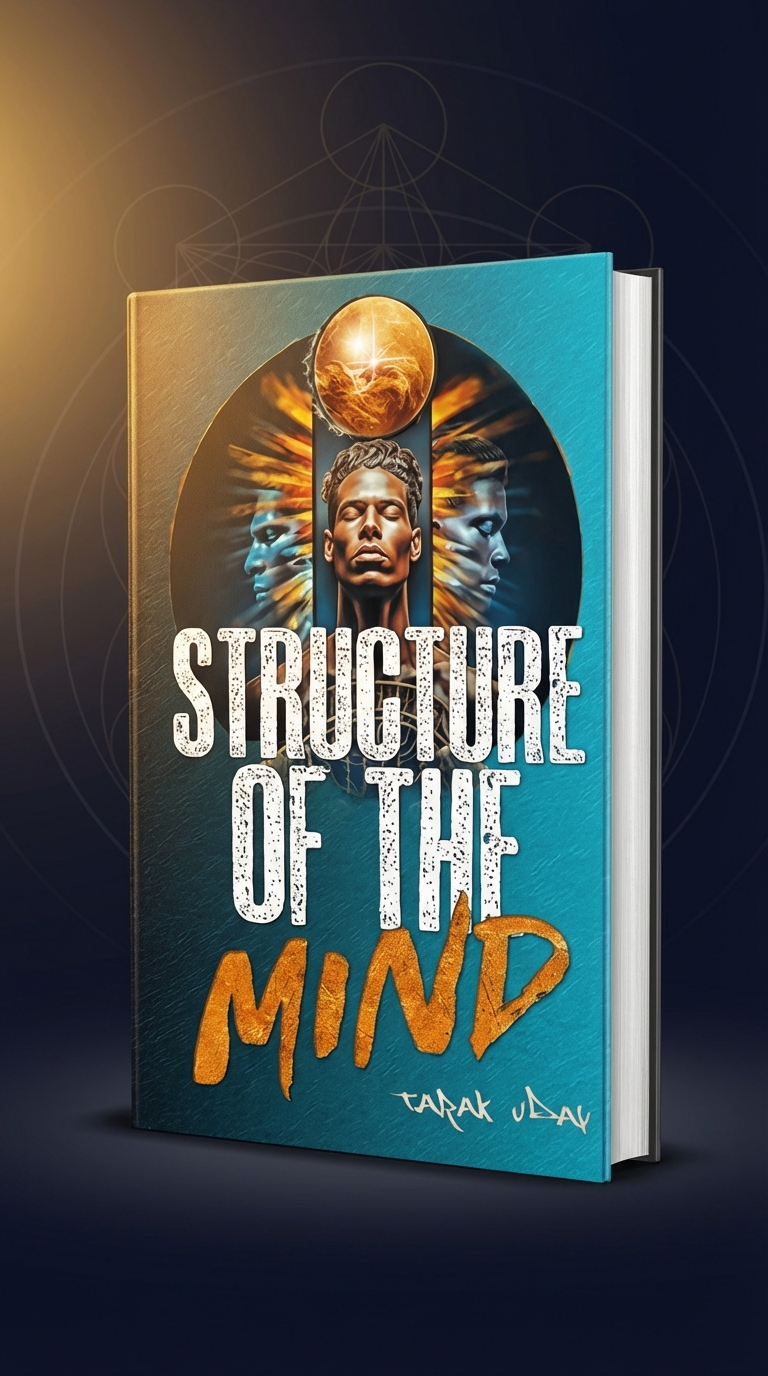
Understand Your Own Mind
"Structure of the Mind" reveals the three divisions of mind, seven levels of consciousness, and powers of mind that most people never learn to develop.