
Tattoos in Dreams: What Your Subconscious Is Really Telling You
In the Universal Language of Mind, ink on skin is a decision you made permanent - and the dream is showing you where you signed.


You woke up and the ink was still there. Maybe it ran down your forearm. Maybe it sat across your back where you couldn't quite turn far enough to see it. Maybe it wasn't even on you — it was on someone else, someone familiar, and you kept staring at it. And somewhere in that dream, before you were fully awake, you already knew the one thing that mattered about it: it wasn't coming off.
That's the detail your subconscious mind put there on purpose. Not the design. Not the needle. The permanence.
Almost every dream dictionary will tell you a tattoo means rebellion, or a wish to stand out. That reads your waking-life fashion and stops there. In the Universal Language of Mind a tattoo is self-expression — and not the passing kind. It's self-expression made permanent. Your dreaming mind has no interest in your style. It's interested in what you've chosen to show the world about who you are. So when it hands you a tattoo, it isn't talking about ink at all. It's talking about something you've decided about yourself, put on display for good, and then quietly stopped questioning.
Seed thought: A tattoo in a dream is a belief you've made permanent in your identity — a decision about who you are that you no longer treat as a decision.
Why Does a Tattoo Show Up in a Dream at All?
In the Universal Language of Mind, every person, place, and object in your dream is an aspect of you. Not a prediction. Not a message from outside. You. The dream is the subconscious mind reporting back on the state of the whole self, and it does it in pictures, because pictures are the mother tongue of the mind.
To read those pictures, you look at form and function. What is the thing? What does it do? Answer both and the meaning stops being mysterious.
So look at a tattoo honestly. Form: pigment placed underneath the skin. Function: to display something permanently on the boundary where your inner self meets the world's view of you. That's the whole thing. Your skin, in a dream, is that boundary — the membrane between the private you and the perceived you. A tattoo is a decision pressed through that membrane and set there for good.
Which means a tattoo dream is never about ink. It's about a self-concept you've worn outward, deliberately, and can't easily take back. Somewhere in your life you concluded something about yourself — "I'm the strong one," "I'm the one who was left," "I'm not creative," "I'm the fixer" — and instead of holding it as an opinion, you engraved it. Your subconscious mind is showing you the engraving.
This is the distinction Tarak Uday draws again and again in his work on dreams: a belief you're aware of is a tool, and a belief you've forgotten you chose is a cage. The tattoo is the mind's way of drawing the cage so precisely that you finally look at it.
What Does It Mean to Dream of Getting a Tattoo?
If you dreamed of sitting for one — the buzz, the sting, the slow filling-in of a shape — your subconscious mind is showing you an identity you're in the middle of adopting right now. Not one you had. One you're taking on.
Pay attention to how it happened. Did you choose the design, or did someone hand it to you? Choosing it means you're consciously authoring this new definition of yourself. Being handed it — or waking inside the dream to find it already finished — means the definition is being installed by something other than your conscious will. Family expectation. A job title. A grief you've started building a personality around.
Pain matters too. A tattoo that hurt, and that you sat through anyway, means you know this new self-concept costs something and you're paying willingly. A painless tattoo means the belief slid in without resistance, and that's worth a second look. The beliefs that arrive without friction are the ones that go unexamined the longest.
And notice the placement. Somewhere you can see it every day — a forearm, a wrist — means this identity is something you're using to remind yourself who you are. Somewhere you can't see without a mirror means you're carrying a self-definition that other people read before you do.
Who did the tattooing matters as much as the tattoo. A stranger with the needle means the belief came from outside your own reasoning — you absorbed it from a culture, a workplace, a room you were in at the wrong age. A parent or a partner holding the machine means you let a relationship write a line of your self-definition and then called that line yours. And if you were tattooing yourself in the dream, that's the subconscious mind telling you this one is fully self-authored. Nobody sold it to you. You built it, and you're the only one who can revise it.
Your skin is the border between the self you know and the self they see. A tattoo is a decision that crossed it and stayed.
Why Would You Dream of Regretting or Removing One?
This is one of the most common versions of the dream, and one of the most hopeful — even when it doesn't feel that way.
To dream of regretting a tattoo, scrubbing at it, hiding it under a sleeve, going in for a removal that hurts worse than the original — that's the mind reporting a belief about yourself that no longer fits and won't leave quietly. You've outgrown it. You can feel that you've outgrown it. And you're discovering that beliefs you made permanent don't come off just because you changed your mind.
The frustration in that dream is real information. It's the exact sensation of trying to talk yourself out of an old self-image using logic. "I know I'm not that person anymore." You know it, and it's still on your arm. That gap between knowing and being is the entire subject of the dream.
So what is the mind actually asking of you? Not erasure. Look at what people really do with tattoos they've outgrown — they rarely erase them. They cover them. They work them into something larger. The old shape stays inside the design but stops being the point. That's how identity genuinely changes: not by deleting who you were, but by making who you were one element inside a bigger picture. A dream of a cover-up tattoo is among the most encouraging images the subconscious mind produces. It means the reinvention is already under way.
Your mind is already doing this work every night. CHITTA reads your dreams back to you in the Universal Language of Mind — the real mechanics of your own mind, not a horoscope. Decode your dream free.
What Does Someone Else's Tattoo — or a Hidden One — Reveal?
When the tattoo is on someone else, the rule doesn't change: that person is still an aspect of you. Ask what quality they represent to you — the bold friend, the rigid parent, the stranger you envy — and you'll know which part of yourself is carrying the fixed mark.
Seeing a tattoo on your father in a dream isn't about your father. It's about the part of you that is fatherly, authoritative, the part that sets the rules. A permanent mark on it says that part of you is operating from a conviction it has stopped re-examining. The dream isn't accusing anybody. It's pointing.
Hidden tattoos are their own teaching. A tattoo you keep concealed under clothing, one you're anxious about anyone seeing, is a private self-definition you don't want inside your public identity. Shame lives here. So does secret pride. Either way there's a split — who you are underneath and who you're presenting have separated, and your subconscious mind is showing you the seam.
The opposite is loud. A tattoo across the face, the neck, the hands — somewhere impossible to hide — means an identity you can no longer keep private, whether you'd like to or not. Something about you has become visible. The dream is asking whether you'll own it, or spend your energy explaining it away.
Tarak Uday takes this further in Structure of the Mind, his map of the three divisions of mind and the powers of attention, memory and imagination.
What Is the Image Inside the Tattoo Actually Saying?
Here's where the reading gets precise, and where most people stop too early. The tattoo tells you a belief has been made permanent. The image inside the tattoo tells you which belief.
Every symbol carries its own meaning in the Universal Language of Mind, and that meaning doesn't change just because it's rendered in ink. An eagle inked on your arm is a habitual thought of your subconscious mind, as every bird in a dream is, now fixed into how you express your purpose. A snake is your creative energy, the Kundalini, the power you create your reality with. A skull is the death of an old identity, made permanent on purpose. A name is a relationship you've merged into your self-concept so completely you'd have to cut skin to separate from it.
So run the image through form and function first, then add the tattoo's single modifier: this is not a passing thought, this is load-bearing. That's the whole grammar. The image is the content. The tattoo is the sentence that says, "I have decided to make this content who I am."
A blurred or unreadable tattoo means something different and important — you've committed to a belief you can no longer articulate. You'd defend it in an argument and you couldn't tell anyone where it came from. Those are the ones worth hunting down.
Watch for tattoos that move, bleed, or change shape while you're looking at them. Ink that shifts is a belief that's still negotiable, still wet, not yet cured into fact. That's an invitation. The mind is telling you the decision hasn't fully hardened, and that you're standing in the narrow window where it can still be rewritten without a fight.
How Do You Work With This the Morning After?
Don't interpret it and then shelve it. Interpretation without change is just entertainment.
Carry one question into your day: what have I decided about myself that I'm treating as a fact instead of a choice? Write down the sentence. Not the story around it — the sentence. "I'm not the kind of person who..." "I always..." "I could never..." That's the ink. You're now looking at the exact thing the dream drew for you.
Then ask the only question that actually moves anything: is it still true, or is it just still there? Most self-definitions we carry aren't lies. They were accurate once. They described a person who existed under conditions that have long since ended, and they stayed on the skin after the conditions changed.
You don't have to tear it off. You couldn't if you tried, and the dream already told you so. But you can begin the cover-up. You can build a larger design around the old mark and let it become one shape among many instead of the entire statement. That isn't denial. That's growth — and your subconscious mind will show it back to you the moment it takes.
The needle in your dream was never in someone else's hand. You were always the one holding it.
Frequently Asked Questions


Books by Tarak Uday
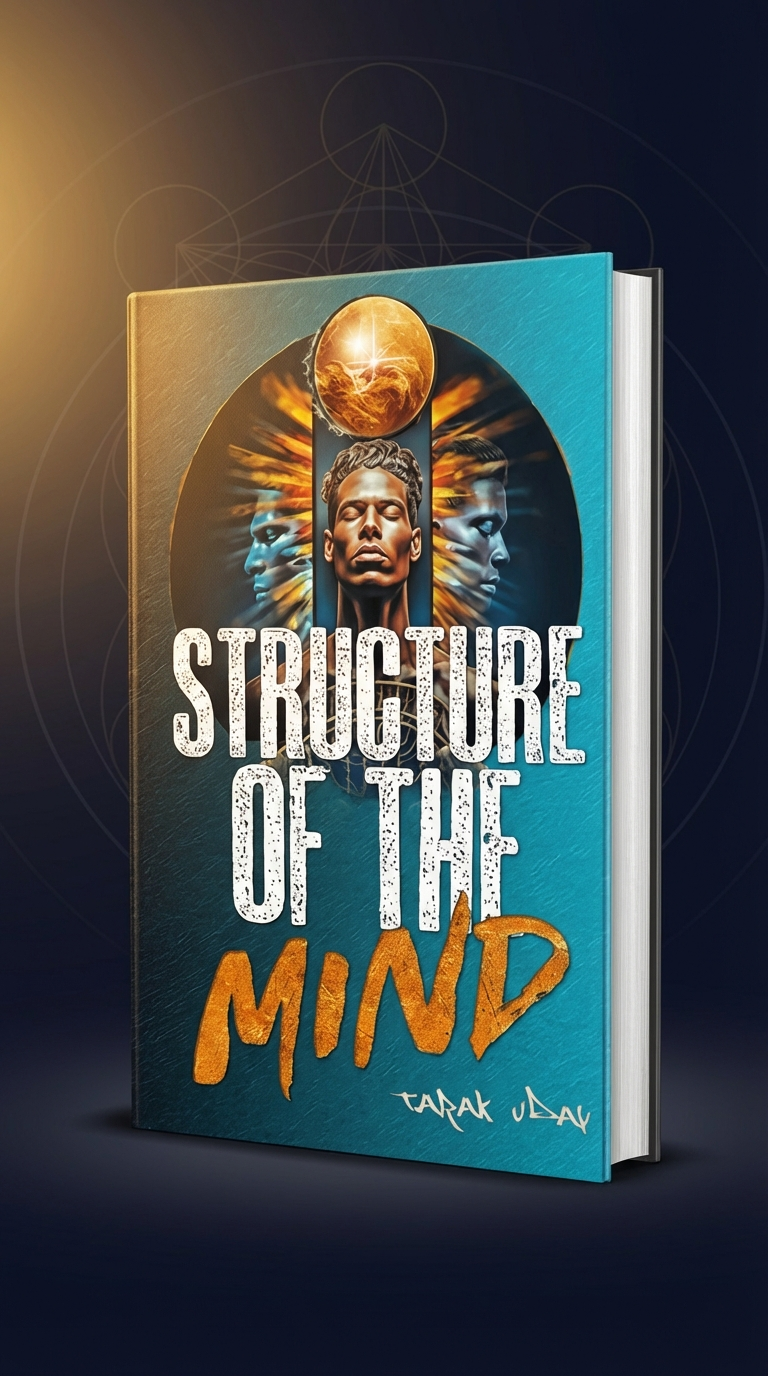
Understand Your Own Mind
"Structure of the Mind" reveals the three divisions of mind, seven levels of consciousness, and powers of mind that most people never learn to develop.
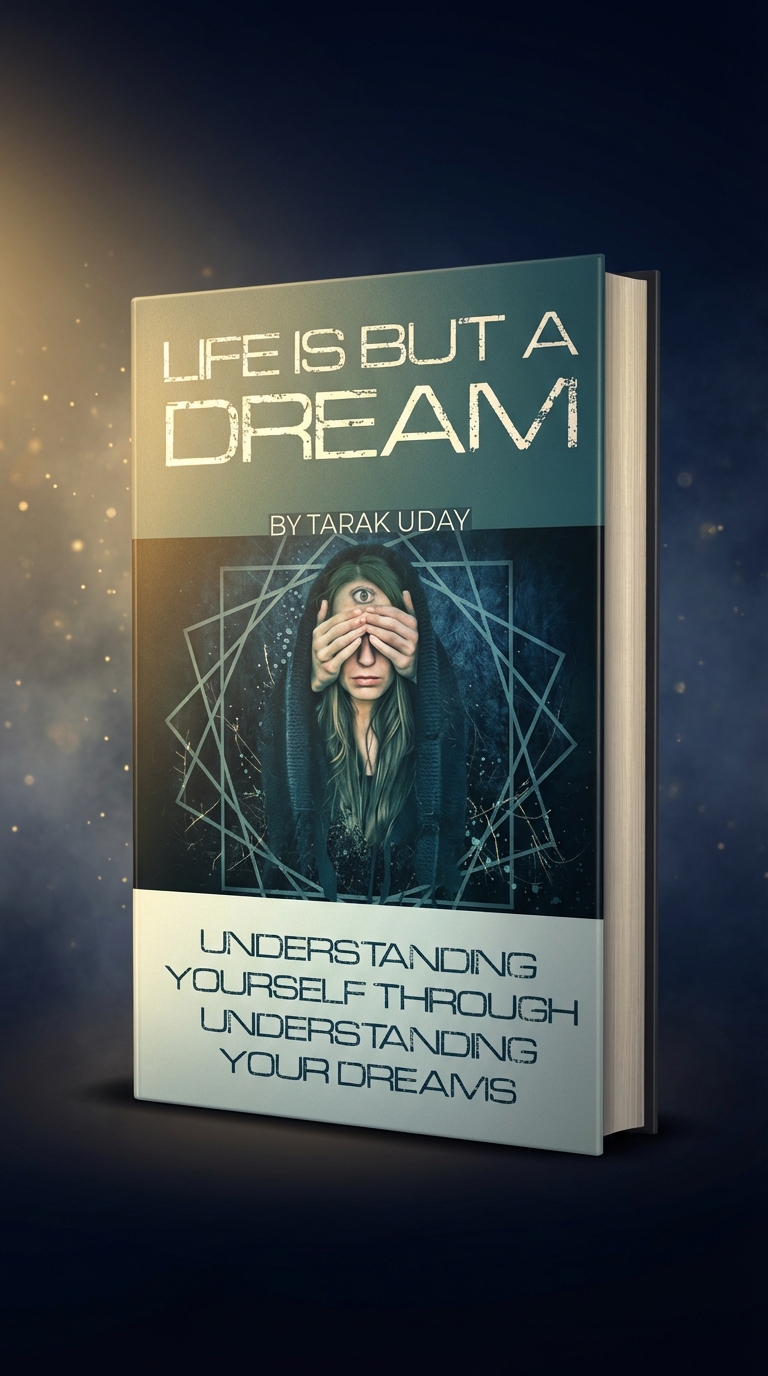
Learn The Language Your Dreams Speak
"Life Is But a Dream" teaches the Universal Language of Mind — how to read any dream symbol by what it is and what it does, so every dream becomes a message you can act on.
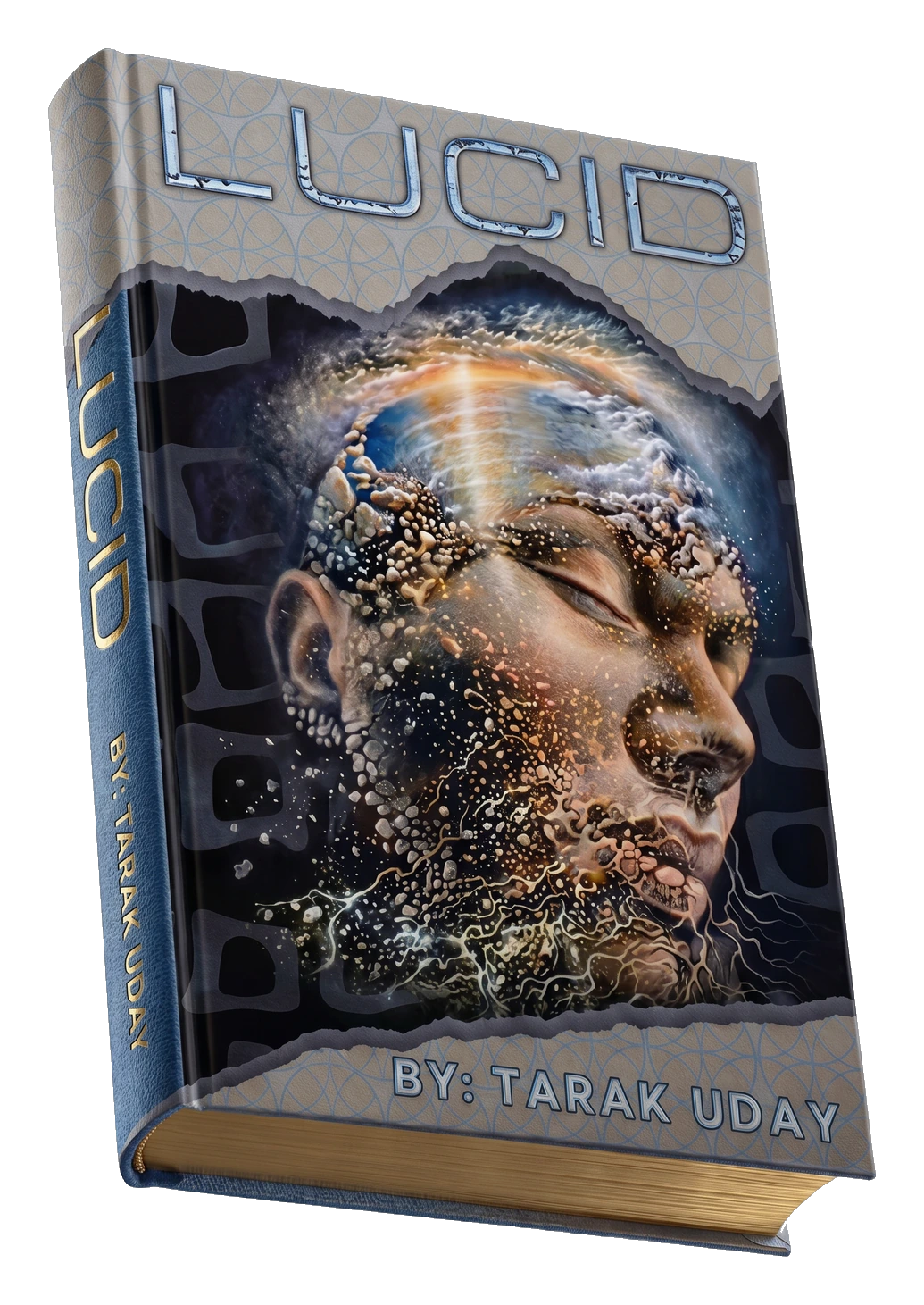
LUCID
You've tried every lucid dreaming technique. Most miss the root cause. LUCID reveals what they all skip.