
Tsunami in Dreams: What Your Subconscious Is Really Telling You
The wave that left you breathless wasn't coming for you. You raised it.


So you had a dream about a tsunami — a massive wall of water rising up, and no matter where you ran there was no way out — and you woke up with that wave still hanging over you. Here's the direct answer: a tsunami in a dream means you're feeling completely overwhelmed by your life experiences. In the Universal Language of the Mind, water represents your conscious experience of life, and a tsunami is that experience turned into a force so big it feels like it's about to destroy everything you've built. It's not a prophecy. It's a picture of where your mind is right now.
And the most important thing about that wave is something almost nobody tells you: you're the one who raised it.
Why does a tsunami dream leave you so shaken?
Look, a tsunami dream hits different than most. You don't just wake up uneasy — you wake up with a kind of dread still sitting on your chest, like something enormous is bearing down on you. So why does this one land so hard? Because it's not a small symbol doing a small job. It's your subconscious using the biggest, most unstoppable image of water it has to describe exactly how big the pressure in your life has gotten.
Most dream sites will tell you a tsunami warns of a coming disaster, or a flood of buried emotion about to break loose. Think about that for a second. You generated this entire experience inside your own mind, and the takeaway is supposed to be "brace for catastrophe"? That leaves you bracing against the outside world, powerless, waiting for the hit. Your subconscious doesn't work that way. It speaks the Universal Language of the Mind, and in that language the wave isn't coming for you from outside — it's a portrait of your inner state.
So here's what's actually happening at the level of mind. The dread you feel is recognition. Some part of you already knows the volume of what you're carrying — the obligations, the changes, the demands, the sheer amount of life coming at you all at once — has crossed the line from "a lot" into "more than I can hold." The tsunami is your mind being honest about that. It's not exaggerating. It's measuring.
What does a tsunami actually mean in the Universal Language of the Mind?
So to read the tsunami correctly you have to start with water, because the wave is just water at maximum intensity. According to Tarak Uday's work on the Universal Language of the Mind, water represents your conscious experience of life — the actual events, circumstances, and situations you move through day to day. Calm water is a life you're navigating with ease. Rough water is a life that's gotten choppy. And a tsunami is that life experience swollen into a single, towering, unstoppable wall.
That's the precise meaning: a tsunami represents feeling completely overwhelmed by your life experiences. It's a massive, sudden, destructive thing that leaves no obvious escape route — which is exactly how genuine overwhelm feels from the inside. Not "I'm a little stressed." More like "everything is hitting at once and I can't see a way through any of it." The dream takes that feeling and gives it a shape you can't argue with.
And notice the detail of being unable to outrun it. That's not random. A tsunami in the Universal Language of the Mind is the most extreme form of overwhelm precisely because it removes the escape — your subconscious is showing you that you've stopped believing there's a way out. That belief is the real subject of the dream. Not the water. The cornered feeling.
What life experience is your wave actually made of?
CHITTA decodes your specific tsunami dream through the Universal Language of the Mind — and names exactly what's been building toward overwhelm in your life.
Decode Your Dream Now →Why does it feel like there's no escape?
So this is the part of the dream that haunts people — the running, the climbing, the desperate search for high ground, and the wave catches you anyway. And the reason it feels inescapable is that you can't outrun your own perception. The tsunami isn't chasing you from the outside; it's generated by how you're currently seeing your life. You can't run from a wave your own mind keeps raising.
This connects directly to other overwhelm dreams. If you've also been dreaming about water in rougher forms, or about being pulled under and unable to surface, your subconscious is circling the same message: the experiences in your life have outpaced your sense of being able to handle them. The tsunami is just the loudest version of that signal — the one your mind sends when the quieter ones didn't get through.
But here's the turn, and it's everything. The dream feels like proof that you're doomed. It isn't. It's proof of how you're perceiving — and perception is the one thing you have direct power over. The wave looks absolute. It isn't. It's a measurement of a belief, and beliefs can change.

Bindu says: "You keep trying to outrun the wave. Stop running and look at it honestly — it's made entirely of thoughts you're still choosing to think."
Is the tsunami predicting something real?
So let's kill this one directly, because the fear that a tsunami dream is a premonition keeps a lot of people stuck. No — your subconscious is not forecasting a literal disaster, and it's not predicting that your life is about to collapse. Every symbol in your dream is about you, generated by you, for you. The tsunami points inward, at your perception of your life, never outward at the future.
What it is reflecting is real, though — just not in the way fear wants you to take it. It's accurately reporting that you currently perceive your life experiences as out of control and threatening to destroy what you've built. That perception is real. The catastrophe it seems to promise is not. Recognize the tsunami as a reflection of your perception, not an absolute reality, and the whole charge of the dream changes. You stop bracing for the future and start working with the present, which is the only place the wave actually lives.
Tarak Uday takes this further in Life Is But a Dream, his guide to reading every dream in the Universal Language of the Mind.
How do you turn back a tsunami dream?
So the practical work begins with the most basic thing you have: your breath. When the tsunami shows up, your system is in full overwhelm, and you can't address anything from inside that state. Breathe deeply and reconnect with yourself first. That's not a throwaway line — it's the first real step, because a flooded mind can't redirect anything.
Then you address the water one thought at a time. The tsunami feels like a single impossible mass, but it was built the way all overwhelm is built — out of many separate thoughts about many separate experiences, stacked until they merged into one wall. So you take it apart the same way. Name one experience that's overwhelming you. Just one. Change your relationship to that single thought, and the wall loses a layer. Then the next. The power that raised the wave is the same power that lowers it, and that power is your thinking. You created the conditions that manifested these experiences — which means, however impossible it feels, the ability to change them still lives inside you.
And this is where reading the Universal Language of the Mind stops being interpretation and becomes power. The tsunami is genuinely massive. But you are more powerful than the wave — because you are the one who raised it, and you are the one who can redirect it. That's not motivational talk. That's the mechanism. The dream that terrified you was your own mind showing you the size of what you're carrying and, in the same image, reminding you exactly whose mind built it.
The wave is made of thoughts. Start with one.
Decode the exact overwhelm your tsunami dream is naming — and learn to read every dream in the Universal Language of the Mind with CHITTA.
Decode Your Dream Now →So the next time a tsunami rises up in your sleep, don't run for higher ground. Stand still and look at the water. It's your life, it's your perception, and it's been waiting for you to remember that you're the one holding the power to calm it.
Frequently Asked Questions



Books by Tarak Uday

Learn The Language Your Dreams Speak
"Life Is But a Dream" teaches the Universal Language of the Mind — how to read any dream symbol by what it is and what it does, so every dream becomes a message you can act on.

LUCID
You've tried every lucid dreaming technique. Most miss the root cause. LUCID reveals what they all skip.
Understand Your Own Mind
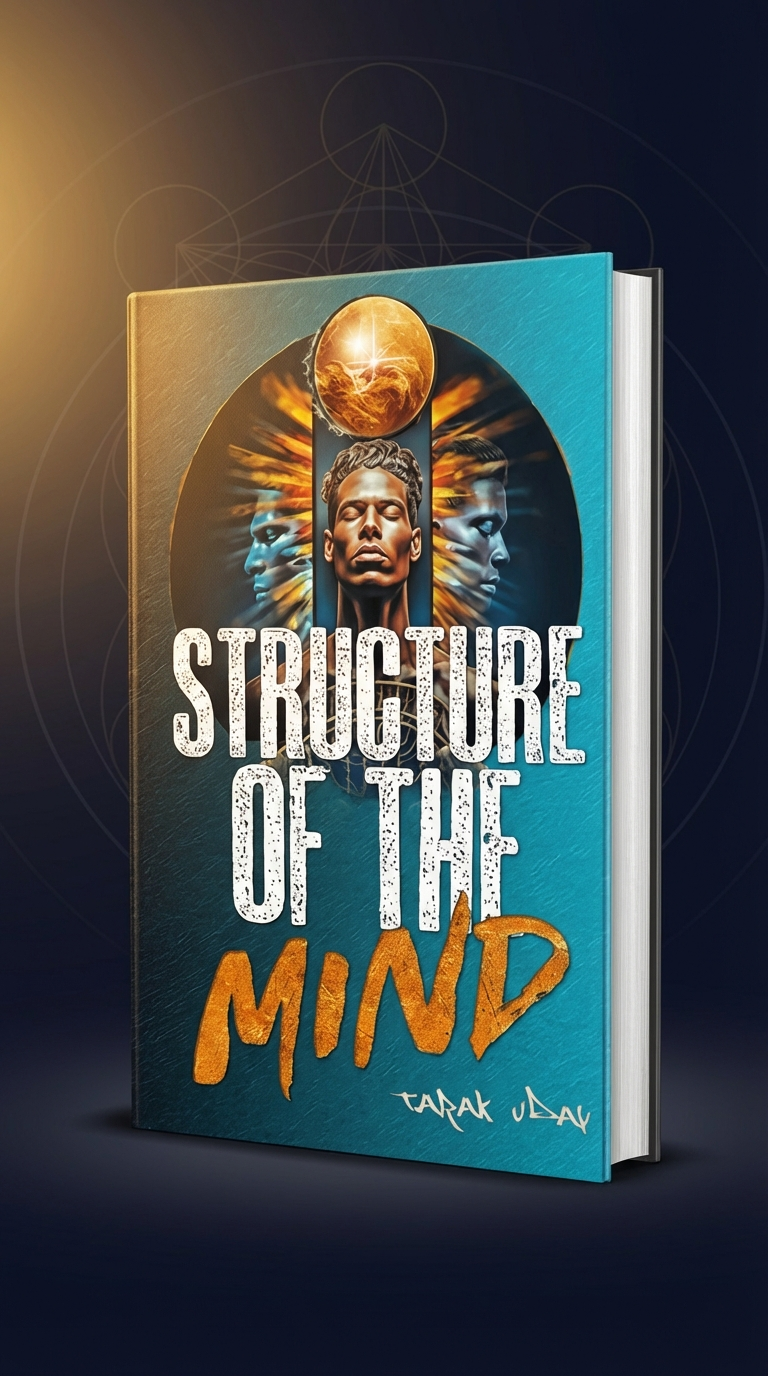
"Structure of the Mind" reveals the three divisions of mind, seven levels of consciousness, and powers of mind that most people never learn to develop.