
Universal Language of the Mind vs. Freudian & Jungian Dream Analysis: Why Most Dream Interpretation Is Guessing
Freud says dreams disguise meaning. Jung says dreams reveal archetypes. The Universal Language of the Mind says dreams are written in a specific language — and here's the dictionary. Three frameworks, thousands of years of difference.


Sigmund Freud published The Interpretation of Dreams in 1899. Carl Jung broke from Freud and published his own theories on dream symbolism beginning around 1912. Between them, they established the two dominant frameworks that have shaped how the Western world thinks about dreams for the past century.
The Universal Language of the Mind has been studied, practiced, and transmitted through mystery schools for thousands of years.
That timeline alone should give us pause. The frameworks that dominate modern dream interpretation — the ones used by therapists, apps, websites, and AI models — are roughly 125 years old. The system they unknowingly echo fragments of is forty times older. And yet, almost no one in the modern dream interpretation space knows it exists.
This isn't a history lesson. This is a practical comparison of three fundamentally different approaches to the same question: What are your dreams telling you? The answer depends entirely on which framework you're using — and two of the three will leave you guessing.
Freud: Dreams as Disguise
Freud's central thesis is straightforward: dreams are the disguised fulfillment of repressed wishes. Your unconscious mind harbors desires — primarily sexual and aggressive — that your waking mind finds unacceptable. During sleep, these desires attempt to surface. The dreaming mind disguises them through a process Freud called "dream-work," encoding forbidden wishes into symbolic imagery so they can be experienced without waking you up.
In this framework, the dream is fundamentally deceptive. It's hiding something from you. The job of interpretation is to reverse the disguise — to strip away the symbolic surface and uncover the repressed wish underneath. Freud called the remembered dream the "manifest content" and the hidden meaning the "latent content." The analyst's role is to move from one to the other through free association.
The practical implication is significant: under Freudian theory, you cannot trust the dream's surface. What you see is deliberately not what it means. A cigar might be a cigar in waking life, but in a dream, Freud would likely find something else entirely behind it. This creates an interpretive environment where anything can mean anything, because the dream is assumed to be lying to you.
Freud's method of free association reinforces this problem. The patient says whatever comes to mind in response to a dream element, and the analyst follows the chain of associations until reaching what they believe is the repressed content. As Jung himself later noted, this method tends to lead away from the dream image rather than deeper into it — the associations spiral outward until you've left the dream behind entirely.
If the dream is a disguise, then interpretation becomes an act of suspicion rather than understanding. You can never take the dream at face value. Every symbol is potentially hiding something else. This makes Freudian dream analysis inherently unstable — there's no way to verify whether a given interpretation has reached the "real" meaning or simply constructed a plausible narrative. Two Freudian analysts interpreting the same dream will frequently arrive at different conclusions, with no objective way to determine which is correct.
Jung: Dreams as Archetypal Messages
Jung departed from Freud on a fundamental point: he believed dreams are not deceptive but compensatory. Rather than disguising forbidden wishes, dreams offer the conscious mind information it's missing — perspectives, insights, and awareness that balance out the one-sidedness of waking consciousness. Where Freud saw dreams as concealing, Jung saw them as revealing.
This was a major improvement. Jung treated the dream as an honest communication rather than a trick. He introduced the concept of archetypes — universal patterns inherited through the "collective unconscious" — and suggested that dream symbols often carry meanings that transcend the individual, connecting the dreamer to shared human themes of transformation, death, rebirth, the shadow self, and individuation.
Jung's method of interpretation, which he called amplification, works in the opposite direction from Freud's free association. Instead of spiraling away from the dream image, amplification circles around it — gathering cultural, mythological, and symbolic associations that illuminate the image from multiple angles while always returning to the dream itself. This produces richer, more grounded interpretations than the Freudian approach.
The limitation, however, is that Jungian interpretation remains fundamentally subjective. Archetypes are patterns, not definitions. A snake in a dream might activate the archetype of transformation, or the archetype of the shadow, or the archetype of primal fear, or the archetype of healing — and the analyst selects which archetype applies based on context, intuition, and their own theoretical orientation. Two Jungian analysts interpreting the same snake dream may emphasize entirely different archetypes, and both can make compelling cases for their reading.
Jung himself acknowledged this openly. He insisted that the dreamer "owns" the dream and that no interpretation is valid unless the dreamer feels its accuracy. This is a respectful position, but it also means the framework has no internal mechanism for verification. If the interpretation feels right, it is right. If it doesn't, you try another angle. There's no external standard against which to measure.
"When we seek a psychological explanation of a dream, we must first know what were the preceding experiences out of which it is composed... I work all around the dream picture and disregard every attempt that the dreamer makes to break away from it."
— Carl JungThe Universal Language of the Mind: Dreams as Structured Communication
The Universal Language of the Mind takes a position that neither Freud nor Jung fully articulated, though Jung came closer: dreams are a language. Not metaphorically. Not poetically. Literally. Your subconscious mind communicates using a specific symbolic vocabulary where each symbol has a defined meaning derived from its function in waking life.
This is the critical departure. Freud treats symbols as masks. Jung treats symbols as archetypes with fluid meaning. The Universal Language treats symbols as words in a vocabulary — each one carrying a specific, consistent definition that doesn't change based on the analyst's theoretical preference or the dreamer's momentary feeling.
The logic is elegant: what does the symbol do in waking reality? That function is its meaning in the dream.
Teeth break down food so you can digest nutrients. In dreams, teeth represent your ability to assimilate — to break down experiences and knowledge so you can absorb their value. Water is the medium through which you have conscious experiences (you drink it, swim in it, bathe in it, weather it). In dreams, water represents your conscious life experiences. A house shelters you and provides rooms for different activities. In dreams, a house represents your state of mind, with different rooms reflecting different aspects of it.
This isn't arbitrary assignment. It's functional derivation. And it produces something neither Freud nor Jung could offer: consistency. A snake doesn't mean fear on Monday and transformation on Friday. A snake represents creative energy — the Kundalini — every single time, for every single dreamer. What varies is how that creative energy relates to the individual's life. The vocabulary is universal. The sentence is personal.
Freud asks: "What is the dream hiding?"
Jung asks: "What is the dream compensating for?"
The Universal Language of the Mind asks: "What is the dream saying?"
The first two treat the dream as something to be analyzed. The third treats it as something to be read — because it's written in a language that has defined vocabulary, consistent grammar, and specific meaning.
Three Frameworks, One Dream
To make this concrete, consider a common dream: you're back in school, sitting in a classroom, and you suddenly realize there's an exam you didn't study for. You feel panic. You don't know any of the answers.
Freud's interpretation
The exam represents a current life situation where you feel judged or evaluated. The anxiety about being unprepared may disguise a deeper wish — perhaps a desire to return to a time when stakes were lower, or a repressed fear of sexual inadequacy being exposed. The school setting may represent regression to an earlier developmental stage. The analyst would use free association to follow the patient's chain of thoughts away from the dream image until reaching what they believe is the repressed content driving the anxiety.
Jung's interpretation
The dream is compensating for an overly confident conscious attitude. If you've been feeling secure or complacent in waking life, the dream is showing you the opposite — the part of you that feels unprepared and inadequate. The school represents a place of individuation, and the exam is an archetypal test — a threshold moment requiring you to demonstrate what you've integrated. The panic reveals shadow material: aspects of yourself you haven't fully developed. The analyst would amplify the school symbol through cultural and personal associations, exploring what "being tested" means in the dreamer's life narrative.
Universal Language of the Mind interpretation
A school represents a learning state of mind. You were in a learning state of mind the previous day — open to gaining understanding from your experiences. The exam represents a test of what you've learned. Not studying means you weren't prepared — you hadn't done the inner work of extracting lessons from your recent experiences. The panic reflects your subconscious awareness that life is presenting you with a test and you haven't assimilated the knowledge needed to pass it.
The message is specific: look at what happened the day before the dream. What experience presented itself as a learning opportunity? Did you engage with it fully, or did you let it pass without extracting the lesson? The dream is telling you that life is testing you on material you haven't studied — and you need to go back and learn it before the test comes again.
Notice the difference. Freud speculates about hidden wishes. Jung explores archetypal compensation. The Universal Language tells you exactly what happened in your consciousness the day before, what your subconscious is communicating about it, and what to do next. One is speculation. One is exploration. One is translation.
Learn to Read the Language
Chitta interprets your dreams using the Universal Language of the Mind — the only codified symbolic system that provides specific, consistent meanings. Not Freudian guessing. Not Jungian exploration. Direct translation of what your subconscious is saying.
Decode Your Dream →Why the Modern World Forgot the Original System
If the Universal Language of the Mind predates Freud and Jung by thousands of years, why isn't it the dominant framework today?
The answer is historical, not intellectual. The Universal Language was preserved and transmitted within mystery school traditions — lineages of teachers and students who passed this knowledge carefully across generations. It was never popularized because it was never designed to be. It was taught to people who demonstrated readiness for genuine inner work, not marketed to mass audiences.
When Freud and Jung developed their theories in the early 20th century, they did so within the context of Western academic psychology — a field that deliberately distanced itself from anything that sounded "mystical" or "esoteric." Freud was committed to positioning psychoanalysis as a science. Jung went further toward spiritual territory but framed everything in psychological language to maintain academic credibility. Neither engaged directly with the metaphysical traditions that had been interpreting dreams for millennia.
The result is that modern dream interpretation is built on a foundation that's barely a century old, while the deeper, more comprehensive system it partially echoes remains largely unknown to the general public. Every dream app, every AI tool, every therapy-based approach works from Freud's and Jung's incomplete frameworks — or, more often, from diluted pop-psychology versions of those frameworks — without realizing that the complete system has existed all along.
The Practical Stakes
This isn't an academic debate. The framework you use to interpret your dreams determines what you do with the information.
Under the Freudian framework, you analyze your dream for hidden desires and bring them to conscious awareness. The goal is insight into repression. Under the Jungian framework, you explore your dream for compensatory messages and work toward psychological wholeness. The goal is individuation.
Under the Universal Language of the Mind, you read your dream as a direct communication about how you used your consciousness the previous day — what you learned, what you missed, what you're creating, and what your subconscious is showing you about the state of your inner world. The goal is self-mastery — not just understanding yourself, but consciously directing how you use your mind.
Dreams in this framework aren't psychological artifacts to be analyzed in therapy. They're nightly progress reports from your subconscious mind. They tell you what you're doing well, where you're falling short, and what needs your attention. They are curriculum, not symptoms.
"Remember life is like a school room. In our physical, waking life, we go to school to learn academic lessons, and in life our soul uses the physical body to learn lessons of understanding the Self, the universe and the Creator."
— Tarak Uday, Life is But a DreamMoving Forward
Freud made a genuine contribution by insisting that dreams are meaningful — a radical position in his time. Jung improved on Freud by treating dreams as honest communications rather than deceptions, and by recognizing symbolic patterns that transcend individual psychology. Both men were reaching toward something real.
But both were working from fragments. Fragments of a system that predates them by thousands of years. A system that doesn't just suggest dreams are meaningful but provides the complete vocabulary for reading them. A system that doesn't require an analyst to speculate about hidden content or archetypal patterns because the symbols themselves carry defined, functional meaning.
The Universal Language of the Mind is not a theory about dreams. It's the language dreams are written in. Learning it doesn't require abandoning useful insights from psychology — it provides the foundation that makes those insights more precise, more consistent, and more actionable.
Your dreams spoke last night. They'll speak again tonight. The question is whether you'll interpret them through a 125-year-old theory, or read them in the language they were written in.
GO WITHIN>>> OR GO WITHOUT!
PEACE.
Read Your Dreams in Their Original Language
Chitta is the only dream interpretation platform built on the Universal Language of the Mind — thousands of years of codified symbolic science. One full dream reading is free every month, and you can earn another by practising 7 days in a row. Oracle guidance. Concentration training. Everything you need to begin.
Decode Your Dream →Frequently Asked Questions


Books by Tarak Uday
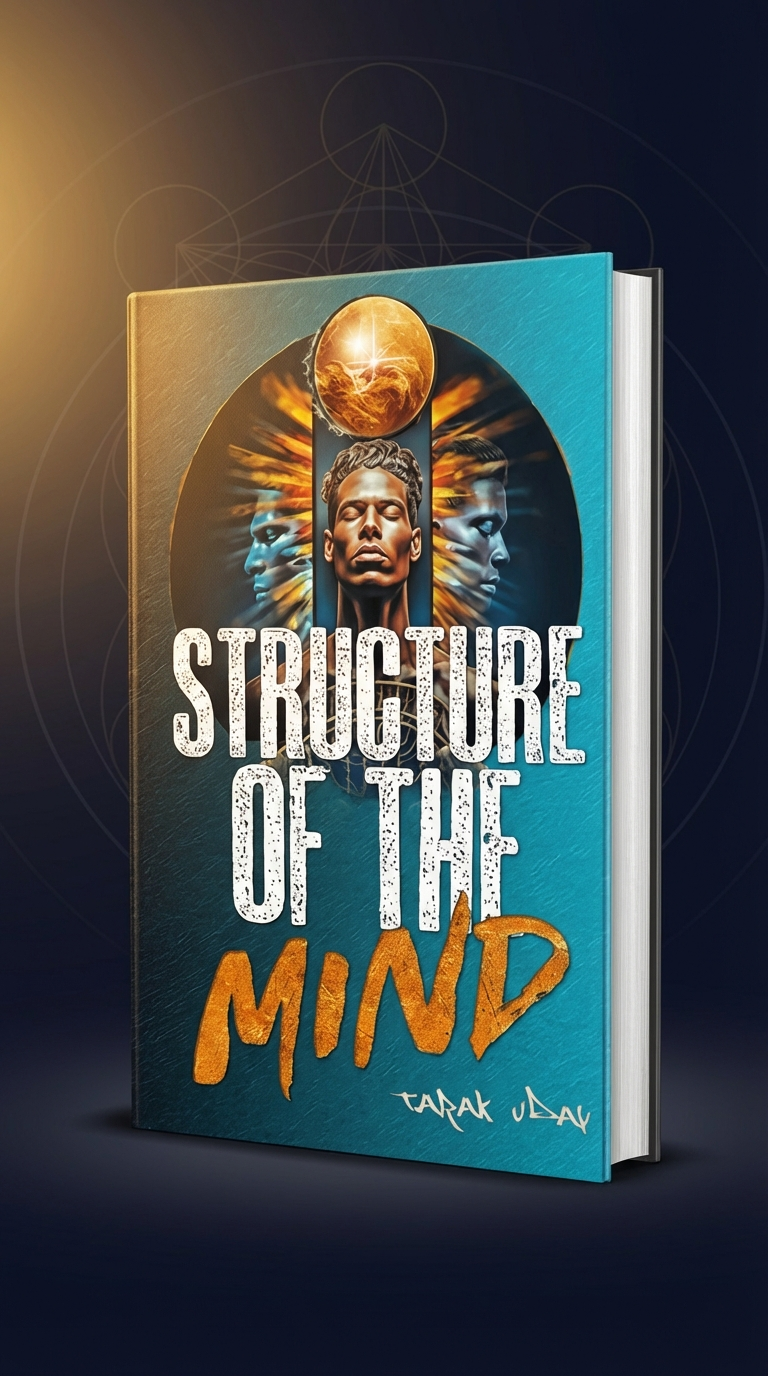
Understand Your Own Mind
"Structure of the Mind" reveals the three divisions of mind, seven levels of consciousness, and powers of mind that most people never learn to develop.

Learn The Language Your Dreams Speak
"Life Is But a Dream" teaches the Universal Language of the Mind — how to read any dream symbol by what it is and what it does, so every dream becomes a message you can act on.
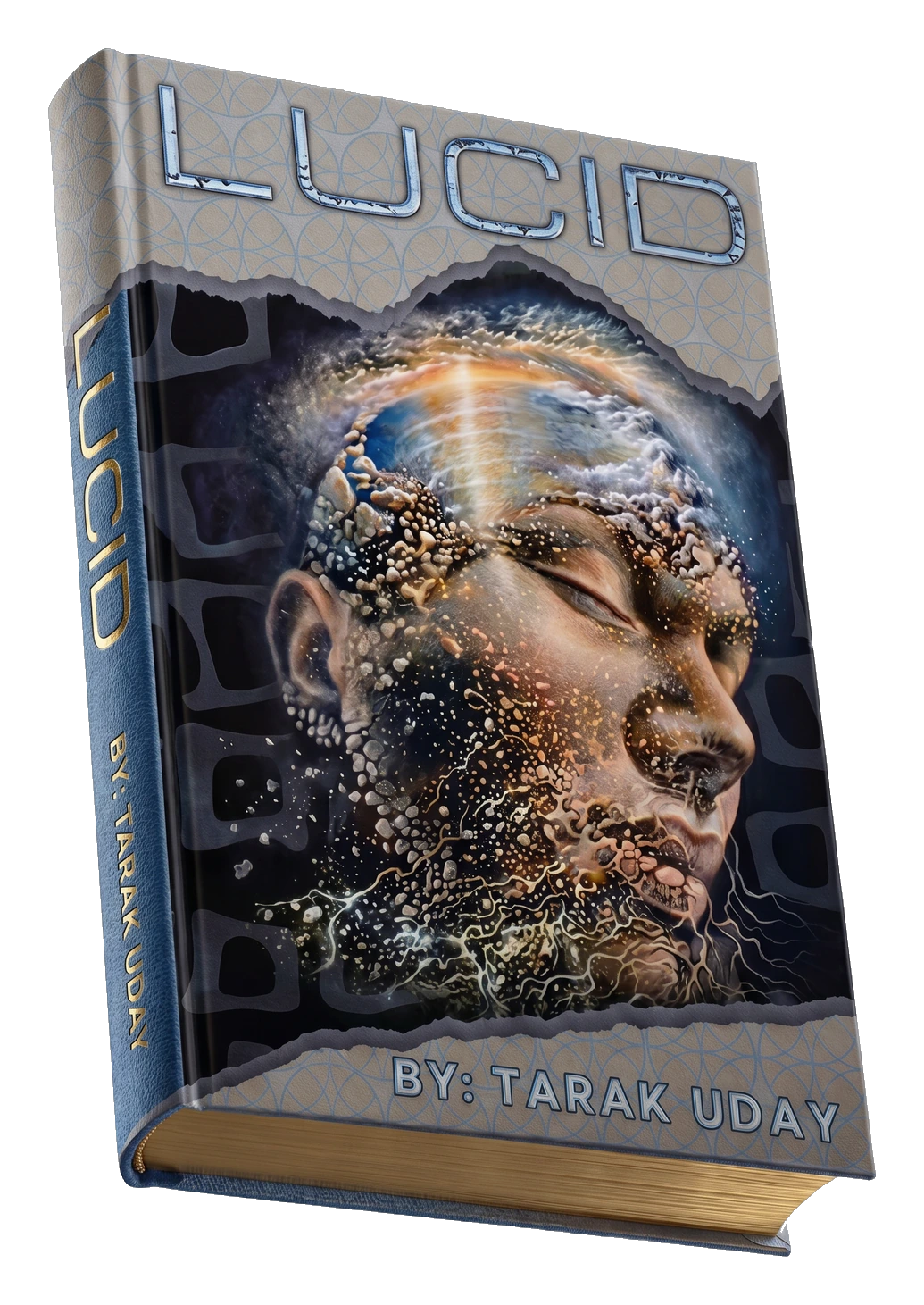
LUCID
You've tried every lucid dreaming technique. Most miss the root cause. LUCID reveals what they all skip.