
Book in Dreams: What Your Subconscious Is Really Telling You


The book dream almost always has the same defect in it, and almost nobody notices.
There's a book. It matters — you can feel that it matters. It's old, or it has your name on it, or someone hands it to you with a look that says this is the one. And then you open it and something goes wrong. The letters move. The page you need has been torn out. You read a line and forget it while you're still reading the next. Or you simply close it and walk off, and the dream carries on somewhere else entirely.
You wake up certain you were being given something. You just can't say what.
That gap isn't a flaw in your recall. The gap is the message.
In the Universal Language of the Mind, a book is information. Not wisdom, not truth, not destiny — information. It's data held in a form outside of you. So a dream where you can't get the book open, or can't hold what it says, is your subconscious mind reporting on the distance between what you've been told and what you've actually made yours.
What does a book actually mean in the Universal Language of the Mind?
A book is information.
The Universal Language of the Mind asks what an object is for, and a book is for holding something outside of you. That's its entire function. Somebody knew a thing, they encoded it, and now it sits on a shelf being true whether or not anyone reads it. A book doesn't require a mind to hold it. That's the whole invention — the reason it changed the species — and it's also the reason your subconscious chose it as a symbol.
Because your mind does the same trick. You take in far more than you use. You know the correct answer about sleep, about money, about how you should be speaking to the people you love. It's stored. It's accurate. It's shelved.
So when a book appears in your dream, your subconscious isn't handing you wisdom. It's pointing at a container — and, almost always, at whether you've opened it.
The whole framework Tarak Uday teaches rests on this kind of reading: the image means what the object does, consistently, in every mind, regardless of whether you personally like reading. A book means the same thing to someone who's never finished one as it does to a scholar, because the function doesn't change with taste.
Why is information not the same thing as understanding?
Here's the belief the dream is quietly correcting, and it runs deep because school trained it into most of us: knowing something and having something are the same event.
They aren't, and the distinction is the most practical idea in this entire framework.
Information is a description of an experience someone else had. Understanding is what's left in you after you've had the experience yourself. You can hold a thousand accurate sentences about swimming and go straight to the bottom of a pool. The sentences weren't wrong. They just weren't yours yet, because nothing had converted them.
The conversion is use. You take the information, you act on it in waking life, the action produces a result, and the result gets written into you in a way no sentence can be taken back out of. That's the manufacturing process, and it only runs one way: information plus lived experience becomes understanding, and understanding is permanent.
Information sits on the shelf. Understanding is what you can't put down.
So the book in your dream is a report on your inventory, not your intelligence. It's showing you the stack of things you've collected and haven't run through the process. And your subconscious keeps returning to it for the same reason a good librarian keeps sending overdue notices — the material was never the point, the borrowing was.
None of which is an argument against books. The information layer is necessary; you can't convert what you never collected. It's an argument against stopping there.
There's a second reason your subconscious reaches for a book rather than, say, a voice or a sign. A book is patient. It will wait years. It does not degrade if you ignore it and it does not press you, which makes it the exact right image for the kind of knowing that can sit in you untouched for a decade without going stale and without doing you the slightest good. A voice would imply urgency. A book implies storage. The choice of container is itself part of the report.
What does it mean if you can't read the book, or the pages are blank?
This is the most common version of the dream and the most useful, because the specific failure names the specific problem.
Text that won't hold still — letters swimming, lines rearranging, the sentence changing between one glance and the next — is information you have not stabilised. In waking life that's the subject you've read about from six sources that disagree, or the advice you keep receiving in contradictory forms. You have the data. You don't have a settled version of it, so your mind can't render a fixed page.
Blank pages are a different report and a better one than people assume. Blank is not empty in the pejorative sense; blank is unwritten. Something in your life is at the stage before information exists — a situation nobody has described to you yet, including you. If you've been waiting for the instructions on a decision, blank pages are your subconscious telling you the instructions don't exist and you're going to have to write the page by doing the thing.
A book you can't open, or that's locked, points somewhere else again. In this language a key is an idea or belief that allows you to access a new way of thinking. So a sealed book says there's a piece of understanding you don't yet have, and without it the information stays shut. That's not a punishment. It's a sequence.
A torn or missing page is information you've lost access to — usually something you did know, once, in a period of your life you've stopped drawing on.
And a book you're writing rather than reading flips the whole thing. That's you as the source: your own experience being encoded into a form that will outlast the moment. Pay attention to what's on the page, because that's the part of your life your subconscious considers finished enough to record.
Bring the book dream into CHITTA and read it against the Universal Language of the Mind — the state of the pages, the room it happened in, who handed it to you — decoded together rather than one word at a time.
Who hands you the book matters as much as the book. Other people in dreams are aspects of yourself, so being given a book by a stranger says the information is arriving from a part of you that you don't recognise as you — capability you haven't claimed yet. Being given one by someone you know says it's arriving through the part of you that person represents, which is usually the quality you most associate with them. And finding a book yourself, unhanded, on a shelf or a floor or in a drawer, is the report of information you already possessed and had misplaced rather than never had.
So the sequence to run is simple. What was the book's condition, could you access it, and where did it come from. Three answers, and together they'll tell you whether your problem is collecting, stabilising, or applying.
Tarak Uday takes this further in Life Is But a Dream, his guide to reading every dream in the Universal Language of the Mind.
What is the difference between a book, a library, and a school?
The dictionary separates these three carefully, and the differences tell you what stage of the process you're in.
A book is information — one body of it, contained, specific. A library is an abundant source of information available to the Self: not a single answer but access, the whole reservoir. Dreaming of a library when you've been feeling stuck is a genuinely encouraging report, because it says the material you need is available to you, which is a different problem from not having it.
A school is a learning state of mind — you, in the condition of taking things in. That's about your posture, not the content. And the figures in a school reinforce the point: a teacher is the superconscious mind, the part of you that already knows, while a student is the aspect of yourself that understands how to learn.
So the four images make a chain. There's material available to you. There's a particular body of it in front of you. There's the state of mind in which you can take it in. And there's the part of you that knows how to turn it into something permanent.
Notice where your dream sits on that chain. Someone who keeps dreaming of libraries but never of reading has an access dream and an application problem. Someone who dreams of school but never of books is in a receptive state with nothing specific to receive.
What is the dream asking you to do with the information?
Use one thing. That's the instruction, and it's smaller and harder than it sounds.
Not read more. More reading is what your subconscious just showed you a picture of. So take one piece of information you already have — one you could recite, one you'd defend in an argument, one you have not actually run through your own life — and act on it this week in a way that could fail.
The failure is the point. Information that can't be wrong hasn't been tested, and untested information stays on the shelf forever, sounding correct. The moment you act on it and get a real result, the conversion happens: it stops being a description of someone else's experience and becomes a piece of yours.
Then write down what happened. Not what you learned — what happened, in plain terms, including the part that went badly. That record is the difference between a person who has read about their own life and a person who has one, and it's the same operation your subconscious performs every night when it takes the day and hands it back to you in pictures. You're just doing it on purpose, in daylight, where you can act on it.
Those are the metaphysical mechanics, and the accounting is brutally simple. Something in you keeps two columns — what came in, and what got spent. It watched today's intake and today's application, and the picture it drew you overnight was the gap between them. A shelf you can't open is not a comment on your character. It's a balance.
Open one book while awake. Not the paper one — the one you've been carrying around already knowing.
Frequently Asked Questions



Books by Tarak Uday

Learn The Language Your Dreams Speak
"Life Is But a Dream" teaches the Universal Language of the Mind — how to read any dream symbol by what it is and what it does, so every dream becomes a message you can act on.
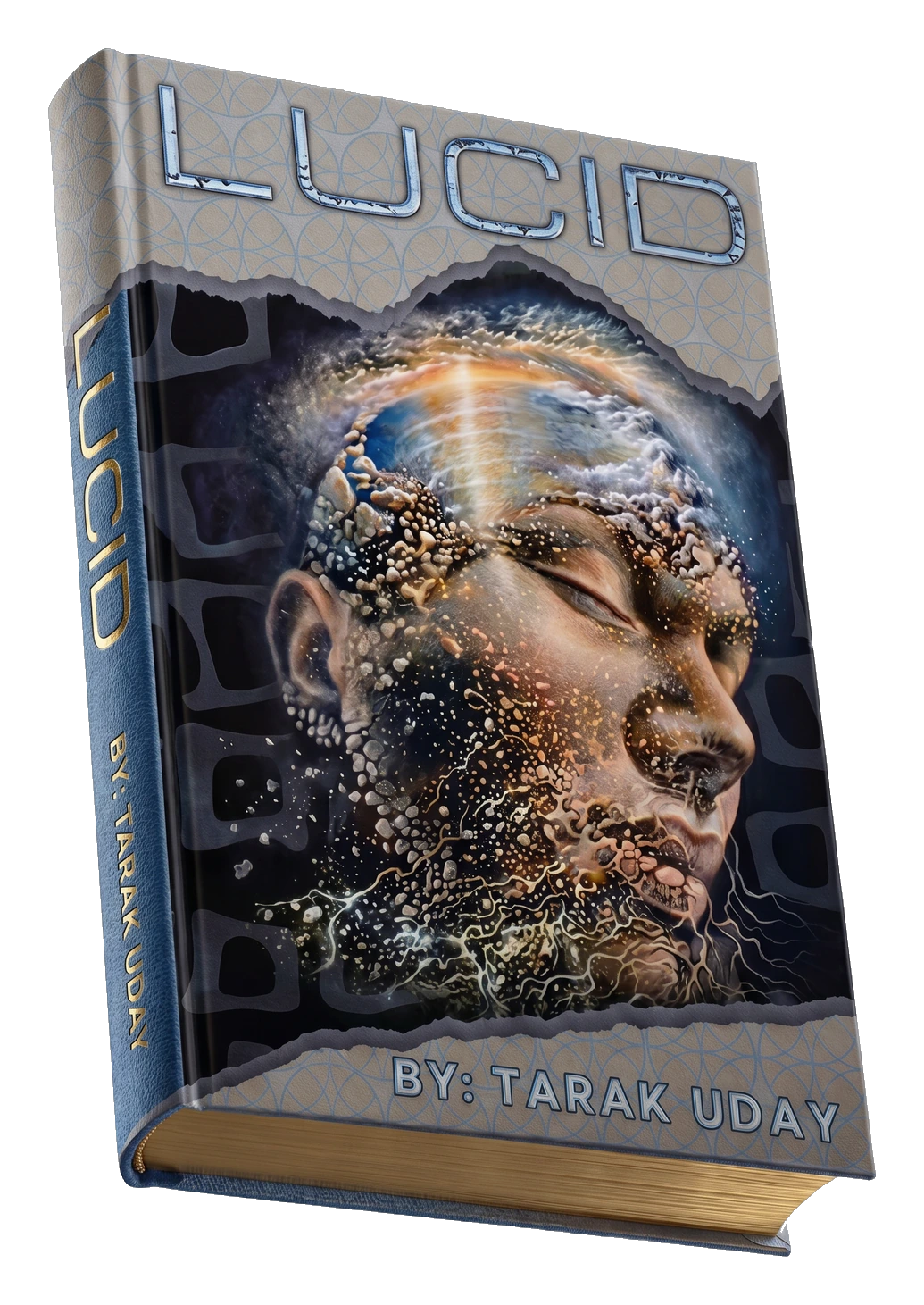
LUCID
You've tried every lucid dreaming technique. Most miss the root cause. LUCID reveals what they all skip.
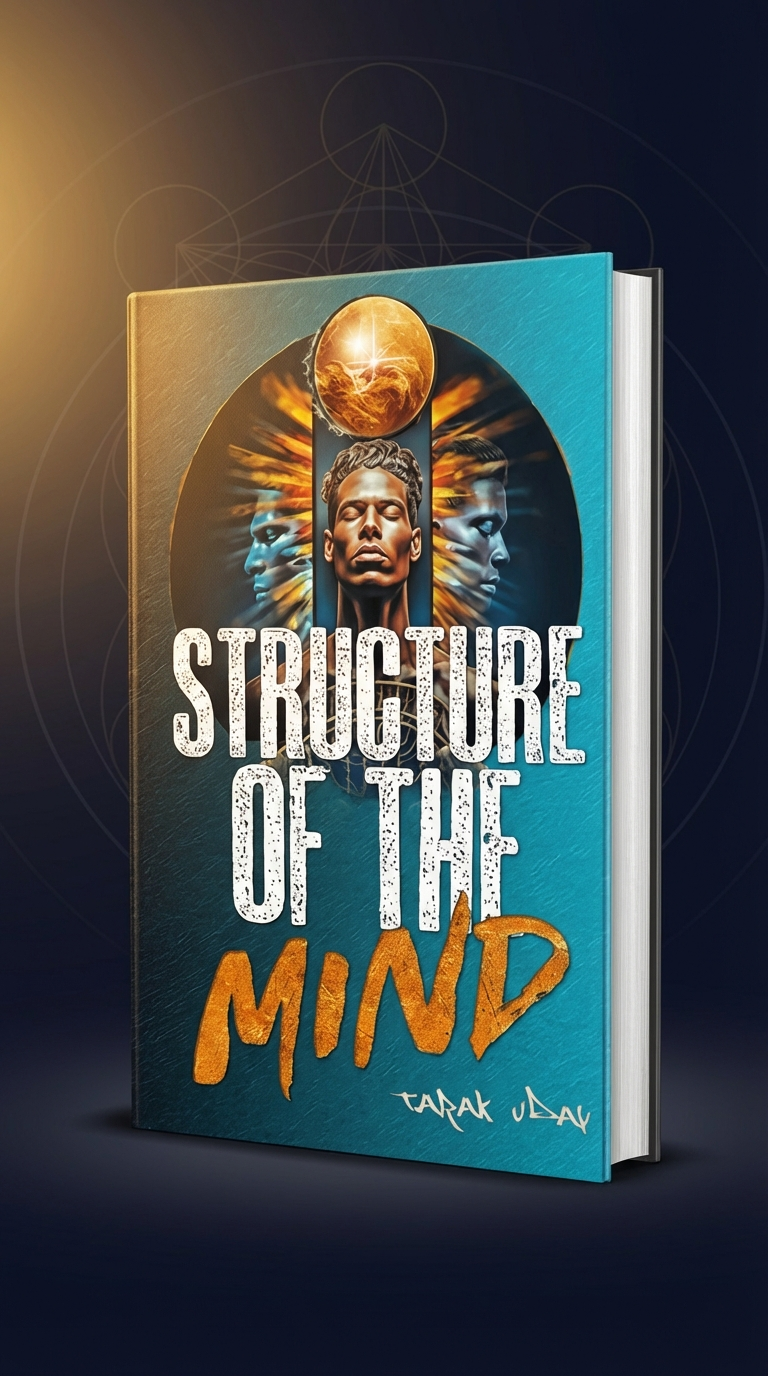
Understand Your Own Mind
"Structure of the Mind" reveals the three divisions of mind, seven levels of consciousness, and powers of mind that most people never learn to develop.