
Brother in Dreams: What Your Subconscious Is Telling You
He isn't your brother. He's the part of your conscious mind you know so well you stopped looking at it.


A brother in a dream represents a familiar aspect of the Self — specifically, a familiar aspect of your conscious mind. In the Universal Language of the Mind, the people in your dreams are almost never other people. They are characteristics within your own personality. Family members represent qualities you already recognize as part of who you are, and a brother, being male, points to the aggressive, outer mind you use to move through physical reality.
So here's the thing nobody tells you when you wake up rattled from a dream about your brother.
You spend the whole morning wondering what's going on with him. Is he okay? Should you call? Is this one of those dreams that means something's about to happen? And that instinct — the one that sends you reaching for your phone — is exactly the instinct that keeps the message sealed.
Because your subconscious mind didn't put your brother in that dream to tell you about your brother.
It put him there because it needed a face you'd recognize instantly.
Why Isn't Your Brother in the Dream Actually Your Brother?
Let's flip the belief first, because it's load-bearing.
Most people read dreams like the news. Something happened, and the dream is reporting on it. Your brother showed up, so the dream must be about him — his health, his marriage, that argument you had in March. This is the single most common reason people read their dreams for decades and get nothing back but goosebumps.
Your subconscious mind does not report the news. It doesn't have a stake in what your brother is doing three states away. It has exactly one job: to show you the condition of you.
According to the Universal Language of the Mind that Tarak Uday teaches, every person who walks into your dream is wearing a costume made out of your own personality. You are capable of being loving, responsible, angry, giving, stubborn, vengeful, ambitious — all of it. Your subconscious needs a way to point at one of those qualities and say this one, look at this one right now. It can't hand you an abstract label. So it hands you a person you already associate with that quality.
That's the whole trick. It's not mystical. It's efficient.
Think about how casting actually works. A director doesn't pick an actor at random. She picks the one whose face already carries the thing she needs the audience to feel before a single line is spoken. Your subconscious is the most economical director who ever lived. It has one night, no dialogue budget, and a message that has to survive your waking-up amnesia.
So it reaches for the shorthand. It reaches for family.
What Does It Mean That Your Brother Represents the Conscious Mind?
Here's where the Universal Language of the Mind gets specific in a way that generic dream sites never do.
Gender in a dream isn't about gender. It's about function. Male figures represent the conscious mind — the aggressive, outer, reaching mind that pushes into physical reality and makes things happen. Female figures represent the subconscious mind — the receptive, inner, intuitive self that receives and gestates. This holds regardless of whether you're a man or a woman, because every single person carries both. You have a conscious mind and a subconscious mind operating right now, in this sentence.
So a sister in your dream points to a familiar quality of your inner, receptive mind. A father points to your superconscious — the lifeforce end of the pipeline. A mother points to your superconscious too — its receptive side, the part that holds your blueprint. And a brother? A brother is a familiar quality of your doing mind. The part of you that acts. Decides. Pushes. Argues. Executes.
That distinction changes the entire read.
Because when your brother shows up, your subconscious isn't flagging something soft and interior. It's flagging something operational. Something in how you're moving through the world right now. The way you handle conflict. The way you go after what you want. The way you take up space in a room — or don't.
And that word — familiar — is doing more work than it looks like.
A stranger in your dream is a quality you haven't claimed yet. Something operating in you that you'd deny if someone named it out loud. But a brother isn't a stranger. A brother is the part of you that you know. You've known it your whole life. You could describe it to someone in one sentence.
Which is exactly why you stopped looking at it.
That's the paradox your subconscious is working against. Familiarity is a kind of blindness. The traits you know best about yourself are the ones you've stopped auditing — they've been running on autopilot since you were nineteen, and nobody's checked the gauges since. Your subconscious cast the most familiar male face it could find precisely because familiarity is where you've gone unconscious.
The dream isn't introducing you to something new. It's turning the lights on in a room you walk through every day with your eyes closed.
Which Quality of His Is Your Subconscious Actually Pointing At?
Do this right now, before you keep reading. It takes four seconds and it's the whole article.
Say your brother's name in your head. Not the relationship — the name. And notice the first word that arrives.
Not the fair word. Not the word you'd say at his wedding. The first one. The one that showed up before your manners did.
Stubborn. Reliable. Golden. Reckless. Absent. Steady. Loud. Careful. Better-than-you. Whatever landed — that's the one. That's not you being unkind about your brother. That's your subconscious mind confirming the casting call in real time.
Because the quality that arrives first is the quality your subconscious was using him to name. It didn't pick him for his whole biography. It picked him for the one adjective that's welded to his face in your mind. That adjective is the aspect of your own conscious mind the dream is about.
Sit with that for a second, because it stings in a specific way.
If the word was stubborn — your dream isn't about his stubbornness. It's about yours. The place you've dug in and called it principle. If the word was reckless — there's somewhere you're moving without looking, and you've been calling it decisiveness. If the word was the successful one — your subconscious is pointing at your own capacity to achieve, and asking why you've assigned it to someone else's face instead of your own.
This is the moment most people flinch. They notice the word, feel the sting, and immediately convert it back into a story about their brother — his choices, his flaws, the thing he did in 2019. That conversion is a defense mechanism, and it's how a message that traveled all the way from your subconscious to your bedroom gets thrown away at the door.
Stay with the word. It's yours. He just carried it in.
What Is He Doing in the Dream — and Why Does That Matter More Than Who He Is?
So you've got the quality. Now you need the verb.
The Dream Symbol Dictionary is clear on this: pay attention to what your brother is doing, because that's what reveals how that familiar aspect of you is currently operating. The symbol tells you which part of you. The action tells you the condition it's in.
This is form and function — the lens that runs through everything in Tarak Uday's work. The form is the brother. The function is the verb. You need both or you've got half a sentence.
If your brother is fighting you, that familiar conscious quality is in conflict with the rest of you. Some part of your decision-making is at war with itself — and it's not subtle, because your subconscious escalated all the way to violence to get your attention.
If he's helping you, building something with you, showing up — that quality is available and working. This isn't a warning dream. It's a status report. Your subconscious is confirming that a well-known strength is online right now, and you're probably underusing it.
If he's dying, leaving, or already gone, that familiar aspect is changing. Death in the Universal Language of the Mind is never a prediction — it's transformation. Something in how you act in the world is ending so something else can take its place. Most people wake from that dream terrified for their brother's life when the actual message is that they're outgrowing an old way of moving.
If he's ignoring you, or you're chasing him and can't get his attention, you have access to that quality and you're not using it. It's in the building. It just won't return your calls.
If he's a child again, or younger than he is now, the quality is regressed or undeveloped — you're operating that part of yourself at an age you outgrew a long time ago.
Notice what all of these have in common. None of them are about him. Every one of them is a readout on the operating condition of a part of you that you already know.
What If You Don't Have a Brother — or You Haven't Spoken in Years?
This trips people up constantly, so let's clear it.
If you don't have a brother and one appeared anyway, nothing is broken. Your subconscious built a composite — a male figure carrying the felt sense of brotherhood: familiar, same-generation, an equal rather than an authority. Ask what he felt like rather than who he was. The feeling is the casting note. Familiar-and-equal is still the message, even with no real sibling behind it.
If you're estranged, the read gets sharper, not murkier. Estrangement means the quality he carries is one you've cut off from yourself. Your subconscious sent the person you refuse to speak to, carrying the trait you refuse to look at. That's not cruelty. That's precision. It used the strongest lock it had because the door's been shut the longest.
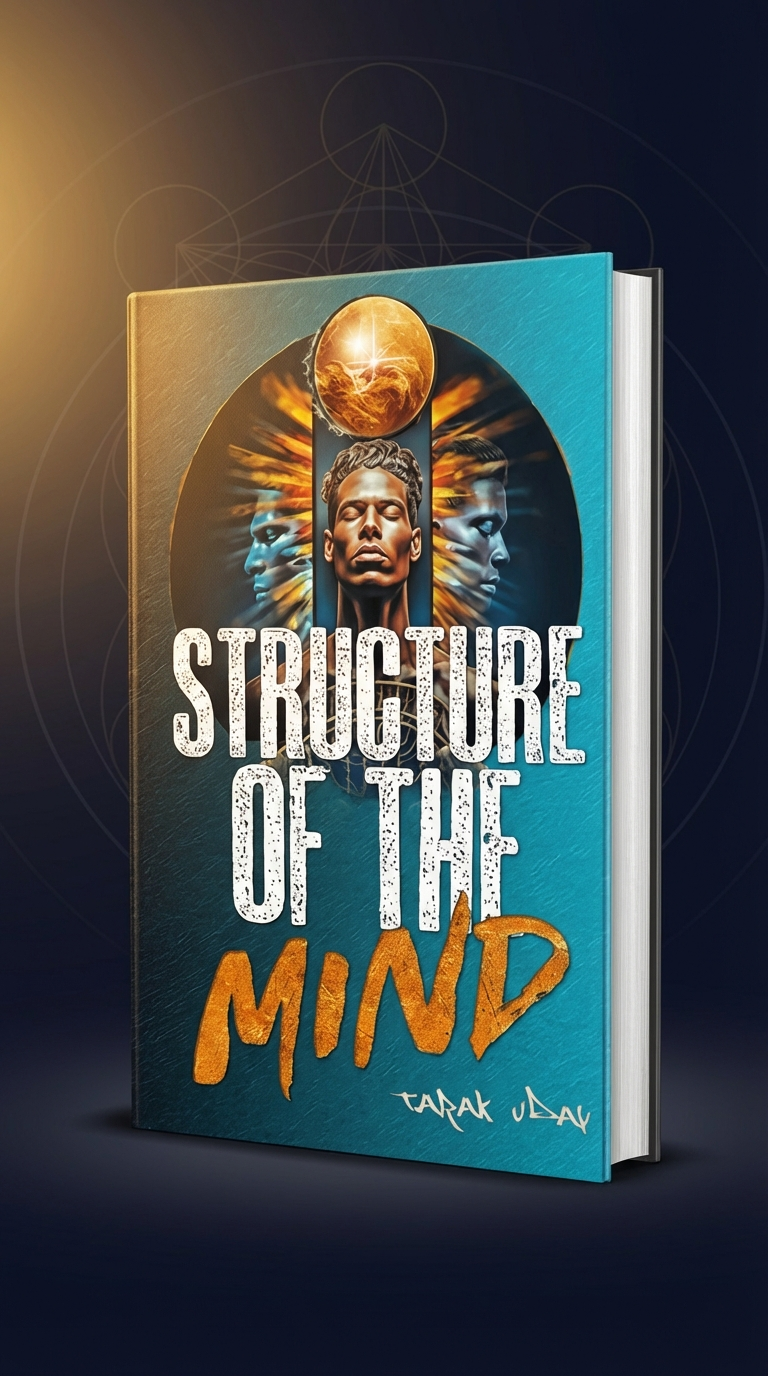
Tarak Uday takes this further in Structure of the Mind, his map of the three divisions of mind and the powers of attention, memory and imagination.
And if your brother has passed on — in most of these dreams the symbol still holds. He still represents a familiar aspect of your conscious mind, and now the dream is often about what of him lives in you. Which of his qualities you inherited, carried, or are still deciding whether to keep. A true visitation is different, and you'll know it when it comes: not much else is going on, he is the whole focus, happy and well, often younger, telling you without moving his mouth that he loves you. That one is him. The rest are you.
How Do You Read Your Own Brother Dream Tonight?
Three moves. That's it. You already did the first one.
First, the word. You did this above — the adjective that arrived before your manners did. Write it down. That's the aspect of your conscious mind under review.
Second, the verb. What was he doing? Not the whole plot — the one action carrying the emotional weight of the dream. Fighting, leaving, laughing, building, refusing to look at you. That's the condition that aspect is in.
Third, the sentence. Put them together in this exact shape: My [word] is [verb]. My stubbornness is fighting me. My ambition is leaving. My steadiness is helping me build something. My competence is ignoring me.
Say it out loud. If it lands with a small physical thud somewhere behind your sternum — that's it. Your body confirms the read faster than your mind does, and that confirmation isn't a metaphor. It's how recognition works.
Then ask the only question that matters: is that aspect serving me, or does it need adjustment? That's the question the Dream Symbol Dictionary ends the brother entry on, and it's not rhetorical. The context of the dream will tell you. It always does.
And he's only one seat at the table. Your father in a dream reaches up into the superconscious — the lifeforce end of the pipeline, reporting on why you're drained or why you're lit up. Your mother in a dream is the receptive side of your superconscious, holding the blueprint your whole existence gets built from. Your grandmother, too, is that receptive quality of the superconscious, the keeper of the blueprint. Your brother sits at eye level, holding the conscious mind's most familiar tool. Read them together and you stop reading dreams one symbol at a time — you start reading the architecture.
Here's what I want you to sit with.
You woke up this morning worried about your brother. You may have even texted him. That worry was real and it was kind — but it was aimed one address too far to the left.
The person your subconscious mind was worried about was you.
It cast someone whose face you'd know before you were even fully asleep. It gave him one quality, put him in one action, and sent him across the whole architecture of your mind to reach you for about ninety seconds before your alarm went off. That's not noise. That's a division of your own mind doing the only thing it has ever done — trying to show you the condition of you clearly enough that you'd finally do something about it.
Your brother in the dream is a familiar aspect of the Self.
The whole point of the word familiar is that you already know. You've always known. The dream isn't teaching you something new — it's asking whether you're going to keep pretending you don't.
So. What's the word?
And what's it doing?
Tarak Uday is the author of Life is But a Dream and LUCID, and the compiler of the 828-entry Dream Symbol Dictionary that underpins CHITTA's interpretation engine. His work traces the Universal Language of the Mind — the single symbolic grammar the subconscious uses in every dreamer, in every language, in every era.
Frequently Asked Questions


Books by Tarak Uday
Understand Your Own Mind
"Structure of the Mind" reveals the three divisions of mind, seven levels of consciousness, and powers of mind that most people never learn to develop.

Learn The Language Your Dreams Speak
"Life Is But a Dream" teaches the Universal Language of the Mind — how to read any dream symbol by what it is and what it does, so every dream becomes a message you can act on.

LUCID
You've tried every lucid dreaming technique. Most miss the root cause. LUCID reveals what they all skip.