
Childhood Home in Dreams: Your Mind's Older Blueprint
Why your subconscious keeps rebuilding a house you left decades ago


You are in the hallway again. The one with the low doorway. You know every inch of this place. You have not lived here in twenty years.
Here is the direct answer. In the Universal Language of the Mind, a house is a state of mind. Your childhood home is an earlier structure of your own mind, the way you organized your thinking back when that house was your entire world. When it shows up in a dream, your subconscious is telling you that structure is still standing, and you are still living inside part of it.
So let's get the wrong answer out of the way first, because you have already read it somewhere. Every dream site on the internet will tell you the same three things. You are nostalgic. You have unresolved childhood wounds. Your inner child needs attention. And every one of those answers points you backward, into the past, toward a time you cannot reach and cannot change.
That is the mistake. Your subconscious has no interest in your past. It does not archive. It does not reminisce. It communicates in pictures, in the present tense, about what is happening in you right now. That house is not a memory. It is a diagram.
Why Does Your Subconscious Keep Rebuilding a House You Already Left?
Think about what your mind had to do to put that house on the screen last night. It had to reconstruct the exact width of the stairwell. The angle of the light in the kitchen at four in the afternoon. The sound the screen door made. That is an enormous amount of construction work for a building you supposedly do not care about anymore.
Your subconscious does not waste effort. It builds what it needs to communicate. And it reached for that particular house because it needed a picture of a particular state of mind, and that house is the most precise picture of it you own.
Here is the part nobody tells you. You did not stop using that state of mind when you moved out. A state of mind is not geography. It is structure. It is the arrangement of what you believe, what you assume, what you never questioned because you were seven and nobody told you it was a question. You built that arrangement inside those walls. Then you packed a car and drove away and left the arrangement completely intact.
According to the Universal Language of the Mind that Tarak Uday teaches, the house in a dream reflects the condition of the mind at the time of the dream. Not the condition of the mind in 1998. Right now. So when your mind hands you your childhood home tonight, it is not saying "remember this." It is saying "you are using this."
The correction: Your childhood home in a dream is not your past. It is an older blueprint of your mind that is still load-bearing in your present. The dream is a floor plan of what you are currently thinking with.
That reframe changes everything about how you read the dream. You stop asking "what happened to me back then" and start asking "what am I still running on."
What Does a House Actually Mean in the Universal Language of the Mind?
The Universal Language of the Mind is not a dream dictionary in the way you are used to. It does not assign meanings by tradition or culture or vibe. It reads symbols by form and function. What is the thing? What does it do? The answer to those two questions is the meaning, and it is the same for every dreamer on earth, because minds are built the same way regardless of the language you speak while awake.
So apply it. What is a house? A structure you live inside. What does it do? It holds you. It organizes your existence into rooms with purposes. It has an inside and an outside, and it decides what gets in.
Now name the thing you live inside, that holds you, that organizes your existence into compartments, that has an interior and an exterior and a filter deciding what gets through.
That is your mind. That is why a house is a state of mind. Not your body, which is a car, a vehicle you drive through the physical world. The house is the mind itself. Tarak Uday's Life is But a Dream is built on exactly this lens, form and function, and once you have it you cannot unsee it.
And a house in a dream read this way stops being mysterious. It becomes readable. Is it clean? Is it flooded? Is it under renovation? Is it on fire? Each one is a diagnostic sentence about the condition of your thinking, written in the only language your subconscious speaks.
You did not leave that house. You moved out of the building and kept the floor plan.
Why Do the Rooms Matter More Than the House Itself?
Most people report the dream as "I was in my childhood home" and stop there. That is like reporting a book by its cover. The address is not the message. The room is the message.
A house has floors, and in the Universal Language of the Mind those floors map directly onto the three divisions of mind. The first floor is the conscious mind, the aggressive waking mind you use to have experiences in this physical reality. The second floor is the subconscious, where your understandings are stored as permanent wisdom. The third floor and the attic are the superconscious, the level closest to your Real Self, holding the blueprint of your purpose. The basement is what is unconscious to you, the part running underneath your awareness entirely.
So where were you standing? That is not a detail. That is the whole address of the dream.
If you were in your childhood kitchen, you were in a conscious-mind space about knowledge, because food is knowledge from life experiences and the kitchen is where it gets prepared. You are working with what you learned in that era. If you were in your old bedroom, you were in a room about rest and regeneration and the private self. If you climbed the stairs to the attic, your dream moved you from the conscious mind up to the superconscious mind, and that stairway is the entire point of the dream, not a transition scene.
And if you found a room in that house that never existed, pay close attention. Discovering hidden rooms is active evidence that your consciousness is expanding. Your subconscious is showing you that the old blueprint has more capacity than you ever used. There was more mind in there the whole time. You just never opened that door because you were a kid and kids do not go looking for rooms nobody mentioned.
Read the rooms of a dream house like sentences and the dream stops being a mood and starts being a message.
Stop guessing at your own dreams. CHITTA decodes your dreams in the Universal Language of the Mind, the same form-and-function framework used here, so you get the actual mechanics instead of an internet horoscope. Interpret your dream free and see what your mind has been building.
What Are the Most Common Childhood Home Dreams Really Saying?
Let's take the ones that actually show up, because the variations carry the precision.
The house is exactly as it was. Nothing has changed, every object in place. Your subconscious is reporting that this state of mind has not been updated. Not one belief in that arrangement has been touched since you built it. That is neutral information, not an accusation. But it is worth asking what a mind you assembled before puberty is still deciding for you.
The house is decaying or falling apart. The structure is failing. This is one of the better dreams you can have, even though it feels terrible. An old mental structure losing integrity means it is no longer holding you the way it did. Something in you outgrew it and the building is reporting the strain. Decay in a dream house is not loss. It is the beginning of renovation.
You cannot get in. The door is locked, the key is wrong. Access to that state of mind is blocked. Some part of your history is currently closed to your conscious mind, and you are standing outside a piece of yourself trying to remember which pocket you left it in.
Someone else is living there. Another aspect of self has taken over that state of mind. Who is it? A man reflects an aspect of your conscious mind. A woman reflects an aspect of your subconscious. A stranger is an aspect of yourself you have not met yet. The house did not get invaded. It got reassigned.
The house is bigger on the inside, or the layout is wrong. Your mind is telling you the structure you remember is not the structure that is actually there. Your understanding of your own foundation is inaccurate. The dream is correcting the floor plan in real time.
You keep going back, night after night. Recurring dreams are an unlearned lesson being repeated. The subconscious does not repeat itself for atmosphere. It repeats because the message has not landed yet, and it will keep sending you back to that hallway until you read what is written on the walls.
How Do You Stop Living in a Mind You Outgrew?
Here is where the mirror comes up, so look into it honestly.
Tarak Uday takes this further in Life Is But a Dream, his guide to reading every dream in the Universal Language of the Mind.
You are an adult. You make decisions all day. And some percentage of those decisions are not being made by the adult. They are being made by the arrangement you built in that house, running quietly underneath, the way a thermostat runs a building nobody thinks about.
The way you go quiet when a voice gets a certain edge. The way you assume you have to earn the room. The way you make yourself small before anyone has asked you to. None of that is your personality. That is architecture. You built it in that house because in that house it worked, and you never demolished it because nobody demolishes a wall that is holding something up.
So the dream comes. Not to make you sad about your childhood. To show you the blueprint you are still standing on.
The work is simpler than the drama around it suggests. Start writing the dreams down, because you cannot renovate a structure you cannot see, and dream recall is the only tool that puts the floor plan on paper. Then get specific. Not "I dreamed of my old house." Which room. What condition. Who was there. Which floor. Every one of those is a coordinate.
Then ask the only question that matters: what belief did I build in this room, and do I still agree with it?
That is the moment the dream was engineered for. Not the interpretation. The disagreement. The instant you look at an assumption you have carried for thirty years and say, out loud, I do not believe that anymore. That is a wall coming down. And your subconscious will show you the new floor plan the same night, because in the Universal Language of the Mind the house always reports the current condition.
You are not haunted by that house. You are its architect. And you are allowed to renovate.
What Do People Most Often Ask About Childhood Home Dreams?
Does dreaming of my childhood home mean I want to go back? No. Your subconscious is not sentimental and does not deal in wishes about the past. It handed you that house because it is the clearest image you own of a state of mind you are using today. The dream is about your present, drawn with material from your memory.
Why does the house feel wrong or laid out differently? Because the state of mind it reflects is not what you assume it is. When the layout distorts, your subconscious is correcting your inaccurate map of your own foundation. Trust the dream's floor plan over your memory of the real building.
Is it bad if the house is destroyed or on fire? No. An old mental structure breaking down means it has stopped holding you the way it did. Destruction in a dream house is transformation, not loss. Something in you outgrew the arrangement, and the building is honestly reporting it.
What if strangers are living in my childhood home? Strangers are unfamiliar aspects of yourself. That state of mind is now being occupied by a part of you that you have not consciously met. The dream is an introduction, not a break-in. Ask what that figure was doing, and you will know which part of you moved in.
Frequently Asked Questions


Books by Tarak Uday

Learn The Language Your Dreams Speak
"Life Is But a Dream" teaches the Universal Language of the Mind — how to read any dream symbol by what it is and what it does, so every dream becomes a message you can act on.

LUCID
You've tried every lucid dreaming technique. Most miss the root cause. LUCID reveals what they all skip.
Understand Your Own Mind
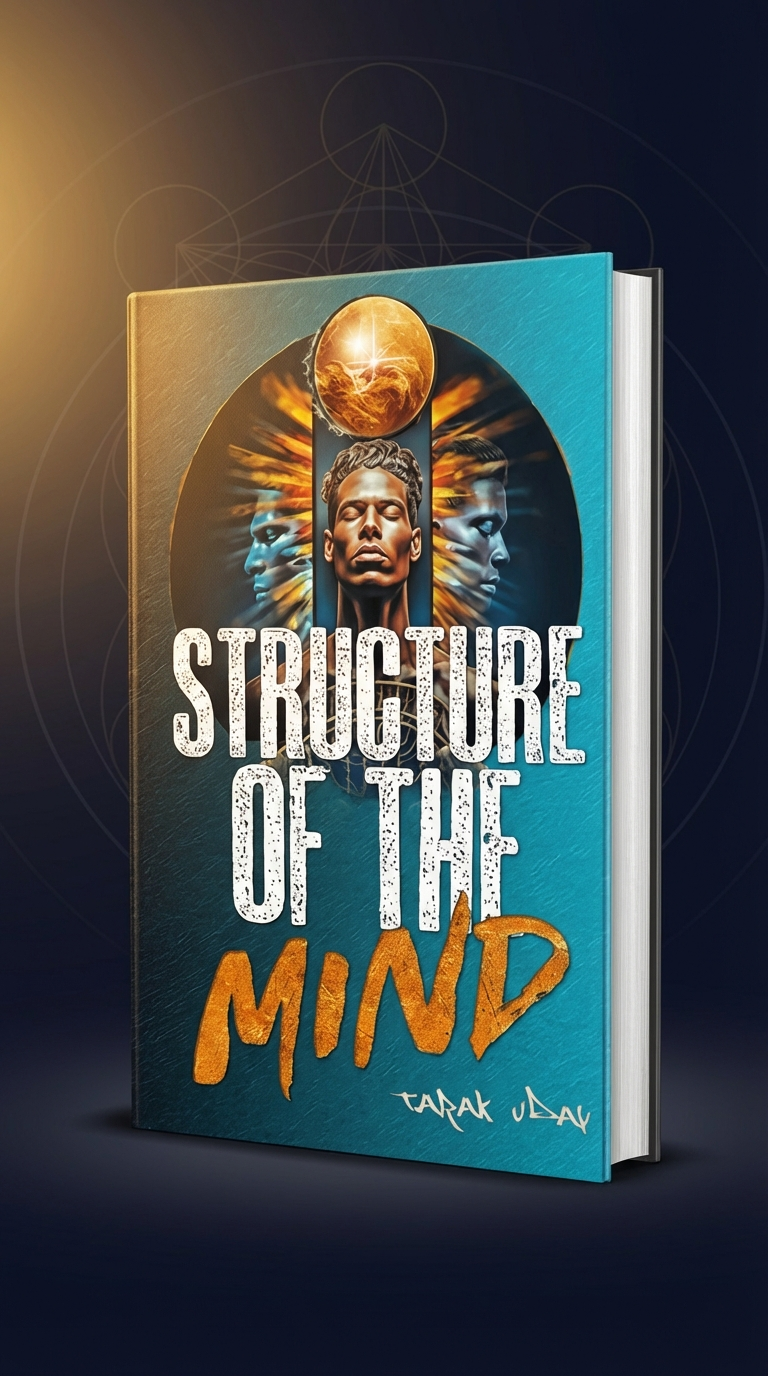
"Structure of the Mind" reveals the three divisions of mind, seven levels of consciousness, and powers of mind that most people never learn to develop.