
Desert in Dreams: Meaning and Interpretation
Not empty — dormant, and waiting on water
You woke up from a desert and reached for the obvious word. Empty. Maybe lonely, maybe dry, maybe some version of "I'm going through a barren patch." Then you got on with the day, because a dream about sand doesn't seem to demand much follow-up.
Here's what that reading misses. A desert isn't empty — it's specific. In the Universal Language of Mind, water is conscious experience, the living, nourishing flow of what you actually engage with. So a desert is an area of your mind where that flow stopped. Not a place where nothing exists. A place where something stopped being watered, and the ground remembers exactly what used to grow there.
Water is conscious experience. A desert is a region of your inner life that stopped receiving it. The dream isn't reporting emptiness — it's naming the exact place where you stopped showing up.
What does a desert actually mean in a dream?
Take the function first, the way the Universal Language of Mind always does. What does a desert do? It withholds water. It exposes everything — there's nowhere to hide and nothing between you and the horizon. It preserves whatever is left in it, sometimes for thousands of years. And it demands that you carry your own supply, because it will not provide one.
Each of those functions translates directly. An area of your life with no nourishment coming in. A place where you can see everything clearly because nothing is left to obscure it. A part of you where old things have been perfectly preserved rather than decomposed. And a situation that runs entirely on what you brought with you.
That last one is the reason desert dreams feel the way they do. Everywhere else, you're partly carried by circumstance. In a desert you're not. Whatever you have is what you packed, and the dream is usually arriving at a moment when that's literally true of your waking life — a season where the external support has thinned out and you're running on reserves.
Tarak Uday makes the point that the subconscious never chooses a landscape for atmosphere. It chooses it for accuracy. If it had wanted to say "I feel sad" it had a hundred easier images. It said desert because the specific mechanics of a desert — dryness, exposure, preservation, self-supply — match something in your life exactly.
Why does the same desert feel peaceful to one dreamer and terrifying to another?
Because a desert has two entirely different meanings depending on whether you chose it, and your subconscious tracks that distinction precisely.
A desert you were dumped in is deprivation. Something dried up without your consent — a friendship that quietly stopped, a career that stopped feeding you, a practice you loved and haven't touched in two years. These dreams carry thirst, panic, or the particular dread of not knowing which direction to walk. The message is that something needs water and you've been treating the drought as permanent scenery.
A desert isn't empty. It's the exact place where you stopped watering something, and the ground still remembers.
A desert you walked into deliberately is something else entirely — it's stripping away. Every tradition that ever produced anything worth reading sent people into one on purpose, and not because suffering is noble. It's because a desert removes input. When there's nothing to distract you, what remains is what's actually yours. Dreamers in this second category often wake up calm, sometimes exhilarated, and they're usually in a period of deliberate simplification: fewer commitments, less noise, a decision to stop consuming and start thinking.
So the diagnostic question isn't "was it a desert." It's "how did you get there, and did you have water." Those two details separate a warning from a confirmation, and they're the first things to forget if you don't write them down.
What does it mean to be lost in a desert or searching for water?
This is the most common version of the dream and the most actionable.
Searching for water is searching for conscious experience — for something real to engage with. Not entertainment, which is why people who are saturated with content still have this dream. Entertainment is not water. In the Universal Language of Mind, water is what you actually participate in and are nourished by, and you can consume ten hours of input a day while receiving none of it.
So if you're wandering, look at what you're wandering for. A dreamer searching desperately with no direction describes someone who knows something is missing but hasn't identified what. A dreamer walking toward a specific point on the horizon is in much better shape — the direction exists, the arrival just hasn't happened yet.
Then there's the mirage, which deserves its own attention. A mirage is a false source that appears exactly where you most want a real one. It's the thing you keep going back to that never actually nourishes you — the relationship you re-enter, the purchase, the scroll, the plan you keep re-planning instead of starting. Your subconscious drawing a mirage is not mockery. It's a precise warning that you've been spending your remaining energy walking toward something that has never once delivered, and it's the single most useful image the desert can hand you.
A sandstorm belongs in this same section and is different from both. Where a mirage misleads you, a sandstorm removes your ability to see at all — the ground itself lifts up and becomes the thing blocking you. That's a dry situation stirred into agitation, where the very material of your circumstances is now in the air and there's nothing left to navigate by. So the instruction it implies is the one every desert traveller already knows: don't walk. Stop, cover, wait for it to settle. Moving during a sandstorm is how people get lost within sight of where they meant to go.
Whether you had water, which way you walked, whether the sand was hot — these vanish within a minute of waking. CHITTA captures the dream while it's whole and reads it back in the Universal Language of Mind. Start your dream journal free.
What is an oasis telling you?
An oasis is the best news in the entire desert vocabulary, and most dreamers underrate it.
An oasis is a real source inside a barren region. It says the drought is not total — there's a specific place, in the middle of the dry area, where conscious experience is still flowing. That's not a consolation prize. In a desert, one real source is the difference between survival and everything else.
So identify it when you wake. Almost everyone in a genuinely dry season still has one thing that reliably gives: one friendship, one hour of the week, one practice, one part of the work that still feels alive. The dream is pointing at it and telling you to stop treating it as incidental. People in drought habitually neglect their oasis because it seems small next to the scale of the dryness. That's backwards. The oasis is where the water table is closest to the surface — which means it's where digging actually works.
And notice whether you drank. Reaching an oasis and not drinking from it is one of the more pointed images your subconscious can produce, and it describes exactly what it looks like: having access to something nourishing and not taking it, usually out of guilt, hurry, or the belief that you should be solving the desert instead.
Tarak Uday takes this further in Life Is But a Dream, his guide to reading every dream in the Universal Language of Mind.
What if the desert is blooming or full of life?
Then you're being shown the thing deserts are actually famous for among people who know them, which is that they are not dead. They're dormant. Every seed in a desert is waiting on one variable, and it isn't time. It's water.
A dream of a desert in bloom — flowers across sand, unexpected green, life where you'd sworn there was none — is one of the most encouraging images in the whole symbol set. It says the capacity was never lost. It was preserved, exactly the way a desert preserves things, and something has started flowing again. These dreams frequently arrive early in a recovery, often before the dreamer consciously believes anything has changed.
Desert life more generally works the same way. Animals, insects, a lizard on a rock, a plant with deep roots — these are the parts of you that adapted and kept functioning in low conditions. They're worth respecting rather than pitying. Whatever survived your dry season did so by developing something the well-watered version of you never had to build.
And a desert at night, which many dreamers describe as unexpectedly beautiful, is the same region under different conditions. The heat is the pressure; the stars are the perspective that only becomes visible when the glare drops. So a night desert dream isn't a darker version of the message. It's usually the calmer, clearer one.
Notice too whether you were alone. Deserts in dreams are usually solitary, and that's accurate — the dry regions of a life tend to be exactly the ones nobody else can see you in. So a companion, a caravan, or a set of tracks left by someone who crossed before you is a meaningful addition rather than background. It says this particular barren stretch has been crossed by others, and that you're navigating with something more than your own guesswork.
What should you do after a desert dream?
Name the region first. A desert dream is always about a specific area, not your whole life, and the mistake people make is generalising it into "everything is barren." It isn't. Ask which part of your life has had no new input for months — a relationship you're maintaining but not tending, a skill gone stale, a body you stopped moving, a mind you stopped feeding anything demanding.
Then check your supply. In a desert you run on what you carry, so ask honestly what your reserves are made of and how much is left. People in long dry seasons tend to discover they've been running on a reserve that ran out some time ago and haven't noticed, because the depletion was even.
Then water one thing. Not the whole desert — that's how people stay in them, by staring at a scale of problem no one could act on. Pick the smallest specific place where nourishment actually reaches: one conversation, one page, one walk, one hour of something you engage with rather than consume. In the Universal Language of Mind, conscious experience is water, and water is what turns preserved seed into growth. The ground was never dead. It was waiting on you to bring something to it.
That's why your subconscious drew sand instead of ruins. Ruins would have meant something ended. A desert means something is dormant — and dormant is the most hopeful diagnosis your mind has.
Frequently Asked Questions


Books by Tarak Uday

Learn The Language Your Dreams Speak
"Life Is But a Dream" teaches the Universal Language of Mind — how to read any dream symbol by what it is and what it does, so every dream becomes a message you can act on.
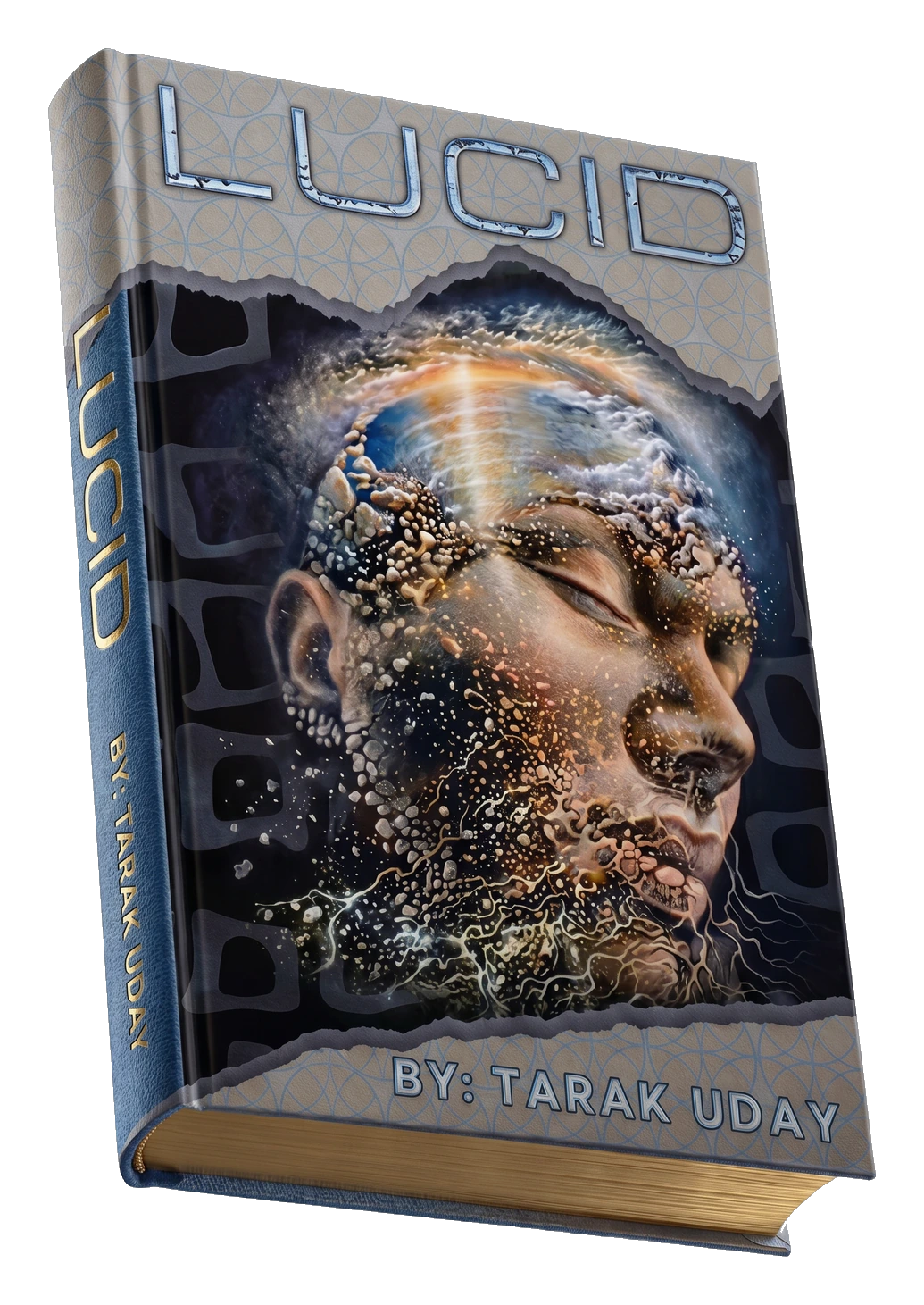
LUCID
You've tried every lucid dreaming technique. Most miss the root cause. LUCID reveals what they all skip.
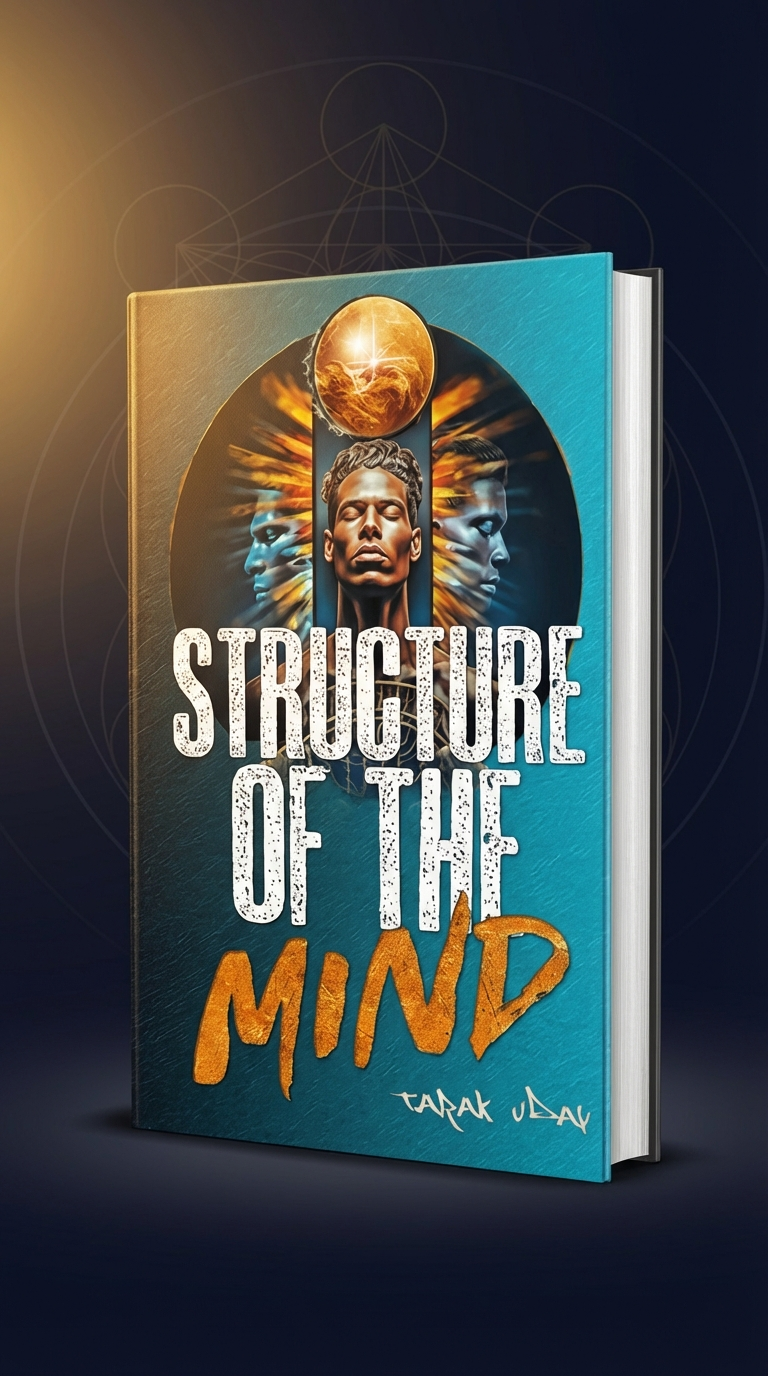
Understand Your Own Mind
"Structure of the Mind" reveals the three divisions of mind, seven levels of consciousness, and powers of mind that most people never learn to develop.