
Throne in Dreams: The Seat of Your Inner Authority
Not power over anyone — occupancy of the seat that was already yours
You dreamed of a throne, and it stayed with you in a way an ordinary object wouldn't. There was a seat, raised, ornate, unmistakably built for one person, and everything in the dream arranged itself around it. Maybe you were on it. Maybe it was empty. Either way you woke up with a reading already forming: this is about power, or about ego, or about wanting to be important.
That reading is the one to put down. In the Universal Language of Mind a throne is stability — specifically, the stability that comes from knowing your own inner authority and using it. And the authority in question isn't social. It's the superconscious mind, the part of you that already knows the direction of your own life, and a throne is the seat your dream built for it.
A throne is not power over anyone. It's the seat of your inner authority, and the dream is reporting its occupancy — whether that authority is seated, vacant, or has been handed to something else.
What does a throne actually mean in a dream?
Function first, always, because appearance is where dream dictionaries go wrong and function is where this language actually lives. So what does a throne do? It seats exactly one. It does not move. It sits higher than everything around it. And it holds its authority whether or not anybody is in it — an empty throne is still a throne, which is not true of an empty chair.
Every one of those maps directly. Something in you that is singular and cannot be shared or delegated. Something fixed, which is why the dream feels stable even when its content is strange. Something above your ordinary reasoning, which is exactly where the superconscious mind sits in the three divisions of mind. And an authority that exists in you continuously, regardless of whether you're currently drawing on it.
That last quality is the reason throne dreams feel so different from anxiety dreams. Nothing is pursuing you. Nothing is falling. There is a settled, almost still quality to them that dreamers often report and then distrust, because they assume a dream about a throne must secretly be about vanity. The stillness is accurate. You're looking at the one structure in your inner life that doesn't need maintaining.
Notice the room the throne was in, too. A throne in a hall built around it reports inner authority that has an established place in how you run your life. A throne in a field, a basement, a corridor, or somewhere it plainly doesn't belong reports the same authority with no structure around it — present, real, and currently unhoused.
An empty chair is furniture nobody is using. An empty throne is an authority nobody is exercising. Your mind knows the difference and picked one.
Why a throne and not just a chair?
A chair has its own meaning in this language, and it isn't a smaller version of this one. A chair is about supporting yourself through rest — whether you let yourself stop carrying your own weight. It's a symbol about relaxation and self-support, and its condition tells you how well you're doing at giving yourself a break.
A throne carries none of that. Nobody rests on a throne. So when your subconscious mind had the whole vocabulary of seating available and chose the one seat that isn't for resting, it removed rest from the reading entirely. What's left is position, singularity and elevation, which is the shape of authority rather than the shape of support.
You may also have met the word used loosely — a habit that rules you, a belief that took over the throne, a fear in charge of your decisions. That usage is a good metaphor and a different thing. The dream symbol is stricter: the throne itself is never the habit. It's the seat, and the whole question the dream raises is what is currently in it.
Which is why a throne dream can arrive during a period when you feel powerless and still be reporting something solid. The seat doesn't disappear when you stop using it. That's the difference between authority and confidence, and it's the piece most dreamers need.
What does it mean if the throne was empty?
This is the most common version and the most misread. An empty throne feels ominous — a vacancy, something missing, maybe something taken. Dreamers describe standing in front of it and not approaching.
What it actually reports is inner authority that is available and unexercised. Your superconscious mind hasn't gone anywhere; you simply haven't been making decisions from it. In waking life that maps to a very recognisable stretch: you know what you should do, you've known for a while, and you keep running the question through reasoning and opinion instead of acting on the thing you already know. So the seat is drawn, correctly, as unoccupied.
The detail that sharpens this is your distance from it. Standing at the foot of an empty throne reports awareness of your own authority and hesitation to claim it. Seeing it across a hall you can't cross reports the same authority experienced as belonging to someone more qualified. And finding an empty throne in a ruined or abandoned place reports a longer stretch — an authority you stopped consulting so long ago that the structure around it has gone unused too.
None of these is a warning and none of them is a loss. An empty throne is the most workable dream in this family, because the only thing standing between the frame you saw and a different frame is one decision made from certainty instead of from debate.
What if someone else was sitting on it?
Then read who, because in this language every figure in your dream is an aspect of you, and the identity of the occupant is the specific message.
A parent, a grandparent, a teacher or an authority figure on the throne is the gentlest version. Those figures already carry superconscious meaning in dreams, so this frame reports your inner authority seated and functioning — just recognised as coming from outside you rather than from within. It's accurate and incomplete, and the correction is simply to notice that the knowing was yours the whole time.
A stranger on the throne is a different report. A stranger is an unknown aspect of yourself, so this describes authority being exercised by a part of you that you haven't identified yet. Dreamers often find this unsettling and it's usually good news — something in you is deciding well, and you don't yet know what to call it.
Someone you actively resent on the throne is the one worth sitting with. Your dream is not telling you that person controls you. It's using them as the clearest available image of a quality you've refused to own, now placed in the seat of your own authority. Tarak Uday teaches that the dreaming mind is a literalist about function and entirely indifferent to your preferences — it will cast whoever renders the message most precisely, and it will not soften the casting to spare you.
And a child on the throne reports authority being exercised by an undeveloped part of you. That is the frame behind a lot of decisions people can't later explain: not a failure of will, just the wrong aspect of self in the seat.
Who was on the throne, how far away you stood, what room it was in — the reading turns entirely on those, and they're the first things to go. Write the dream into CHITTA and have it decoded in the Universal Language of Mind. Start your dream journal free.
What if you were on the throne and it felt wrong?
Plenty of dreamers report exactly this: seated, elevated, apparently in charge, and deeply uncomfortable. Some describe the throne being too big. Some can't get up. Some are waiting to be found out.
A throne that's too large reports authority you hold and have not grown into — real, correctly yours, and not yet inhabited. That dream tends to arrive early in something, a few weeks after a promotion or a move or a decision that raised your position faster than your sense of yourself moved.
Being unable to leave the throne is a separate reading and a more useful one. Inner authority is meant to be used and then stepped away from; you consult what you know, you act, you go back to living. A dreamer stuck in the seat is reporting a period of deciding constantly — every small thing escalated to a matter of principle, nothing delegated to habit. That's exhaustion wearing the costume of responsibility.
And the fear of being exposed while seated is the clearest of the three. Nobody can be a fraud in their own superconscious mind. The seat doesn't verify credentials, and the discomfort is only the conscious mind, which works by reasoning and evidence, finding itself in a position that runs on knowing instead. So the unease isn't a signal that you don't belong there. It's the specific feeling of using a faculty you don't usually use.
What do you do after a throne dream?
Find the decision first. There is almost always exactly one — a thing you already know the answer to and keep reopening. A throne dream doesn't arrive during genuine uncertainty; it arrives when certainty exists and isn't being acted on. So don't go looking for a big life question. Look for the one you've stopped gathering information about because the information stopped changing anything.
Then make it once, from knowing rather than from reasoning. Not impulsively — knowing and impulse are opposites, and you can tell them apart by how quiet they are. Reasoning argues. Impulse pushes. The superconscious mind simply states, and it doesn't restate.
Then get out of the seat. Do the next ordinary thing on your list, deliberately, without re-examining the decision. This is the part people skip, and skipping it is how a single clear choice turns into a week of relitigating. Inner authority produces stability precisely because it isn't consulted about everything.
So stop treating the throne as a question about whether you deserve it. It's the one piece of your inner life that was built before you had an opinion about yourself, and your subconscious mind drew it because you have something to decide. Sit down, decide it, and go and live the rest of the day.

Frequently Asked Questions



LUCID
You've tried every lucid dreaming technique. Most miss the root cause. LUCID reveals what they all skip.
Understand Your Own Mind
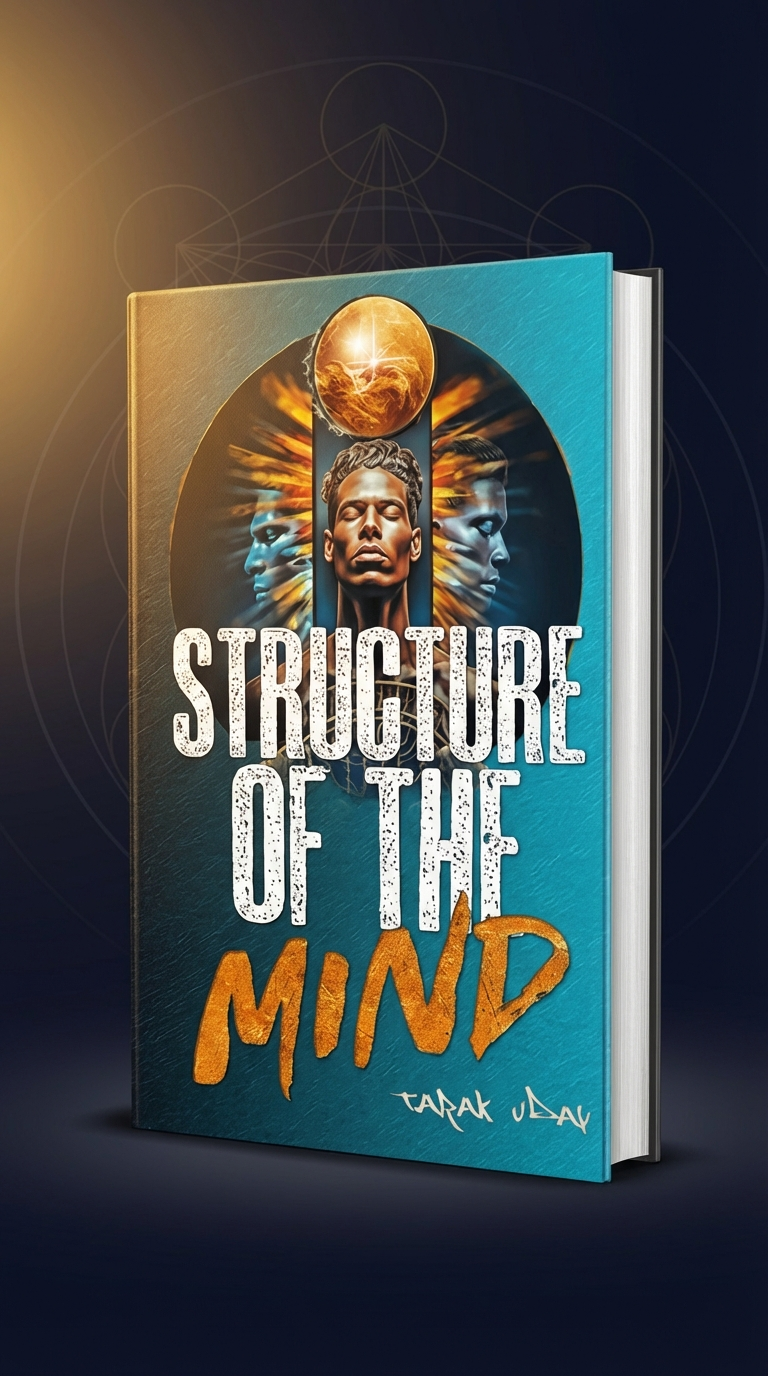
"Structure of the Mind" reveals the three divisions of mind, seven levels of consciousness, and powers of mind that most people never learn to develop.