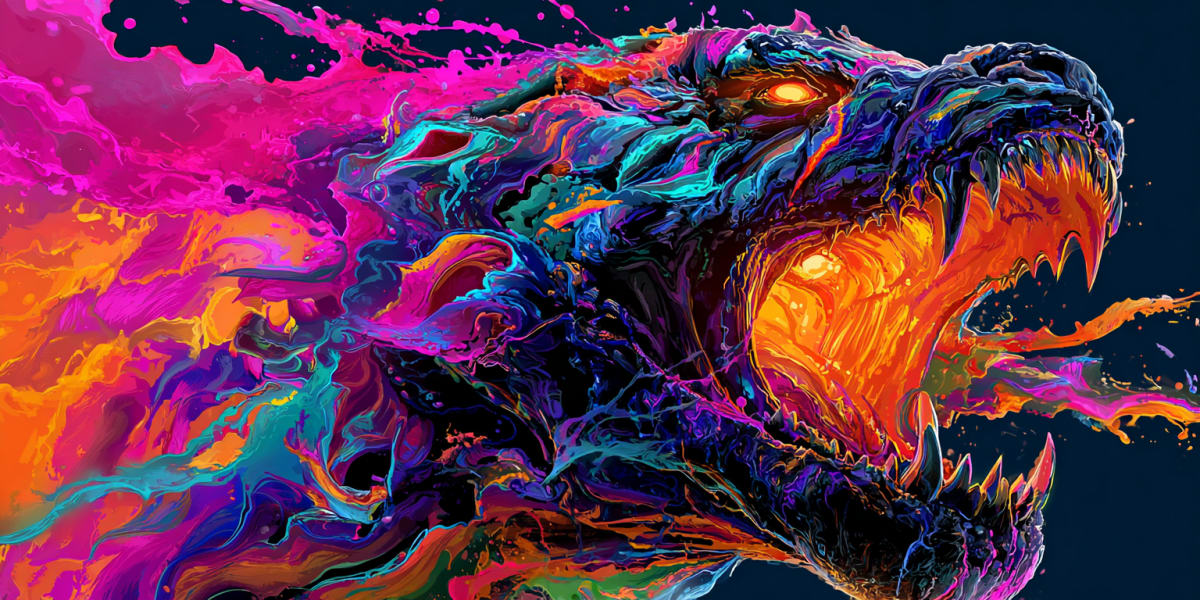
Dragons in Dreams: What Your Subconscious Is Really Telling You


The dragon never behaves like a normal monster.
A monster in a dream chases you. It's stupid and relentless and it wants one thing. A dragon is different, and if you've had the dream you already know it — the dragon waits. It watches. It has a position and it holds it. Sometimes it speaks. Very often it isn't attacking at all, and the fear you wake up with isn't the fear of being hunted. It's the fear of being seen by something that knows exactly who you are.
That difference isn't atmosphere. It's the entire interpretation.
In the Universal Language of the Mind, a dragon is the ego — your sense of being a separate self. Dragons, the plural, are the evolved form of it: an ego that has grown, organised, and acquired reasons. The dream isn't warning you about an outside force. It's showing you the size of something you built.
What does a dragon actually mean in the Universal Language of the Mind?
A dragon is the ego.
Reach that reading by asking what the creature does in the scene rather than what its name carries. The Universal Language of the Mind identifies an animal by the role it plays, not by the mythology stacked on top of it, and the dragon's role is unmistakable once you look at it plainly: it guards a hoard, it occupies territory, it insists on being reckoned with, and it will not be moved by anything smaller than itself. It doesn't consume you and move on. It defends a position.
That's not a description of an enemy. That's a description of an identity.
Your ego is the part of you that knows you are you and not someone else. It holds a boundary, keeps an inventory of what belongs to you, and protects the story you've built about who you are. Everyone has one, everyone needs one, and none of that is a failing. Tarak Uday teaches the ego as a function of mind — a real and necessary piece of machinery — rather than a moral defect you're supposed to be embarrassed about.
So a dragon in a dream is your subconscious mind rendering that function in a form you can't ignore. Scaled, armoured, sitting on everything it has decided is its own.
Why does the plural matter — what makes a dragon an evolved ego?
The dictionary makes a distinction most people skip. A dragon is the ego. Dragons are the evolved form of the ego, and evolution here means exactly what it means everywhere else: the thing has adapted to its environment and gotten better at surviving.
An unevolved ego is loud. It brags, it sulks, it takes offence in public, and everyone can see it working — including you. That version is almost easy. It's embarrassing, but it's visible.
An evolved ego has learned that all of that costs it territory. So it stops shouting. It develops reasons. It presents as principle, as standards, as realism, as the way things are. It stops saying I want to be right and starts saying I just care about getting it right. It acquires humility as a technique. And because every position it holds now comes wrapped in a justification you actually believe, you defend it without ever noticing you're defending yourself.
An evolved ego doesn't argue for itself. It gets you to argue for it.
That's why the dream gives you more than one, or gives you one enormous and intelligent one. Your subconscious is reporting sophistication. Not that you've become worse — that the structure has become harder to see. Which is precisely why it had to send a dragon and not a monster.
A monster, in this language, is unawareness of the parts of yourself that are working against you. A dragon is the opposite problem. It's not that you can't see it. It's that when you look at it, it looks like your convictions.
It's worth separating the dragon from its neighbours in the dictionary, because dream creatures blur together in memory and the readings don't. Animals in general are mental habits — habitual thoughts, the loops you run without choosing to. A snake is creative energy, the raw generative force, which is why snakes turn up around ideas and beginnings and things you're about to make. A dragon borrows the shape of both and is neither. It's the organiser: the thing that decides which habits are kept, which creative energy gets spent, and what the whole arrangement is going to be called.
So if you woke up unsure whether it was a dragon or a large lizard or a serpent with wings, don't force the label. Ask what it was doing. If it was guarding, ruling, or requiring you to account for yourself, you had a dragon regardless of how many legs it had.
Is the dragon your enemy or your power?
Here's where two popular beliefs collide, and both of them are wrong in the same way.
The first says the dragon is evil and the dream is telling you to slay it. Kill the ego. Dissolve the self. Get rid of the thing. People go years on this and end up with an ego that has simply learned to call itself selfless — which is the evolved form, arriving right on schedule.
The second says the dragon is your power. Your inner fire, your strength, the untamed magnificence you've been suppressing. This one feels better and is more flattering, and your ego is entirely willing to be described that way.
Both readings make the same error: they treat the dragon as a verdict instead of a report. Your subconscious doesn't hand out verdicts. It doesn't have opinions about whether you're good. It has one function in the dream state, and that's to show you the current condition of your mind in images that mean the same thing in every mind on earth.
So the dragon isn't your enemy and it isn't your power. It's your size. And the useful question is not should I kill it but what is it sitting on.
Bring the dragon dream into CHITTA and read it against the Universal Language of the Mind dictionary — the hoard, the fire, the distance, all decoded together instead of one scary word at a time.
What is the fire doing?
Fire is the detail people report most and understand least, because in this language fire isn't destruction. Fire is expansion of consciousness — inner purification. It's the process that burns off what can't survive contact with truth.
Put that together with the ego and the image gets very precise. A dragon breathes expansion of consciousness at anything that approaches it.
Read that slowly, because it's the mechanism of the whole dream. The ego takes the very energy that's meant to enlarge your awareness and aims it outward as a weapon. That's what it feels like in waking life when someone questions a belief you're attached to and you don't get curious, you get articulate. The insight capacity fires. It just fires in the wrong direction — at the questioner instead of at the question.
Tarak Uday takes this further in Life Is But a Dream, his guide to reading every dream in the Universal Language of the Mind.
So watch where the fire goes in the dream. A dragon burning the landscape is that capacity spent scorching your own circumstances. A dragon breathing fire at you is the part of you attempting to approach the position getting driven back. And a dragon curled quietly around its hoard, fire banked, no threat in the room, is often the most telling picture of all: nothing is challenging the structure, so it doesn't have to defend anything.
The hoard matters too. Whatever the dragon is guarding is what your identity has been built on — and it's usually something that was genuinely valuable once. Gold. A body of work. A grievance. Being the one who's never wrong about this particular subject. Ask what it would cost you to hand it over, and if the answer is I wouldn't know who I was, you've found the thing.
Your own position in the scene finishes the report. Running from the dragon says you're aware of the structure and unwilling to face what it's holding. Fighting it with a weapon says you're trying to defeat your identity using your identity's own tools, which is the loop most people spend years in. Riding it is the reading almost everyone wants and it's rarer than the internet suggests — the ego harnessed and aimed, still enormous, no longer sovereign. And being the dragon, watching yourself from inside the armour, is your subconscious dropping the metaphor entirely and telling you that you've stopped experiencing this as something you have and started experiencing it as something you are.
What does your subconscious want you to do with it?
Not slay it. That's the folklore, not the mechanics.
Notice that the Universal Language of the Mind has a symbol for the real operation, and it isn't murder. Death in a dream is inner transformation — a form ending so something else can take its place. To kill in a dream is to consciously cause that transformation. Nothing gets annihilated. Something gets converted.
So the instruction is transformation, and like every dream instruction it has to be carried out while you're awake. Dreams report; waking life is where the change is made. Nothing you understand at three in the morning counts until it costs you something at noon.
That means finding the waking situation where the fire came out. This week, somewhere, someone questioned something and you defended it faster than you examined it. You know the moment. There's a small physical signature to it — the heat, the immediate counter-argument arriving fully formed, the sense that the other person has misunderstood you. That is the dragon, awake, in ordinary clothes.
Then do the one thing the ego has no move against: concede something real. Not a performance of humility, which the evolved form can produce on demand. An actual position, surrendered, where surrendering costs you standing. Say you're right and I was defending that because it's mine. Watch what happens to the heat.
Do that a few times and the dream changes on its own. The dragon shrinks, or it stops guarding, or it turns out to be the size of a lizard, or — and this is the one worth waiting for — it looks at you and you're not afraid of it, because there's nothing left in the hoard you need it to hold.
What arrives each night isn't a judgement and it isn't a prophecy. It's a measurement, taken honestly, by the one part of you with no incentive to flatter you — and the dragon measurement reads: this is what you've become in order to protect what you have. Nothing in that sentence is an accusation. It's just the size of the thing, drawn to scale, waiting for you to decide what it's guarding is worth the room it takes up.
Frequently Asked Questions


Books by Tarak Uday
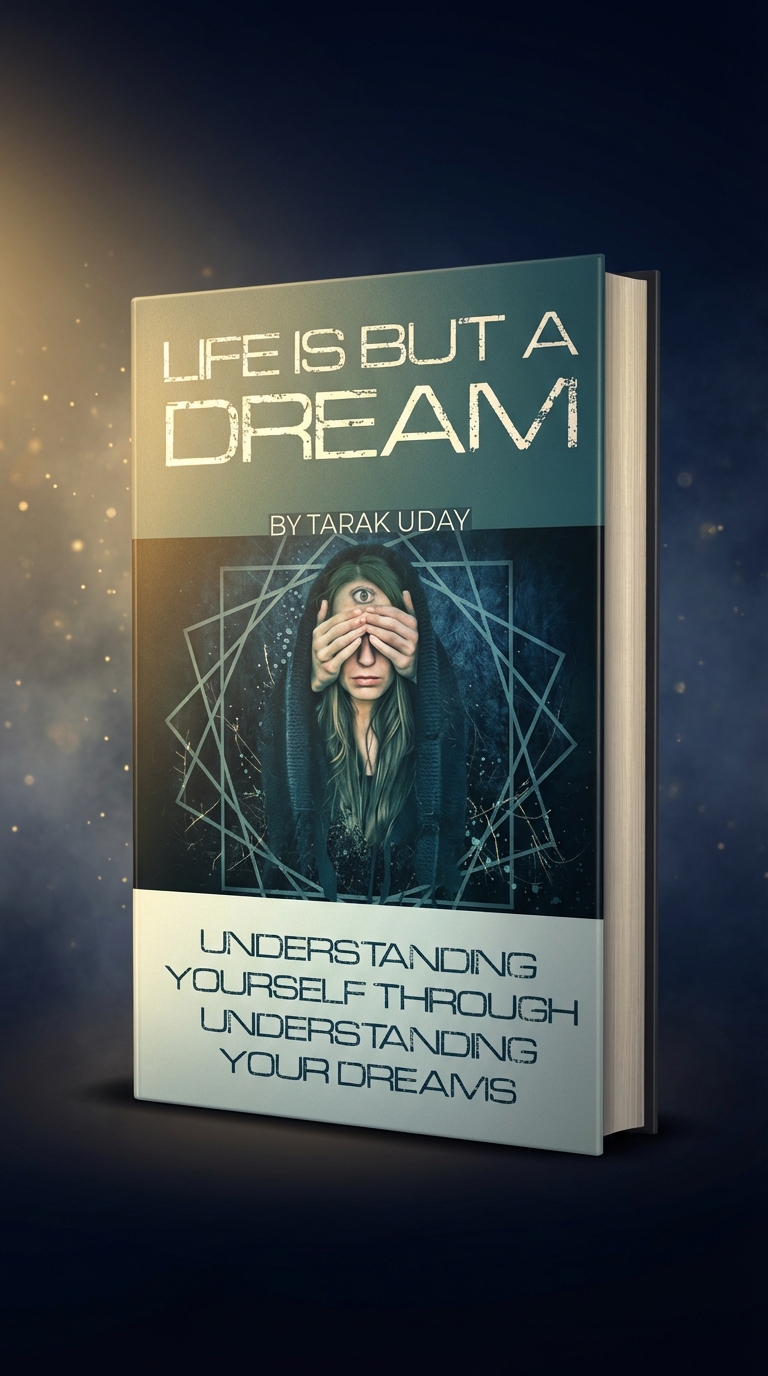
Learn The Language Your Dreams Speak
"Life Is But a Dream" teaches the Universal Language of the Mind — how to read any dream symbol by what it is and what it does, so every dream becomes a message you can act on.
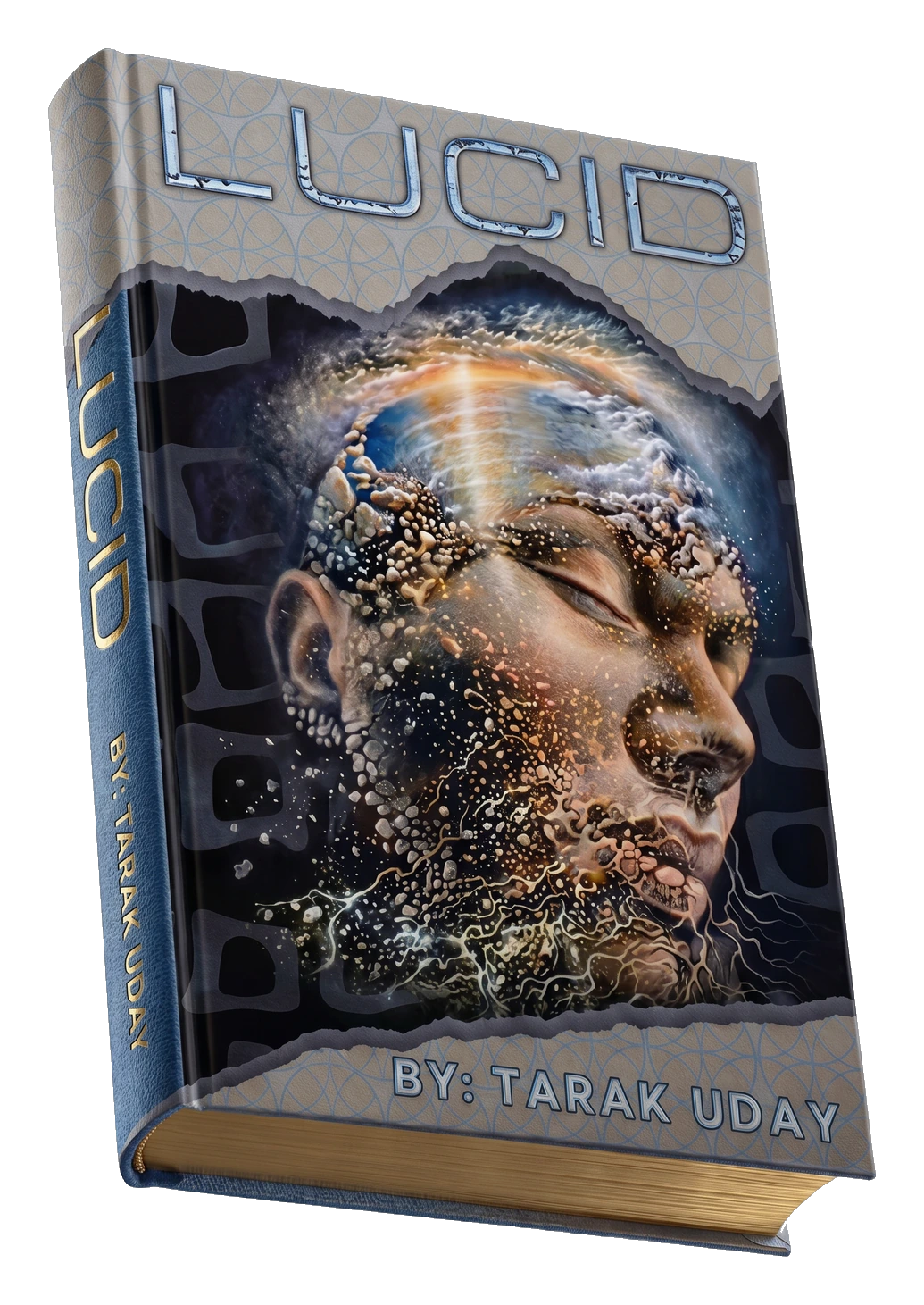
LUCID
You've tried every lucid dreaming technique. Most miss the root cause. LUCID reveals what they all skip.
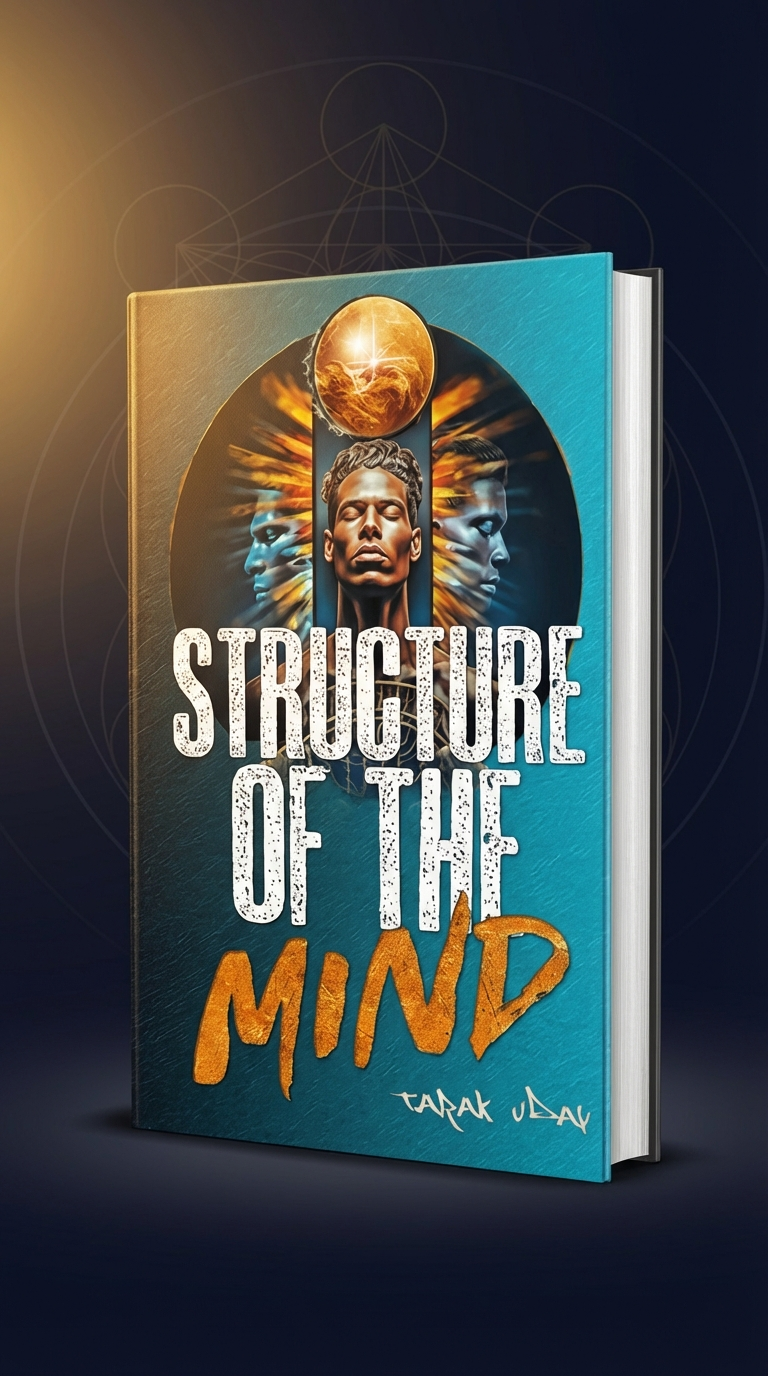
Understand Your Own Mind
"Structure of the Mind" reveals the three divisions of mind, seven levels of consciousness, and powers of mind that most people never learn to develop.