
Dream About Attending a Funeral — What It Really Means
So you dreamed you were sitting in the pews at a funeral — watching, not dying. Every dream site calls it grief or a death omen. They're missing the whole mechanic. Here's what attending a funeral actually means in the Universal Language of Mind.
So you dreamed you were attending a funeral. You were in the pews, or standing graveside, watching — not the one in the casket, just present for the ending. And you woke up heavy, maybe a little scared, wondering who it's about. Every dream site online will tell you the same two things: it's grief, or it's a warning that someone's going to die. Both are wrong, and both put you in a weaker position than the dream actually intends.
Look, you had a vivid, multi-sensory experience inside your own subconscious mind, and the best the internet could offer you was "you're sad" or "someone's in danger." That doesn't even begin to touch what's happening here. So let's actually decode it.
What does attending a funeral actually mean in the Universal Language of Mind?
Here's the form-and-function reasoning, because that's how every symbol in the Universal Language of Mind gets read. A funeral, in waking life, is not the death. The death already happened. The funeral is the ceremony — the conscious, deliberate gathering where the living formally acknowledge that something has ended, honor it, and give themselves permission to move forward. The function of a funeral is closure.
So in the language of the mind, a funeral isn't the change. It's your conscious mind doing the work of acknowledging the change. Death in a dream means inner transformation — an old belief, an old identity, an old way of being is releasing. That's covered in depth in our guide to what death means in a dream. But a funeral is a step further down the road. It's your subconscious telling you the transformation is already done, and now it needs you — the waking, conscious you — to recognize it and close the loop.
That's the whole point. The dream isn't warning you of an ending. It's asking you to finish one.
Why are you the witness instead of the one who died?
This is the detail almost everyone overlooks, and it's the most important one. You're not in the casket. You're attending. You're the witness.
Every person and role in your dream is an aspect of you. When you're the one watching the funeral rather than the body being buried, your subconscious is being very precise: the part of you that needed to end has already ended. You're past the dying. You're at the part where the conscious mind stands present and says, this is over, and I'm here for it. Being the witness means the hard part is done — the only question left is whether you'll stay present for the closure or look away and cling to what's already gone.
So when people dream they're attending a funeral and not the one being mourned, they often wake up relieved without knowing why. That relief is accurate. The relief is your deeper mind telling you: you survived the transformation. Now grieve it properly and walk forward.
What ending in your waking life have you not let yourself grieve?
Here's where this stops being information and becomes a mirror. So ask yourself plainly: what has actually ended for you that you haven't let yourself close?
It's almost never as obvious as a death. It's the version of you that existed inside a relationship that's over. It's the career identity you outgrew but still introduce yourself as. It's the dream you had at twenty-five that quietly stopped being yours, and you never held a service for it. It's the old self that fit a city, a marriage, a faith, a friend group — a self that's genuinely gone now, while you keep showing up as if it still lives here.
I've decoded thousands of these and the pattern never changes: the funeral dream shows up precisely when the transformation is complete but the acknowledgment isn't. Your subconscious finished the work weeks or months ago. You just never let your conscious mind sit in the pew and admit it.
What ending is your subconscious asking you to close?
CHITTA reads your specific dream through the Universal Language of Mind — not a generic dictionary — and shows you exactly which inner chapter is asking to be acknowledged.
Decode Your Dream Now →Whose funeral is it, and what does that tell you?
So the body matters — not as a person, but as a quality. If you knew who the funeral was for, that person represents a specific quality in you. A parent's funeral often points to the ending of an old authority structure you internalized — a rule about how life is supposed to go that no longer governs you. The funeral of a friend points to a relational quality of yourself that's completed its arc. Even a stranger's funeral has meaning: in the Universal Language of Mind, a stranger is an unfamiliar aspect of self, so it's an ending in a part of you that you haven't fully met yet.
And if it's your own funeral you're attending — watching yourself be mourned — that's the deepest one. It means a foundational version of your identity has completed, and your awareness is mature enough to witness its own ending without panic. That's not morbid. That's mastery. That kind of dream tends to arrive in people moving through a genuine chapter shift, the same way death dreams show up most for the people growing fastest.
How do you complete the closure the dream is asking for?
So the dream gave you the ceremony. Your job is to make it real in waking life, because closure that stays only in the dream stays unfinished.
Start by naming the ending out loud. Not in your head — out loud, to yourself, before sleep: "This is over. This version of me is complete. I honor it and I release it." It sounds simple. It's not simple, it's mechanical — you're giving your conscious mind the exact acknowledgment your subconscious has been requesting. Then write it down. Spend ten minutes putting on paper what specifically ended, what it gave you, and what you're walking toward now. The writing is the funeral. The pen is you sitting in the pew.
According to Tarak Uday's Universal Language of Mind, the reason these dreams repeat is that an unacknowledged ending behaves like an unlearned lesson — it loops until you receive it. So receive it. Hold the service your subconscious has already scheduled.
That's the gift hidden inside a dream that woke you up heavy. Something in you finished its work. You're not being warned. You're being invited to the one ceremony you keep skipping — the one where you finally let yourself move on.

Frequently Asked Questions



LUCID
You've tried every lucid dreaming technique. Most miss the root cause. LUCID reveals what they all skip.
Understand Your Own Mind
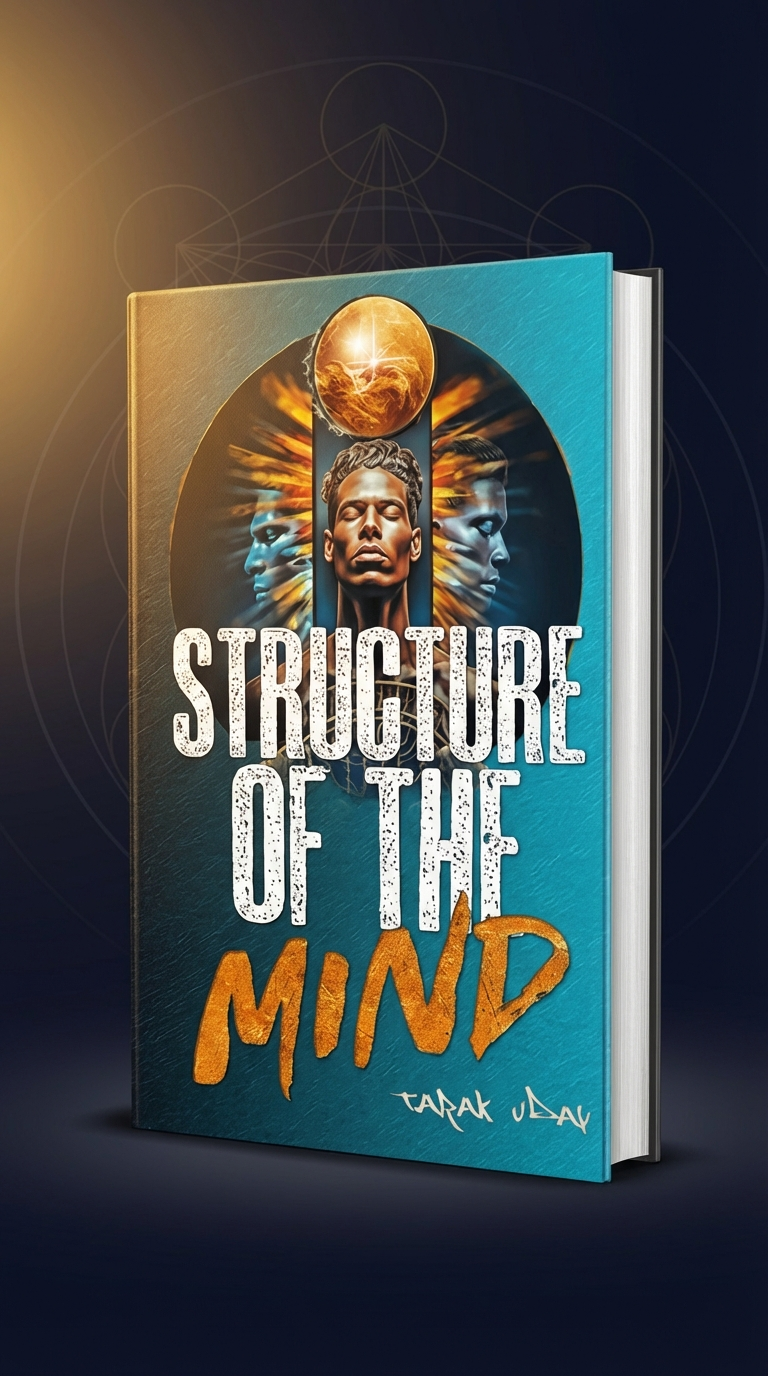
"Structure of the Mind" reveals the three divisions of mind, seven levels of consciousness, and powers of mind that most people never learn to develop.