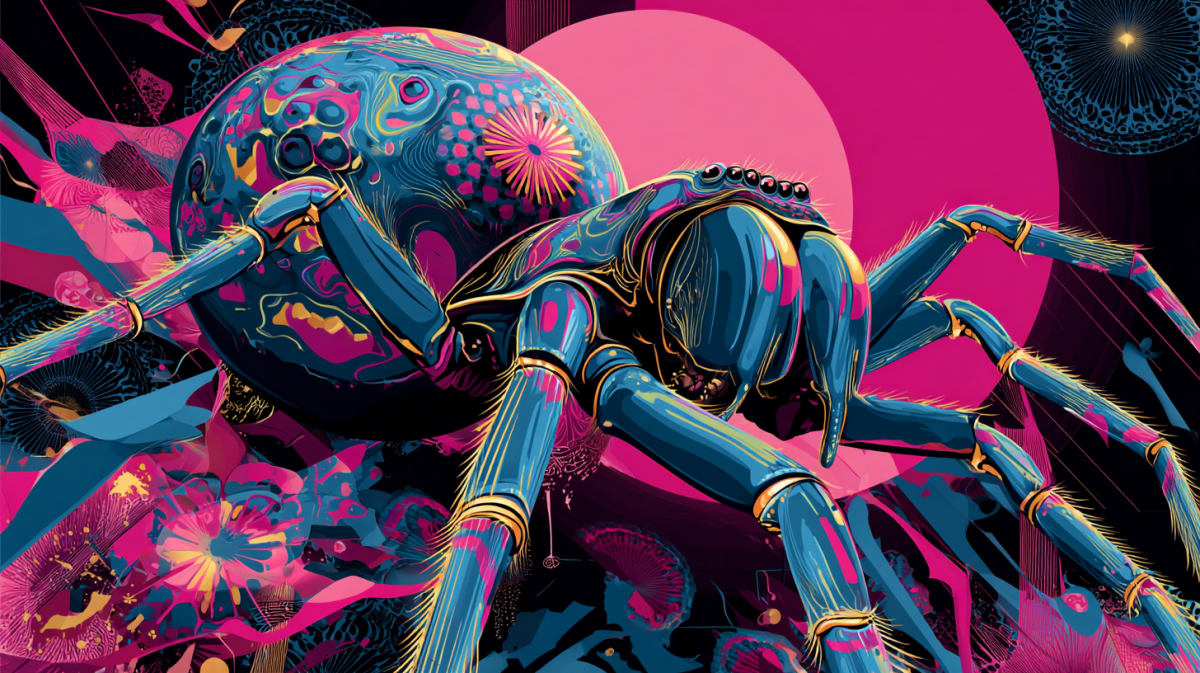
Dream About Killing a Spider: ULM Meaning
Why ending a spider in a dream is your mind closing the book on a quiet habit
So you dreamed you killed a spider, and you woke up wondering whether that's a bad omen, a good sign, or just your brain being weird. Here's the short answer first: killing a spider in a dream is one of the most quietly powerful images your subconscious can hand you. It means a small mental habit, one that's been spinning a web in the corners of your mind without your permission, just got noticed, confronted, and ended. That's not a warning. That's a victory.
What does killing a spider actually mean in a dream?
Look, most dream sites will tell you killing a spider means you're overcoming a fear or defeating an enemy. And sure, that sounds tidy. But think about it for a second, you had a vivid, multi-sensory experience inside your own subconscious mind, and the best anyone could offer was a vague metaphor about enemies? That doesn't even begin to touch the mechanics of what happened.
So here's what's actually happening at the level of mind. According to Tarak Uday's Universal Language of Mind, every animal in a dream represents a habitual thought, because animals act on instinct and conditioning rather than reasoned choice, which is exactly how habits operate inside you. The spider is the smallest, quietest version of this. It's the habit you don't even notice. It builds in the shadows. It works in the corners.
And when you kill it, your dreaming mind is dramatizing a decision your inner self has already started making: this pattern stops here.
Why does the subconscious use a spider for a habit instead of something obvious?
Because the spider is the perfect mirror for how habits actually behave. This is where the form-and-function lens of dream interpretation earns its keep. In the Universal Language of Mind, you don't ask what does this symbol traditionally mean, you ask what does this thing DO, and where in my inner life does something function the same way?
So what does a spider do? It's small. It's quiet. It sits unnoticed. And it spins a web, a trap designed to catch and hold whatever wanders into it.
That's a mental habit to the letter. The thought you keep thinking. The loop you don't question. The little reaction that fires before you've consciously chosen anything. It catches your attention, drains a thread of your energy, and you walk away never realizing you got caught. The web is invisible because the habit runs below the line of conscious awareness, and the three divisions of mind explain exactly why.
And here is the part that makes the spider such a precise symbol. The web is not the habit itself, the web is what the habit produces. A single repeated thought looks harmless on its own, but spun out across days and weeks it becomes a structure, a sticky lattice that quietly reroutes where your attention goes. So by the time you notice you are caught, you are not fighting one thought anymore, you are tangled in a whole web that thought built. That is why a habit you barely register can drain so much. The spider was small. The web was not.
Which part of your mind is the spider operating in?
So this is where it gets precise. The Universal Language of Mind describes the mind in three divisions: the conscious mind, where you reason and choose; the subconscious mind, where habits, memories, and conditioned reactions live; and the superconscious mind, your deepest connection to the Real Self. A spider habit lives in the subconscious. That's the whole reason it stays hidden, it's not running in the part of you that's watching.
And here's the part almost nobody understands. When you dream you kill that spider, the conscious mind, the reasoning, choosing you, has reached down into the subconscious and taken deliberate action. That's enormous. It means the habit is no longer running the show unopposed. You saw it. You named it as something to end. You ended it.
Wondering what habit your spider was carrying?
CHITTA decodes your dream through the Universal Language of Mind and shows you exactly which mental pattern your subconscious flagged, and how to clear it for good.
Decode Your Dream Now →How do you find the real habit the dream was pointing at?
So the dream did its job. Now comes yours. The spider you killed wasn't random, your subconscious chose it because something in your waking life functions exactly like that quiet web. So the question to sit with is simple and a little uncomfortable: where in my day does a small, automatic thought keep catching my attention and draining my energy?
Maybe it's the reflexive self-criticism that fires every time you look in the mirror. Maybe it's the little story you tell yourself about why you can't start the thing you want to start. Maybe it's checking your phone the instant a moment of stillness appears. These are spiders. Small. Quiet. Web-spinners. I've decoded thousands of these dreams and the pattern never changes, the habit the dreamer finally names is almost always one they'd stopped noticing years ago.
Killing the spider in the dream is the subconscious telling you the awareness has arrived. The web can be cleared now. So clear it, with honest self-examination and steady concentration, the exact tools the Universal Language of Mind points you toward. If your spider also appeared spinning a web, the spider web dream carries its own layer worth reading next.
What if you felt fear or guilt after killing it?
So a lot of people wake up from this one feeling uneasy, even guilty, like they did something violent. Here's what's actually going on. Habits resist their own ending, that's what makes them habits. The fear or guilt you feel isn't a sign you did something wrong. It's the habit's last grip. The discomfort of change always shows up right at the moment of real change, because the subconscious mind is wired to protect the familiar, even when the familiar is hurting you.
So don't read that uneasy feeling as a warning. Read it as confirmation. You touched something real. The spider was small, but the web it spun was costing you more than you knew, and you just took it down.
So what do you do with that the morning after? You stay awake to it. The dream cleared the web once, but a habit reasserts itself the moment your attention drifts, that is its nature. According to Tarak Uday, the same concentration that let your conscious mind reach into the subconscious and end the spider in the dream is the concentration that keeps the corner clear while you are awake. So the dream was not the finish line. It was your subconscious handing you proof that you can do the thing, then daring you to do it on purpose, in daylight, with your eyes open.
About the Author
Tarak Uday is the creator of CHITTA and the author of Life is But a Dream and Lucid. His work decodes the Universal Language of Mind, the single symbolic language the subconscious uses in every dream, in every person, across every culture.

Frequently Asked Questions




LUCID
You've tried every lucid dreaming technique. Most miss the root cause. LUCID reveals what they all skip.
Understand Your Own Mind
"Structure of the Mind" reveals the three divisions of mind, seven levels of consciousness, and powers of mind that most people never learn to develop.