
Visitation Dream vs Regular Dream: The Real Difference
Something genuinely different did happen. It just isn't the thing everyone told you it was.
A visitation dream and a regular dream really are different, but not in the way you were told. The difference is depth, not distance. What people label a visitation is a dream that happened at a deeper level of your subconscious mind, which is why it arrives clear, calm and singular. The figure in it is still an aspect of you.
So here's the answer you've probably already been given. Your grandmother died, she showed up in a dream looking healthy and peaceful, she said something to you, and you woke up certain it wasn't a normal dream. And every article you found said the same thing: she came to visit. She's watching over you. She crossed over to deliver a message.
Sit with that for a second, because it costs you something. If the meaning of that experience is that someone else visited, then the whole thing happened to you. You're the mailbox. There's nothing to learn, nothing to apply, nothing that changes on Monday. You just got a delivery and now you wait for the next one.
What do people actually mean by a visitation dream?
Strip out the interpretation and look at the raw report, because the raw report is consistent and it's worth taking seriously.
People describe four things, almost word for word every time. The dream was unusually vivid. There was no dream-logic chaos — no shifting rooms, no plot that made sense only while asleep. The deceased person appeared whole and well, often younger than at the end. And the memory didn't fade the way dreams fade; ten years later they can still tell you the room, the light, the sentence.
And there's a fifth thing people mention less often but almost always agree on once you ask: they weren't confused inside the dream. In a normal dream you accept absurdity without blinking — of course the house has a new floor, of course you're late for an exam in a subject you never took. In this one, they knew exactly where they were and who they were looking at. Awareness was intact. That detail matters more than any of the others, and I'll come back to why.
That signature is data. Something structurally different produced it. So the honest question isn't whether these dreams are special — they clearly are. The question is what actually makes them special, and the answer is in the mechanics of how your mind is built.
Is the person in the dream really visiting you?
Here's the correction, and it's the whole article. Every person in your dream is an aspect of your own consciousness. That's not a downgrade. It's a bigger claim than the one you were sold.
According to Tarak Uday's Universal Language of Mind, your subconscious mind selects the face whose defining quality matches the message. Your most generous friend carries generosity. Your most stubborn uncle carries stubbornness. A grandmother — living or deceased — carries something specific and elevated: the receptive quality of the superconscious mind, the deepest and wisest layer of you, the part that receives rather than pushes.
So when a deceased grandmother shows up, your subconscious mind isn't being macabre and it isn't being literal. It reached for the single most trustworthy image of receptive wisdom it had on file. Same with a grandfather, who carries the aggressive quality that supplies lifeforce, or a father or mother standing in for conscious and subconscious authority. The face is chosen for its meaning, not for its ghost.
And notice this doesn't shrink the experience. It relocates it. The person didn't travel to you across some divide. You travelled inward, past your ordinary dreaming, into a level of mind most people never consciously touch. That's a much rarer thing than a phone call.
Why does a visitation dream feel more real than a regular dream?
Because clarity goes up as you go deeper, and noise goes down.
An ordinary dream is assembled largely out of the day's surface material. It's your mind sorting the inbox — errands, the argument in the car, the thing your boss said. Lots of symbols, loose logic, gone by breakfast. In the Universal Language of Mind, that's the shallow end of the subconscious mind doing routine assimilation work.
Go deeper and the noise drops away. Fewer images, more signal. That's why the deep-level dream shows you one room, one person, one sentence, and why it lands with an emotional weight ordinary dreams never carry. In Lucid, Tarak Uday describes this as awareness of the Inner Self — you didn't just dream, you were present at a level where presence is rare.
That's also the answer to the awareness detail from earlier. You weren't confused inside the dream because a bigger share of your awareness made the trip with you. Ordinary dreaming leaves most of your attention behind; the deep-level dream doesn't. It's the same faculty that produces lucid dreaming, just arriving on its own instead of by training.
The persistence follows the same rule. You remember it for a decade because it wasn't assembled from disposable daily material. It came from the layer where your permanent understandings live.
Had one of these dreams? Decode it properly.
CHITTA reads your dream through the Universal Language of Mind and tells you which part of your own mind was speaking — and what it wanted.
Decode Your Dream Now →How do you tell a visitation dream from a regular dream?
Four checks. Run them honestly, and don't grade generously just because you want the answer to be yes.
First, count the symbols. A regular dream is crowded — a car, a street, a stranger, a building, weather. A deep-level dream is sparse. One figure, one setting, sometimes one object. If you can list the whole dream in two sentences, that's a signal.
Second, check the emotional temperature. Regular dreams run on whatever you were carrying that day — anxiety, irritation, the low hum of unfinished business. The deep-level dream is calm, and the calm is the strange part, because the subject matter usually isn't calm at all.
Third, check the message. Regular dreams show you a situation and leave you to decode it. This kind hands you a statement — a sentence, a look, a single unmistakable instruction — and it's already assembled when you wake.
Fourth, wait a month. Ordinary dreams decay fast. If the imagery is still sharp in thirty days, it came from a deeper level. That one test alone sorts most of them.
What is a grandmother in a dream actually telling you?
Now the useful part, the part the visitation story skips entirely. What is it asking you to do?
A grandmother is the receptive quality of the superconscious mind. Receptive. Not passive — receptive, which is an active skill most people are terrible at. It's the capacity to take in, to be nourished, to let something arrive without immediately grabbing it and forcing it.
So when she appears with a message, the message and the messenger say the same thing. Something deep in you is offering wisdom, and you're being told the way to get it is to receive rather than pursue. Look at your last few weeks. Where have you been pushing at something that actually needs stillness to resolve? That's the mirror, and it's usually uncomfortable to look at because pushing feels productive.
And if the dream involved her death, or dying, read it correctly: death in a dream is inner transformation, never a prediction. The old way of being ends so a new one can start. That's the mechanism, and it applies whether the person in the dream is alive or gone.
What should you do after a dream like this?
Write it down before it degrades, even though you're sure you'll never forget it. You'll lose the sentence first, and the sentence is the payload.
Then run it. Use the three questions — what is each symbol's form and function, who's present and how familiar are they, and where are you and what's the action. On a deep-level dream this takes about four minutes because there's so little to decode. That's the tell.
Then do the one thing almost nobody does. Ask what quality was on offer, and go use it this week. That's the entire difference between treating the dream as a keepsake and treating it as an instruction. A keepsake gets retold at family dinners. An instruction changes something.
And look — if you loved someone and they appeared to you whole and at peace and told you it was all right, that's not diminished by knowing the mechanism. It's the deepest, wisest part of you saying it in the one voice you'd actually believe. I've decoded thousands of these and that's the pattern every time: the mind picks the messenger you can't argue with.
The quality you loved in them is in you. That's not a consolation prize. That's the whole message.
Find out which part of you was speaking
Log the dream in CHITTA and get the Universal Language of Mind reading — the symbol, the level of mind it came from, and the waking-life bridge.
Decode Your Dream Now →About the author. Tarak Uday is the founder of CHITTA and the author of Life is But a Dream and Lucid, which lay out the Universal Language of Mind and the levels of consciousness that make some dreams land differently from others.

Frequently Asked Questions




LUCID
You've tried every lucid dreaming technique. Most miss the root cause. LUCID reveals what they all skip.
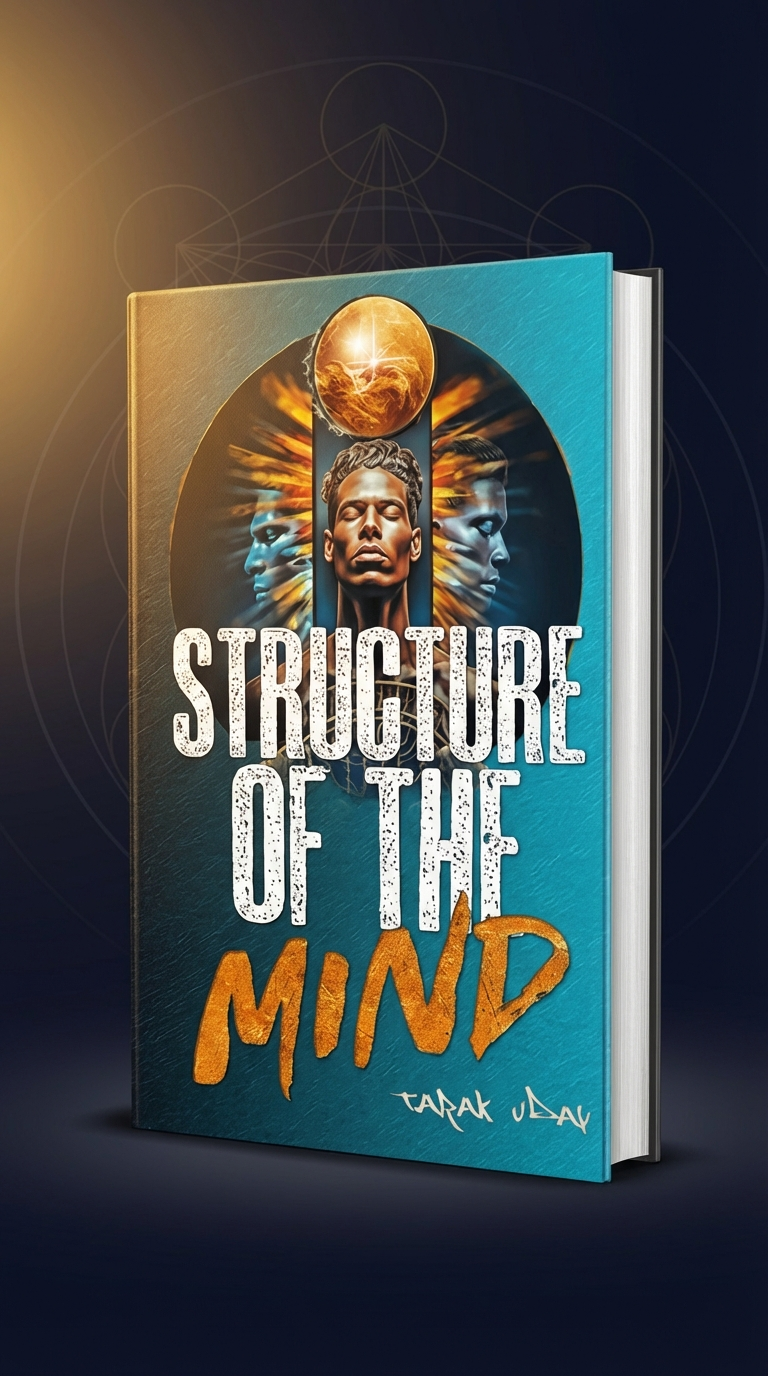
Understand Your Own Mind
"Structure of the Mind" reveals the three divisions of mind, seven levels of consciousness, and powers of mind that most people never learn to develop.