
River in Dreams: Which Way Your Life Is Really Flowing
Water is your conscious life experience. A river is that experience moving in one direction, and the current is made of your own thoughts.


A river in a dream represents your conscious life experiences in motion. Water is the life you're living, and a river is that life moving in one direction along a course, carrying you somewhere whether you're paying attention or not. You know the dream I mean. You were standing beside it, or already in it, or watching it slide past, and you woke up with the strange sense that something was going somewhere without asking you first. So the real question isn't what a river is. It's which way your river was flowing, and what it was carrying you toward.
Here's the belief most people bring to that dream. A river feels like fate. It's the one image in nature that seems to say: life is moving, it's bigger than you, and the best you can do is go with the flow. So people wake up from a river dream and read it as a message about surrender, or about time slipping away, or about a force they can't argue with.
That reading gets the mechanics backwards. In the Universal Language of the Mind, as Tarak Uday teaches it, the current in a dream river isn't something happening to you. It's made of something. And once you see what it's made of, the river stops being a verdict and becomes a report you can act on.
Key takeaway: Water in a dream represents your conscious life experiences. A river is that water moving in one direction along a course held by its banks, and the banks are earth, which represents your subconscious mind. So a river dream reports the direction your life experiences are flowing right now and where they're carrying you. The current isn't fate. Your own thoughts are creating it, which means you can change where it goes.
What does a river mean in a dream?
Start with the substance, because every body of water in every dream rests on the same base meaning. The Dream Symbol Dictionary states it in one line that never changes from entry to entry: "water will always represent the life experiences within the conscious mind." The conscious mind is the mind your physical body uses in this three-dimensional physical reality. Every conversation, every decision, every ordinary Tuesday you've lived through with your eyes open is water. And in the same landscape, the sky is the superconscious mind and the earth is the subconscious mind.
Then the form narrows the meaning. That's the form-and-function method the language runs on: what a thing does in the physical world is what it means in your mind. An ocean is vast and endless from where you stand, so it represents your life as a whole. A lake in a dream is water held still, which makes it the water of reflection.
A river does three things none of those do. It moves. It moves in one direction. And it moves along a course that its banks hold in place. Take those one at a time and the symbol reads itself.
It moves, so a river is never a snapshot. It's the part of your life that's actively going somewhere. It moves in one direction, so the river is about trajectory: where these experiences are taking you, not just how they feel. And its banks are earth, so every bend and every narrowing is laid down by your own subconscious mind. Your experiences flow where your inner mind has carved a channel for them.
The dictionary says the same thing about the river's smaller sibling. Its entry for a stream describes water that "flows in a specific direction" and reads it as "the direction your life experiences are taking you." A river is that same mechanism at full size.
Which way was the river carrying you?
So the first thing to write down after a river dream isn't the colour of the water. It's your position relative to the current, because that's where the river shows you what you're doing with the direction your life has taken.
Floating or drifting with the current. You're letting your experiences carry you. That isn't automatically bad; sometimes the direction is right and the move is to stop fighting it. But notice whether you chose the water or simply found yourself in it. Drifting doesn't tell you whether you'd pick that destination.
Swimming against the current. Swimming represents how you're moving through your life experiences, on your own strength. Swimming upstream is effort spent opposing the direction your own experiences are flowing: pushing for a promotion in a job you've outgrown, holding a relationship in place while every week carries it the other way. The exhaustion is accurate. You're spending real strength just to stay where you are.
Being swept away. The dictionary's water entries describe tumultuous water as feeling "like powerful waves washing you away." In a river, that force has a heading. Being swept downstream reports experiences moving faster than you can choose, carrying you toward something before you've decided whether you want it. If the dream tipped into going under, it has crossed into drowning, which reports feeling overwhelmed by your life experiences.
In a boat on the river. A boat represents the physical body, the vehicle your consciousness uses to reach its goals. So a boat on a river reports how you're carrying yourself along the direction your life is taking. Steering it is very different from sitting in it while the current does the work.
Which way you were facing. This is the detail almost nobody writes down. Upstream is where the water has already been. Downstream is where it's going. So facing upstream puts your attention on experiences reaching you from where your life has already been, and facing downstream puts it on where everything is heading. A dreamer who keeps facing upstream while the river carries them forward is moving into their future while staring at their past.
Your river had a direction, and so does your life. CHITTA's interpretation engine reads your dream in the Universal Language of the Mind, symbol by symbol, so you can see which experience the current was carrying and where it was taking you. Decode your river dream.
Was the river clear, muddy, or raging?
Once you know the direction, the water itself tells you how well you can see it.
Clear water reflects your ability to see clearly what is occurring within your life. In a river that means something specific: you can see what you're moving through. The bottom is visible, the stones are visible, and you know what this stretch of your life is made of even while it's carrying you.
Muddy or murky water represents the difficulty you're having in truly perceiving your physical life experiences. A muddy river moves just as surely as a clear one. You're still being carried; you just can't see through what's carrying you. And the mud in a river comes from the earth of its own bed and banks, churned into the water. The dictionary reads mud as the inability to separate the awareness of the subconscious mind from the conscious mind. So a muddy river is a life direction you can't see because your own inner beliefs have been stirred into the experience itself. You can't tell what's happening from what you expect to happen.
Calm water reflects life experiences that are currently peaceful. A calm river still moves. It just moves at a pace you can live with.
Tumultuous water, the rapids and the white water, represents a life that feels wild right now. Pair that with direction and the reading sharpens. Fast water isn't only chaos. It's chaos with a heading. Something in your life is moving quickly toward a destination, so the question isn't just why it's so rough. It's where this rough water is taking you, and whether you want to go there.
What does it mean to cross a river, or to watch it from the bank?
A river divides land. One bank, then water, then another bank. And places in dreams represent states of mind. So a river between two banks is the stretch of life experience lying between where you are mentally and where you're trying to get to.
Wading or swimming across. You're moving through the experiences themselves to reach a new state of mind. The water is the work. Note whether the current pushed you downstream as you crossed, because a crossing that drifts tells you the direction of your life is pulling on you even while you're trying to change your mind.
Crossing on a bridge. A bridge represents your ability to shift from one state of mind to another. A bridge over a river gets you to the far bank without being carried by the current at all: a shift of mind made deliberately, above the flow of events. A sturdy bridge reflects a strong ability to make that shift at will; a broken one says that ability needs building. The bridge in dreams has its own full reading.
Standing on the bank, watching it flow past. The bank is earth, so you're standing on your own subconscious mind while your life experiences move by. You're aware of the direction and not participating in it. Some dreamers wake from this one calm and some with a quiet ache, and the feeling is the diagnosis. Calm says you're observing on purpose. The ache says you already know you belong in the water.
What if the river was dried up, or overflowing its banks?
These two are opposites, and both are about the course rather than the water.
Tarak Uday takes this further in Life Is But a Dream, his guide to reading every dream in the Universal Language of the Mind.
A dried-up river is the strangest image in the family, because the shape is still there. The banks still curve. Only the water is gone. And the course is carved by the earth, your subconscious mind. So a dry riverbed is a direction your subconscious mind still holds a channel for while no actual experience is moving along it. It's the plan you still describe to people and haven't acted on in a year. The route exists, and you've stopped sending your life down it.
A river overflowing its banks is the reverse. There's more experience than the course can carry, and the moment water leaves its banks it loses the thing that made it a river: direction. Floodwater doesn't go anywhere in particular. It goes everywhere. So an overflowing river reports a stretch of your life where so much is happening that it's stopped heading anywhere and started spilling into every area around it. The dictionary's entry for a dam names the skill this asks for, the ability to contain and maintain your life experiences, and adds that "it is not about stopping the flow of life." It's about giving the flow a channel again.
How do you read your river, and change its course?
So here's where the belief from the start of this article finally breaks. If a river were fate, the only honest response to a river dream would be acceptance. But the current is made of something, and the dictionary says exactly what. Its stream entry ends with the instruction that turns this whole symbol from a forecast into a practice: "you have the power to redirect the stream by changing the thoughts that are creating the current."
Your thoughts are the current. The experiences flowing through your life are moving in the direction your repeated thinking has been pushing them, along channels your subconscious mind has carved out of that thinking. Which means the river in your dream isn't telling you where life is taking you. It's telling you where you've been taking your life.
Read it in three passes. First, name the river. A river is one direction, so ask which single area of your life is moving right now: a relationship that's changing shape, a project that's picked up speed. Second, write down your position: in the water or on the bank, with the current or against it, facing upstream or downstream. Third, write down the water: clear or muddy, calm or rough, inside its banks or out of them. Those three lines are the whole reading.
Then ask the only question the river really asks: is this where I want to be carried? If it is, stop swimming against it. If it isn't, find the thought you've been repeating that's pushing the water this way, and start thinking its replacement on purpose, every day, until the channel changes.
That's also how this language starts showing up when you're awake. In LUCID, Tarak Uday describes the point where the symbols begin to read themselves in daylight:
"Water — a river, a rainstorm, a glass of water on a table — and you feel its quality, its calmness or turbulence, and you understand what it reflects about your current life experience." — Tarak Uday, LUCID
CHITTA was built for this kind of tracking. Log the dream in your dream journal, run it through the interpretation engine, and check the symbol dictionary for the bridge, the boat or swimming if they showed up too. Over a few weeks the record shows what no single dream can: whether your rivers are getting clearer, and whether the direction shifts as your thinking does.
Tonight, before you sleep, name the one experience in your life that's moving right now and which way it's carrying you. Write it in your dream journal in a single sentence. Then watch what the river does next.
Frequently Asked Questions


Books by Tarak Uday

Learn The Language Your Dreams Speak
"Life Is But a Dream" teaches the Universal Language of the Mind — how to read any dream symbol by what it is and what it does, so every dream becomes a message you can act on.

LUCID
You've tried every lucid dreaming technique. Most miss the root cause. LUCID reveals what they all skip.
Understand Your Own Mind
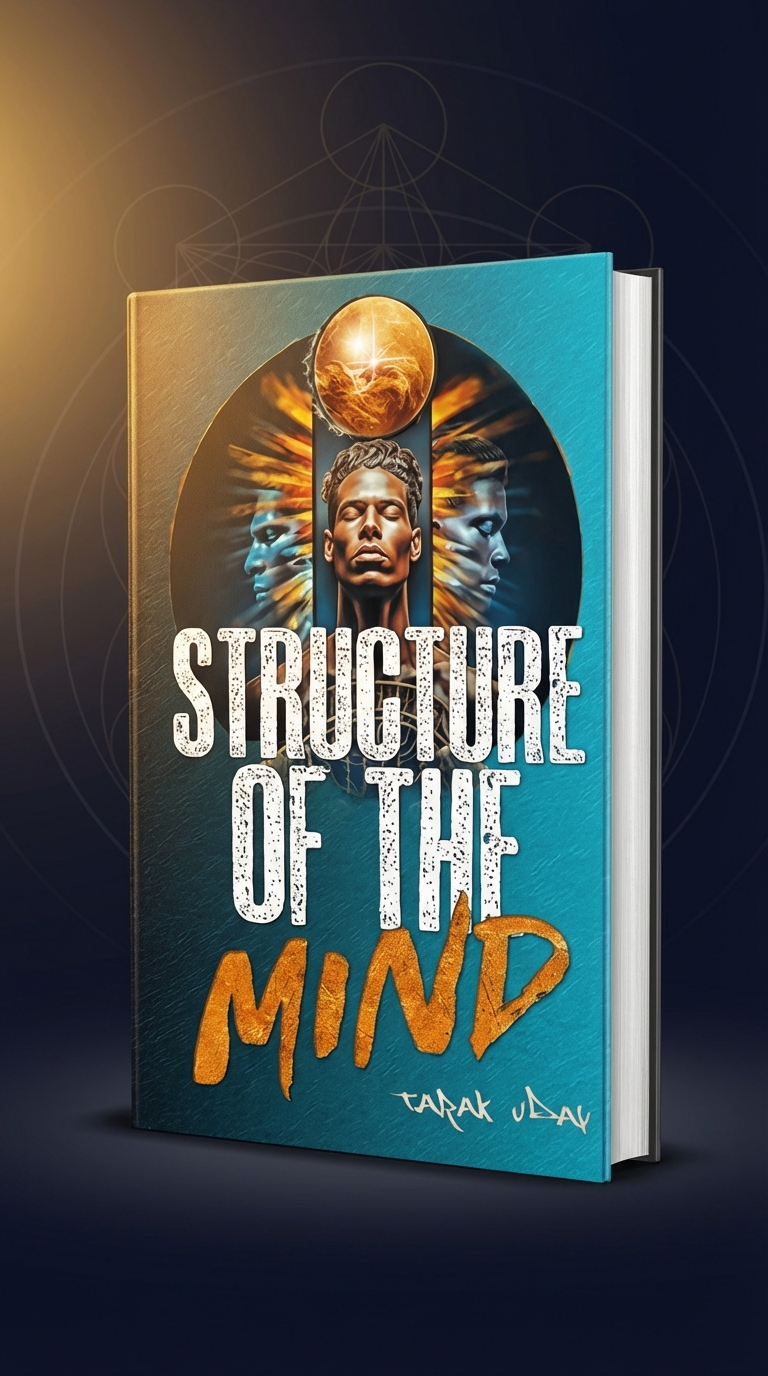
"Structure of the Mind" reveals the three divisions of mind, seven levels of consciousness, and powers of mind that most people never learn to develop.