Elephant in Dreams: The Rope You Stopped Testing
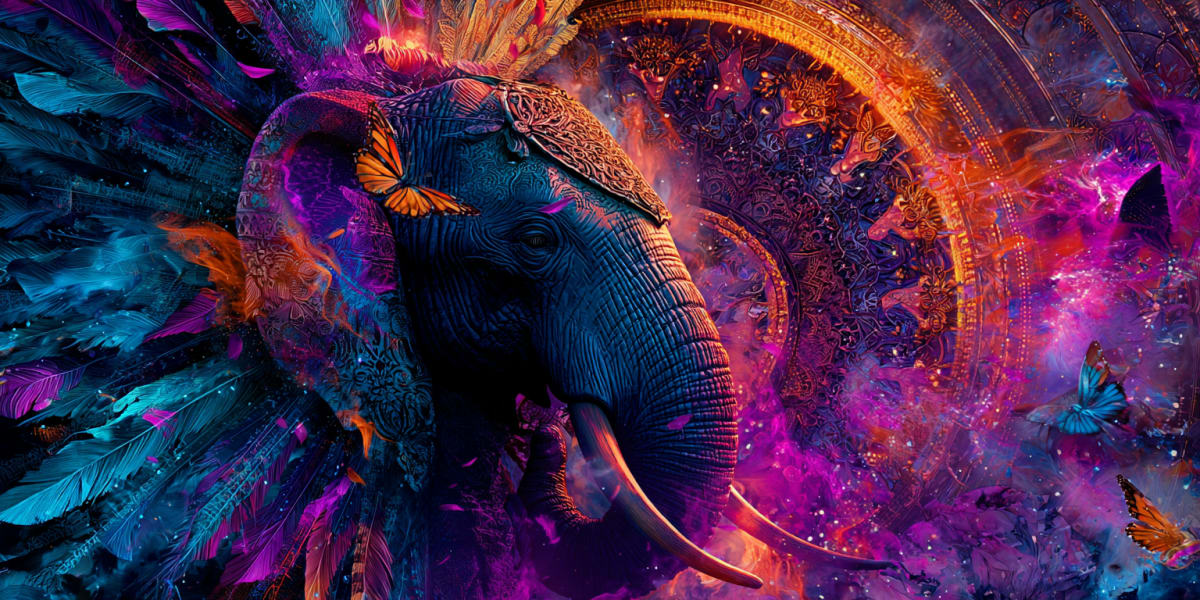
The elephant at the edge of the timber camp weighs four tons, and it spends the whole afternoon standing beside a wooden peg no thicker than your wrist. A length of cotton rope runs from that peg to its back leg. One lazy lean of that shoulder would lift the peg out of the dirt like a candle out of a cake. It never leans. Years ago, when it weighed less than a grown man, a rope just like this one held it fast. It pulled until its ankle was raw, and then it stopped pulling. It hasn't tested the rope since. The animal grew. The conclusion stayed the size of the calf.
Now find the rope you're standing beside. It usually sounds like a plain fact about your character: I can't stick with anything. I'm not a disciplined person. I always fade out around the third week. Ask yourself when you last actually pulled against it. For most people the honest answer is a date from school, or from a first job, or from a year when life was far smaller than you are now.
Then one night a vast grey animal walks through your sleep, and you wake with the weight of it still sitting in your chest. That visitor isn't decoration. Tarak Uday teaches that in the Universal Language of Mind the elephant is will power, and the way it moved, stood or strained in your dream shows you how much of your own will you are putting to work right now.
An elephant in a dream reflects will power: the steady, patient, hard-to-stop follow-through on something you have decided. Its condition shows the state of that will. A strong, free animal points to a well-developed will. A chained, tied or caged one points to a will held back by an old limit. A charging one shows you driving your will hard at a goal.
Why does the largest animal on land walk when it could run?
An elephant can run when it has to. Most of its life, though, it walks. It moves at roughly the pace of a person strolling to the shops, and at that pace a herd covers dozens of kilometres in a day and hundreds in a season. Nothing about it is hurried. It takes a while to get going, and once it's going it is extremely hard to stop. It doesn't wait for a clear trail either; it pushes through brush and branches and makes the trail as it goes. And it remembers. An old matriarch can lead her family to a water hole she last visited decades earlier.
Put those facts side by side and you have a precise portrait of a habit of thought. Animals in your dreams stand for habitual thoughts, and the species tells you which habit you're looking at. The elephant is the habit of will: deciding something and then continuing to act on it, day after day, whether you feel like it or not.
This is where most people have will power backwards. They picture it as intensity. The burst of fire on the first of January, the new gym membership, the vow made at midnight with your jaw clenched. That kind of energy is loud, and it burns out fast, and when it burns out people decide they have no will. So the dream corrects the picture with the biggest land animal on earth, and it shows that animal walking. Force, in the metaphysical mechanics of the mind, isn't the same thing as speed. The elephant wins by never stopping, not by sprinting.
So when the animal shows up in your sleep, the first question isn't whether you want something badly enough. It's whether you are still moving toward the thing you chose, at any pace at all, or whether you've quietly sat down.
Isn't an elephant dream about good luck, a baby, or the thing nobody will mention?
You've probably been handed at least one of these. A raised trunk brings fortune, so an elephant dream is a lucky omen. An elephant is a sign that someone is about to be pregnant. The elephant is really the elephant in the room, the uncomfortable subject you keep stepping around. Or it's your spirit animal, a guardian arriving from outside to watch over you.
Each of these moves the meaning away from you. Luck happens to you. A pregnancy belongs to a body and a calendar. A totem is a separate being with its own agenda. And the elephant in the room is a figure of speech from waking English that the dream has no need for; your subconscious mind doesn't build its pictures out of puns in one language. It builds them out of what things are and what they do, which is why the same image carries the same message to a dreamer in Delhi, in Lisbon and in Chicago.
Your dream is a report on your own mind. Every animal in it is one of your own thought patterns, given a body so that you can see it. So an elephant isn't forecasting your fortune or delivering a warning from a spirit. It is showing you the condition of a capacity you already own and either use or leave standing by the peg.
That is better news than luck. Luck you can only wait for. Will you can train, and the dream has just told you where your training stands.
Will power isn't measured by how hard you push on the first day. It's measured by whether you are still walking on the four hundredth.
How does the elephant's condition show the state of your will?
Look at the animal before you look at anything else in the scene. Its health, its freedom and its behaviour are the reading.
A large, healthy elephant moving freely reflects a will that is developed and in use. You have decided things and you are following through. The dream is showing you an accurate picture of a strength you have earned, so you can keep building on it rather than doubt it.
A thin, sick or injured elephant reflects a will that has been neglected. You've made decisions and then let them lapse, often without noticing, and the capacity has weakened the way an unused muscle does.
A chained or caged elephant reflects a will that is being restrained. Something is holding your follow-through in place. Sometimes it's a circumstance you've accepted without questioning. More often it's a belief. The heavier the chain looks, the more weight you have given that belief.
The rope-and-stake elephant, the one tied by something flimsy, is the most pointed version. It shows a will that could walk away at any moment and doesn't, because it learned long ago that it couldn't.
A charging elephant reflects will applied with force toward a goal. You are driving at something. Notice whether the charge felt aimed or wild. Aimed force is follow-through. Wild force tramples things you care about.
An elephant that refuses to move reflects stubbornness wearing the costume of will: a decision you are holding onto long after it stopped serving you. An elephant lying down reflects a will at rest, which is fine for a night and a problem for a season. A baby elephant reflects a will that is new, usually attached to a recent decision. An elephant crammed inside a house reflects will power that has outgrown the state of mind you are keeping it in. Riding an elephant reflects directing your will consciously instead of being carried along by whatever mood arrives.
If the elephant stood quietly, strained against a tie or came charging, then write that behaviour into CHITTA's dream journal beside whatever you had decided to do that week, because the two entries side by side show whether your will is walking with your decision or waiting next to it. Read your elephant dream
What is the thin rope in your own life made of?
The rope is never rope. It's a conclusion you reached under different conditions and never went back to check. A calf really couldn't pull free. The calf was right. The adult is wrong only because it kept a true fact past its expiry date.
Your version works the same way. At twelve you tried to learn an instrument and gave up, and a sentence formed: I don't finish things. At twenty-two you started a business plan and abandoned it, and the sentence got louder. Every time you repeat it, the habit of thinking it gets stronger, and that habit is exactly what your subconscious mind has been mirroring back to you as an animal tied to a peg.
The elephant's famous memory matters here. Memory serves will when it recalls where the water is. It works against will when it recalls only where the pain was. The matriarch remembers the route to survival; the tied elephant remembers the raw ankle. Both are memory. Only one keeps the herd alive.
So the useful question after this dream isn't how to find more willpower. It's which old verdict you're still obeying, and when you last put any weight against it. Most people discover that the thing holding them has not been tested in ten years, and that the test itself takes an afternoon.
Why does the herd move at the pace of its slowest member?
Elephants live in tight family groups, and the group doesn't leave its weakest behind. A herd slows down for a calf or an injured adult, and it closes ranks around its young when a threat appears. That's a detail your dream wants you to see, because it describes something true about how will operates inside you.
Will isn't one heroic part of you dragging the rest along. It is the capacity that moves your whole self toward what you've chosen, including the parts that are slow, doubtful or tired. When you try to sprint ahead with only your enthusiasm, the rest of you stays at the water hole, and you end up alone and exhausted a few kilometres down the road. When you set a pace your doubts can keep, you arrive with everything you are.
The herd also protects its calves, and will protects what matters to you. A fresh decision is a calf. It's vulnerable in its first weeks, easy to pick off with one bad day or one comment from someone who doesn't believe in it. A developed will surrounds that new decision and keeps walking with it until it can stand on its own.
If your dream showed a herd, notice whether it held together or scattered. A scattered herd reflects a mind whose commitments are pulling in different directions. A herd moving as one reflects a mind whose choices agree with each other.
How do you train a will that keeps on walking?
Will grows the way the elephant travels: by small, steady steps you actually take. Start with a decision small enough that you can't argue with it. Ten minutes on the project. One page. One call you've been avoiding. Make the decision out loud or in writing, then do it, and do it again the next day. The size of the task matters far less than the unbroken line of follow-through, because every completed decision tells your subconscious mind a new fact about who you are.
Pair that with the concentration exercise Tarak Uday teaches, since the ability to hold your attention on one thing is the ground your will walks on. A scattered mind makes decisions it can't keep, because by the time the effort is due, attention has already wandered somewhere else.
Keep your dream record going alongside this. Write down every animal that appears, and in particular every appearance of the elephant, with its condition and what it was doing. Read those entries through the Universal Language of Mind and you'll watch the animal change as your follow-through changes: the chain loosens, the thin animal fills out, the one lying in the dust gets up.
Then go back to the rope. Pick one thing you quietly stopped doing because you decided you were not the kind of person who does it. Not the biggest thing. One thing, with a clear first step.
You open the notebook you closed in the spring and write the first line of the page you never finished. You feel the familiar tug at the ankle, the old sentence starting up, and this time you lean into it instead of standing still. The peg slides out of the dirt with far less effort than you ever imagined, and the rope trails behind you, and you are already walking.

Frequently Asked Questions



LUCID
You've tried every lucid dreaming technique. Most miss the root cause. LUCID reveals what they all skip.
Understand Your Own Mind
"Structure of the Mind" reveals the three divisions of mind, seven levels of consciousness, and powers of mind that most people never learn to develop.