
Five in Dreams: What Your Subconscious Is Really Telling You


There were five of them. Five doors, five people at the table, five o'clock on a clock that was definitely five, a receipt for five dollars you looked at long enough to be sure. The number was not incidental — the dream made a point of it, the way dreams do when they want something counted.
So you did what everyone does. You went looking for what happened five years ago, or checked whether five is a lucky number, or wondered if it was a date. And none of that produced anything, because none of that is what a number is doing in a dream.
In the Universal Language of the Mind a number is not a quantity, a date or an omen. It is a quality of mind. And five is one of the most practically useful qualities in the whole sequence, because five is reasoning — the specific power your conscious mind uses to make sense of anything at all.
The number five in a dream represents reasoning. Numbers in this language are not amounts or dates; each one names a quality of consciousness. Five names the conscious mind's capacity to compare, weigh and conclude — so a dream that insists on five is reporting on how your reasoning is currently functioning, and on whether the situation in front of you is being reasoned through or merely reacted to.
What does the number five mean in the Universal Language of the Mind?
The Universal Language of the Mind works on form and function, and with numbers the function is position. A number's meaning comes from where it sits in a progression of mental development, which is why the sequence has to be read as a sequence rather than as a list of separate omens.
Tarak Uday teaches five as reasoning. Reasoning is the power your conscious mind uses to take in information through the senses, compare it against what you already know, and reach a conclusion. It is the faculty you are using at this exact moment. It is also the faculty most people assume they are using when they are in fact only reacting, which is precisely why the dream bothers to point at it.
Notice the connection your own body makes to the number. You have five senses, and reasoning is the power that processes what they bring in. That is not a coincidence dressed up as meaning — it is form and function again. The count of your physical instruments of perception and the name of the faculty that handles their output are the same number, because the language is built on how things actually work.
So when five presents itself in a dream, your subconscious mind is directing your attention to your own reasoning: how you are thinking, how you are weighing, and whether the conclusions you have reached lately were reached or merely arrived at.
Why would your subconscious mind send a number at all?
Because a number is the most compact symbol available to it, and your subconscious mind is relentlessly economical.
Every other image in the language has to carry context. A house needs rooms and a condition and a floor before it says anything precise. A number needs nothing. It names a quality of mind directly, with no scenery required, which is why numbers turn up in otherwise sparse dreams and in the strangest possible places — on a jersey, a door, a bill, a countdown.
A number in a dream is not counting anything. It is naming a quality of your own consciousness in the fewest possible strokes.
That is also why numbers feel so inexplicably significant on waking. The dream gave the number emphasis without giving it a story, so your conscious mind, which is built to look for stories, starts hunting for anniversaries and lottery tickets. There is nothing to find there. The significance is real and it is pointing inward, not outward.
And it explains why the number recurs. If the quality it names needs attention, the number will keep appearing across nights in unrelated dreams — a much more reliable sign than any single dramatic image, because repetition without variation is your subconscious mind refusing to change the subject.
Where does five sit in the sequence, and why does that matter?
Because the numbers on either side define it, and reading five in isolation loses most of its meaning.
The progression runs through qualities of developing consciousness. One is individuality, the recognition that you exist as a distinct self. Two is duality, the awareness of opposites and of the other. Three is creation, what happens when two come together. Four is inner stability — and stability is what has to exist before anything can be examined calmly.
Five follows four for a reason: reasoning requires a stable base. A mind in turmoil does not reason, it reacts, and everyone knows this from experience even if they have never put it that way. So a dream emphasising five in a period of chaos is often reporting the gap directly — the faculty is being called for and the stability it depends on is not there.
And six follows five. Six is intuition, the subconscious mind's own way of knowing, which arrives without a chain of steps behind it. That ordering carries the real teaching of the number: reasoning is not the summit. It is the disciplined middle, the thing you must develop properly before the faculty above it can be trusted — because intuition in an undisciplined mind is indistinguishable from wishful thinking.
CHITTA reads your dreams in the Universal Language of the Mind — the same symbol system used here — so a number that felt significant becomes a specific reading instead of a puzzle you gave up on. Decode your dream free.
What is reasoning, and what is it not?
Worth pinning down, because almost everything people call reasoning is something else wearing its clothes.
Reasoning is a conscious-mind faculty. It works on material the senses deliver, it proceeds in steps, and it can be shown to another person: this, then this, therefore that. If you cannot lay out the steps, you did not reason your way there. You may still be right — but you arrived by a different road, and knowing which road you took is the point of the number.
What it is not, first, is emotion with a justification attached afterwards. That is the commonest counterfeit. The conclusion lands first, complete and certain, and the reasons assemble behind it to defend a position already taken. It feels identical to thinking from the inside, which is exactly why your subconscious mind has to flag it with a symbol.
What it is not, second, is intuition. Intuition is a subconscious faculty and it does not show its work — it delivers the conclusion whole. That is a legitimate and higher way of knowing, but it is not five, and confusing the two is how people talk themselves into decisions they cannot account for. Reasoning that has been properly developed is what makes real intuition distinguishable from noise later on.
And what it is not, third, is having more information. Reasoning is the operation performed on information, not the accumulation of it. Plenty of people research a decision for months and never once perform the operation, and a dream insisting on five during such a period is naming the missing step with some precision.
How did the five appear in your dream?
The container tells you which area of your life the reasoning applies to, and this is the step that turns a general symbol into something you can act on.
Tarak Uday takes this further in Life Is But a Dream, his guide to reading every dream in the Universal Language of the Mind.
Five people report five aspects of yourself involved in the matter, with reasoning as the quality being emphasised among them. People in dreams most often represent parts of your own self, so a group of five is your consciousness convened around a decision.
Five doors or five paths report a choice your reasoning is being asked to handle. Doors are opportunities and paths are directions, and the count is telling you that the faculty required here is comparison — not intuition, not force, not more information. Weighing.
Five as money or a price reports reasoning applied to value: what something is worth to you and whether you have assessed that or inherited the assessment. Five as a time on a clock reports timing being reasoned about. Five written or spoken plainly, with nothing attached, is the purest form of the symbol and the most likely to be about your thinking in general rather than one situation.
Five of something broken, missing or wrong — four chairs where there should be five, a five that reads as a different digit when you look again — reports reasoning that is not intact. Something in the chain is absent, and the dream is telling you the fault is in the process rather than in the material. That is genuinely good news, because a broken process can be repaired in an afternoon while missing information can take months to obtain.
And if you were counting, note where the count broke. Counting to five and losing it, or finding one missing, reports a reasoning process that is not completing — a chain of thought you keep starting and never finish, which is a specific and fixable complaint rather than a vague one.
How do you strengthen the reasoning that five is pointing at?
By practising it deliberately on something real, because reasoning is a faculty and faculties develop under use like any other.
Start with the separation drill. Take the situation the dream attached itself to and draw two columns: what you actually know, and what you have concluded. Then be strict about the first column — only what you have direct evidence for. Most people discover that the second column is four times the length of the first, and that discovery alone is what the number was asking for.
Then test one conclusion. Pick the belief in column two that is carrying the most weight in your decision, and ask what evidence would show it to be wrong. If you cannot name any, you are not reasoning about it, you are defending it — and the distinction between those two activities is the entire practical content of the number five.
Then build the stability four requires, because reasoning collapses without it. Ten minutes of stillness before you decide anything significant will do more for the quality of your conclusions than any amount of additional information, since the input was rarely the problem.
Then watch the numbers in your dreams. Keep a record for a few weeks and note any number that arrives with emphasis. When five stops appearing, or when it gives way to six, that is your own mind reporting that the faculty has been exercised and the next one is coming online. Count what your dreams count. A number is the shortest sentence your subconscious mind is capable of writing, and it does not waste them.
Frequently Asked Questions


Books by Tarak Uday

Learn The Language Your Dreams Speak
"Life Is But a Dream" teaches the Universal Language of the Mind — how to read any dream symbol by what it is and what it does, so every dream becomes a message you can act on.

LUCID
You've tried every lucid dreaming technique. Most miss the root cause. LUCID reveals what they all skip.
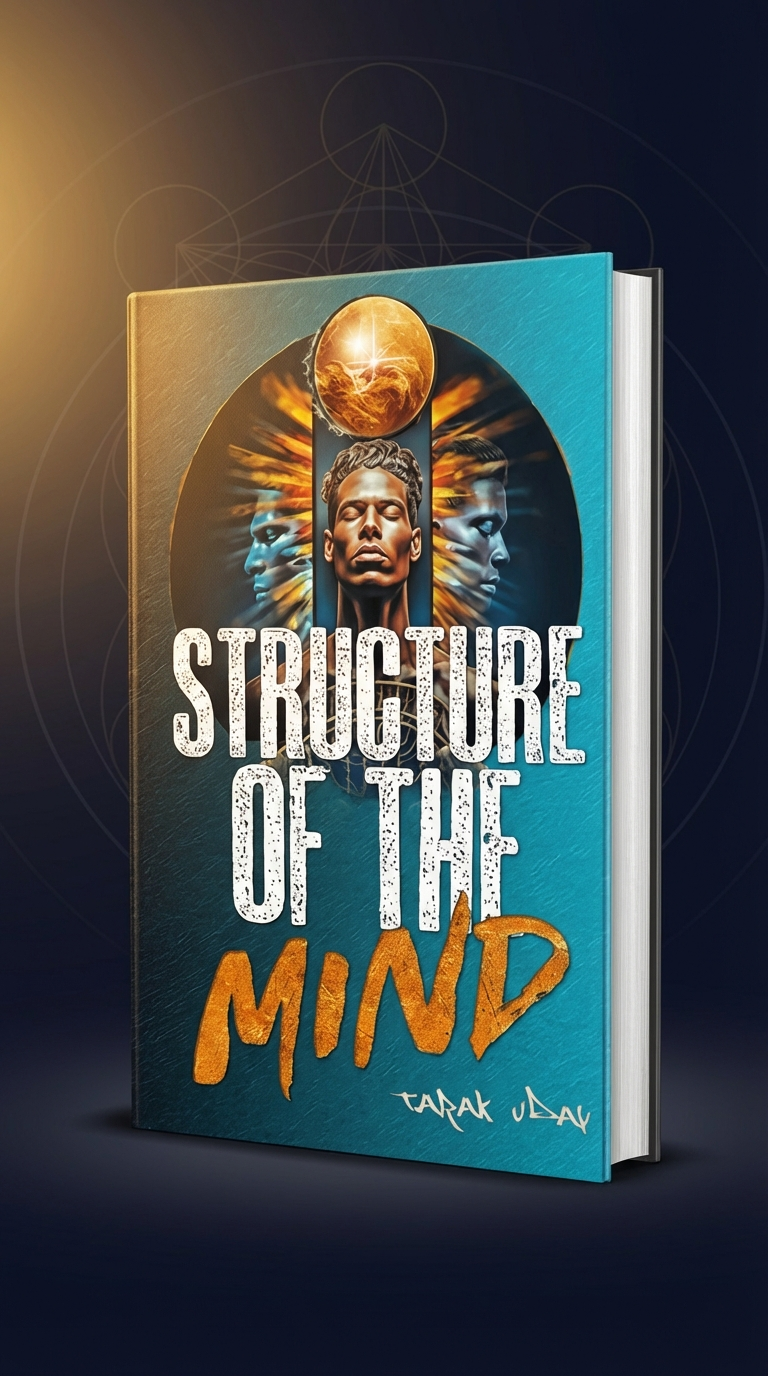
Understand Your Own Mind
"Structure of the Mind" reveals the three divisions of mind, seven levels of consciousness, and powers of mind that most people never learn to develop.