
Fox in Dreams: What Your Subconscious Is Really Telling You


A fox in a dream doesn't behave like most dream animals. It doesn't charge you and it rarely threatens. It appears at the edge of things — at a treeline, across a road, in the half-light — and it looks straight at you for a moment longer than an animal should. Then it's gone, and you're awake, and you can't shake the feeling that it knew something.
So people go looking for the warning. Is a fox in a dream telling me someone's lying to me? Is there a snake in the grass at work? Is my partner hiding something?
Put that search down, because it points outward and the dream points in. In the Universal Language of the Mind, animals represent your habitual thoughts — the thinking you never consciously chose but repeat so often it's become automatic. A fox is one of those thoughts. Specifically, it's the clever one. The habit that doesn't have to overpower you because it can talk its way past you instead.
Animals in dreams represent habitual thoughts — thinking you didn't choose but now run automatically. The animal's nature names the habit. A fox is cunning, quick, and evasive, so a fox reports a habitual thought that gets what it wants by argument and misdirection rather than by force. It's the one you don't catch, because it's clever enough not to be caught.
What does a fox mean in the Universal Language of the Mind?
The Universal Language of the Mind works on form and function. What a thing does in the physical world is what it means inside your mind, and it means the same thing for every dreamer on the planet. So begin with the category before the species.
Animals do what they do without deciding to. A fox doesn't weigh up whether to hunt at dusk; it's built that way and it runs the program. That automatic, unchosen, self-repeating quality is exactly what a habitual thought is. You didn't sit down and choose to think I'm hopeless with money or they're going to leave eventually. The thought moved in, got repeated, and became furniture.
Tarak Uday teaches this as the reason animals show up in dreams so persistently. Your subconscious mind isn't showing you wildlife. It's showing you the parts of your thinking that are running on their own, and it uses animals because animals are the perfect image of behaviour that repeats without being chosen.
Then the species narrows it. A lion is a dominating thought that rules the whole mind. A rabbit is a timid, cautious one. So a fox — small, quick, solitary, famous in every culture on earth for outwitting things larger than itself — is a habitual thought that survives by being smarter than your attempts to stop it.
Why does the fox's nature matter so much to the reading?
Because with animals, the qualities are the message. And the fox has a very particular set of them.
A fox doesn't confront. It takes what it wants from the edge of the property and it's away before anyone comes out. Move that inward and you have a habitual thought that never argues with you directly. It doesn't announce itself as a belief. It arrives sounding like common sense, takes the decision, and leaves before you notice a decision was made.
A fox works at dusk — in the low light, between day and night. In the dream language, light represents awareness, so an animal that operates in half-light is a habit that lives at the boundary of what you're aware of. Not unconscious. Not fully conscious either. That's the exact register of the thoughts that run your life: visible if you look, and specifically designed not to be looked at.
And a fox doubles back on its own trail to break the scent. That's the quality that gives this dream its sting. This is the habitual thought that changes shape the moment you go after it. You resolve to stop procrastinating, and the thought stops being I'll do it later and becomes I work better under pressure — same animal, new tracks.
The fox isn't the habit that overpowers you. It's the habit that outargues you — the one with a reasonable-sounding case, which is exactly why it has never had to fight.
Is a fox in a dream a warning that someone is deceiving you?
Almost everyone lands here, and it's worth taking seriously enough to dismantle properly rather than just waving off.
The reason it feels right is that the fox's folklore is about deception, and deception implies a deceiver, so the mind goes hunting for one in your waking life. But dreams don't work that way. Every character, object, and animal on that stage is a part of you. There's no one else in the building. So the cunning in the dream isn't being done to you by someone — it's being done by a part of your own mind, to the rest of it.
That's a harder message than the outward one, and a far more useful one. An external deceiver is someone else's problem to fix. An internal one is yours, and it's actually within reach. The thought that talks you out of the gym, the one that reframes the third drink, the one that explains why this particular unanswered message means what you're afraid it means — those are foxes, and they're all yours.
So if you woke up suspicious of a specific person, note that too. Not as an accusation, but as data: people in dreams represent qualities, so that person is carrying a quality you recognise. The question becomes what quality do they hold for me, and where is it operating in my own thinking.
What was the fox doing in the dream?
The behaviour is the diagnosis, and this is where the general symbol becomes an instruction you can act on.
A fox watching you from a distance reports a habit you've become aware of but haven't approached. You know it's there. You've named it, possibly to a friend. Nothing has been done, and the dream is noting the stalemate.
A fox raiding — taking food, getting into somewhere it shouldn't — reports a habitual thought that's actively costing you. Food in dreams is knowledge and nourishment, so a fox stealing it is thinking that's consuming the very resource you needed for something else. That's the version that shows up when you're tired all the time and can't say where the day went.
A fox you're chasing and can't catch is the most common form of all. It reports a genuine, deliberate attempt to change a habit — and it reports that the habit keeps changing its story faster than you can pin it down. That's not failure, and it isn't a sign the habit is stronger than you. It's a sign you're using pursuit on something that can't be caught by chasing.
A fox that's calm near you, or that lets you approach, reports the beginning of the actual solution: the thought seen clearly and no longer fleeing your attention. And a fox that's hurt, caged, or dead reports a habitual thought that's genuinely losing its power — usually one you've been working on longer than you've given yourself credit for.
CHITTA reads your dreams in the Universal Language of the Mind — the same symbol system used here — so you can see which habitual thought your subconscious was pointing at instead of guessing at it. Decode your dream free.
What does it mean if the fox was inside the house, or if you were the fox?
Both of these change the reading considerably, and both come up often enough to be worth their own answer.
Tarak Uday takes this further in Life Is But a Dream, his guide to reading every dream in the Universal Language of the Mind.
A house in a dream represents your state of mind, so a fox indoors is a habitual thought that's no longer operating at the edges. It's got inside the structure. That reports a habit that has stopped being an occasional visitor and started shaping the space itself — the thinking now runs while you're doing everything else, not just at the moments you're tired or unguarded. Note which room, too. A fox in the kitchen points at how you take in and prepare knowledge; a fox in the bedroom points at rest and intimacy; a fox in the basement points at material you've no awareness of at all.
And being the fox yourself is a different message entirely, and a more hopeful one than it usually feels. When you take an animal's form in a dream, you're identified with that habitual thought rather than observing it. There's no distance between you and it. So the dream isn't accusing you of being sly. It's reporting that a particular pattern of clever self-justification is currently wearing your face, and you can't see it as separate because you're inside it.
So the instruction in that version is simply to step back out. The moment you can watch the thought instead of thinking it, the fox is across the room again — and something you can see is something you can work with.
How do you actually change a habit this clever?
Not by chasing it. That's the whole lesson of the animal, and the dream has been demonstrating it to you.
You catch a fox by watching the ground it crosses, and you catch a habitual thought the same way — by attention rather than by force. So the practice is concentration, and it's more literal than it sounds. Sit for five minutes. Put your full attention on one ordinary thing: a candle flame, your own breathing, the second hand of a clock. When your attention leaves, bring it back without arguing with yourself. Then do it again tomorrow.
What that builds is the ability to notice a thought while it's happening rather than after it's finished. And that single capacity is what a fox cannot survive, because its entire method depends on moving through the low-light zone where you're not quite watching. Raise the light and the animal has nowhere to work.
Then do the second half, which is replacement rather than removal. A habitual thought vacates when another one occupies the ground, so decide in advance what you'll think when the familiar case gets made. Write the counter-thought down in your own words and keep it somewhere you'll see it. This is the practical end of the metaphysical mechanics: the subconscious mind accepts whatever is repeated with conviction, and it doesn't much care whether you chose the thought or inherited it.
Then watch your dreams for the answer. Keep a record for a few weeks and note every animal in it. When the fox turns up calm instead of fleeing, or smaller, or not at all, that's your own subconscious mind confirming the habit has lost its hold. It reports honestly, it reports quickly, and it doesn't flatter you — which is precisely what makes it worth reading.
Frequently Asked Questions


Books by Tarak Uday

Learn The Language Your Dreams Speak
"Life Is But a Dream" teaches the Universal Language of the Mind — how to read any dream symbol by what it is and what it does, so every dream becomes a message you can act on.

LUCID
You've tried every lucid dreaming technique. Most miss the root cause. LUCID reveals what they all skip.
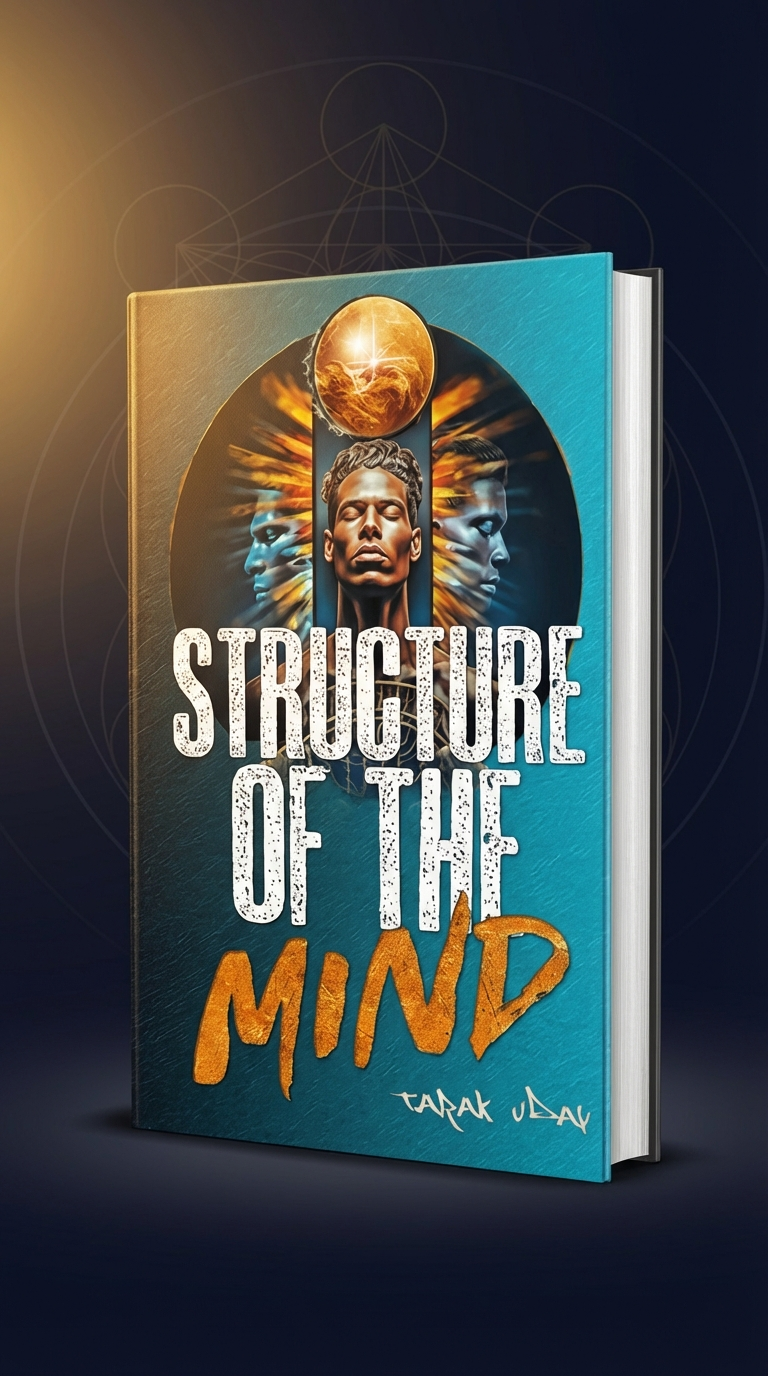
Understand Your Own Mind
"Structure of the Mind" reveals the three divisions of mind, seven levels of consciousness, and powers of mind that most people never learn to develop.