
Heart in Dreams: What Your Subconscious Is Really Telling You
Why the heart in your dream isn't about love at all, and what it really reveals about your power to respond.
So you woke up with a heart still beating somewhere in your mind. Maybe it was your own heart pounding, maybe a heart held in someone's hands, maybe a heart that stopped cold. And now you want to know what it means. Here's the short version before we go deep, because you deserve the real answer up front: in the Universal Language of Mind, a heart in a dream isn't about romance at all. It's about responsibility — your ability to respond to your own life. Stay with me, because once you see why, you'll never read a heart dream the same way again.
What does a heart really mean in a dream?
So here's where almost everyone gets it backwards. You've been told a heart means love, a crush, a relationship, the person you're secretly pining for. Think about that for a second. You had a vivid, multi-sensory experience inside your subconscious mind, and the best anyone could offer was — you must have feelings for somebody? That doesn't even begin to touch what's actually happening at the level of mind.
Your subconscious doesn't speak in gossip. It speaks in the Universal Language of Mind, a symbolic language where every image reflects a quality of your own consciousness. And to read any symbol correctly, you start with its function. Not what it looks like — what it does. So look at the heart. The heart is the central organ of the body. It pumps lifeforce energy to every part of your physical system. Without it, nothing runs. Every other organ, every limb, every cell waits on it. It's the core upon which everything else depends.
Now translate that mechanically. The quality in your life that everything else depends on, the thing that circulates your power into every single area, is your responsibility — your ability to respond. That's the whole point. Break the word open and it's right there: response-ability. The capacity to answer what life puts in front of you instead of flinching from it. According to the Universal Language of Mind that Tarak Uday teaches, the heart in a dream is your subconscious showing you the exact condition of that central pump — how freely, or how poorly, your power is circulating right now. Nothing in your inner life moves without it, which is exactly why your subconscious chose it.
Why isn't your heart dream about romance?
Look, the romance reading feels right because waking culture glued the heart to love a long time ago. Valentines, love songs, the little heart emoji. So when a heart shows up at night, your conscious mind grabs the nearest familiar meaning and calls it done. But your dreams weren't built by greeting-card companies. They were built by the deeper part of you that only ever talks about one subject — you.
Now here's what others say, so you can see the ceiling on it. The pop-psychology reading calls the heart your emotions. The old dream dictionaries call it love and relationships. Even that isn't wrong so much as shallow — it stops at the surface and never asks what emotion is actually for. So flip the belief. The heart isn't pointing outward at some person you love. It's pointing inward at how you're carrying your own life. And responsibility isn't a burden, either — that's the second thing people get wrong. Responsibility is a power. It's the recognition that you are the cause of your experiences, that your thoughts and choices and actions built the reality you're standing in right now. When you accept that, you reclaim the power to change it.
So a dream that seems to be about a broken heart usually isn't grief over a person. It's your subconscious flagging a place where you've handed your power away — where you've been blaming, excusing, or waiting for someone else to fix what only you can respond to. That's a very different, and far more useful, message than you miss your ex. One reading leaves you helpless and pining. The other hands you back the controls. And only one of those actually changes anything tomorrow morning.
Your heart dream is a message. Read it correctly.
CHITTA decodes your dreams through the Universal Language of Mind, so you get the real meaning instead of a generic guess.
Decode Your Dream Now →What do the most common heart dreams actually mean?
So let's get concrete, because the scenario you dreamed carries its own precise reading. Dreaming of a heart attack? That's rarely a medical omen. Far more often it's responsibility overload — you've said yes to more than your current sense of self can pump, and the deeper mind is showing you the strain before your body ever feels it. Dreaming you gave your heart away, handed it to someone, or had it taken? That's you handing your responsibility — your power to respond — to another person, and the dream is asking whether you meant to.
Dreaming of a heart transplant? Something in how you carry your life is being replaced — an old, failing pattern of ownership swapped for a new one. That's growth, even if it feels like loss. Dreaming of someone else's heart, exposed or beating? Your subconscious is measuring your relationship with responsibility against theirs, or showing you a quality of ownership you're ready to take on. And a heart that simply stops? That's the felt sense that your power has stopped circulating somewhere — a place you've gone numb, disengaged, quit responding. So don't read the scene literally. Read what it's doing to the flow of your power, because that flow is the only thing the dream actually cares about.
What is the condition of the heart trying to tell you?
So this is where a heart dream gets specific, and the details you might've dismissed become the whole message. Your subconscious never wastes a frame. The condition of the heart is the diagnosis.
Was the heart healthy, strong, beating with a steady rhythm? Then it's reflecting a well-developed sense of personal responsibility — you're owning your life and it shows in the core. Was it wounded, ailing, or failing? That's your subconscious telling you either that you've been avoiding responsibility somewhere, or that the weight you've picked up has grown too heavy to carry the way you're carrying it. Was the heart exposed, out in the open, unprotected? That points to vulnerability in the area of responsibility — a place where you feel raw about what you're being asked to carry.
And an enlarged, glowing, or radiant heart? That's expansion. Your capacity to respond to life is growing, and the deeper mind is showing you the growth so the conscious mind can catch up. So don't skip the condition. It's not decoration. It's the exact word your subconscious chose, and it's telling you precisely where your power is thriving and where it's leaking out.
How does the heart connect to the three divisions of your mind?
So to really understand why the heart lands where it lands, you have to see the architecture underneath. In the Structure of the Mind, your consciousness runs in three divisions. The conscious mind is where you think, choose, and act in waking life. The subconscious mind is the vast middle where habits, memories, and emotional understandings live — and where your dreams get authored. The superconscious mind is the highest division, holding the blueprint of who you truly are.
Responsibility is what links all three into one working system. Your conscious mind makes a choice. Your subconscious mind circulates the emotional charge of that choice into every corner of your inner life — exactly like the heart circulating blood. And your superconscious mind holds the standard you're growing toward. So when the heart appears in a dream, your subconscious is reporting on the health of the whole circulation — whether the power generated by your choices is actually reaching every part of you, or getting blocked, leaked, or hoarded somewhere.
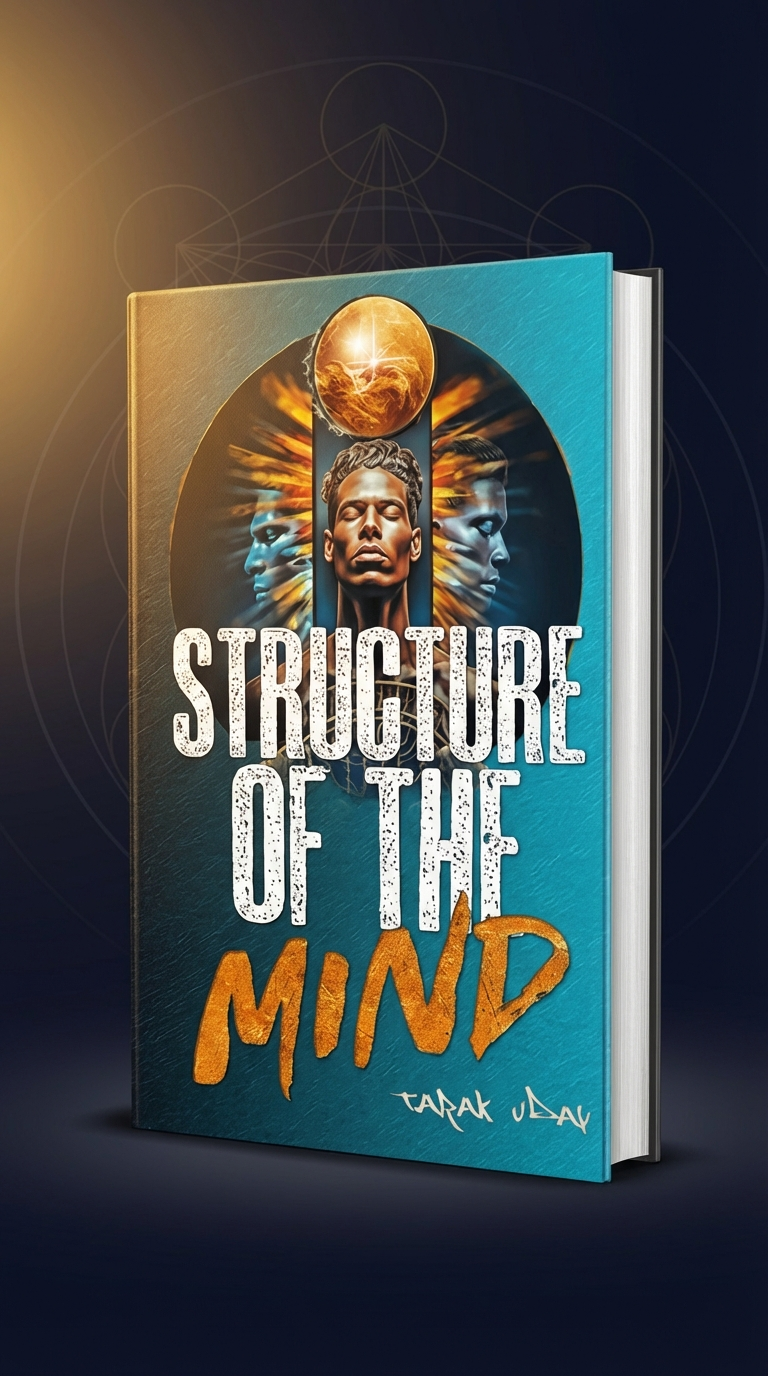
Tarak Uday takes this further in Structure of the Mind, his map of the three divisions of mind and the powers of attention, memory and imagination.
That's why the heart sits at the center of the body in your dreams the same way responsibility sits at the center of self-mastery. Read the symbol by its form and its function together, and the message stops being mysterious. It becomes a status report on the one quality your whole life runs on.
What should you do when a heart shows up in your dream?
So the dream did its job the moment it got your attention. Now it's your turn to respond — which is fitting, because responding is the whole lesson. Start with one honest question. Where in your waking life are you the cause, but acting like the victim? Where are you blaming, excusing, or waiting for a rescue that isn't coming? That's the area the heart was pointing at, and you already know the answer before you finish reading this sentence.
Then match your answer to the condition you saw. If the heart was strong, this is confirmation — keep circulating that ownership, you're on the path of self-mastery. If it was heavy or failing, look for where you've overcommitted or where you're carrying something that was never yours to carry, and set it down consciously. If it was wounded, tend the place you feel raw about, not by hardening but by responding — the heart heals through use, not through armor. I've decoded thousands of these and the pattern never changes: the moment someone shifts from blame to ownership, the anxious heart dreams stop. Not gradually. They stop, because the message got received.
So the heart of your power lives in your ability to respond. Strengthen that, and everything downstream strengthens with it. That's not a metaphor — that's the metaphysical mechanics of how your inner life actually circulates. Your subconscious just handed you the diagnosis in a language older than words. Read it, respond to it, and watch the whole system come back into rhythm.
Turn tonight's dream into tomorrow's clarity.
Log your heart dream in CHITTA and let the Universal Language of Mind show you exactly which area of responsibility it's pointing to.
Start Decoding Free →Written by Tarak Uday, teacher of the Universal Language of Mind and author of Life is But a Dream. Tarak has spent decades decoding the symbolic language of the subconscious mind and teaching the metaphysical mechanics of self-mastery. His work shows that every dream is a precise, readable message about the one who is dreaming it — and that learning to read it is the fastest route to reclaiming your power to respond.

Frequently Asked Questions


Books by Tarak Uday
Understand Your Own Mind
"Structure of the Mind" reveals the three divisions of mind, seven levels of consciousness, and powers of mind that most people never learn to develop.

Learn The Language Your Dreams Speak
"Life Is But a Dream" teaches the Universal Language of Mind — how to read any dream symbol by what it is and what it does, so every dream becomes a message you can act on.
LUCID
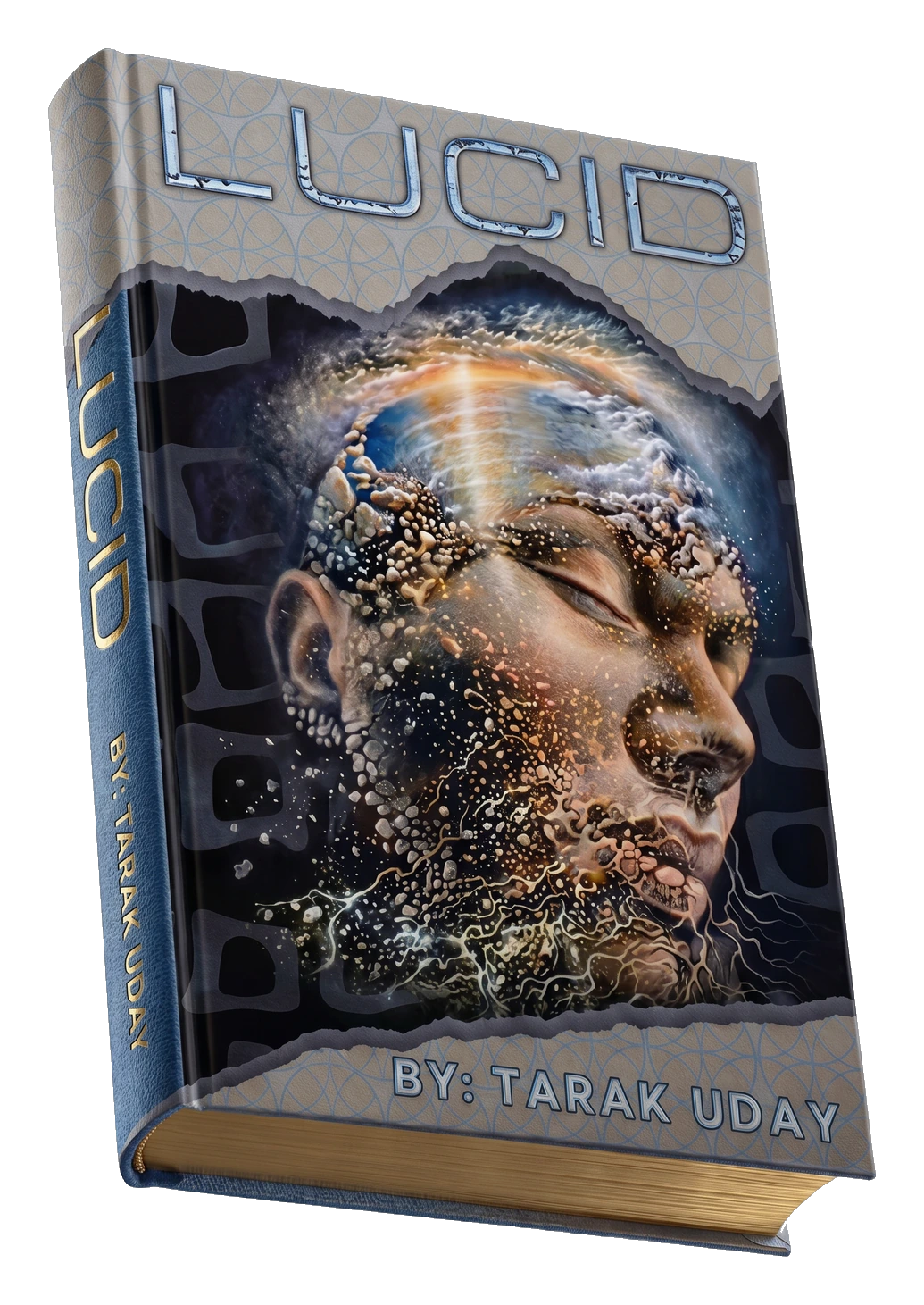
You've tried every lucid dreaming technique. Most miss the root cause. LUCID reveals what they all skip.