
Illness in Dreams: What Your Subconscious Is Really Telling You
In the Universal Language of Mind, a sickness dream isn't about your body - it's about the thoughts creating dis-ease within you.
You wake up shaken. In the dream you were sick — really sick. Maybe you were lying in a hospital bed, maybe you felt a fever burning through you, maybe a doctor was saying words you didn't want to hear. And now you're lying awake at 3am wondering if your body is trying to warn you about something. So let's settle that fear right now, because the answer is both simpler and far more useful than you'd expect.
Here's what most dream sites get wrong. They treat a sickness dream like a medical omen, sending you into a spiral of health anxiety. That's backwards. Your dreaming mind doesn't diagnose your body — it speaks in symbols about the state of your inner world. And when it hands you the image of illness, it's pointing at something you can actually do something about.
Why Did You Dream About Being Sick When Your Body Feels Fine?
So the first thing to understand is that your subconscious mind doesn't think in literal facts. It thinks in pictures. When it wants to show you that something in your mental life has fallen out of harmony, it reaches for the most vivid image it has for "something is not well here" — and that image is illness.
Look at the word itself. Dis-ease. The absence of ease. The lack of harmony. That's not an accident of language — it's a description of mechanism. According to the Universal Language of Mind that Tarak Uday teaches, every ailment begins in the mind as an unproductive thought pattern long before it ever shows up anywhere else. So when you dream of being ill, your subconscious is holding up a mirror. It's saying: look at what you've been thinking. Look at what you've been feeding yourself.
This is why the dream can arrive when your body is perfectly healthy. It was never about the body. It's about the thoughts you carry through your day — the quiet resentment you replay, the fear you rehearse, the harsh inner voice you've grown so used to you don't even hear it anymore. Those thoughts are the fever. The dream just gave them a face.
So notice the relief hiding in that. If the dream were about your body, you would be helpless in front of it, left to wait and worry. But because it is about your thinking, you are anything but helpless. Thinking is the one thing in the universe you were built to govern. The image scared you awake precisely so you would take that governance seriously.
What Does Illness Actually Mean in the Universal Language of Mind?
Let's get precise, because precision is where the freedom is. In the Universal Language of Mind, illness and disease represent unproductive thoughts that are creating disharmony within your mind and, by extension, within your life. The principle underneath is one you'll meet again and again in this work: thought is cause.
Thought is cause. That means the conditions of your life — the ease or the dis-ease — begin as movements in your mind. A thought held long enough becomes a belief. A belief held long enough becomes an attitude. And an attitude, running quietly in the background of everything you do, shapes what you experience. So the illness in the dream isn't the problem. It's the readout. It's the smoke that tells you where the fire is.
This is the form-and-function lens at the heart of the Universal Language of Mind. The form is the picture — the sickness, the symptom, the sickbed. The function is what that picture is doing for you — flagging an unproductive thought pattern that needs your attention. Read the form as literal and you panic. Read the function and you get to work.
And the details matter. Where was the illness in your body? What kind was it? A dream of a diseased heart speaks to the thoughts you carry about love and giving. A dream of a failing stomach speaks to something you can't digest — an experience or truth you haven't been able to process. The location is a clue to the specific nature of the unproductive thought. Your subconscious is precise. So it pays to pay attention.
So hold the two halves together, because this is the whole teaching in miniature. Form: you dreamed you were ill. Function: your subconscious flagged a thought that had drifted out of harmony. Miss the function and the symbol just frightens you. Catch it, and the same symbol becomes a map. That is what it means to be literate in the Universal Language of Mind — you stop reading the pictures as threats and start reading them as guidance, sent by the one part of you that never stops paying attention.
So Where Does the Illness in Your Dream Actually Come From?
Here's the part that stings a little, and it's meant to. The illness in your dream came from you. Not as an accusation — as a promise. Because if you built it, you can un-build it.
Think about the thoughts you've been rehearsing lately. Not the ones you'd say out loud, but the ones that run underneath. The story where someone wronged you and you replay it, feeling the resentment fresh each time. The fear you visit like a familiar room, imagining the worst outcome in full color. The verdict you've passed on yourself — that you're behind, that you're not enough, that you've already failed. Every one of those is an unproductive thought. And unproductive thoughts don't just sit there quietly. They accumulate. They create a mental climate. And your subconscious, watching all of it, eventually stops hinting and hands you the undeniable image: you're sick.
So the dream is a kindness, really. It's your deeper mind refusing to let you keep ignoring what you've been doing to yourself. Most people go years without ever examining the thoughts they think on autopilot. The illness dream is your subconscious pulling the emergency brake — insisting you look now, while it's still just a picture in the night and not something harder.
And notice how honest the timing usually is. The illness dream tends to arrive after a stretch of the same low-grade thinking — a hard week at work you narrated as failure, a relationship you kept scoring in your head, a season of comparing your life to everyone else’s highlight reel. Your subconscious lets it build, and build, and then it speaks. So if the dream feels sudden, look back a little further. The thought was never sudden at all.
What was your illness dream really pointing at?
CHITTA decodes your dream through the Universal Language of Mind — not generic symbolism, but the exact unproductive thought pattern your subconscious is flagging, and what to do about it.
Decode Your Dream Now →What Should You Do When You Dream of Being Ill?
So you've had the dream. You understand now that it's pointing at a thought, not a tumor. What comes next? You get to work on the cause, because thought is cause and cause is where the leverage is.
Start by catching the thought. For the next few days, notice what your mind returns to when it's idle — in the shower, in traffic, in the quiet before sleep. That's where your real thinking lives. You'll likely find the same few unproductive loops running again and again: a grievance, a fear, a self-criticism. That loop is the dis-ease. Naming it is half the healing, because you can't change a pattern you refuse to see.
Then you replace it. This is not positive-thinking wallpaper — it's mechanics. Every time you catch the unproductive thought, you deliberately install a productive one in its place. Not a lie, a truth you'd been forgetting. Where there was resentment, you practice release. Where there was fear, you rehearse the outcome you actually want. Where there was self-judgment, you speak to yourself the way you'd speak to someone you love. Do this enough times and the old loop starts to lose its grip, because a thought only has the power you keep feeding it.
Tarak Uday takes this further in Structure of the Mind, his map of the three divisions of mind and the powers of attention, memory and imagination.
And use your tools. Concentration builds the muscle to catch a thought before it runs away with you. Meditation creates the inner stillness where you can actually hear what you've been thinking. Breathwork reconnects you to the calm underneath the noise. This is the daily practice of tending your own mind — and it's the whole point of the work. So the dream didn't just scare you. It handed you an assignment worth doing.
So give it a rhythm, not a heroic one-time effort. Five quiet minutes in the morning to set the tone of your thinking. A few check-ins through the day to catch the loop before it compounds. A moment at night to release what you do not want to carry into sleep. This is how the ease returns — not in a single dramatic breakthrough, but in the steady, unglamorous work of thinking on purpose instead of on autopilot. Do that, and you will likely notice the illness dreams simply stop coming, because the disharmony they were reporting is gone.
Is Your Dream Warning You About Your Physical Health?
Let's be direct, because this is the fear that brought you here. No — a dream of illness is not a diagnosis, a prophecy, or a medical warning about your body. It is a reflection of the inner condition of your mind. If you have real concerns about your physical health, see a doctor; that's what doctors are for, and your dream can't replace one. But don't let health anxiety hijack a dream that's actually trying to help you.
Because here's the deeper truth this symbol is built on. Thought is cause, which means the most powerful thing you can do for your whole life — mind and body and circumstance alike — is to take command of what you think. The illness dream isn't a curse. It's a course correction. It's your subconscious, fluent in a language older than words, telling you exactly where the disharmony lives so you can restore the ease.
So the next time a sickness dream wakes you at 3am, don't reach for panic. Reach for curiosity. Ask the better question — not "what's wrong with my body?" but "what have I been thinking that I need to change?" That question is the door. And walking through it is how a frightening dream becomes the most useful message your mind has sent you all year.
Ready to read your dream the way your subconscious meant it?
Stop guessing at symbols. CHITTA uses the Universal Language of Mind to show you the exact thought your dream is naming — and the practice that heals it.
Decode Your Dream Now →Tarak Uday is the author of Life is But a Dream and Lucid, and the creator of CHITTA's dream-decoding engine built on the Universal Language of Mind.

Frequently Asked Questions


Books by Tarak Uday
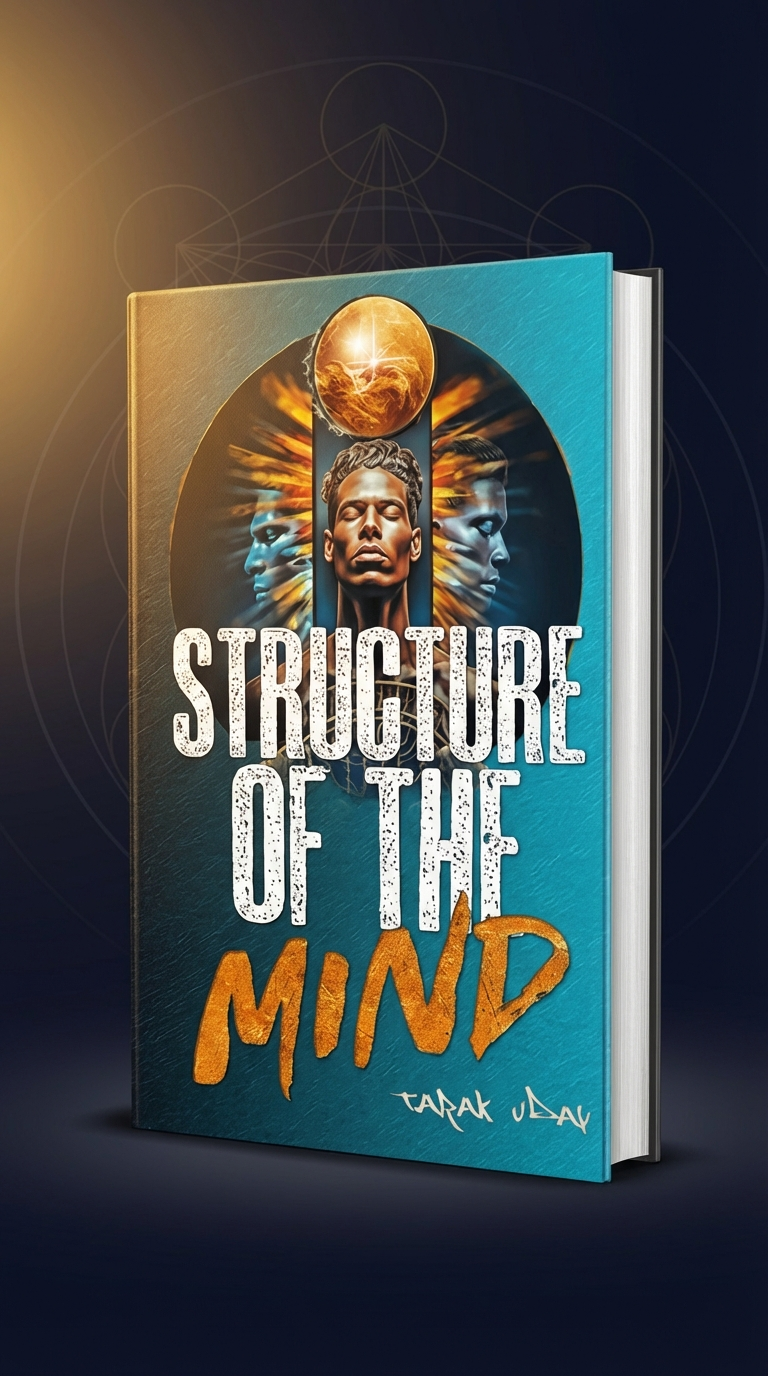
Understand Your Own Mind
"Structure of the Mind" reveals the three divisions of mind, seven levels of consciousness, and powers of mind that most people never learn to develop.

Learn The Language Your Dreams Speak
"Life Is But a Dream" teaches the Universal Language of Mind — how to read any dream symbol by what it is and what it does, so every dream becomes a message you can act on.

LUCID
You've tried every lucid dreaming technique. Most miss the root cause. LUCID reveals what they all skip.