
Horses in Dreams: What Your Subconscious Is Really Telling You

Nobody wakes up neutral from a horse dream.
You wake up moved. There was something in the size of it, the muscle, the sound of it going past you, and the feeling that stays for an hour afterwards isn't fear and isn't quite joy. It's closer to being reminded of something. People describe it as majestic, or free, or powerful, and then they can't say what it was about, and the dream goes in the drawer with the other beautiful ones.
That's a waste, because the horse is one of the most operational symbols your subconscious mind has. It isn't there to move you. It's there to tell you what you've been doing with your will.
In the Universal Language of the Mind, a horse is will power. Not freedom, not spirit, not your untamed nature — the raw capacity to make yourself do something. The dream isn't celebrating that capacity. It's showing you where it currently is and whether anyone is steering it.
What does a horse actually mean in the Universal Language of the Mind?
A horse is will power.
The Universal Language of the Mind names a symbol after the work it performs, and what a horse performs is force placed under direction. That's the whole animal. It is the strongest thing most humans have ever had access to that will also go where it's told. Everything a horse has ever been used for — pulling, carrying, ploughing, charging, covering distance faster than a body can — comes down to the same arrangement: enormous power, plus a rider who decides the heading.
Now hold that next to what will power actually is. It's the ability to apply force to your own behaviour. It doesn't know what it's for. It doesn't pick your goals. It's the strength you put behind a decision that somebody — hopefully you — has already made.
Same structure. So the subconscious mind, which builds its images out of function rather than culture, reaches for the horse. Not because horses are noble but because a horse is the clearest available picture of a force that must be aimed.
This is the discipline Tarak Uday teaches throughout the work: read what the thing does. The moment you do, the horse stops being an aesthetic experience and starts being a measurement.
It also explains why the horse dream leaves that particular residue. You aren't responding to a beautiful animal. You're responding to a picture of your own capacity, drawn to scale, and some part of you recognises the size of it. That recognition is the dream working correctly. What usually goes wrong is what happens next — you file it under lovely instead of asking the one question the image was built to raise.
Why isn't the horse about freedom?
Because freedom is what unaimed power looks like from a distance.
Almost everyone arrives at the horse dream carrying the same belief, and it's been reinforced by every poster, every advert, every film shot of horses on a beach: the horse means wildness, liberation, the part of you that refuses to be broken. It's a lovely idea. It's also the exact opposite of what the symbol reports.
Look at the loose horse honestly. It has all its strength. It's going somewhere at speed. And nothing about its direction is chosen — it's running on stimulus, on herd, on whatever startled it. From outside, that reads as freedom. From inside, it's force with no destination.
Will power without a heading isn't freedom. It's just motion.
You already know the waking version of this. It's the week you worked fourteen hours a day and finished nothing that mattered. It's the discipline you can absolutely summon for the gym, the inbox, the side project you don't care about — while the thing you actually want sits untouched. The capacity was never the problem. You have enormous will. You have been spending it on whatever was loudest.
So when the dream shows you a horse thundering past and something in your chest lifts, notice what your subconscious just did. It showed you your own strength, moving at full speed, without you on it.
What does it mean if the horse is running loose, or if you're riding it?
Your position relative to the animal is where the dream stops being poetic and starts being a report you can act on.
Riding is the clearest reading, and the Universal Language of the Mind gives it its own entry: to ride is to make progress toward reaching your goals. You're on the will, you're steering it, and it's carrying you somewhere you chose. If you were riding well, that's your subconscious confirming the arrangement is working — which is worth knowing, because confirmation dreams are real and people ignore them looking for problems.
Watching a horse from a fence is will you're aware of and not using. There's the capacity, right there, contained, and you're a spectator to it. That one usually maps to a waking situation where you've decided the effort is for later.
Being thrown, or unable to hold on, is will that has outrun your direction. It's not weakness — it's the opposite. Something in your life has more force behind it than steering, and the dream is telling you the steering is the deficit.
A horse that won't move is the picture people find most frustrating and it's the most precise. Full capacity, present, refusing. In waking life that's the project you cannot make yourself start despite genuinely wanting it, and the dream is saying the problem isn't your strength. Something else is deciding, and it isn't the part of you that made the plan.
An injured or dying horse is will power that's been damaged by how you've been spending it. And a horse in a stable, fed and calm, is capacity in reserve — available, unspent, waiting on a decision from you.
The ground under the horse finishes the sentence, because will always operates on terrain. A road is the direction your life is taking, so a horse on a road is will applied to a path you've actually chosen. Open country is capacity with no route defined yet. Mud is the reading worth watching for — in this language mud is the inability to separate what you're aware of from what you're not, and a horse struggling in it says your will is being spent inside confusion rather than on a decision. And water under the horse is your conscious life experience: will moving through your actual days, which is either wading or swimming depending on how much of it the days are taking.
So build the read in layers. Name the animal, name your position relative to it, then name the ground. Three facts, and between them they usually describe your waking week more accurately than you'd describe it yourself.
Log the horse dream in CHITTA and read the whole scene — the rider, the terrain, the direction — against the Universal Language of the Mind, instead of settling for a one-word symbol lookup.
Why did your subconscious send more than one?
Plurals in this language are about amount, and a herd is a statement about quantity of will.
Tarak Uday takes this further in Life Is But a Dream, his guide to reading every dream in the Universal Language of the Mind.
Many horses moving together is a great deal of will power pointed the same way. That's a powerful report and it cuts both directions depending on the heading. If they're moving toward something, you have real momentum behind an aim — and this is the dream to take seriously, because that much aligned force will arrive somewhere whether or not you've checked where. If they're stampeding, the alignment came from panic rather than choice, and you're being carried by your own strength in a direction nobody selected.
Horses scattered across a field, grazing, is capacity distributed and idle. Nothing wrong, nothing wasted — but nothing aimed either. That's often the dream of someone with more ability than they currently have use for.
And it's worth separating the horse from the other animals in the dictionary, because they get blurred in memory. Animals in general are mental habits — the thoughts you run automatically. A horse isn't a habit. It's the engine a habit can hijack. So a horse being led somewhere by something you didn't choose is a very specific report: your will power has been recruited by an automatic pattern, and the pattern is now doing the steering.
One more distinction, because it changes what you do next. A horse is will; a car, in this language, is your physical body and your life in physical reality. People treat the two dreams as interchangeable because both are things you get into and steer, and they aren't. A car breaking down is a report about your vehicle. A horse refusing is a report about your force. If you keep dreaming of horses and never of cars, your subconscious has decided the live question is what you're willing to do, not what you're able to do.
What are you supposed to do with your will power tomorrow?
Take a heading. That's the entire instruction, and it's more demanding than it sounds.
Your subconscious sent a report about direction, not about effort, so answering it with more effort will fail — and it'll fail while feeling productive, which is the worst kind of failing. Working harder is exactly what a loose horse does.
So do the small, unglamorous, waking-life thing instead. Pick one aim. Write it somewhere you'll see it. Then, tomorrow, put your will behind that one thing before you spend any of it on the day's noise — before the inbox, before the calls, before the tasks that are urgent because someone else made them urgent. Fifteen minutes at the front of the day, aimed deliberately, will do more to change the next dream than a fourteen-hour push.
And keep a record, because this symbol updates faster than most and you'll miss the update if you're working from memory. Write down where the horse was, where you were, and what the ground was doing, then write down what you aimed your will at that week. Do it for a fortnight. What you'll usually find is that the dream tracked the aiming, not the exertion — that the week you did less but pointed it somewhere is the week you were on the animal instead of watching it. That correlation is the thing worth having, and it's only visible on paper.
Those are the metaphysical mechanics, and they're indifferent to how hard you tried. Your subconscious doesn't score exertion. It draws where the force went, which is a question about aim, and it will keep drawing the same picture as long as the aim stays the same. That's not a punishment. It's just what a mirror does.
Get on the horse in waking life. The report will change by itself.
Frequently Asked Questions

Books by Tarak Uday
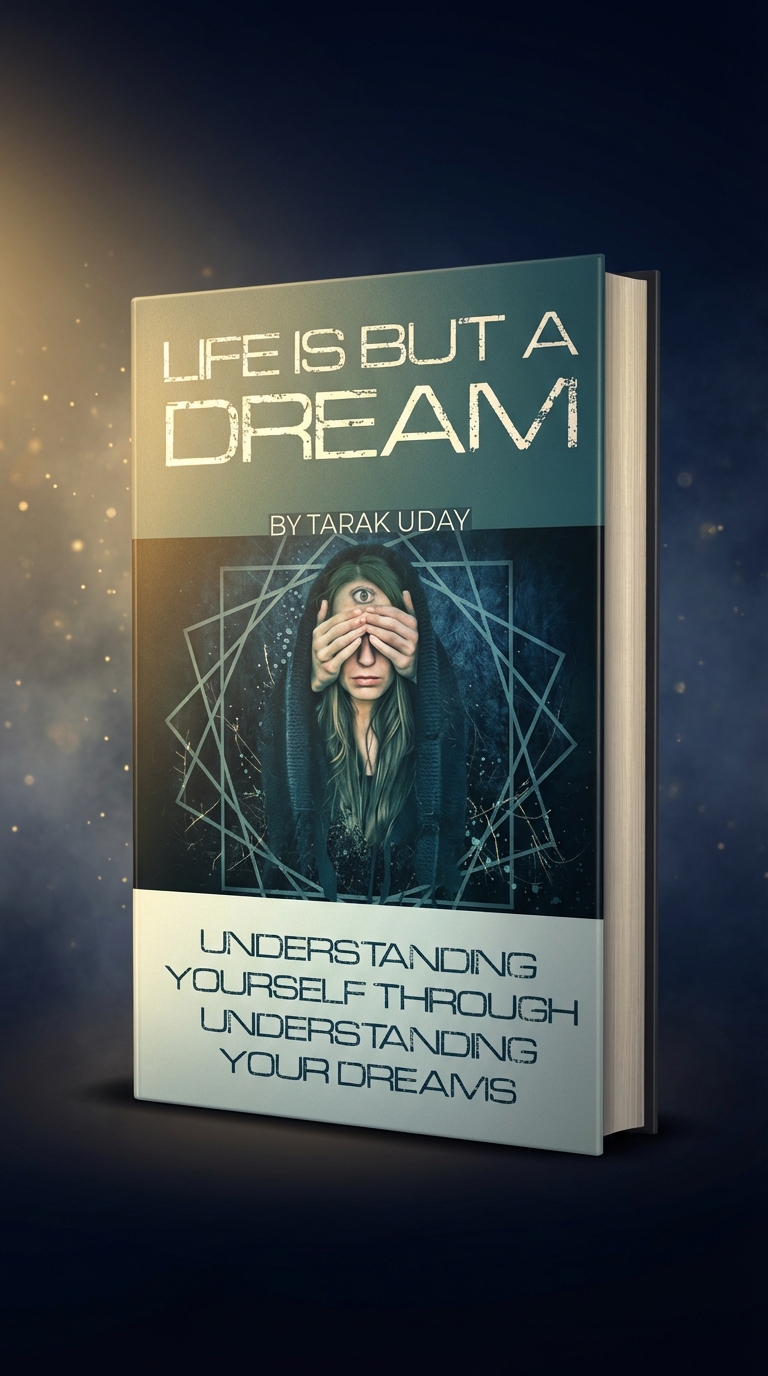
Learn The Language Your Dreams Speak
"Life Is But a Dream" teaches the Universal Language of the Mind — how to read any dream symbol by what it is and what it does, so every dream becomes a message you can act on.
LUCID
You've tried every lucid dreaming technique. Most miss the root cause. LUCID reveals what they all skip.
Understand Your Own Mind
"Structure of the Mind" reveals the three divisions of mind, seven levels of consciousness, and powers of mind that most people never learn to develop.