
Island in Dreams: What Your Subconscious Is Really Telling You


There's a reason the island dream doesn't scare you.
You're standing on sand. The water goes out in every direction. Nothing is chasing you, nothing is broken, and the whole thing has the quiet of a place where nothing more is required of you. You wake up and the word that arrives is peaceful. Maybe you even wish you could go back.
Then it happens again a few weeks later, and again, and at some point you notice that you have never once, in any of these dreams, left.
That's the part worth looking at. Not the sand. Not the light. The fact that in a dream where you could go anywhere, you stayed on a piece of land with no road off it — and it felt fine.
In the Universal Language of the Mind, an island is an isolated state of mind. Not a place, not a mood, not a holiday. It's a way of thinking that has been cut off from the rest of your awareness, surrounded by life experience it no longer connects to. The calm you feel there is the calm of a room nobody enters.
What does an island actually mean in the Universal Language of the Mind?
An island is an isolated state of mind.
To see why, you have to read the image the way the Universal Language of the Mind reads every image — by its boundaries, by what it separates and what it refuses to join. Forget the palm trees. Forget the postcard. Strip an island down to its mechanics and you get one fact: it is land that has been severed from other land by water, and the severance is the entire definition. A hill isn't an island. A peninsula isn't an island. The moment the connection is cut on every side, you have one.
So the symbol isn't about sand or sun or solitude as a feeling. It's about a piece of you that has no route to the rest of you.
This is the discipline underneath the whole framework Tarak Uday teaches, and it's what separates the Universal Language of the Mind from the guesswork that fills most dream dictionaries. You don't ask what an island reminds you of. You ask what an island does. What it does is stand apart.
Everything else in the dream then reads off that single fact. Land in a dream is the mind you can stand on — the stable, occupied part of you. Water is your conscious life experience, the days you actually live. Put them together and an island is a state of mind you're standing in, surrounded by a life it has stopped touching.
Size then tells you scope. A small island with a few rocks on it is a narrow, specific way of thinking that has come loose — one opinion, one habit, one part of your competence. A large island with terrain and interior you never explored is something much bigger cut adrift, an entire mode of operating you used to live inside. And an archipelago, several islands in view of each other, says the fragmentation has happened more than once: several parts of you, each intact, none of them talking.
Why does an island feel like peace when it's reporting a problem?
Here's the belief the dream is built to confront, and it's a good one because you probably don't experience it as a belief at all. You think islands mean escape. Rest. A reward. Somewhere the demands stop.
Every piece of that reading came from advertising, and none of it came from your subconscious mind.
Isolation is genuinely quiet. That's not an illusion — it's the mechanism. When a part of your thinking loses its connections, the traffic stops. No incoming demands, no contradictions from other parts of you, no friction. What you experience as peace on that beach is the specific quiet of a system that has stopped exchanging anything with its surroundings.
So the pleasant feeling isn't evidence that the island is good news. The pleasant feeling is the news. Your subconscious is showing you that a section of your mind has gone quiet, and that you've come to like the quiet enough to keep returning to it.
The island doesn't feel calm despite being cut off. It feels calm because it's cut off.
Compare it with how the Universal Language of the Mind handles a prison, which is the same isolation worn as a complaint instead of a comfort. A prison is a personal limiting belief — a boundary you experience as imposed. An island is a boundary you experience as scenery. The mechanics are close cousins. The difference is entirely in whether you've noticed you're contained.
What is the water around the island telling you?
People fixate on the island and skip the water, and the water is half the report.
Water is your conscious life experience. An ocean is those experiences taken as a whole — the entire mass of your waking days at once. So an island in an ocean is a very specific statement: this state of mind is surrounded on all sides by your actual life, and it is not in contact with any of it.
Read the water's condition and you get the rest. If the surrounding water is calm and glassy, your life isn't in crisis — the isolation is happening in ordinary conditions, which usually means it has been going on a long time and nothing has forced the issue. If the water is rough, your days are moving hard while this part of you sits still, and the gap between them is widening. If the water is dark or murky, you can't see what your own life contains from where you're standing, which is the natural result of standing somewhere it can't reach.
So the two halves fit together into a single sentence: this is the state of mind I'm occupying, and this is what my life is doing while I occupy it. That sentence is the dream. Everything else is set dressing.
Log the island dream in CHITTA and get the water, the shoreline and the distance read together — the full Universal Language of the Mind interpretation, not a one-word symbol lookup.
What is the difference between being stranded and choosing the island?
This is where a repeating island dream starts to give you something actionable, because your posture in the dream tells you how the isolation got there.
Being shipwrecked or washed ashore says the separation happened to you. Something in your waking life severed a connection you didn't choose to sever — a role ended, a group dissolved, a person left, and a whole way of thinking got marooned with nowhere to send its output.
Building on the island, settling in, making it comfortable, says you're maintaining the separation. You've furnished the isolation. Somewhere in waking life you're actively declining to reconnect a part of yourself, and you've made the declining survivable enough that it doesn't hurt.
Looking out at the water and not entering it says you know exactly where the rest of your life is. You can see it. The distance isn't the problem; the entry is.
Tarak Uday takes this further in Life Is But a Dream, his guide to reading every dream in the Universal Language of the Mind.
And an island you're glad to reach — swimming toward it, relieved to arrive — inverts the whole thing. That's isolation as destination, which usually maps to a waking situation you've been treating as rescue. Getting away from people. Going quiet on the group chat. Taking the role where nobody checks on you. Your subconscious isn't scolding you for it. It's telling you what you actually chose, in language you can't argue with.
Notice that none of these readings are about how you felt. They're about what you did, in the dream, with the geography. So when you replay it, track your movements rather than your mood.
There's one more variant worth naming because it catches people off guard: the island that turns out to be inhabited. You arrive expecting emptiness and there are people there, or a village, or a single figure who seems to have been waiting. Other people in dreams are aspects of yourself, so an inhabited island says the separated territory isn't dormant. Something in you has been living out there this whole time, developing on its own, without any input from the rest of your thinking. That's not automatically bad — but it does mean whatever grew there grew unchecked.
How do you build the bridge back?
The Universal Language of the Mind is generous about this, because it gives you the connectors in the same vocabulary. A bridge is the ability to shift from one state of mind to another. A boat is your physical body and your life in it — the vehicle you already own for crossing experience.
So the instruction hidden in an island dream is never feel less isolated. It's structural. Restore a connection, in waking life, between the part of you standing on that sand and the rest of what you're living.
That means finding what got severed. The skill you stopped using when you changed jobs. The version of you that only came out around people you no longer see. The subject you used to think hard about and now don't discuss with anyone. The ambition you kept and quietly stopped mentioning. Every one of those is a piece of land with the water risen around it.
Then build one crossing. Say the thing out loud to a person. Use the skill on something small and real. Put the isolated interest back into contact with your actual week, where it has to survive weather and other people and being wrong in public. That contact is the bridge. You don't construct it by understanding the dream; you construct it by acting while awake, and the dream updates afterwards because the thing it was reporting on has changed.
Expect the dream to change shape rather than vanish. That's how the metaphysical mechanics of it work — the imagery tracks the condition, so as the condition shifts the imagery shifts with it. The water gets shallower. A sandbar appears. You find a boat pulled up on the beach that wasn't there before, or you're on a longer stretch of coast with a road running inland. People miss these updates because they're waiting for the island to disappear, and it doesn't disappear; it gets connected. A peninsula is a very good dream. It means the land is still yours and it's attached again.
That's the whole mechanism, and it's the reason this framework measures dreams against structure rather than sentiment. Boundaries are visible. Distances can be counted. What your subconscious drew last night was a piece of geography, and geography can be changed by building on it. The island picture says one thing only: this part of you is standing alone, and you've made your peace with it.
The next report is yours to determine. Cross once, in daylight, and see what your subconscious sends back.
Frequently Asked Questions



Books by Tarak Uday

Learn The Language Your Dreams Speak
"Life Is But a Dream" teaches the Universal Language of the Mind — how to read any dream symbol by what it is and what it does, so every dream becomes a message you can act on.

LUCID
You've tried every lucid dreaming technique. Most miss the root cause. LUCID reveals what they all skip.
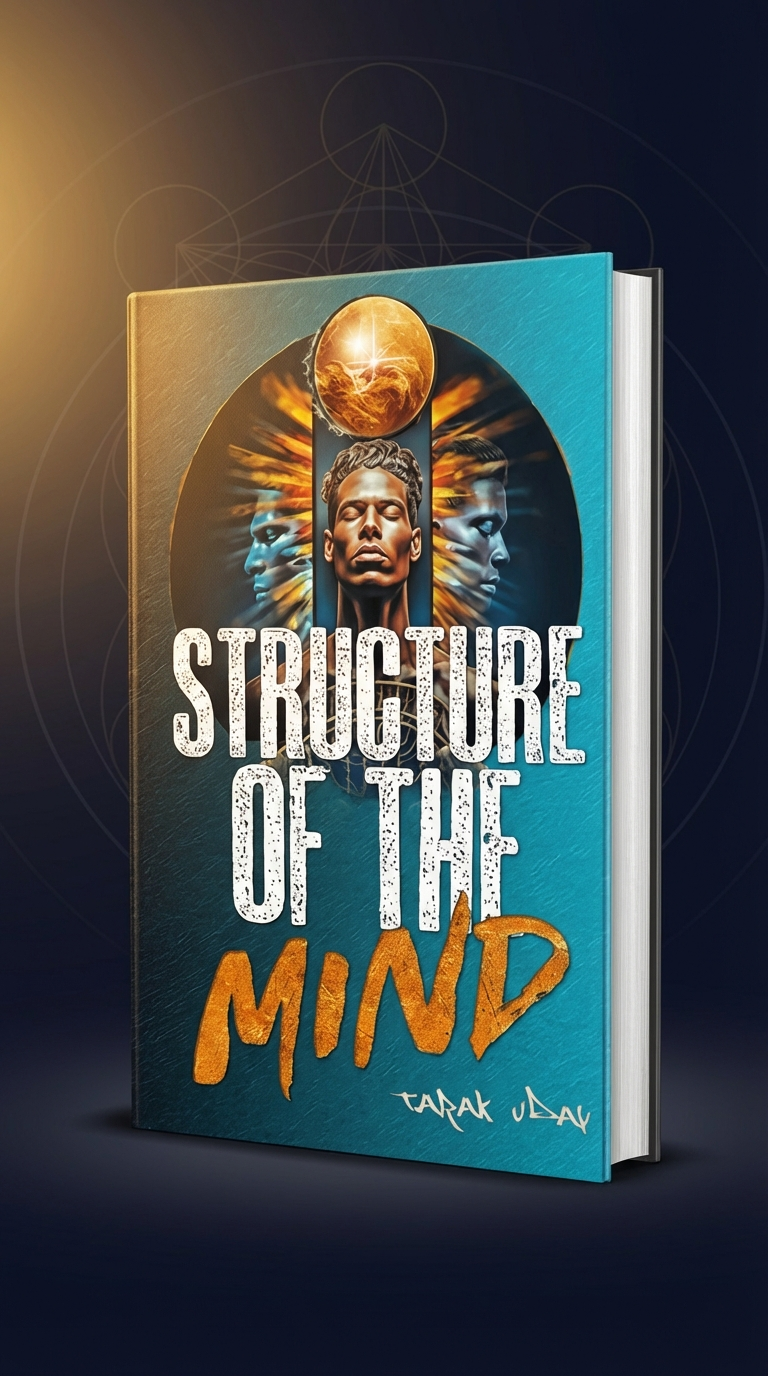
Understand Your Own Mind
"Structure of the Mind" reveals the three divisions of mind, seven levels of consciousness, and powers of mind that most people never learn to develop.