
Ladder in Dreams: What Your Subconscious Is Really Telling You


A ladder shows up in a dream and almost everybody reaches for the same worn metaphor: the career ladder, the social ladder, climbing my way up. It's the most available reading in the language, which is precisely why it's useless. Your subconscious mind didn't borrow a business cliché to talk to you. It chose a specific object with a specific job, and the job is not promotion.
In the Universal Language of Mind, a ladder is a mental tool for accessing higher levels of mind. A tool. Something you pick up, position, and use under your own power to reach a level of yourself you cannot otherwise get to. That's the whole meaning, and it puts the entire dream in your hands rather than in the hands of whoever hands out promotions.
Why did your subconscious mind choose a ladder over stairs or an elevator?
Form and function is the whole method Tarak Uday works from — what an object does in waking life is what it means in a dream. Usually that means examining one object. Here your subconscious mind had three near-identical candidates and picked one, so the choice itself is the message, and it's worth being exact about the differences.
Stairs mean access to different levels of mind. They're built into the structure, they're always there, and they carry you in both directions as a matter of course. An elevator is movement between the inner levels of consciousness — a conveyance, something that does the lifting for you once you indicate where you want to go. Neither of those requires much from you.
A ladder is different in kind. It's not part of the building. You bring it, you lean it, you decide where it lands, and then you supply every bit of the energy that gets you up it. It's portable, it's temporary, and it is completely dependent on your own effort. So when your dream reaches past the stairs and past the elevator for a ladder, it is telling you that this particular access to a higher level of yourself is not automatic and will not happen to you. You have to do it.
That's why ladder dreams so often arrive at the start of something rather than in the middle. The tool appears when the work becomes voluntary.
What does the climb actually cost you?
Look at what a ladder demands, physically, because the demands are the meaning.
You go one rung at a time. There is no skipping, and there is no arriving at the top by a clever route. Higher levels of mind aren't reached in a leap, and the dream renders that as a sequence you cannot shortcut. People who wake frustrated at how slow the climb felt have received the message accurately and rejected it.
Your hands are occupied. This is the detail nobody notices and it's the sharpest thing in the image. To climb a ladder you must let go of whatever you were holding, and you must hold on to the tool instead. So look at what you were carrying in the dream, and whether you tried to climb while carrying it. That's an exact picture of what you're refusing to set down in order to reach the level you say you want.
And you're exposed. A ladder gives you no walls, no floor beneath you, and nothing to lean back against. Accessing a higher level of mind genuinely does feel like that — unsupported, visible, with the ground still perfectly available below you. The fear in the dream isn't a warning. It's an accurate description of the conditions.
What does an unstable, too-short, or broken ladder report?
This is where the symbol gets diagnostically precise, because a tool can fail in several distinct ways and each one names a different problem.
A ladder that wobbles or won't stay put is reporting on the base — on what you've leaned this effort against. A tool for accessing higher mind has to rest on something stable, and if it slips, the dream is telling you the foundation of this undertaking is the issue, not your climbing. People usually diagnose themselves as weak here when the honest reading is that they set the thing up against nothing.
A ladder that's too short is entirely different. It's stable, it's fine, it simply doesn't reach — and you can climb to the very top of it and still not arrive. That's a report that the method you're using is sound but insufficient for the level you're aiming at. Not a character flaw. A tool-selection problem, and the correction is to get a better tool rather than to climb the current one harder.
Missing rungs are the most specific of all. The tool exists, it reaches, but a step in the sequence is gone. Something in your process of ascent has a hole in it — a stage you skipped, a piece of understanding you never actually built. So find the gap rather than straining across it, because a missing rung doesn't heal by effort.
And a ladder lying flat on the ground is its own report, quieter than the rest and easy to walk past. Nothing is broken. The tool is intact and entirely capable. It simply hasn't been raised, which means the access exists and has not been attempted. People dream this during long stretches of talking about a change without beginning it.
Why do you look down, and what does climbing down mean?
The look down is nearly universal in these dreams and it's badly misunderstood. People treat it as fear or as self-sabotage. It's neither.
Looking down from a ladder is measurement. You are checking how far you've come, mid-effort, and that is an ordinary and necessary act. The trouble is what it does to the climb — the moment you turn attention from where you're going to where you've been, upward progress stops. So the dream isn't scolding you for looking. It's showing you a cost you'd otherwise never notice.
Climbing down is separate and it is not failure. A ladder works in both directions on purpose. Descending is what you do when you've retrieved what you went up for, or when you realise you positioned the tool badly and need to move it. Both are competent uses of a tool. People wake ashamed of having gone down, which is like being ashamed of putting a hammer back.
What does deserve attention is being stuck partway — not climbing, not descending, holding on. That's the state of having committed effort to a level you're no longer sure you want, and refusing to either finish or reposition. It's expensive in a way that neither climbing nor descending is, because holding on burns everything and moves nothing.
There's a variant worth naming here: watching somebody else climb while you stand at the base. Every figure in a dream is an aspect of yourself, so that isn't envy and it isn't a spectator's dream. It's a part of you already making the ascent while the part of you that identifies as "you" stays on the ground and calls the climbing something that other people do. The Universal Language of Mind is unusually blunt on this point — the climber is you, and the distance between the two figures is the distance between what you're capable of and what you've claimed.
What's at the top, and why is it so rarely shown?
Ask most people what was at the top of their dream ladder and they can't tell you. The climb was vivid. The destination was blank. That's not a defect in your recall.
Tarak Uday takes this further in Structure of the Mind, his map of the three divisions of mind and the powers of attention, memory and imagination.
Higher levels of mind aren't places with contents you can inventory in advance. The whole reason you need a tool to access them is that they're not visible from where you currently stand. So a dream that shows you the ladder in perfect detail and leaves the top vague is being honest rather than incomplete — it's reporting exactly as much as you actually know.
So don't treat the missing summit as a problem to solve before you start. That's the most common way this dream gets wasted: people wait to be certain of the destination before committing to the effort, and the tool sits unused against the wall. The mechanics don't work that way. Access comes from the climb, not from advance knowledge of what's up there.
When the top does appear — a roof, an opening, a room, light — pay close attention to it, because your subconscious mind only renders that when the level in question has genuinely come into view. That's a meaningful upgrade in the report, and it usually follows a period of real work rather than preceding one.
How do you use a ladder dream this week?
Take it apart in order and gather everything before interpreting any single piece. This symbol rewards precision because a tool has parts, and each part means something different.
Start with what the ladder rested against, since that's the foundation of the effort. Then its condition — solid, wobbling, short, broken, missing rungs. Then what you did: climbed, hesitated, descended, held on, never touched it. Then what you were carrying and whether you set it down. Then where you looked, up or down. And finally what was at the top, or the fact that nothing was, which is information too.
Now bridge it to your waking week, concretely. What have you been treating as something that should happen to you when it's plainly a tool you'd have to pick up? What are you carrying that makes the climb impossible while you hold it? Where have you leaned a serious effort against a base you already know is unstable? And what have you been refusing to start because you can't yet see the top?
One thing worth saying plainly, because it's where this symbol gets misused. A ladder in a dream is not a demand that you climb. It's the report that the tool is available and the ascent is voluntary. Nobody is going to be disappointed in you for leaving it against the wall — but nobody is going to carry you up either, and your subconscious mind chose a ladder precisely to make that unambiguous.
So the ladder was never about getting ahead of anyone. It was your own tool for reaching a level of yourself you can't get to from the floor, standing there fully assembled, waiting to see whether you'd put your hands on it.
Frequently Asked Questions



Books by Tarak Uday
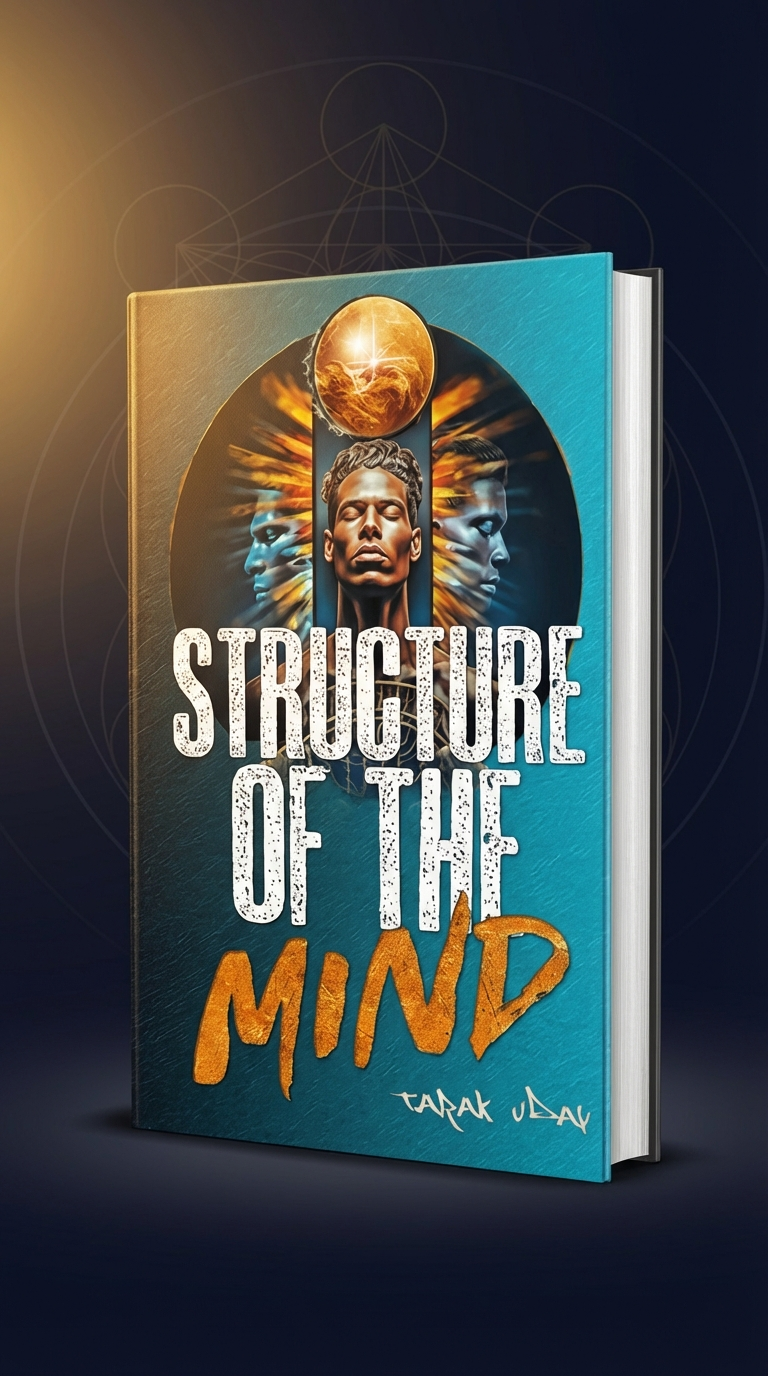
Understand Your Own Mind
"Structure of the Mind" reveals the three divisions of mind, seven levels of consciousness, and powers of mind that most people never learn to develop.

Learn The Language Your Dreams Speak
"Life Is But a Dream" teaches the Universal Language of Mind — how to read any dream symbol by what it is and what it does, so every dream becomes a message you can act on.

LUCID
You've tried every lucid dreaming technique. Most miss the root cause. LUCID reveals what they all skip.