
One in Dreams: What Your Subconscious Is Really Telling You


Numbers in dreams get dismissed faster than almost anything else. You saw a one — on a door, on a ticket, on a jersey, glowing on a wall for no reason — and by the time you were making breakfast you'd already decided it was random noise, or worse, a lottery hint.
Neither of those is what happened. Your subconscious mind doesn't produce filler, and it doesn't gamble. It selects. And when it selects a number, it's using one of the most compact pieces of vocabulary it has, because a number carries a complete idea in a single character.
In the Universal Language of the Mind, one means individuality.
Not first place. Not winning. Not being better than the rest. One is the number of the single, distinct, undivided thing — and when your dream puts a one in front of you, it's talking about your individuality: the part of you that is specifically, irreducibly yourself.
One is the image of individuality. A dream that shows you the number one is reporting on your relationship with being a distinct self, not predicting a rank or a result.
Why does one mean individuality in the Universal Language of the Mind?
Numbers work by function here just like objects do. Ask what a number does, and the meaning follows.
One is where counting begins. Before one there's nothing to count; after one, everything is a repetition or a combination of one. It's the unit — the thing that can't be divided further without stopping being itself. So one is not the smallest number in any meaningful sense. It's the number that defines what a single, whole, separate thing is.
That's individuality exactly. Your individuality is the part of you that isn't a combination of other people's influence, isn't divisible into roles, isn't a fraction of a group. It's the unit of you. So when the subconscious mind needs a symbol for that, it draws a one.
Tarak Uday's framing helps here: the subconscious mind thinks in wholes, not in adjectives. It can't hand you the phrase "your sense of yourself as a distinct person." It hands you a one, and the one carries the whole idea intact. Learning the number is learning to receive a complete sentence from a single mark.
So the immediate correction most people need is this: a one in a dream is almost never about competition. The waking association — number one, first, best — is cultural, and it's noise layered over a much older and more precise meaning. Strip that off and the dream gets far more useful, because it stops being about beating anyone and starts being about whether you're operating as yourself.
Does it matter where the one appears in the dream?
A number never floats in isolation. It's attached to something, and the attachment is the second half of the sentence.
A one on a door is individuality at a point of access — a threshold you'll cross as yourself or not at all. A one on a piece of clothing is individuality worn, which is to say a distinct self you're currently presenting to others. A one written on your hand relates to individuality connected to what you do and how you work, since hands are the image of your capacity to act.
The number one is not about being first. It's about being singular — and your dream is asking whether you currently are.
Seeing a single object of something — one shoe, one chair, one bird — reads the same way. It's not incompleteness. It's the symbol reduced to its unit so you notice its individuality rather than its quantity. One shoe is not half a pair in this language; it's a specific stance about how you're moving through your life, presented on its own so you'll look at it directly.
How the number is rendered narrows it further. A one written by hand is individuality you're actively asserting, something authored rather than issued. A printed or official one — on a form, a badge, a numbered door in an institution — is individuality assigned to you by a system, which is a very different thing and often the source of the unease in that dream. A one made of light, or glowing, points at individuality you're becoming aware of rather than one you already own.
Repetition matters too. A one that appears several times across a single dream, on different objects, is your subconscious insisting. It rarely repeats a symbol for emphasis alone; it repeats when a previous night's version of the same message went unread. So a one that keeps turning up across a week of dreams is not coincidence, and it's not the same as seeing the number on a clock in waking life. It's a message being re-sent.
And a one that's damaged, broken, or crossed out is worth catching. That's an image of individuality under pressure — something in your waking life is currently eroding your sense of being a distinct person. Usually it's not dramatic. It's a job that only wants the role, a relationship that runs on assumptions, a stretch of months where you did what was required and nobody asked what you thought.
What does it mean to be the only one in the dream?
Being alone in a dream is the most direct expression of this number, and it's the one people misread as loneliness.
Solitude in a dream is not a report about your social life. It's a report about individuality with nothing else in the frame. An empty street, an empty house, a landscape with only you in it — these say your mind is examining you as a unit, without the modifying influence of anyone else. That's often uncomfortable and almost always productive.
The feeling in the dream tells you which kind of solitude it is. If the emptiness felt peaceful, your individuality is intact and your mind is showing you what it looks like standing on its own. If it felt like abandonment, something in you believes your distinctness costs you connection — which is a belief, not a fact, and one worth examining precisely because it operates invisibly.
There's a version worth separating out: being alone in a place that should obviously be full. An empty airport, a school with no students, a stadium with one occupied seat. The location tells you which area of life is being examined, and the emptiness says your mind has cleared everyone else out of it so you can see what remains when the crowd is gone. That's not isolation. That's a controlled experiment your subconscious is running on your own individuality.
Being the only one who can see something, or the only one who notices, is a related image with a sharper point. That's individuality as perception. Some part of you is aware of something the rest of your mind — and often the people around you — hasn't registered. So the dream isn't complaining about being unheard. It's identifying where your distinct viewpoint is currently the most valuable thing in the room.
Numbers are the easiest dream details to throw away and among the most precise. CHITTA reads them in the Universal Language of the Mind alongside everything else in the dream, so the single mark you almost forgot becomes part of the message instead of a loose end.
Why does one arrive when you're surrounded by people?
This is the version that confuses dreamers most: a clear, insistent one in the middle of a crowded scene.
Tarak Uday takes this further in Life Is But a Dream, his guide to reading every dream in the Universal Language of the Mind.
A crowd in a dream represents the many aspects of your own mind, and also the influences you've absorbed from others. So a one appearing inside a crowd is a contrast being drawn deliberately. Your individuality is being pointed out against a background of everything that isn't specifically you.
When the one is easy to see, your distinct self is holding its shape in company. When you have to search for it, or when it flickers, your individuality is being crowded — not destroyed, but harder to locate under the weight of what everyone else expects. People in intensely social periods of life get this dream repeatedly, and so do people who have recently taken on a role with a strong identity attached to it.
There's also the version where you're one of many identical figures. Same clothes, same face, same movement, and you're indistinguishable. That's the sharpest statement in this whole category. Your mind is showing you individuality subtracted — the experience of operating as a unit of a group rather than as yourself. It's not a punishment or a warning. It's an accurate picture of a state you've been in, and the reason it feels so wrong in the dream is that some part of you has already noticed.
So the question that follows is the practical one: where in your waking life did you last make a decision that was recognizably yours? Not a correct decision. Yours. The dream is measuring the gap between those two things.
How do you use a one dream in the next few days?
Record the number and everything it was attached to, because the attachment carries half the meaning and it degrades fast. Door, ticket, hand, wall, clothing — write it down before it becomes just "there was a one."
Then run a single honest question against the last week: where were you operating as yourself, and where were you operating as a function? Most people can answer that in under a minute, and the answer is usually specific enough to act on. The dream showed you a one because your individuality was the subject on the table that night.
Check the number against the company it kept. If a two or a group also featured, your mind is weighing individuality against union or against the collective, and the balance between them in the dream is the reading. One standing clearly apart from a pair says something different from one absorbed into it, and the difference is the message rather than a detail of the staging.
Look for the pressure too. If the one was damaged or hidden or hard to reach, something has been compressing your distinctness, and it's worth naming what. Naming is most of the work here. An unnamed pressure keeps operating; a named one immediately becomes a choice.
Then do something small and unmistakably yours within a few days. Not a life change. A single act that no one would predict from your role — an opinion stated plainly, a preference honoured, work done your way rather than the default way. These are metaphysical mechanics and they run both directions: the dream reports your state, and your waking action changes what tomorrow's dream has to report.
That's the whole discipline. The Universal Language of the Mind gave you a single character on a wall, and it contained a complete question about whether you're living as a distinct person or as a well-behaved average of other people's expectations. So don't file the number under noise. It was the shortest, clearest thing your mind said all night.
Frequently Asked Questions



Books by Tarak Uday

Learn The Language Your Dreams Speak
"Life Is But a Dream" teaches the Universal Language of the Mind — how to read any dream symbol by what it is and what it does, so every dream becomes a message you can act on.

LUCID
You've tried every lucid dreaming technique. Most miss the root cause. LUCID reveals what they all skip.
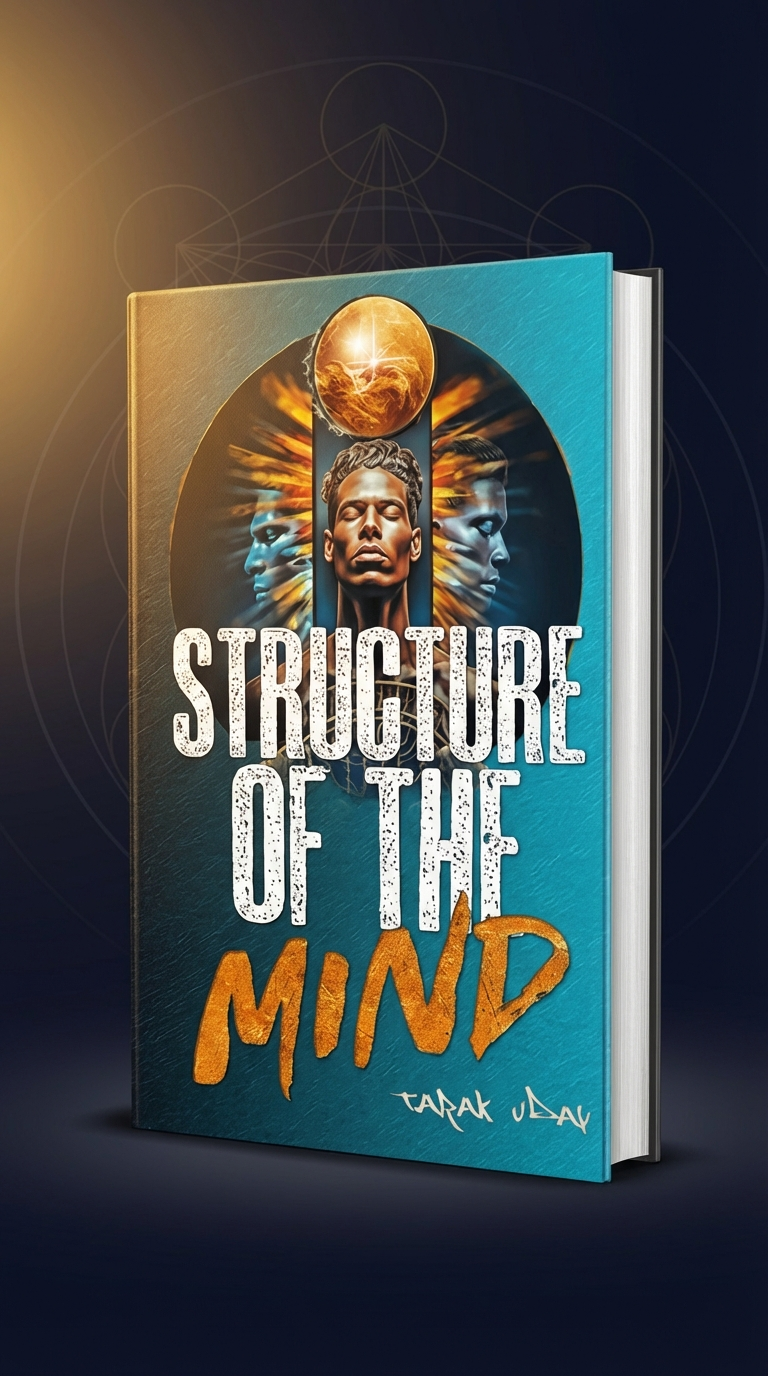
Understand Your Own Mind
"Structure of the Mind" reveals the three divisions of mind, seven levels of consciousness, and powers of mind that most people never learn to develop.