
Outer Space in Dreams: The Farthest Place Is Inside You
Picture the farthest thing you can. Past the Moon, past the ringed planets, past the last star you could name, out to a smear of galaxies so distant that their light left home before anyone on Earth had learned to write. Hold that image for a moment. Feel how small you are in front of it.
Now turn the telescope around. Press the eyepiece against the sky, aim the lens back at yourself, and keep going in that direction just as far. When you dreamed of outer space, that reversal is what your own mind was asking of you. The black distance, the silence, the stars close enough to touch were all pointing somewhere much closer than the sky.
Most people wake from a space dream and reach for a horoscope, an alien theory, or a guess that they feel lonely. You're about to see why each of those aims the telescope the wrong way, and where the dream is actually aiming. There's a room inside you larger than anything you have measured, and last night's dream just showed you its door.
In the Universal Language of Mind, outer space in a dream means inner space: the vast, largely unexplored depth of your own consciousness. The planets, stars and galaxies you saw reflect the levels, qualities and structures of your inner world, and the dream is calling you to go further within, through meditation, than you have gone before.
Why does the dreaming mind point outward to show you something inward?
Your subconscious mind speaks in pictures, and it chooses each picture for what the thing is and what it does. When it needs to show you something with no edges, something you have barely begun to explore, it has a problem. Nothing in your house is big enough. No city, no ocean, no mountain range carries the right proportion. So it reaches for the only image in your waking experience that is genuinely beyond measure: the space above the sky.
That choice is one of the most striking inversions in the Universal Language of Mind. The farthest reaches of external reality become the picture of the deepest reaches of your internal reality. Tarak Uday's dream symbol dictionary sums up the entry for outer space in two words: inner space. The direction is flipped on purpose. Everything you've been trained to treat as remote, as the property of astronomers and science fiction, is handed back to you as a description of what lives in here.
Think about how you normally relate to your own mind. You know the front rooms well: the running commentary, the to-do list, the worries you rehearse in the shower. You rarely go further. Most of your consciousness sits past the reach of your ordinary attention, the way most of the universe sits past the reach of your naked eye. If anything, the scale of space undersells how much of you remains unvisited.
There's also a reason the dream uses outer space rather than a deep cave or the bottom of the sea. Those places press in. Space opens out in every direction at once, with no floor and no ceiling. The feeling it carries is expansion, and expansion is the precise quality of consciousness the dream wants you to notice. Those are the metaphysical mechanics of this symbol: the biggest thing you can see outside becomes the picture of the biggest thing you have inside.
What is outer space, and what does it actually do?
Strip away the films and read the thing itself. Outer space is vast beyond any number you can hold in your head. It is mostly dark and mostly silent, since sound has nothing to travel through. It is largely unexplored; after all our rockets and telescopes, human beings have walked on exactly one moon. It has no up or down, so a body in it floats. And scattered through that darkness are structures of staggering order: stars burning for billions of years, planets holding steady orbits, galaxies turning like slow wheels of light.
Now lay each of those facts over your inner life. Your consciousness is vaster than your conscious mind can currently grasp. Much of it is quiet, because you rarely go there without the noise of daily thinking. Most of it is unexplored, since the average person spends a lifetime in a few familiar corridors of thought. And within it are levels and qualities of real order and brilliance, whether or not you have looked at them yet.
So the objects you meet in a space dream are worth reading one by one. A planet has its own entry and is read as a foundational understanding, a settled body of knowing that you orbit around. Stars, galaxies, black holes and comets each carry their own meanings in the dictionary, and they're best looked up individually. What they share is where they sit. Anything you see floating in that darkness is a feature of your inner landscape, a quality or structure of your own consciousness that the dream has placed in view.
Every light drifting through that dream marked a place inside you that you haven't visited yet.
Notice the silence too. People who dream of space often mention it before anything else: the hush, the absence of wind and voices. That silence is a direct image of the stillness beneath your thinking. Whether it frightened or thrilled you shows how comfortable you are alone with your own depth.
You floated, drifted, flew or stared into the dark out there. CHITTA reads every detail you give it, from where you drifted to what hung in the blackness around you, as a feature of your own inner landscape. Map your space dream with CHITTA
Isn't dreaming of space about astrology, aliens, or wanting to escape?
Those are the explanations you'll find first, so give each one a fair hearing. Astrology says the planets in your dream carry messages about your birth chart or a coming transit. Popular dream sites say space means alien contact, a longing to escape your life, or a feeling of being isolated and lost. Each of these sounds plausible, and each one sends your attention away from you.
Look at what they have in common. Astrology puts the meaning in distant bodies acting on you, the alien reading in visitors from elsewhere, the escapism and isolation readings in a life or a circle of people that falls short. Every one of them points the telescope outward, which is exactly the direction the dream reversed.
Your dreams are messages from your subconscious mind about your own state of consciousness. They aren't forecasts about planetary alignments and they aren't transmissions from visitors. When a dream shows you the cosmos, the subject is the cosmos inside you. The loneliness some people feel in these dreams is real as a feeling, and it deserves respect, but read it correctly: it's what it feels like to stand at the edge of your own depths without yet knowing your way around. Unfamiliar territory feels empty until you've walked it.
One more distinction matters. A dream set in outer space is not an astral projection and doesn't mean you left your body; it's a dream using the image of space to show you your inner world. Keep the two separate and the message stays clear.
What does it mean to float, drift untethered, or look back at Earth?
The action in the dream tells you how you're currently relating to that inner expanse. Floating weightless, calm and curious, is one of the most encouraging versions. You're at ease in a state of consciousness without the usual gravity of daily concerns pulling you down. That's the natural ease of a mind ready to go deeper, and it shows that your meditation, or your willingness to begin one, is already working in your favour.
Drifting away from a ship with no tether is the version that wakes people with a racing heart. Here you've moved into open inner space and lost your connection to the familiar structure you set out from. The fear is the real clue. It exposes the part of you that believes going inward means losing yourself. You won't. Depth doesn't dissolve you; it reveals more of what you are. The dream is showing you where your comfort currently ends so you can extend it on purpose, a little at a time, rather than avoid the dark altogether.
Looking back at Earth from far above gives you perspective. From out there, the whole world you usually live inside appears as one small, luminous sphere. That's a picture of stepping back from your ordinary frame of reference far enough to see it whole.
Being an astronaut on a mission means you're approaching your inner exploration with purpose and discipline. Travelling at speed past stars reflects rapid growth in awareness, a period when you're moving through new understanding quickly. Seeing stars up close, near enough to touch, shows you coming into direct contact with qualities in yourself you'd only glimpsed from a distance. And fear of the sheer vastness, the sense of being swallowed by it, reflects resistance: your mind has shown you how big you are, and part of you would prefer to stay small.
Where does inner space show up in your waking life?
A space dream tends to come when something in your waking life has pressed against the edges of your usual thinking. Perhaps you've started meditating, or keep meaning to. Perhaps a situation has outgrown your old answers and you're being pushed to look for something deeper than habit.
So ask yourself where you've been living on the surface. You might be solving every problem by thinking harder, rearranging the same thoughts in the same few rooms, when the answer sits in a part of your consciousness you never enter. You might be looking outward for guidance, to other people, to predictions, to the next piece of advice, while ignoring the wisdom, awareness and power already present within you and not yet discovered.
Match what the dream felt like to your days. If you floated peacefully, you're ready and even hungry for more depth, and your waking life is making room for it. If you drifted in panic, notice where you back away from stillness: the phone reached for the second a silence opens, the podcast playing through every quiet minute, the discomfort of sitting with nothing to do. Those are the waking versions of losing the tether. They show you exactly where your inner exploration stops.
In the Universal Language of Mind, the size of a dream's setting speaks to the size of what's being offered, and there is no larger setting than this one. There's territory within you bigger than the life you've been living, and it's time to explore it.
How do you go further within than you've ever gone before?
The practice is meditation, and the dream asks for a specific kind of progress in it: going past your usual depth. If you've never meditated, begin. If you already sit, stretch the edge. So here's a structure you can use for the next week, built directly from the image your dream gave you.
Choose a time, ideally early morning or just before sleep, and sit comfortably with your spine upright. Close your eyes. Give your attention to the breath for a few minutes until the surface chatter slows. Then recall the space from your dream as vividly as you can: the darkness, the stillness, the lights hanging in it. Hold that image and deliberately turn its direction inward. Let the vastness be the size of your own awareness rather than something outside you.
When thoughts arrive, and they will, treat each one like a passing satellite: note it, let it cross, return to the dark and the quiet. Each time you come back, rest a little further behind the thinking. That's the inward movement the dream is describing. If fear rises, that untethered feeling, remember that the breath is your line home. You can always return to it, and knowing that is what lets you go further.
After each sitting, write two or three sentences about what you noticed. Across the week the stillness arrives sooner and reaches deeper, which is your inner space becoming familiar territory. The first session can happen tonight.
Your eyes are closed now. The breath moves in and slips out, slower each time, and the noise of the day thins to a faint hum at the edges. Somewhere behind your forehead the dark begins to widen, quiet and enormous, and for the first time the room inside you has no walls.

Frequently Asked Questions




LUCID
You've tried every lucid dreaming technique. Most miss the root cause. LUCID reveals what they all skip.
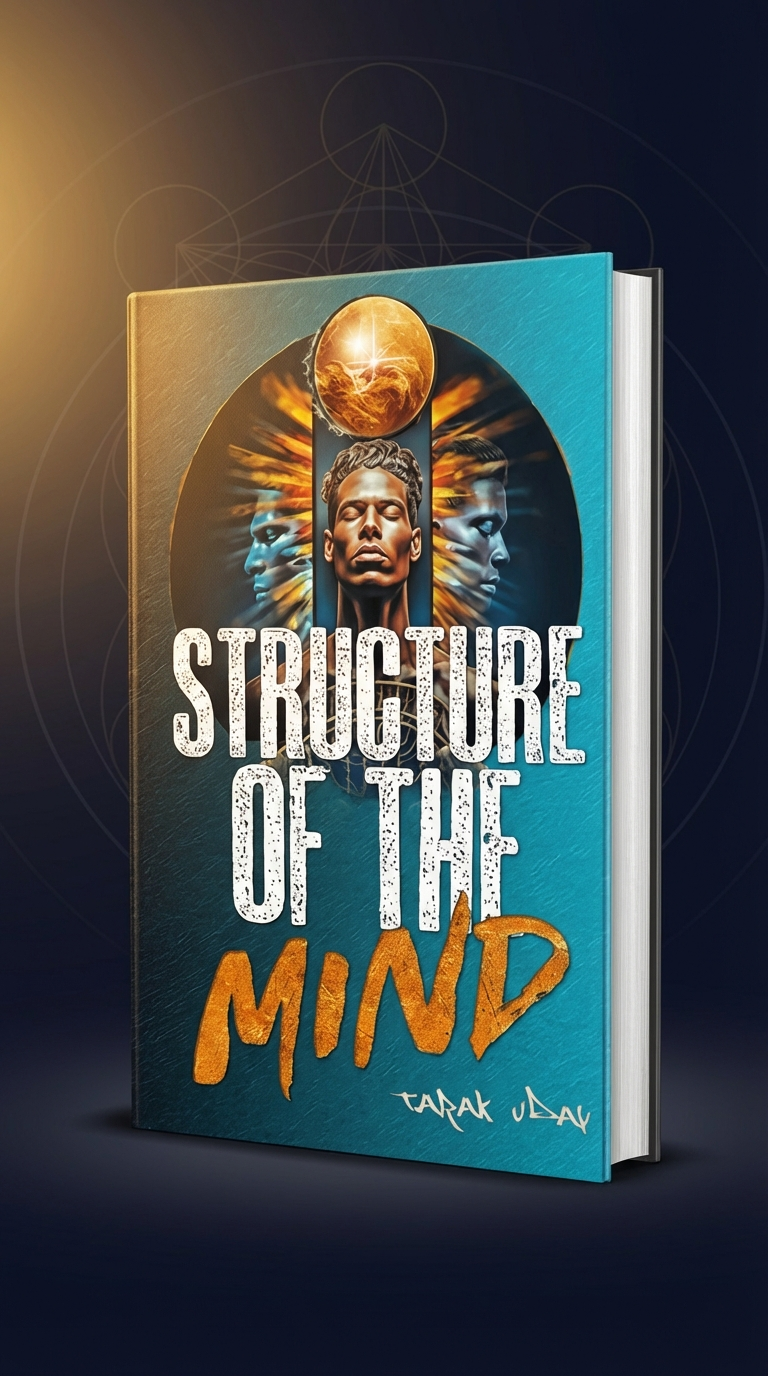
Understand Your Own Mind
"Structure of the Mind" reveals the three divisions of mind, seven levels of consciousness, and powers of mind that most people never learn to develop.