
Paralyzed in Dreams: Why You Froze and What You Have Been Putting Off
Two very different experiences get filed under one word. In the first, you are waking up. Your eyes open onto your actual bedroom, the clock on the dresser reads a real time, and your body will not respond. There is often a heaviness on your chest and a strong sense that someone is standing in the doorway. In the second, you are fully inside a dream story — a street, a stairway, a kitchen from a house you have never lived in — and somewhere in that story your arms go dead, your feet stick, and the scream you are pushing out makes no sound at all.
People call both of these "being paralyzed," and then they go searching for a single explanation that covers them. There isn't one. The first is something your body does. The second is something your mind says. Mixing them up leaves you frightened of the wrong thing and deaf to the message you were actually given.
This article separates them cleanly, gives the physical event its proper place, and then reads the dream symbol the way the Universal Language of Mind reads every image your subconscious mind sends: by what the condition is and what it does. What you will find is less a horror story than an invoice for something you meant to start and never did.
Dreaming that you are paralyzed represents passivity in your thinking process and inactivity towards fulfilling your desires. Your capacity to think and create is present but unused, so nothing moves from idea into action. So the dream is an urgent wake-up call from your subconscious mind, asking one blunt question: what have you been putting off? Even a single small step breaks the spell. Sleep paralysis, the waking physiological event, is a separate thing and deserves a doctor if it happens often.
Is sleep paralysis the same thing as dreaming you cannot move?
No, and the difference matters before any interpretation begins.
Sleep paralysis is a recognised sleep phenomenon. During the dreaming phase of sleep, known as REM, your body's large muscles are deliberately switched off so you don't act out what you dream. Occasionally your awareness surfaces before that switch flips back. You are conscious, you can see the real room, and your muscles are still held in that dreaming-state stillness. Because part of the dreaming brain is still active, the episode often comes with a felt presence, pressure, or shapes at the edge of vision. It is frightening, well documented, and usually over within a minute or two.
That experience is not a dream symbol, and this article won't pretend otherwise. If it happens to you frequently, if it disrupts your rest, or if it arrives with excessive daytime sleepiness, talk to a doctor. Nothing written here is a diagnosis or a prediction about your health.
The dream of being paralyzed is different in a way you can check for yourself. The setting is not your bedroom as it really is. There is a plot. Something is happening that you want to respond to — a door to reach, a person to call, a decision waiting — and inside that story your body refuses. When you wake, you can move at once. That is the image your subconscious mind chose, and it chose it on purpose.
So hold the two apart. One is your physical vehicle waking up out of order. The other is a message about how you are using your mind.
What does being paralyzed mean in the Universal Language of Mind?
Start with what paralysis actually is. A paralyzed limb has not disappeared. The arm is still attached, the muscles are still there, the nerves still exist. What is missing is movement: the signal that would carry intention into action does not arrive, and so the capacity sits there unused.
That is exactly the condition the dream describes in your thinking. Tarak Uday teaches this symbol as passivity in the thinking process and inactivity towards fulfilling your desires. You have the equipment. You can imagine, you can reason, you can choose. You simply are not directing your thoughts with intention, and a mind that is not directed does not produce action, and without action there is no progress towards anything you want.
This is why the dream feels urgent even when nothing in it is violent. It describes a stall, not a danger.
A paralyzed body still has every muscle it needs. The dream is pointing at a mind in the same condition: fully equipped, completely still, and waiting for you to send the signal.
It helps to see the metaphysical mechanics underneath. Every creation you have ever brought about followed the same sequence: an ideal, a purpose, and activity. The ideal is the picture of what you want. The purpose is why you want it, what it will do for you and in you. The activity is the movement that carries both into physical life. Ideal plus purpose plus activity equals success. Take away activity and the first two go nowhere, however clear and heartfelt they are. You can hold a perfect image of the life you want for ten years and manifest none of it.
So the paralysis dream tends to arrive precisely when the first two parts are in place. You know what you want. You know why. The third part is what has gone silent, and the dream shows that silence as a body that won't obey.
Keep it distinct from its near neighbours. Sinking in quicksand is being overwhelmed by your own inner thoughts — too much movement, all of it pulling you down. Paralysis is the opposite problem: not enough movement, by choice or by habit. Walking in a dream is effort towards your goals. Paralysis is that effort switched off.
Why won't your legs move when something is chasing you?
This is the version most people remember, so it deserves a direct answer. Something is behind you. You try to run, and your legs feel as if they are wading through wet cement, or they won't lift at all.
The chase itself is its own symbol with its own reading, and it has been covered elsewhere. What matters here is the added detail your subconscious mind put on top of it: you could not act. When paralysis joins a pursuit, the emphasis shifts from what is behind you to what you are failing to do. The dream is less interested in the pursuer than in the frozen runner.
Look at what legs do. They carry you forward. They are how you get from where you stand to where you intend to be, and in this language legs relate to your spiritual foundation, the ground your movement rests on. Legs that won't lift describe forward motion that has stopped at its base. It isn't that you lack direction. It's that the part of you meant to carry you towards it is not being used.
Notice too how the effort feels. In these dreams you are usually trying extremely hard. Every ounce of strain goes into moving, and nothing happens. That is a precise picture of a very common waking pattern: enormous mental energy spent worrying about a situation, rehearsing it, dreading it, and none of that energy converted into one real action. Worry feels like effort. It is not activity.
CHITTA reads your dreams in the Universal Language of Mind, the symbol system used throughout this article, so the part of you that froze becomes a specific reading about where your own progress has stalled. Decode your dream free.
Which part of you refused to move, and what was left undone?
The specific location of the stillness narrows the reading, so recall it as exactly as you can.
If your whole body was frozen, the passivity is general. It is not one project but your overall way of meeting life right now — waiting, deferring, hoping circumstances will arrive and do the work.
If your hands or arms would not move, look at intention. Hands and arms relate to purpose and to your ability to take hold of something and shape it. Frozen hands suggest that you know what you want and have not taken hold of it. You are looking at the tool and not picking it up.
If you tried to scream or call out and no sound came, the paralysis sits in expression. There is something you have been meaning to say, ask for, or put forward, and you keep swallowing it. Very often this is the request, the proposal, or the honest conversation that would set everything else moving.
If you were frozen in front of a choice — two doors, a crossroads, a phone you could not pick up — the dream is naming indecision as a form of inactivity. Not choosing feels safer than choosing wrongly, but it is still a choice, and it is the one guaranteed to produce nothing.
And if you could move your eyes but nothing else, you are fully aware of what is happening and not responding to it. You see the opportunity, you see the problem, you see the next step. You are watching your own life like a spectator.
So ask the question the dream is really asking, and answer it with a name rather than a feeling. What have you been putting off? Not in general. Which specific thing?
What does it mean when someone else is paralyzed, or when you break free?
Every person in your dream is an aspect of you, a part of your own personality given a face. So a paralyzed friend, parent, colleague or stranger is not a comment about that person. It is a portion of you that has gone still.
Ask what that person represents to you. If it is a creative friend, perhaps your own creativity is not being exercised. If it is a disciplined relative, the stalled aspect might be your capacity to follow through. If you were trying to help them move, part of you is already aware of the stall and trying to restart it, which is a hopeful sign.
If you were the one causing the paralysis — holding someone down, tying them, stopping them — then one aspect of you is actively blocking another. That is common when an old caution, a fear of looking foolish, or an inherited rule is keeping a newer desire from ever taking its first step.
Breaking free is the most encouraging version of all. When a finger twitches and then the whole body comes back, when the sound finally tears out of your throat, or when you realise mid-dream that you can move after all, your subconscious mind is showing the moment activity resumes. Pay attention to what you did first once you could move. That first motion tends to point at the first step.
How do you get your thinking moving again?
You break paralysis the only way it can be broken: with movement, however small. Understanding the dream is not the same as acting on it, and a clever interpretation you do nothing with is simply a better-informed stillness.
Begin tonight, before bed. Write down the one desire the dream brought to mind. Under it, write your ideal in a single sentence: what, specifically, you want to exist. Beneath that, write your purpose: what this will give you and who you become in the process. These two lines usually come easily. That is the point, because they were never the problem.
Then write the third line, which is the one you have been avoiding. Name one activity that takes under fifteen minutes and can be completed tomorrow. Not a plan, not a schedule, not research. An action. Send the email. Open the document and write the first paragraph. Make the call. Put your shoes on and go outside.
Do it early the next day, before your mind has time to begin its familiar negotiation. The size of the step does not matter nearly as much as the fact that it is a step, because a single real movement tells your subconscious mind that the signal is getting through again.
For the next week, repeat the practice each evening: ideal, purpose, one small activity for tomorrow. Keep the steps small enough that you cannot talk yourself out of them.
Tomorrow morning the email is sitting in your outbox, sent. The document has a first paragraph that did not exist yesterday. That one finished action is the signal reaching the muscle, and it is the stillness breaking exactly where it began — in the way you direct your own thinking. The capacity was always there. This morning, it's in use.

Frequently Asked Questions



LUCID
You've tried every lucid dreaming technique. Most miss the root cause. LUCID reveals what they all skip.
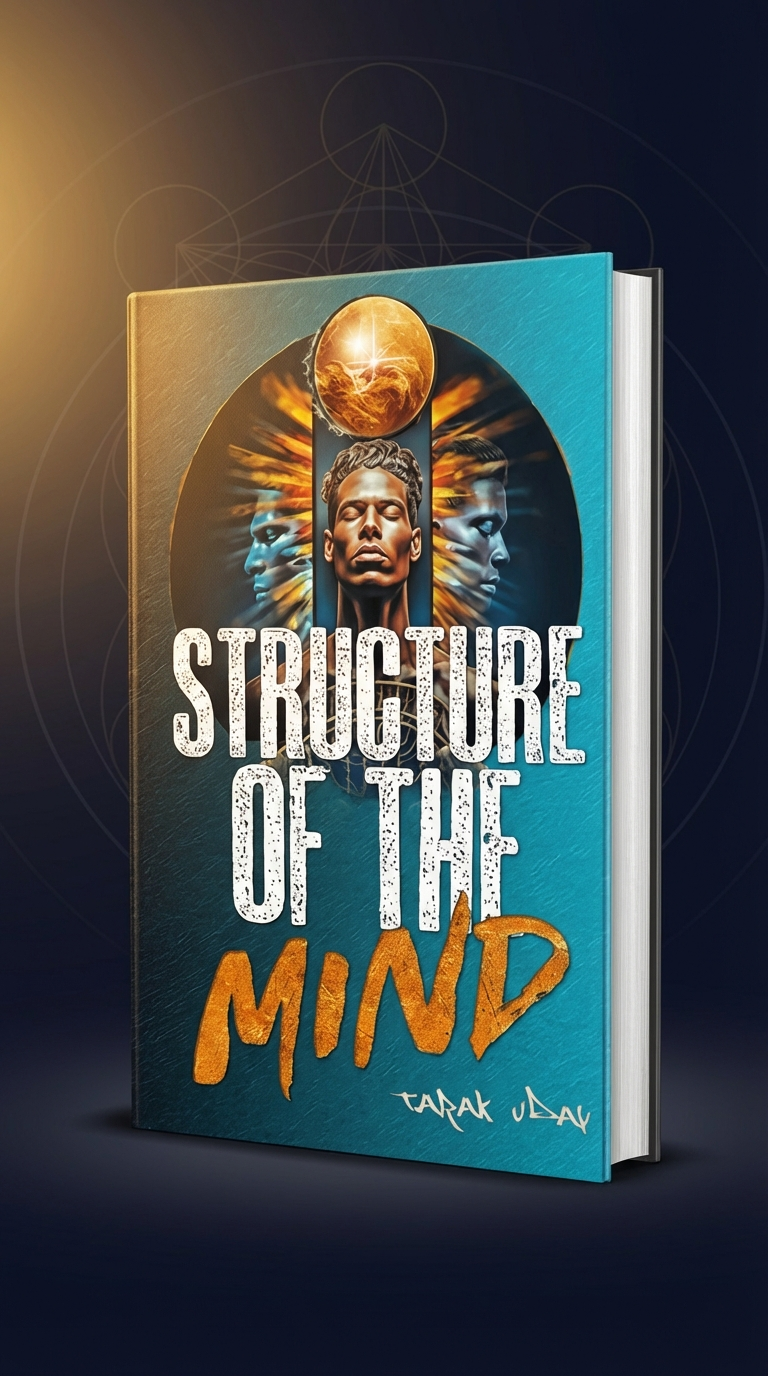
Understand Your Own Mind
"Structure of the Mind" reveals the three divisions of mind, seven levels of consciousness, and powers of mind that most people never learn to develop.