
Planets in Dreams: What Your Subconscious Is Really Telling You


You wake up and the image will not leave you alone. A planet, hanging there — enormous, close enough that it filled the whole sky, turning slowly like it had all the time in the world. Maybe you were standing on the ground looking up at it. Maybe you were out in space watching it turn. Either way it was silent, and it was bigger than anything you have a word for.
So you do what everyone does. You look it up, and you get told it's about astrology, or a past life, or some cosmic destiny arriving. And none of that lands, because the dream didn't feel like a prophecy. It felt like a fact. It felt like being shown something that was already true.
It was. And the thing it was showing you isn't in the sky at all — it's the set of ideas you've been standing on your entire adult life without once checking whether they hold.
In the Universal Language of Mind, a planet is a foundational understanding — one of the few core ideas your whole way of thinking is built on top of. Its size in the dream is not distance or drama. It is how much of your life is resting on it.
What Does It Mean When You Dream About Planets?
A planet is a body large enough to hold everything on it in place. That's its job. It doesn't visit, it doesn't move through, it doesn't come and go. It sits there and provides the ground and the gravity for every single thing that lives on its surface. Every step anyone takes on it is taken against it.
That function is the meaning. The Universal Language of Mind doesn't read a dream image by what it resembles — it reads the image by the work it does. And the work a planet does is to be the unmoving thing that everything else is held by. So when your subconscious mind wants to show you a belief that has become that — a belief so settled you no longer experience it as a belief, just as how things are — it hands you a planet.
These are your foundational understandings. Not opinions. Not preferences. The bedrock assumptions underneath the opinions. Things like effort is what makes you worth something, or people leave, or the world is basically fair, or I have to keep everyone comfortable. You don't argue about these. You don't examine them. You stand on them, and you build the rest of your thinking on the ground they provide.
That's why the dream feels so heavy and so quiet. There's no conflict in it. Your subconscious mind isn't fighting you. It's just turning the thing around so you can finally see the size of it.
Why Does Your Subconscious Mind Use a Planet Instead of a Person?
Here's where most people get stuck, and it's worth confronting head on. You've probably been told that dream images are personal symbols — that your planet means something to you that it can't mean to anyone else, based on your associations, your childhood, that documentary you watched. So the interpretation becomes a guessing game about your own history.
That isn't how the subconscious mind works, and it's why so much dream interpretation goes nowhere. The subconscious doesn't speak in personal code. It speaks in a universal picture-language built out of function, and it is the same language in every dreamer in every country in every century. Tarak Uday's work on the Universal Language of Mind is a reconstruction of exactly that grammar — not a dictionary of associations, but a description of how the mind actually encodes an inner condition into an outer image.
So the question is never "what do planets mean to me?" The question is "what does a planet DO, and what part of my mind does that same work?"
A person in your dream is an aspect of yourself you can still negotiate with. A room is a state of mind you can walk out of. A planet is neither. A planet is the thing under the room. It's the layer you can't step off of, because there's nowhere else to stand. So when your mind reaches past every smaller image and gives you a whole world, it's telling you the material is structural. This isn't a mood. It's a load-bearing wall.
You don't have opinions about gravity. That's exactly how a foundational understanding feels from the inside — not like a belief you hold, but like the floor.
What Is the Difference Between the Earth, the Sun, the Moon, and the Stars in a Dream?
Your dream almost never gives you a generic planet. It gives you a specific one, and the specifics carry the message.
The Earth is your subconscious mind — the whole storehouse of what you've learned, believed and become, the part of you that runs continuously whether you attend to it or not. So dreaming of the Earth from a distance, whole and blue and turning, is your mind showing you your own accumulated inner life as a single object. That's a big moment. It usually arrives when you're on the edge of understanding yourself as one thing rather than a pile of unrelated habits.
The Sun is superconscious awareness — the highest, most originating part of you, the source rather than the storage. Sunlight in a dream is that awareness reaching your everyday thinking. A sun that's blocked, eclipsed or going out is telling you the connection has been cut off by something, and the dream will usually show you by what.
The Moon is subconscious awareness — not the storehouse itself but your ability to perceive with it. A moon reflects light rather than making it, which is the mechanic exactly: subconscious awareness works by receiving and returning what the higher mind sends down.
The Stars are conscious awareness — the waking, reasoning attention you're using right now to read this sentence. Small, distinct, countless, far away. And that distance is the teaching. Your everyday attention is the smallest light in the sky of your own mind, which is a humbling thing to be shown and a useful one.
And an unnamed planet — one you don't recognize, in a colour no world has — is worth its own note. That's a foundational understanding you haven't identified yet. It's already operating and already holding weight. You simply haven't put language to it, which is why your subconscious mind couldn't hand you a familiar body and had to build one. Those dreams tend to arrive right before a person finally articulates something they've believed silently for twenty years.
So a dream where you're standing on the Earth watching a planet rise is not the same dream as one where you're falling toward a sun. One is your subconscious mind showing you a foundational understanding coming into view. The other is your ordinary awareness being pulled toward the source. Read the bodies, and the sentence assembles itself.
What Does It Mean When a Planet Is Damaged, Colliding, or Dying in Your Dream?
This is the version people wake up frightened by, and it's almost always good news delivered badly.
A planet cracking apart, burning, or being struck by another planet is a foundational understanding under structural stress. Something in your waking life has put weight on an assumption that can't carry it, and the assumption is failing. That's terrifying from the inside, because when a foundation goes, everything built on it moves at once — which is precisely why the dream is planetary in scale rather than personal.
Two planets colliding is more specific. That's two foundational understandings that can't both be true, finally meeting. You believed I must never disappoint anyone and you also believed I have to be honest, and you kept them in separate orbits for years by never letting them touch. Then a situation arrived that required both, and your subconscious mind staged the impact.
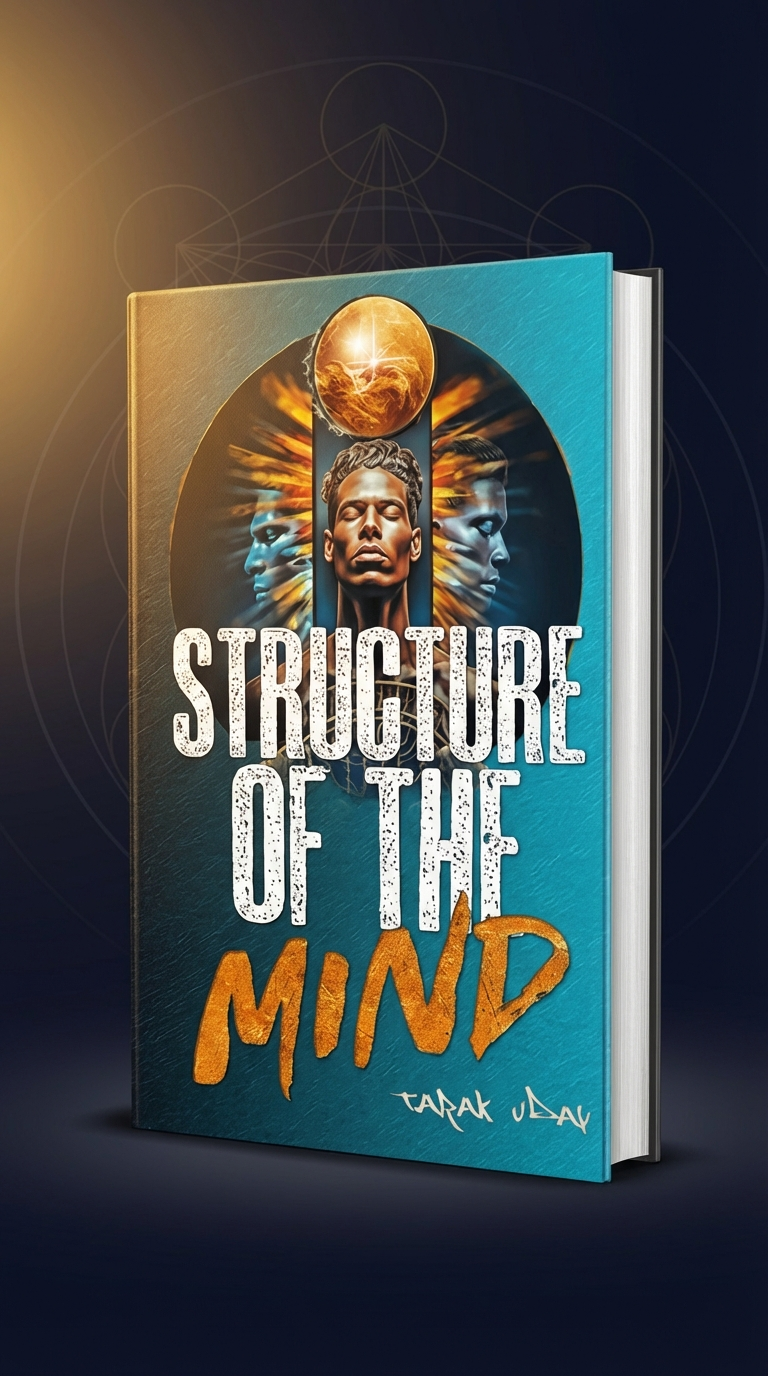
Tarak Uday takes this further in Structure of the Mind, his map of the three divisions of mind and the powers of attention, memory and imagination.
A dead or barren planet — no life, no water, dust — is a foundational understanding that used to organize your life and doesn't anymore. It's still there. You're still standing on it. But nothing grows on it. That's the dream of an outgrown belief that hasn't been replaced yet, and the discomfort you feel is the gap, not the loss.
None of these are predictions. Your subconscious mind isn't warning you about the world. It's reporting on the load-bearing structure of your own thinking, in the only language it has.
CHITTA reads your dreams in the Universal Language of Mind rather than guessing at symbols — so a planet dream comes back as the specific understanding it's pointing at, not a horoscope. Write the dream down while it's still warm and let the interpretation engine do the decoding.
How Do You Turn a Planet Dream Into a Change You Can Actually Feel?
Understanding a dream and using one are different acts, and the second is where the value is.
Start by naming the sentence. A planet dream is pointing at a foundational understanding, so your job on waking is to finish this line: I have been living as though ______ is simply true. Don't reach for something profound. Reach for something boring and total — the kind of statement that feels too obvious to write down. That flatness is the signature. Foundational understandings feel like facts, so the right answer will feel like you're stating the weather.
Then look at the last two weeks of your waking life for where that sentence was charged with weight. A planet doesn't show up on a quiet week. It shows up when a decision, a relationship or a piece of work leaned hard on the assumption and you felt the ground flex. That's the bridge between the image and the day, and it's the part almost everyone skips.
Then decide, deliberately, whether the understanding is still yours. Some of them are load-bearing and worth keeping. Some were installed by someone else before you were old enough to consent, and you've been carrying a world that isn't yours. You can't tell which is which while it's invisible — that's the whole reason the dream took the trouble to show it to you at scale.
And keep recording. One planet dream names a foundation. A run of them across a few months shows you the whole system: which understandings keep reappearing, which ones changed shape after you acted, which one is quietly under all the others. That's not symbol collecting. That's watching the architecture of your own mind become visible, which is the point of learning the Universal Language of Mind in the first place.
The planet was never far away. It was the closest thing in the dream — so close and so large that you'd stopped being able to see the edges of it. Now you can.
Frequently Asked Questions


Books by Tarak Uday
Understand Your Own Mind
"Structure of the Mind" reveals the three divisions of mind, seven levels of consciousness, and powers of mind that most people never learn to develop.

Learn The Language Your Dreams Speak
"Life Is But a Dream" teaches the Universal Language of Mind — how to read any dream symbol by what it is and what it does, so every dream becomes a message you can act on.
LUCID
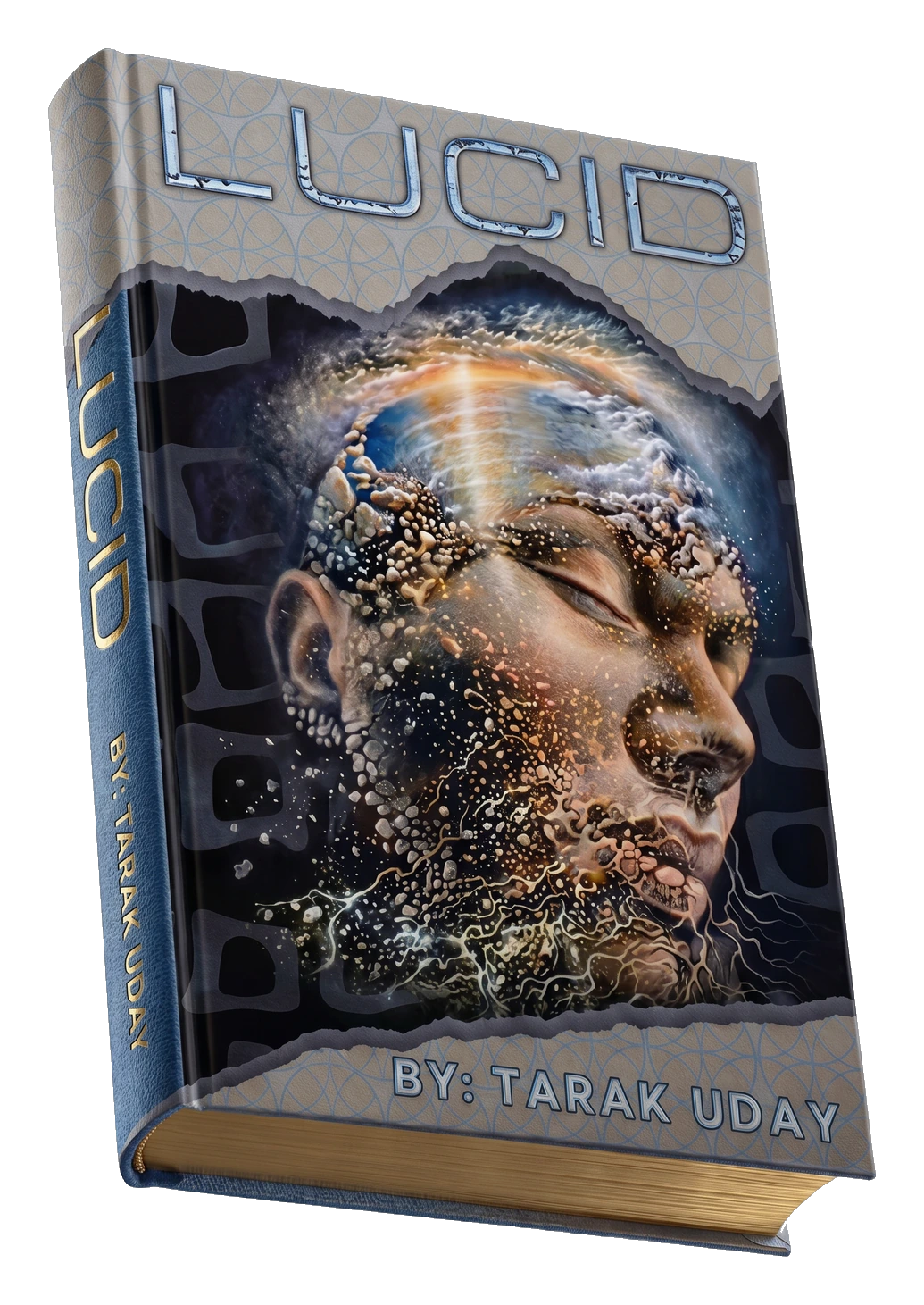
You've tried every lucid dreaming technique. Most miss the root cause. LUCID reveals what they all skip.