
Room in Dreams: What Your Subconscious Is Really Telling You


Some dreams give you a story. This one gives you a place. You're just in a room — standing in it, aware of the walls, the light, whether the door is open. Nothing happens. And you wake up carrying the room around with you all morning like a mood you can't shake off.
That's because it wasn't scenery. In dreams, the room isn't where the meaning happens. The room is the meaning, and once you know that, a whole category of dreams you'd written off as pointless turns into the most direct message your mind sends.
The question it's answering is one you almost never ask yourself in daylight: what state of mind have I actually been living in?
In the Universal Language of Mind, a room is a state of mind. Not a memory, not a place you've been — the specific mental condition you're occupying. Which room you're in tells you which state you're in, and the fixtures tell you how you got there.
What Does It Mean to Dream About a Room?
Start with what a room does. A room takes an unbounded space and encloses part of it, so that inside the boundary there are particular conditions — a particular temperature, a particular light, a particular set of things you can do there. You don't cook in a bathroom. You don't sleep in a hallway. The enclosure defines what's possible inside it.
That's a state of mind exactly. Your mind isn't one undifferentiated space either. At any given hour you're inside a bounded mental condition that permits some thoughts and quietly excludes others — and you move between these conditions all day without noticing the thresholds.
Decoding a dream means asking what an image does rather than what it looks like, and the mind builds its picture-language on that principle without exception. So when your subconscious mind wants to report on the mental condition you've been occupying, it doesn't describe a feeling. It builds you a room and puts you inside it.
A house, by comparison, is the whole state of mind — the entire structure. A room is one compartment of it. So a house dream is about your overall condition, and a room dream is about the particular corner of it you've been living in lately, which is usually the more actionable of the two.
Why Does the Type of Room Change the Meaning Completely?
This is where most interpretations collapse into vagueness, and it's avoidable. Every kind of room has a function, and the function is the reading.
A bedroom is a state of mind of rest and relaxation. Dreaming yourself into one says something about your relationship with genuine rest — and a bedroom you can't get comfortable in, or that belongs to a stranger, says it more sharply than any amount of self-reflection would.
A kitchen is the state of mind where you decide what lessons you'll be taking on in life. It's where raw material gets prepared into something you can actually absorb. So a busy kitchen, an empty one, one where nothing's been cooked in months — each is a report on how much you're currently choosing to take in and digest.
A bathroom is release, letting things go. It's the room for eliminating what you no longer need, and dreams set there are almost always about that process rather than about the body. A bathroom you can't find, or can't get privacy in, is a straightforward statement about how hard you're finding it to let something go.
A basement is what is unconscious to you, the deepest storage. An attic is superconscious mind, the highest. And an ordinary living room — the shared, public room of a house — is the state of mind you present and operate from with other people.
So you don't need to guess. You need to identify the room and ask what it's for. The subconscious mind chose that room specifically because its function matches the mental condition it's describing.
Two more are worth naming because they come up constantly. A hallway or corridor isn't a room at all — it's the passage between states, which is why corridor dreams feel like waiting. You're in transition and haven't arrived. And an office or workroom is the state of mind you occupy when you're producing something, which makes an office dream a report on your relationship to your own output rather than to your job.
Whose room it is matters as much as what kind. Your own room is your own state of mind. A stranger's room is a mental condition you've entered that doesn't belong to you — one you've adopted from someone else, or been placed in. A room from your past is a state of mind you formed earlier and have returned to. Same architecture, entirely different diagnosis, and the difference is the first thing to establish.
Nobody wonders what state of mind they've been in for the last month. Your subconscious answers the question anyway — by building the room and putting you in it.
What Do the Doors, Walls, and Floors of a Dream Room Tell You?
The fixtures aren't decoration. Each one has a job, and together they explain how the state of mind is structured.
A door is access from one state of mind into another. So a door standing open means the transition is available to you right now. A locked door means it isn't — not yet, and the dream will usually indicate what the key is. A door you refuse to go through is the most honest image in the whole vocabulary: you know the other state exists, you know you could enter it, and you're choosing the room you're in.
A wall is a personal limitation. Not an external obstacle — a limit inside you, which is why walls in dreams so often turn out to be thinner, lower or more easily walked around than they appeared. A room with too many walls, or walls closing in, is a state of mind that has become defined more by what it excludes than by what it contains.
A floor is the separation between the inner levels of your mind. Which floor of the building you're on matters: higher levels are nearer superconscious awareness, lower ones nearer what is unconscious to you. A floor that's unstable, or that you fall through, means the separation between levels isn't holding — material from a deeper level is coming up into your everyday awareness, which is disorienting and frequently a sign that something real is surfacing.
Windows are worth a note too. A window lets you perceive a state you aren't currently in. Looking out of one is awareness of a mental condition that isn't yours at the moment. Whether it opens tells you whether that awareness is available or merely visible.
What Does It Mean to Find a Room You Did Not Know Was There?
This is the one people describe with genuine wonder, and they're right to.
Discovering an unknown room — a door you'd walked past a thousand times, a whole wing behind the wardrobe, a floor of the house you'd forgotten existed — is your subconscious mind showing you a state of mind that is genuinely available to you and that you've never entered. Not a fantasy. A real capacity, already built, already part of the structure, unused.
The emotional signature is unmistakable: expansion, relief, the specific feeling of I have more space than I thought. That feeling is accurate. It's what learning the Universal Language of Mind gives people repeatedly — Tarak Uday's work returns to this, that the mind is far larger than the portion of it we habitually occupy, and that the unused portion is not hypothetical.
Pay attention to the room's condition when you find it. Dusty and disused means the capacity was yours once and you stopped going there. Beautiful and prepared means it's ready and you simply haven't claimed it. Locked, or behind something you have to move, means there's a specific obstruction — and the dream is naming it.
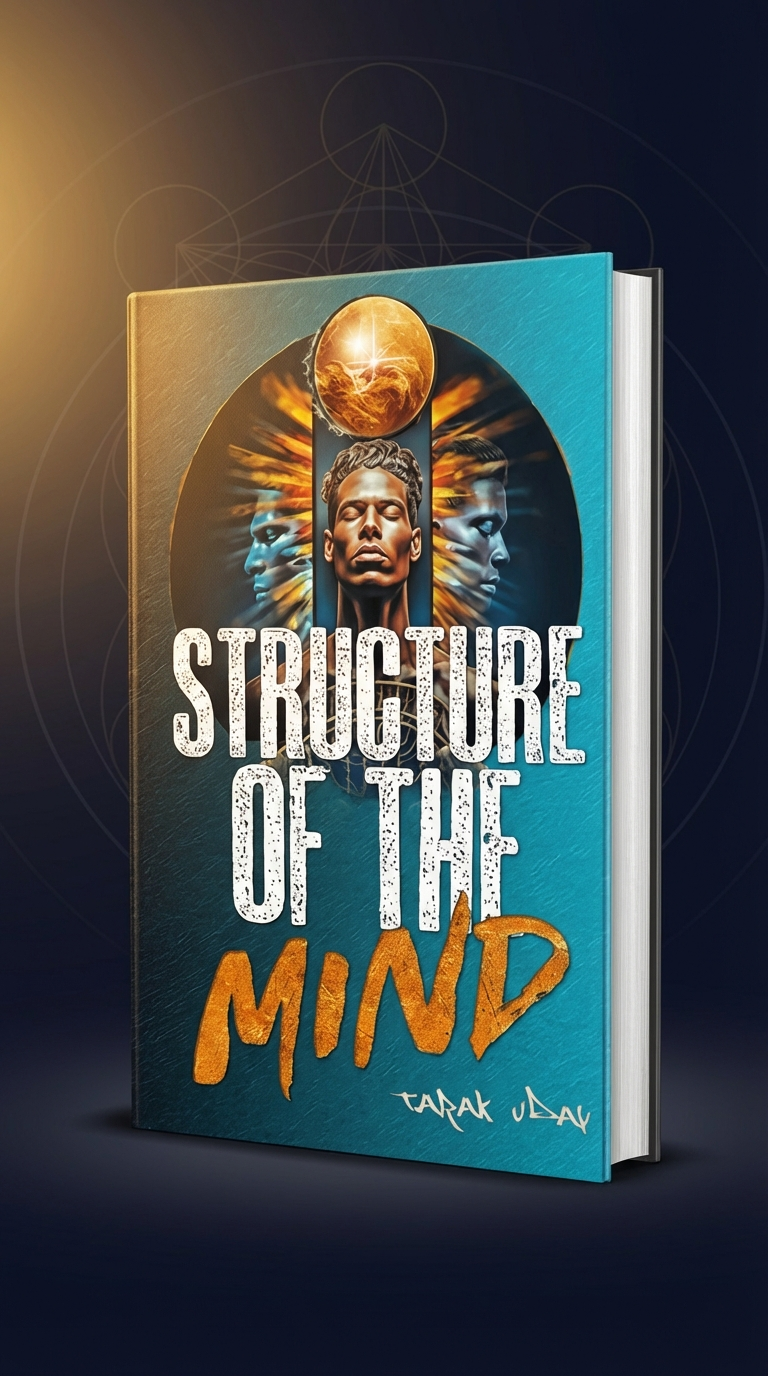
Tarak Uday takes this further in Structure of the Mind, his map of the three divisions of mind and the powers of attention, memory and imagination.
People often ask why the mind would hide something from itself, and the framing is wrong. Nothing was hidden. The room was always in the house. You simply never had a reason to open that door, because the states of mind we occupy get selected by habit rather than by survey — you return to the four or five conditions you know, the way people live in a third of a house they own entirely. The dream isn't revealing a secret. It's ending a habit of not looking.
The opposite dream also happens. A room that shrinks, or that you find has been emptied, is a state of mind you're losing access to. Worth catching early, because it usually corresponds to something in your waking life you've quietly stopped doing.
Room dreams only reveal their pattern in series — which rooms recur, which doors keep appearing locked, whether you ever went back to the one you found. CHITTA logs each dream and interprets it in the Universal Language of Mind, so the map of your own states of mind assembles itself over weeks instead of staying scattered across a dozen half-remembered mornings.
How Do You Read Your Own Room Dream Tonight?
Four questions, asked in order, before you get out of bed.
First: what kind of room was it? Name the function, not the decor. Kitchen, bedroom, bathroom, basement, attic, a room for work, a room for company. The function is the state of mind.
Second: how did you get in, and could you leave? Doors are transitions. Whether you arrived deliberately, wandered in, or were already there when the dream began says whether you chose this mental condition or defaulted into it.
Third: what was the room's condition? Cluttered, empty, well-lit, dim, too warm, unfinished. That's the state of the state — how well-maintained the mental condition currently is.
Fourth, and this is the one that converts the dream into something usable: where in the last two weeks have you been living inside exactly that condition? Not metaphorically. Specifically. The dream is reporting on a real stretch of your waking life, and the report is worthless until you've matched it to the days it describes.
Then do one thing about it. If the door was open, go through it — meaning, take the actual waking step the transition corresponds to. If a wall was closing in, name the limitation out loud and check whether it's still true. If you found a new room, go back tonight deliberately by holding the image as you fall asleep.
So the room stops being a place you visited. It becomes a description of where you've been standing — and once you can see the walls, you get to decide whether to stay in them.
Frequently Asked Questions



Books by Tarak Uday
Understand Your Own Mind
"Structure of the Mind" reveals the three divisions of mind, seven levels of consciousness, and powers of mind that most people never learn to develop.

Learn The Language Your Dreams Speak
"Life Is But a Dream" teaches the Universal Language of Mind — how to read any dream symbol by what it is and what it does, so every dream becomes a message you can act on.

LUCID
You've tried every lucid dreaming technique. Most miss the root cause. LUCID reveals what they all skip.