
Train in Dreams: It Is an Organization, Not Your Life Path
Why tracks mean established systems, and what being on board says that watching it pass does not
There was a train. Maybe you were on it and could not get off, maybe you were running for it, maybe you just stood there and watched it go by, and you woke up certain the dream was about your life going somewhere without you. In the Universal Language of Mind, a train represents an organization. Not fate, not your life path, not time running out. A group of people moving together toward a shared destination along a route that was laid down before any of them got on. That is a specific message about a specific structure you belong to, and it explains why the dream felt less like a prophecy and more like a verdict. So the question worth asking is which organization your subconscious mind put on those tracks last night.
What Does a Train Mean in a Dream?
A train is an organization. In the Universal Language of Mind, any large vehicle that carries many people toward a common destination reflects an organization, a group of aspects moving together with shared purpose. A bus carries this meaning. So does a ship, and so does an airplane. They differ in the kind of organization they name, but the category is the same.
This is the reading most people have never encountered, because the common interpretation of a train dream is that it is about your journey, your direction, being on the right track. That reading feels true, which is exactly why it survives. It is also a reading of the English idiom rather than of the symbol. Your subconscious mind does not speak idiom. It speaks function, and the function of a train is to move a collective.
Once you have that, the details stop being atmosphere and start being information, because everything distinctive about a train is a statement about how that organization operates.
A train is an organization: a group moving together toward one destination. Tracks mean established systems and a route set in advance. Momentum means the organization is hard to stop or redirect once moving.
Why Does an Organization Show Up as a Train and Not a Car?
Because your subconscious mind builds every image out of function, and three functions separate a train from every other vehicle.
First, a train follows tracks. The path was laid down before the train ever moved, and the train cannot leave it. It goes where the rails go and nowhere else. That reflects an organization with deeply established systems, procedures and direction, one that follows a predetermined route rather than choosing its course as it goes. Not necessarily a bad organization. A predetermined route is what makes a train reliable. It is also what makes it unable to turn.
Second, a train has enormous momentum. Once it is at full speed it is extremely difficult to stop. Organizations build exactly this. Moving in the right direction, that momentum is a force of remarkable productivity. Moving in the wrong direction, it is a force of remarkable destruction, and redirecting it is enormously hard. Anyone who has tried to change one policy inside a large institution has felt the mass of that.
Third, a train is many connected cars, each carrying its own passengers and cargo. That reflects the departments, divisions and groups inside the organization: all coupled, all moving together, each carrying its own specific content and purpose.
Tarak Uday makes the test simple: read what the object does, never what it reminds you of. A train, a bus and a ship all carry a group toward one destination, so all three name an organization. Read how each one travels and you get three different organizations, which is the difference between a dictionary and an actual language.
Compare that to a car, which usually carries one person or a few and can turn at any moment. A car is individual direction. A train is collective direction with the steering already decided. When your subconscious mind reaches past the car and picks the train, it is telling you that what is at stake is not your personal choice but a structure you are inside.
A car can turn. A train cannot. Your subconscious mind chose the vehicle that cannot turn, and that is the message.
Were You On the Train, or Watching It Pass?
This single detail decides most of the interpretation, and it is usually the easiest thing to remember.
Being on the train means you are part of the organization. Whatever the train is doing, you are inside the doing of it, and its destination is currently your destination too. Watching it pass means you are observing the organization from the outside. Both are useful. Neither is a verdict on your worth, though the emotion attached tends to be strong enough that people read it as one.
Running for a train and missing it is one of the most common versions of this dream, and the standard reading, that you are afraid of missing out, is a feeling rather than a meaning. The symbol says something more precise: there is an organization moving toward a destination, and you are not currently coupled to it. Whether that is a loss depends entirely on where its tracks go, which is the question the anxiety usually prevents people from asking.
Trying to get off a moving train, or being unable to, reflects being inside an organization whose momentum you cannot personally arrest. That is not a metaphor for helplessness. It is an accurate description of how organizational momentum actually works, and recognising it as structural rather than personal is often the first relief a dreamer gets.
Notice, too, who else was on board. Every person in your dream is an aspect of you, so the passengers are the parts of yourself currently committed to that organization. A crowded train and an empty one are two very different reports on how much of you is invested.
What Do a Delayed, Derailed, or Runaway Train Mean?
Read the condition of the train as the condition of the organization. The subconscious mind is being literal, not dramatic.
A train running on schedule at full speed reflects a well-functioning organization with strong momentum and clear direction. A delayed or stalled train reflects an organization that has lost its momentum, which the people inside it usually feel long before anyone says it out loud. A derailed train reflects an organization that has come off its established systems entirely, and it is worth separating this from failure: a derailment means the structure left its own route, not that the route was wrong.
A runaway train, moving too fast to control, reflects momentum that has outrun the organization's ability to steer it. Growth does this. So does urgency. If you are inside one of these, the dream is not asking you to stop the train, which you cannot do. It is asking you to notice that nobody is steering.
A station is worth reading separately from the train itself. A station is where people join and leave an organization, so a dream that lingers on a platform rather than on the journey is about membership, not direction. Waiting on a platform with no train arriving is a precise image, and it usually belongs to someone who has already decided to leave one structure and has not yet found the next.
An abandoned or rusted train reflects an organization that has stopped moving altogether, though the structure still stands. People stay coupled to these for years, which is part of why the image lands so heavily.
And a train in the dark, or with its lights off, brings light into the reading, because light in a dream is awareness. An organization moving without awareness is a different problem from one moving in the wrong direction, and the fix is not the same.
Every symbol here, train, airplane, ship, tracks and light, is in the Symbol Glossary inside CHITTA, free to read. It is the same dictionary this interpretation is built on.
Which Organization Is Your Dream Actually Talking About?
This is where the work becomes yours, because the symbol names the category and only your life names the instance.
Tarak Uday takes this further in Life Is But a Dream, his guide to reading every dream in the Universal Language of Mind.
Look at the organizations you actually belong to: your workplace, your community, your family structure, your spiritual practice group, the institution you are studying inside. A school in a dream carries its own related meaning around learning, and a workplace-flavoured train dream usually arrives during a season when something structural is shifting there.
Then ask the three questions that decode almost any dream without a dictionary: what was acting, what was being acted upon, and what was merely present. If the train was acting and you were being carried, the organization is driving. If you were acting and the train was present, you are the one making decisions about your relationship to it. The order of those questions is the method, and it does more work than any symbol list.
The detail that resolves the ambiguity is almost always the sequence, what came immediately before and after the train. Most people lose that within ninety seconds of waking, not because their memory is poor but because dream recall is a trainable skill that nobody ever trained. That is a solvable problem, and solving it changes what your dreams are able to tell you.
What Do You Do When the Tracks Do Not Lead Where You Want to Go?
You assess honestly, and then you choose, because you have more freedom here than the image suggests.
Start with the assessment the symbol is actually requesting. Are the organizations in your life on the right track? Is their momentum carrying you toward your goals, or away from them? Do the tracks lead where you want to arrive? Those are three separate questions and people usually collapse them into one, which is how someone ends up loyal to a well-run organization that is going somewhere they never chose.
Then remember what the symbol does not forbid. You can stay and add your weight to the momentum. You can get on a different train. Or you can step off the tracks entirely and forge your own path, which costs the momentum but buys the steering. A train dream is not telling you which of those to do. It is telling you that you are currently on one of them, whether or not you decided to be.
Underneath all three options sits the same faculty: attention. Awareness of the structure is what turns an automatic passenger into someone making a choice, and attention is the faculty every other one runs on. Undisciplined attention is why people notice the tracks years later than they could have. That is why attention is trained as a muscle in any serious curriculum, and why CHITTA sequences it first: a modern mystery school with the secrecy removed, where nothing is withheld to be exclusive and everything is ordered because the knowledge is inert without the experience under it.
So that is what the train means. It is an organization, its tracks are its established systems, and its momentum is what makes it both powerful and hard to turn. What the symbol does not tell you is which organization arrived in your dream last night, or why it came now, or what it was doing in the same dream as everything else you saw. That is in the sequence, and it is still yours to read.

Frequently Asked Questions


Books by Tarak Uday

Learn The Language Your Dreams Speak
"Life Is But a Dream" teaches the Universal Language of Mind — how to read any dream symbol by what it is and what it does, so every dream becomes a message you can act on.

LUCID
You've tried every lucid dreaming technique. Most miss the root cause. LUCID reveals what they all skip.
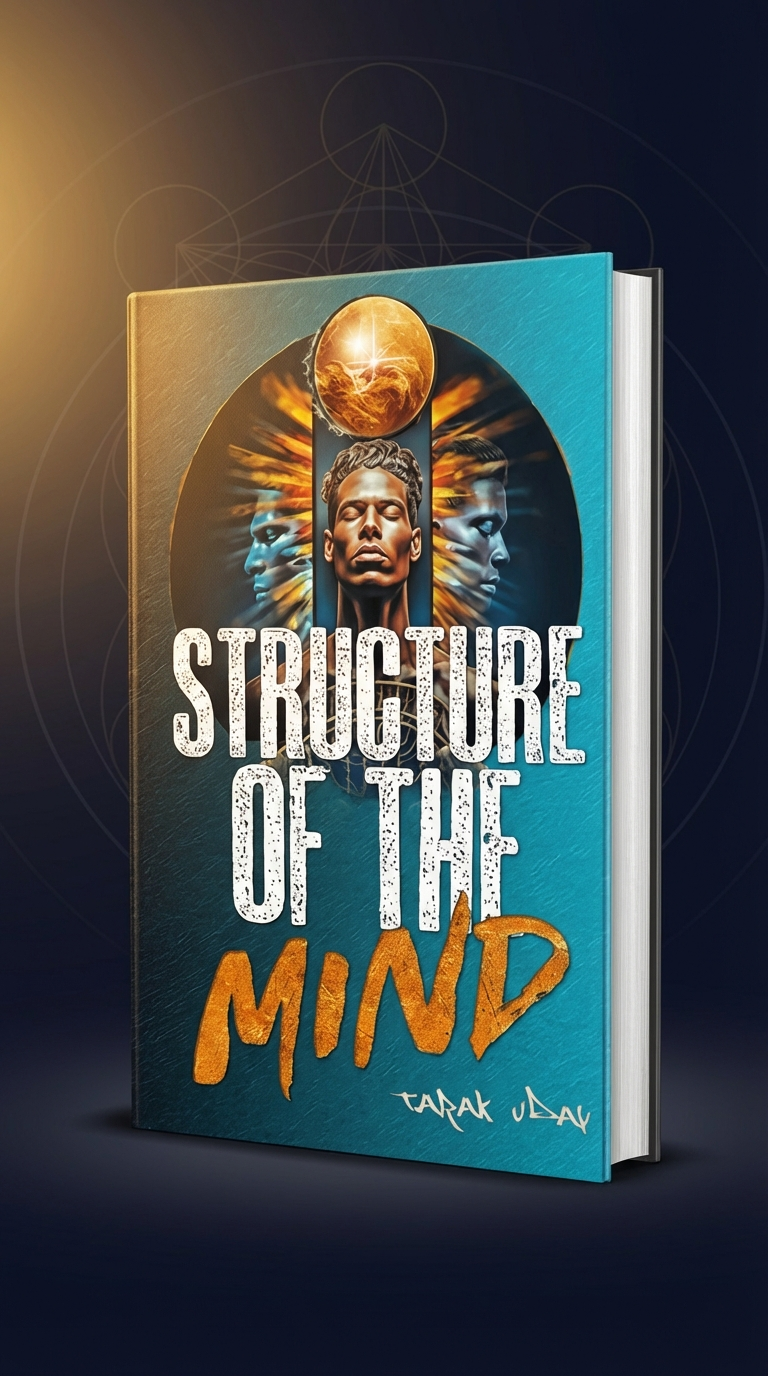
Understand Your Own Mind
"Structure of the Mind" reveals the three divisions of mind, seven levels of consciousness, and powers of mind that most people never learn to develop.