
Blind in Dreams: When the Room Is Lit and You Still Cannot See
You could hear everything. A tap dripping somewhere to your left, a door settling in its frame, someone breathing across the room who did not speak. Your fingers found the edge of a table, the grain of the wood, a cup that was still warm. You could feel heat from a lamp on the side of your face, and you knew with complete certainty that the room was bright. And you could not see any of it.
That detail is the one people skip when they tell the dream afterwards. They say "I went blind," and the listener pictures black. But the dream did not turn the lights off. The light was there. The room was there. The people were there. The only thing missing was your ability to take any of it in, and that is a very specific thing for your subconscious mind to arrange.
The usual explanations reach for fear of illness, fear of ageing, or a vague sense of being lost. Those treat the dream as a worry about your eyes, and your eyes were never the subject. What the dream points at is something happening right now, inside your mind or across your life, that you are not perceiving. It can be found, and the dream has already handed you the first clue.
Being blind in a dream represents an inability to perceive. Seeing, in the Universal Language of Mind, is perceiving and comprehending, so a dream that removes your sight is pointing at something present in your life that you are failing to take in. The light has not gone out. Your perception has. So the dream is an urgent call to increase awareness, and it comes with a question attached: what am I not seeing, and what truth have I been avoiding?
What does blindness mean in the Universal Language of Mind?
Sight has a job, and the job explains the symbol. Eyes gather light, turn it into information, and hand that information to a mind that can then understand where it is, what is near it, and what is coming. Sight is how you comprehend your surroundings before you touch them. It is the fastest and widest sense you have.
So when you say "I see" in waking life and mean "I understand," you are already speaking the language your dreams use. Seeing is perceiving. Seeing is grasping what is in front of you. Tarak Uday teaches blindness in dreams as the loss of exactly that faculty: an inability to perceive what is happening within you or around you.
Notice how narrow that reading is. Blindness is not ignorance in general, and it is not stupidity. A blind person in waking life is often acutely aware through every other channel. The dream uses the image because blindness is a precise condition: the world keeps arriving, the information is fully present, and one particular route to understanding it has closed.
That is why a blindness dream so often lands when you believe you have a clear picture: a relationship you think you understand, a job you are sure is stable. The dream is telling you that in one area you are working from sound, touch and assumption while the actual picture sits there unexamined.
Why would your mind take your sight while leaving the lights on?
Because your subconscious mind is separating two problems that look alike from the outside and need completely different responses.
Darkness in a dream is a condition of the environment. The room has no light, so nobody in it can see, and the symbol reports a lack of awareness spread across a whole situation. Nothing is wrong with you in a dark dream. The place itself is unlit.
Blindness is a condition of the perceiver. The light is on, the room is fully illuminated, other people in the dream can presumably see perfectly well, and you cannot. The limitation has moved from the world to you. That is a far more personal message and, once you accept it, a far more useful one, because you cannot switch on the sun but you can do something about your own perception.
In the dark, nobody can see and it is nobody's failing. Blind, the light is already there, and the only thing standing between you and the picture is you.
It also helps to hold blindness apart from two other eye images your dreams use. Closing your eyes in a dream is a choice not to look, an act of will. Blindness usually does not feel chosen at all, which is the point: this is a limit you have stopped noticing you placed on yourself. Glasses in a dream report perception that works but needs improving. Blindness is further along that road. The faculty is not blurry; it has shut down in one region of your life.
So the useful first question after this dream is never "why is it dark?" There is nothing wrong with the light. Ask instead where you have been standing in a bright, information-rich situation and still coming away with nothing.
One plain word before going further. Everything here reads dream imagery as a picture of the mind; your physical eyes are a separate matter. A blindness dream is not a diagnosis and it does not predict anything about your vision. If you notice sudden changes in your eyesight in waking life, see a doctor promptly; that is a medical matter, and it deserves medical attention.
CHITTA reads your dreams in the Universal Language of Mind, so a dream where the room was lit and you still could not see gets traced back to the exact place your perception has closed. Decode your dream free.
Did the blindness arrive suddenly, or had it been creeping in?
How you lost your sight in the dream tells you how long the gap in your perception has been forming.
Sudden blindness, where you are looking at something and then it is simply gone, points at a recent shutdown. Something happened, a conversation, a piece of news, a decision you did not like, and your mind stopped taking in that area of your life almost immediately. The fear these dreams carry is informative: some part of you registered the moment perception closed.
Gradual blindness, where the edges fade or the world dims over the course of the dream, points at a slower process. You have been noticing less and less about something for a long time: a partner's moods, your own tiredness, the direction a project has been drifting. There was never a single moment of refusal, only a long habit of not quite looking. The gradual version is quieter and more dangerous, because nothing about it ever felt like an event.
Partial or blurred sight is its own message. You can make out shapes but not faces, colours but not edges. That reports perception that has been diluted rather than lost. You know roughly what is going on and you have been content with roughly. The dream is asking you to bring the detail back into focus, because the detail is where the truth lives.
And pay attention to what you were trying to see when it went. The object, the person, the page you were reading at the moment your sight failed is often the most exact piece of information in the whole dream. Your subconscious mind rarely picks that moment at random.
Who tied the blindfold, and was anyone else blind?
A blindfold changes the reading in an important way, because now something outside your eyes is doing the covering.
Every figure your dreams cast is drawn from your own mind. The one tying a cloth over your eyes, then, is a part of you restricting your perception. It is worth asking which part. A parent figure tying the blindfold points at an inherited attitude that tells you certain things are not yours to look at. A partner or friend doing it points at the portion of you that protects a relationship by refusing to notice what is wrong in it. A stranger points at an aspect you have not yet recognised as your own.
If you tied the blindfold yourself, the dream is being unusually direct. You know you are avoiding something and you have arranged not to see it. If you could have removed the cloth and did not, the question is what you believe you would lose by looking.
Another person being blind reports an aspect of you that has lost the ability to perceive. Consider what that person represents to you. A blind child points at a new, still-developing part of your life that you are moving through without awareness. A blind elder points at an established way of thinking that has stopped taking in fresh information. Leading someone blind across a road shows you guiding one part of yourself with another, which is often a healthy sign: some of your awareness is still available and is being put to work.
So a blindfold dream never casts you as anyone's victim. It shows you how you have been organising your own limits, and it puts a face on the part of you doing the organising.
What does it mean when your sight comes back in the dream?
Regaining sight is the most hopeful form this symbol takes, and it is worth reading slowly.
If the blindness lifts on its own, your perception is already returning. Something in your waking life has started to become clear, and the dream is reporting movement that is under way.
If sight returns because you did something, pulled off a cloth, washed your eyes, stepped towards a window, the dream is showing you the method. Removing a covering means dropping an attitude you have been using to avoid looking. Washing means clearing away accumulated assumptions. Moving towards light means actively seeking information you had been declining to gather.
Pay close attention to the first thing you see. The image that meets your restored sight is the thing your mind is ready to comprehend. It might be a face, which points at an aspect of yourself you are about to recognise. It might be a room, which points at a state of mind you have been in without knowing it. It might be something you would rather not have seen, which is the dream answering its own question.
And if you wake before your sight returns, do not treat that as a bad ending. It means the work of seeing is being handed to you while awake, which is where it can actually be done.
How do you find your blind spot once you are awake?
You find it by deliberately increasing your awareness, and that takes two practices: concentration and reflection.
Begin the morning of the dream. Before you look at a screen, write down the dream in as much sensory detail as you can recall, and especially what you could hear, touch and sense while you could not see. Those other senses are how you were still gathering information, and they tell you what you already half-know about the situation you have not been looking at directly.
Then write one question at the top of a clean page: what am I not seeing? Do not answer it straight away. Carry it through the day. Each time you walk into a conversation, a meeting or a familiar room, ask it silently. Blind spots are not found by thinking hard once; they are found by looking again, on purpose, at things you have stopped looking at.
Next, practise concentration for ten minutes. Pick a single ordinary object, a leaf, a mug, your own hand, and look at it without drifting. Every time your attention wanders, bring it back. Holding your attention on what is in front of you is the very capacity the dream says has lapsed, and it strengthens through use.
So in the evening, reflect. Review the day and note one thing you perceived that you would have missed a week ago. Then ask the second question: what truth have I been avoiding? Answer it in writing, plainly, even if the answer is uncomfortable. The truth you avoid is almost always the one the blindness was built around.
Over time your dreams will change. Shapes sharpen into faces. The blindfold loosens. That is your subconscious mind reporting that the metaphysical mechanics of perception are working again, one region of your life at a time.
The light was never the problem. It was on the whole time, filling the room you could not see. What the dream asked of you was simple and demanding: turn towards what is already there, and let yourself take it in.

Frequently Asked Questions



LUCID
You've tried every lucid dreaming technique. Most miss the root cause. LUCID reveals what they all skip.
Understand Your Own Mind
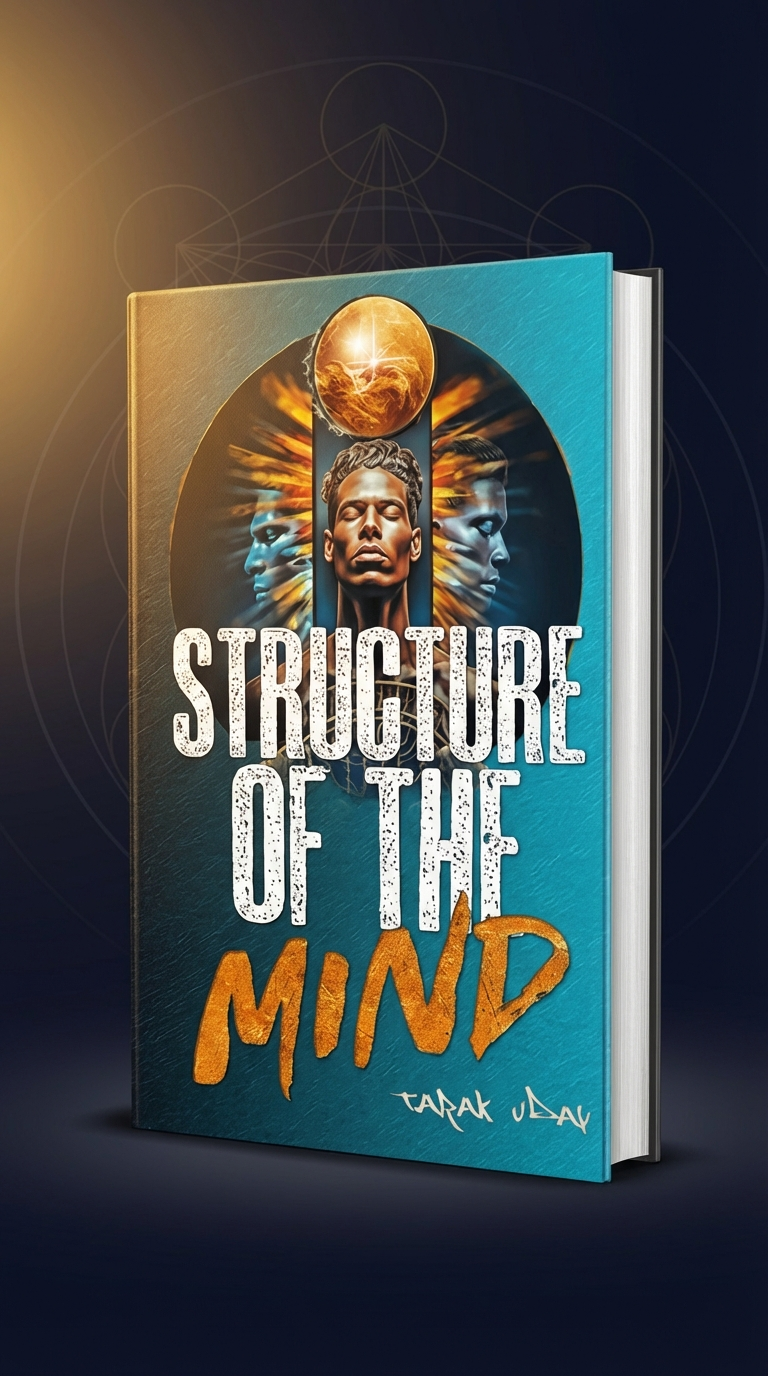
"Structure of the Mind" reveals the three divisions of mind, seven levels of consciousness, and powers of mind that most people never learn to develop.