
Body in Dreams: The Self-Image You Are Carrying


In the dream your body was wrong. Taller, heavier, younger, marked, scarred, missing something, or simply not yours at all. And here's the strange part — you accepted it. Inside the dream it didn't even register as odd. You only noticed when you woke up.
That acceptance is the tell. Your dreaming mind wasn't confused about which body you have. It was showing you the one you're actually carrying around.
Most people take a body dream straight to one of two places. Either it's about health, and now there's a low hum of worry about something in the chest. Or it's about vanity, and it gets filed under insecurity and forgotten. Both readings miss by a wide margin, and they miss in the same way: they assume the dream is about flesh. It isn't. It never was.
In the Universal Language of the Mind, the body is self image. Your dream body is not a scan of your physical condition. It's a portrait of who you currently believe you are — rendered in the only medium your subconscious has for that idea.
Is your dream body a picture of your flesh, or of something else?
The method here is function, not appearance. A dream image carries the meaning of its job, never of its looks. A window lets you see out, so a window is awareness. A road leads somewhere, so a road is a path, a journey, the direction your life is taking. You identify the function and the meaning follows, without guesswork and without a cultural filter. That's the Universal Language of the Mind, and it works identically for a dreamer in Lagos and a dreamer in Lisbon because it's built on how minds operate rather than what societies agree to mean.
So what does a body do? It's the form you occupy. It's the thing that shows up, the boundary between you and everyone else, the shape you're recognised by. Your body is how you are seen and how you experience being seen. That function has a precise inner counterpart, and Tarak Uday names it directly: the body is self image.
Not self worth — that's its own thing, and it has its own symbols. Self image is the picture. It's the working model you hold of yourself, the one that decides what you'll attempt, who you'll approach, and what you assume a room thinks of you before anyone speaks. You're running that model constantly. You almost never look at it. So your subconscious puts it on a screen and makes you look.
Why was your dream body different from your real one?
Because the picture and the physical fact are two different objects, and the dream is reporting on the picture.
A body that's larger than yours is a self image that occupies more space than you consciously admit. That's frequently a positive reading and people rarely take it that way. A body that's smaller, thinner, diminished — that's a self image that has been shrinking, usually in a specific arena. A younger body points to a self image formed at an earlier stage and never updated, which is one of the most common findings in this entire category. You are thirty-eight and running a model built at nineteen.
A body that belongs to someone else is the sharpest version of the image, and it's worth slowing down for. Your subconscious is telling you that the self image you're operating from isn't yours. You borrowed it. From a parent, a partner, a rival, a version of success you absorbed before you'd examined it. So the question isn't why did I look like my brother. It's which of my brother's assumptions about me am I still running.
Your dreaming mind wasn't confused about which body you have. It was showing you the one you're actually carrying around.
And a body you can't see — a dream where you have no form, or you never look down — points to a self image that's currently undefined. That happens during genuine transitions, after a role ends, when the old picture has been abandoned and the new one hasn't been drawn. It feels unsettling and it's structurally healthy. You can't repaint over a portrait you're still standing in.
What are the individual body parts telling you?
Here's where this stops being general and starts being useful, because the parts are specific and they are not interchangeable.
The face is identity and self awareness. So a faceless figure, or a face you can't hold in focus, is about knowing who you are, not about how you look. Hair is conscious thoughts — which is why hair falling out lands so hard on people going through a period where their thinking feels like it's leaving them. Teeth are the mental tool for assimilation, your capacity to take experience in and break it down into something usable, and that's why teeth dreams cluster around periods of overwhelm rather than periods of vanity.
Hands are purpose. What you do, what you're for, the work of your life. Feet are your spiritual foundation, what you stand on when nothing else is holding you up. So a dream where your hands are bound is not the same dream as one where your feet are bound, and treating them as one blurred image of restriction throws away the entire message. One is about being prevented from doing. The other is about having nothing underneath you.
Clothes deserve a mention too, because they show up in almost every body dream and get ignored. Clothes are expression — the layer between the self image and the world. So a body that's fine but clothing that's wrong is a very different report than a body that's wrong entirely. In the first, the picture is intact and the presentation is off. In the second, the picture itself has shifted.
What does it mean when the body is damaged, exposed, or marked?
The distortions carry the most information, and they're the ones that wake people up.
A wounded body points to a self image that has taken a hit and hasn't been repaired. Location matters more than severity here. A wound to the hands is damage to your sense of purpose. A wound to the face is damage to your sense of identity. Your subconscious chose the site precisely, so read the site.
Nakedness in a dream is one of the most common human experiences and almost universally misread as shame. Read it functionally instead. Clothes are expression, so the absence of clothes is the absence of the layer between your self image and other people. That's exposure, yes — but exposure is also the state where nothing is being managed. Many people have this dream right as they stop performing a role, and the feeling in the dream tells you which reading applies. Panic means you experience the drop in management as danger. Calm means you're ready for it.
Marks and tattoos are a category of their own and they're increasingly common. A mark is a deliberate, permanent addition to the form you're recognised by. So marked skin in a dream is about something you've chosen to make part of your self image and can't easily undo — a role, a history, a decision that changed how you'll be seen from now on. Whether that reads as pride or as burden inside the dream is the whole diagnosis.
Ageing is the last distortion worth naming, because it reverses the usual direction. A body that ages inside the dream, visibly, while you watch, is a self image absorbing time it hasn't accounted for. That dream arrives most often to people who have been running on an idea of themselves as early — early in a career, early in a relationship, early in the part of life where potential still counts as achievement. The subconscious isn't threatening you with mortality. It's correcting a filing error. You've been storing yourself under the wrong heading, and the mind is updating the record whether or not the conscious you agreed to it.
Read all of these together rather than one at a time. A single distortion is a note. Two or three in the same dream is a sentence, and the sentence is usually more specific and more actionable than any of the parts alone.
The parts matter, and there are more of them than anyone can hold. CHITTA reads your dream in the Universal Language of the Mind, identifies each element by function, and shows you the mechanics behind the interpretation instead of handing you a verdict. Your first 7 days are free. Bring the next body dream and find out which part of the picture moved.
Is your body dream telling you something about your actual health?
Straight answer: your dream is reporting on your self image, and self image is a mental condition, not a medical one. A dream about a failing leg is a dream about your sense of forward movement. It is not a scan.
Tarak Uday takes this further in Life Is But a Dream, his guide to reading every dream in the Universal Language of the Mind.
That distinction protects you in both directions. It stops you from spending a week frightened by a symbol, and it stops you from treating a dream as a substitute for someone qualified to examine you. If you have a physical concern, take it to a doctor. That's a separate system with separate instruments, and dreams don't compete with it.
What is true is that your inner state and your physical state share a body, and stress about who you are shows up in how you feel. So a run of body dreams often coincides with a run of genuine physical strain. The dream isn't diagnosing the strain. It's telling you the self image underneath it has taken damage, and that's a repair only you can make.
How do you act on a body dream?
Write down the exact difference first. Not I looked strange — I was twenty years younger, my hands were someone else's, my face wouldn't stay still. The specificity is the data, and it evaporates within about ninety seconds of waking.
Then locate the arena. Self image is rarely global. It's usually broken in one place and fine everywhere else. You can be entirely solid about who you are as a parent and running a nineteen-year-old's model at work. So ask where in your life the dream body would be an accurate portrait, and you'll usually find the answer faster than you'd like.
Then correct the picture rather than the behaviour. This is the part people skip. If the self image is that you're small in a room, no amount of speaking up fixes it, because the picture regenerates the behaviour every time. The picture is what has to move. That means catching the assumption in the moment it fires — the half-second where you decide in advance what you're worth in a room — and refusing it, repeatedly, until the model updates.
And watch for the follow-up dream. Self image changes leave tracks. When the picture genuinely shifts, the body in your dreams shifts with it, and you get an unambiguous confirmation from the one part of your mind with no motive to lie to you. That's the real payoff here. You stop guessing whether you've changed. You get shown.
Frequently Asked Questions


Books by Tarak Uday

Learn The Language Your Dreams Speak
"Life Is But a Dream" teaches the Universal Language of the Mind — how to read any dream symbol by what it is and what it does, so every dream becomes a message you can act on.
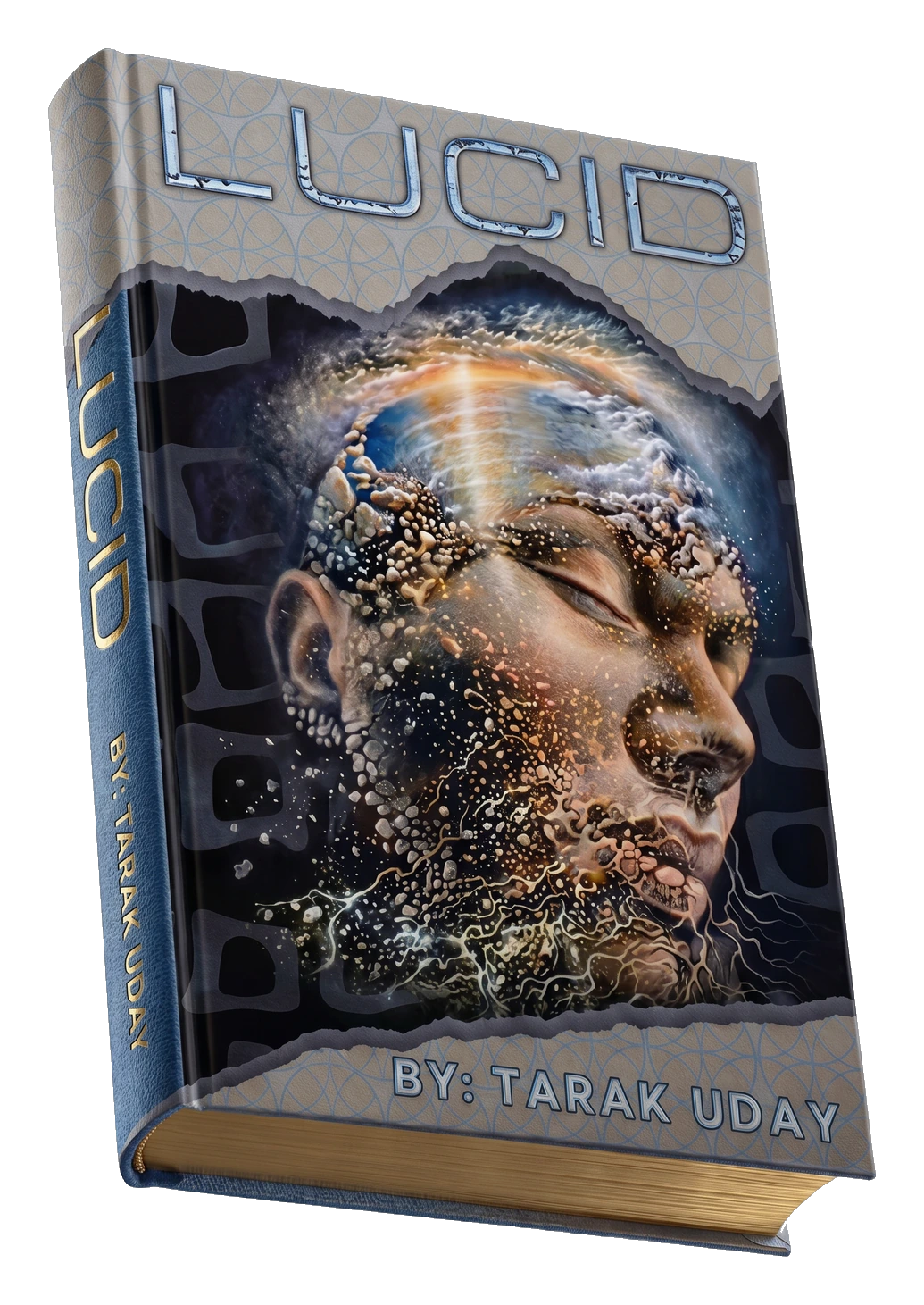
LUCID
You've tried every lucid dreaming technique. Most miss the root cause. LUCID reveals what they all skip.
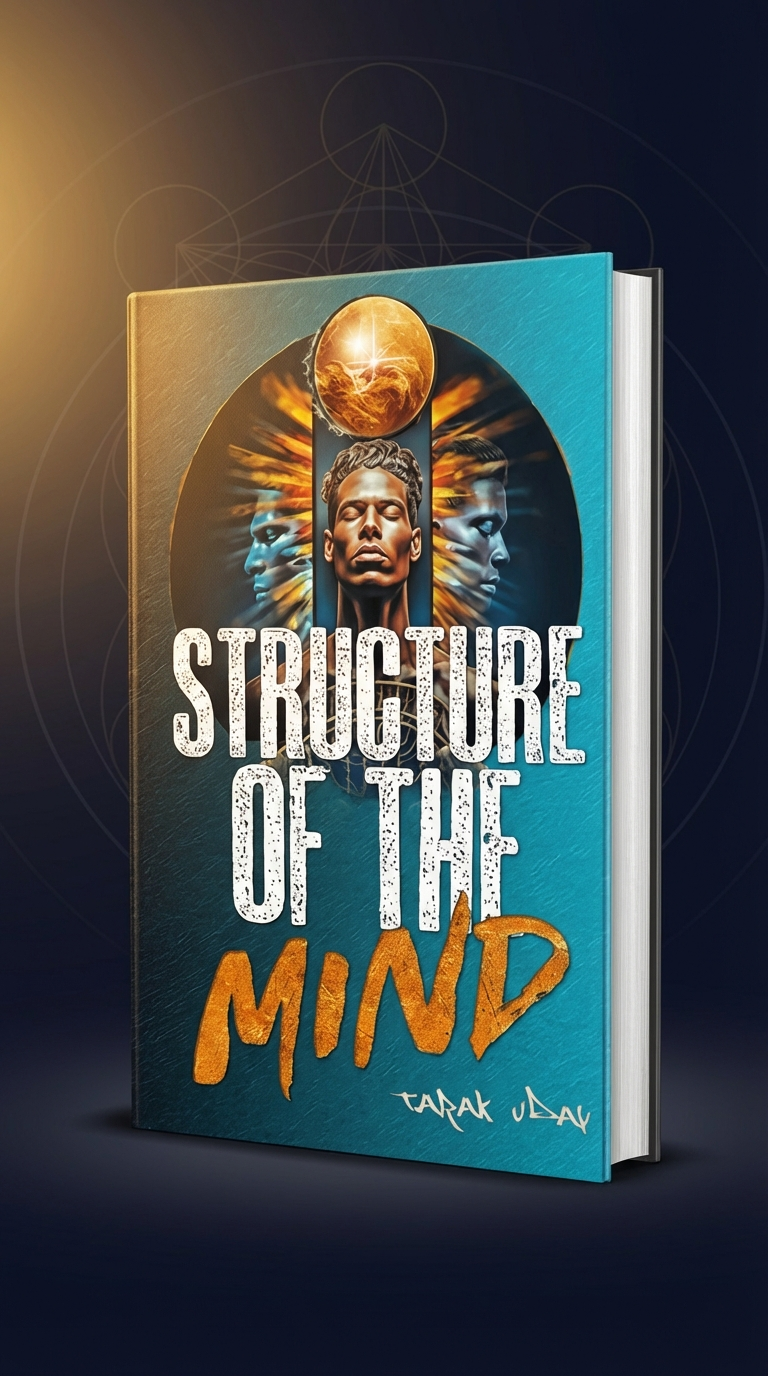
Understand Your Own Mind
"Structure of the Mind" reveals the three divisions of mind, seven levels of consciousness, and powers of mind that most people never learn to develop.