
Door in Dreams: What Your Subconscious Is Really Telling You


You are standing in front of a door. Maybe it's the door of a house you have never lived in. Maybe it's a door that shouldn't be there at all, cut into a wall you walk past every day. You reach for the handle, and then you wake up, and the whole thing dissolves into the ordinary business of finding your phone and starting the coffee.
Most people file that dream under scenery. The door was just set dressing, the way a hallway or a parked car is set dressing. That assumption is the single most expensive mistake you can make with a dream, because in your subconscious mind there is no scenery. Every object on the stage is there because it carries a meaning, and the door carries one of the most precise meanings in the entire vocabulary.
In the Universal Language of the Mind, a door means access from one state of mind into another.
Not a place. Not a person. Not a prediction about a job offer arriving on Thursday. A door is the image your subconscious uses when it wants to talk about the moment your awareness moves from one condition into a different one. So the dream isn't showing you a building. It's showing you a transition, and it's showing you exactly how you're handling it.
A door in a dream is never architecture. It's the image of access — the passage from one state of mind into another — and how you behave at that threshold is the message.
What does a door actually mean in the Universal Language of the Mind?
The Universal Language of the Mind works on form and function. Whatever a thing does in the physical world is what it means in the inner one. A door doesn't decorate a wall. A door's entire function is to make one space reachable from another. It's the difference between a sealed room and a room you can enter.
So when your subconscious mind wants to describe a shift in your awareness — from resistance to willingness, from confusion to understanding, from the person you were at twenty-five to the person you're becoming now — it doesn't hand you an essay. It builds a door and puts you in front of it.
This is why the emotional charge of a door dream is usually so much larger than the visual content. You dreamt about a piece of wood with hinges, and you woke up with your heart going. That mismatch is the clue. The image is small and the meaning is enormous, because what you were actually looking at was the edge of a change in yourself.
Tarak Uday teaches this as one of the foundational mechanics of dream interpretation: the subconscious mind never invents anything decorative. It's an efficient communicator working in pictures, and it picks the picture that matches the function of the inner event with almost mathematical accuracy. A door for access. A window for perspective you have but haven't acted on. A wall for the belief you've decided is not passable.
Once you accept that, the details stop being noise and start being grammar. The size of the door tells you how large the change registers to you. A door you have to stoop through is a passage your mind considers diminishing, and one that towers over you is a change you've made bigger than you are. The material carries weight too. A heavy door means you experience this access as requiring effort. A flimsy one, or a door made of something that shouldn't hold — paper, glass, curtain — says you've been treating a real threshold as though it were nothing.
None of this is symbolism in the loose, interpretive sense where a thing can mean whatever the reader wants. These are metaphysical mechanics, and they hold their meaning across people, across cultures, and across centuries, because they're built on function rather than on association. A door does the same job in Lagos as it does in Lisbon. So it means the same thing in the dream of anyone who has ever used one.
Why does the door matter more than the room behind it?
Almost everyone who has this dream wants to know what was on the other side. That's the wrong question, and chasing it is how people talk themselves out of the actual message.
The room behind the door is the destination. The door is the mechanism. Your subconscious put you at the threshold, not in the room, which tells you where you are in the change — you're at the point of access, not past it. If you had already made the shift, the dream would have skipped the door entirely and dropped you into the new space. It didn't. It kept you at the entrance. So the message is about the entering.
Your subconscious mind didn't put you in the room. It put you at the door. That placement is the whole message.
Now look at what you did there. Did you open it? Did you stand and stare? Did you knock and wait for permission? Did you check the handle, find it turned easily, and walk away anyway? Every one of those is a different report about your relationship to a change that's currently available to you in waking life.
Hesitation at an unlocked door is one of the most common versions, and it's one of the most honest. It says the access exists, the change is genuinely reachable, and something in you is choosing not to move. That isn't a punishment. It's information you can't easily get any other way, because in waking hours the mind is very good at dressing avoidance up as timing.
What is a locked door telling you about your own mind?
A locked door feels like an obstacle placed by someone else. It almost never is.
Everything in your dream is a part of you. The door, the lock, the person holding the key, the hallway you're standing in — all of it is your own mind, showing you its own contents. So a locked door isn't the universe refusing you. It's an image of an access you've closed off yourself, usually with a belief you no longer examine because it's been running so long it feels like a fact.
These beliefs sound reasonable from the inside. Not yet. Not for someone like me. After the next thing settles down. The dream doesn't argue with the sentence. It just draws it as a locked door and lets you feel what standing there is like.
The follow-up question is the useful one. Where's the key? If you're searching your pockets, the access depends on something you already possess and haven't located. If someone else has the key, look closely at who that person is and what quality they carry in your mind, because that quality is the part of yourself you've handed the authority to. And if the door is locked with no key anywhere in the dream, the change isn't blocked — the timing simply isn't yours to force, and the dream is telling you to stop rattling the handle.
Every door dream you've ever had is still sitting in your memory, uninterpreted. CHITTA reads your dreams in the Universal Language of the Mind and gives you the meaning the same night you record them — so the message arrives while the change is still live.
Who is on the other side when someone opens the door for you?
Sometimes you don't open the door. Someone opens it for you, or blocks it, or stands in the frame.
Tarak Uday takes this further in Life Is But a Dream, his guide to reading every dream in the Universal Language of the Mind.
Read that figure as an aspect of your own mind rather than as the person they resemble. Your subconscious casts people the way a director casts actors — it picks whoever most efficiently carries the quality it needs to show you. Your father in the doorway usually isn't about your father. He's about authority, or protection, or judgment, depending on which of those he most represents to you personally. That last part matters, because the casting is drawn from your associations, not from a universal chart.
So when a figure opens the door, some inner quality is granting you access. When a figure blocks it, that quality is currently holding the change shut. And when a stranger opens it, you're being shown a part of yourself you don't yet recognize as yours — which is exactly why it arrives with a face you can't place.
The crowd at the door works the same way. A queue of people waiting to get through the same entrance is your own mind showing you competing aspects of yourself, all wanting the same access, none of them willing to go first. That dream tends to arrive when you've been deliberating a decision for months and calling it consideration.
The revolving door, the door that opens onto a wall, the door you walk through only to find yourself back in the room you left — these all describe the same trap. You're moving through the motions of change without the state of mind actually shifting. That dream is not being cruel. It's reporting a loop, and a loop you can see is a loop you can break.
How do you bring the door back into your waking life?
A dream is a report on a condition that already exists, so the interpretation is only worth something if you can find the condition it's reporting on.
Start with the seventy-two hours before the dream. Something in that window put you at a threshold. A conversation you didn't finish. An offer you haven't answered. A decision you keep moving to tomorrow's list. The subconscious mind processes the day's experiences and hands back a picture of how you're meeting them, so the door almost always corresponds to a specific point of access that's currently open in your waking life.
Then match your dream behaviour to your waking behaviour honestly. If you hesitated at the door, find where you're hesitating. If you knocked and waited for permission, find whose permission you're waiting for and ask whether they ever actually needed to give it. If you walked through easily, notice that too — that's your subconscious confirming a change you may not have given yourself credit for making.
So the practice is simple and it isn't comfortable. Write the dream down before the details go. Name the door's condition — open, locked, guarded, false. Name your own behaviour at it. Then find the waking situation with the same shape. When those two line up, you're no longer interpreting a symbol. You're reading a live report on your own mind, in a language it has been speaking your entire life while you assumed it was making scenery.
The door was never the point. The threshold is where your mind is standing right now, and that's information most people never get to have.
Frequently Asked Questions



Books by Tarak Uday

Learn The Language Your Dreams Speak
"Life Is But a Dream" teaches the Universal Language of the Mind — how to read any dream symbol by what it is and what it does, so every dream becomes a message you can act on.
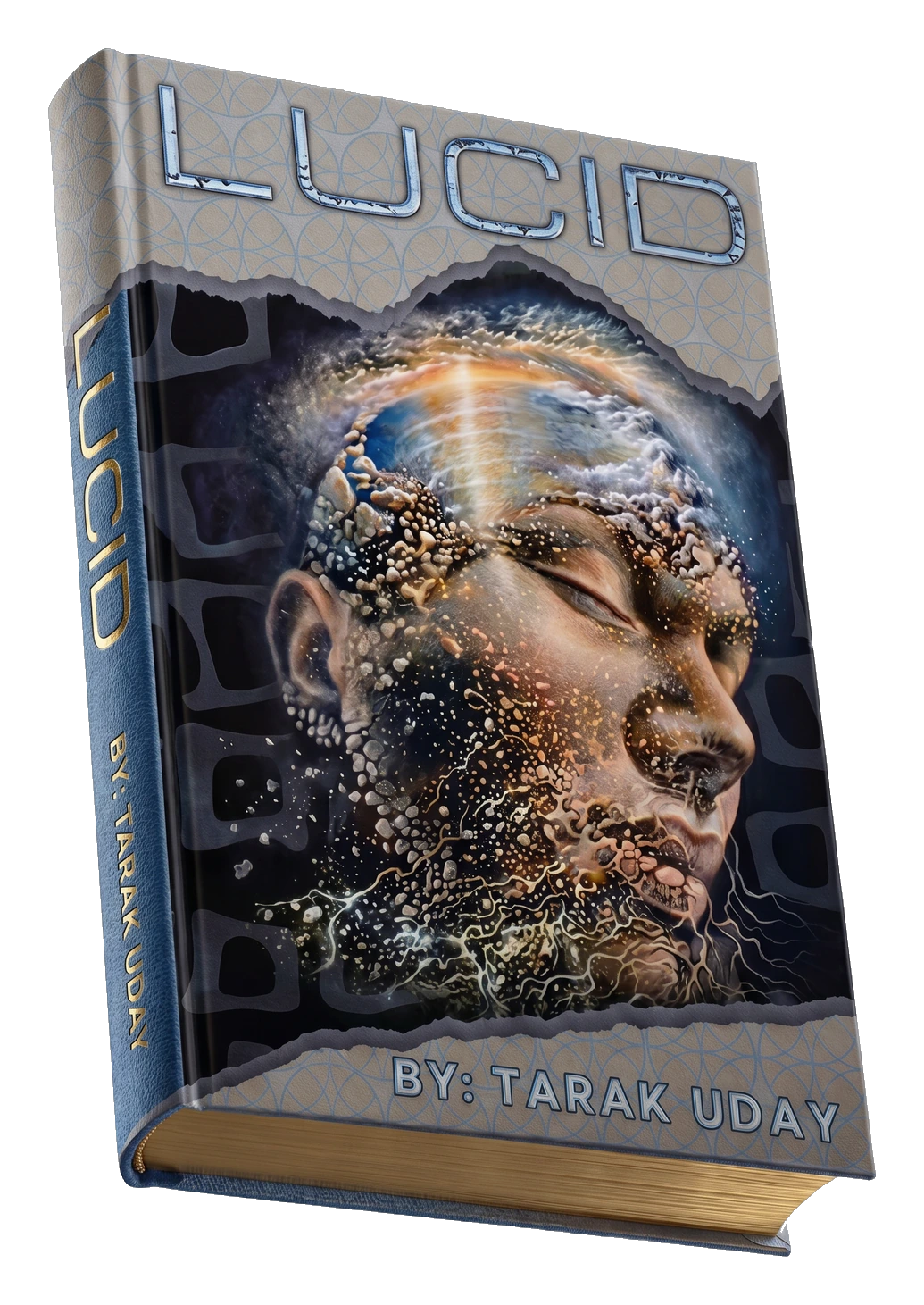
LUCID
You've tried every lucid dreaming technique. Most miss the root cause. LUCID reveals what they all skip.
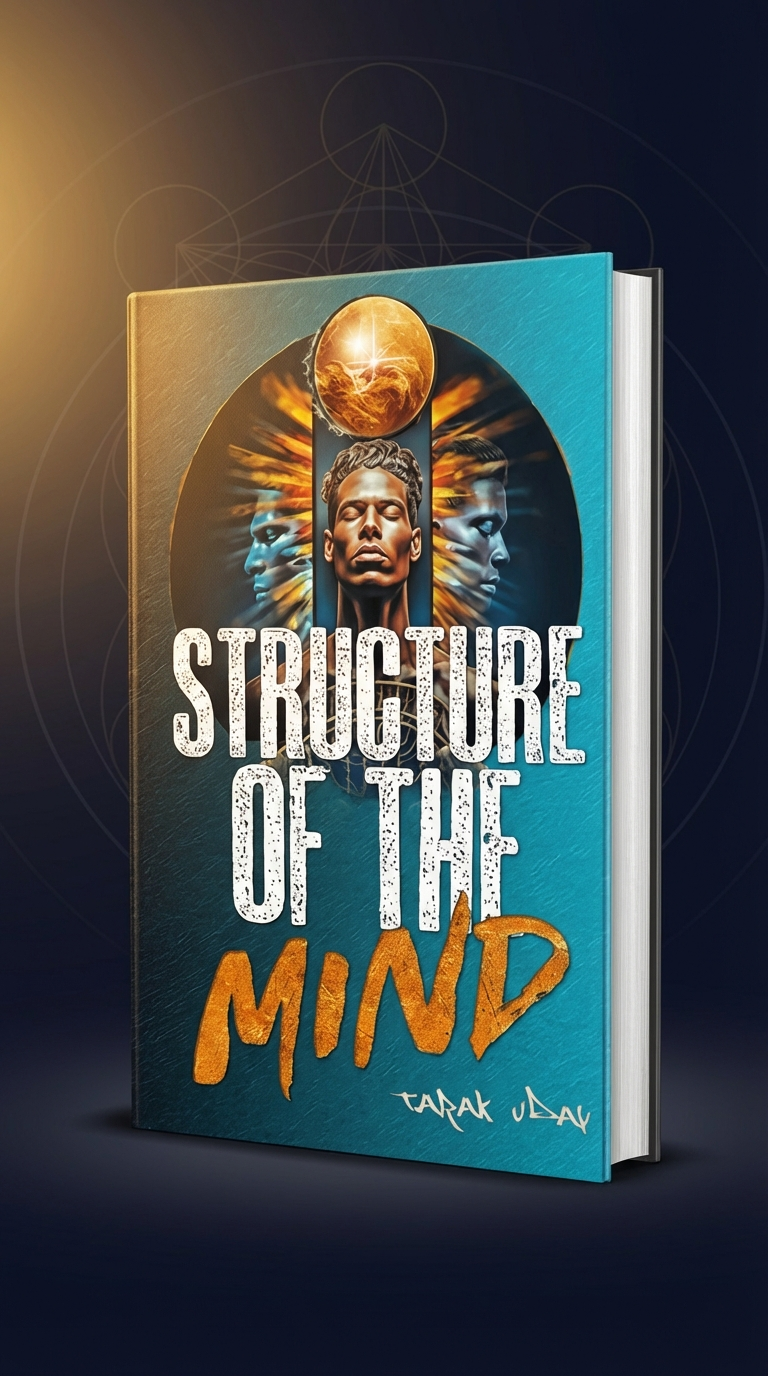
Understand Your Own Mind
"Structure of the Mind" reveals the three divisions of mind, seven levels of consciousness, and powers of mind that most people never learn to develop.