
Elevator in Dreams: What Your Subconscious Is Really Telling You


Almost everyone who dreams of an elevator wakes up with the same tidy explanation ready: I'm moving up in life, or I'm moving down in it. Career. Status. The floor number becomes a scoreboard. It's such a comfortable reading that most people never question it — and it's wrong, which is exactly why the elevator keeps showing up night after night.
In the Universal Language of Mind, an elevator is movement between the inner levels of consciousness. Not your job title. Not your income bracket. Your subconscious mind isn't ranking you against your peers. It's showing you the mechanism that carries your attention from one level of your own mind to another, and reporting on how that mechanism is behaving.
Why is an elevator dream never about the building you're in?
Tarak Uday teaches dream imagery through form and function: your subconscious mind selects a form whose real-world function matches the inner quality it needs to report on. So stop asking what the building looked like and ask what an elevator actually does.
An elevator doesn't build floors. It doesn't decide what's on them. It doesn't change the structure at all. It does exactly one thing — it moves you between levels that already exist, and it does the lifting for you. You step in, you indicate a destination, and something other than your own muscle carries you there.
Now hold that next to the rest of the dictionary. A house, in the Universal Language of Mind, is a state of mind. A building is the condition of the mind. The structure in your dream isn't an office tower. It's you. So an elevator inside it can only be one thing: the faculty that shifts your awareness from one level of yourself to another.
That single substitution changes every elevator dream you've ever had. You weren't being promoted or demoted. You were watching your own attention travel, and your subconscious mind rendered that travel as the most exact picture of effortless vertical movement a human being has ever engineered.
What are the floors your elevator is actually moving between?
The floors are levels of mind, and the dictionary is specific about them. A basement is the deepest, least examined level. An attic is the superconscious mind. The floor itself — the thing that separates one storey from the next — is the separation between the inner levels of mind. That's why your dream bothered to put you in a multi-storey structure instead of a field.
So direction carries the meaning. Going up is movement toward the superconscious, toward the part of you that already knows what you're becoming. Going down is movement toward the subconscious and below it, toward material you've stored and stopped looking at. Neither direction is good or bad. They're just readings.
This is where people misjudge their own dreams badly. They wake from a descending elevator convinced something is wrong. But a great deal of genuine inner work happens downward — you cannot resolve what you refuse to go retrieve. Descent in a dream is frequently the healthiest thing your subconscious mind has arranged for you all week.
Pay attention to the number too, when there is one. Numbers in the Universal Language of Mind are the evolution of a thought, so a floor number isn't decoration — it's telling you how far along the particular thought you're working on has developed.
It's worth knowing that your subconscious mind had other options and passed on them. Stairs mean access to different levels of mind, and they show up in dreams constantly. Choosing an elevator instead is a deliberate piece of information: this particular movement between levels isn't something you're climbing under your own power. It's happening to you, or through you, and the dream is being precise about that difference rather than careless.
Why does the elevator drop, and why does the drop wake you up?
The plunging elevator is the most alarming version of this dream and the most consistently misread. People treat it as a premonition or a stress signal. It's neither.
Falling, in the Universal Language of Mind, is movement into lower levels of mind until you return to the conscious mind of the physical. Read that again, because it dissolves the fear entirely. The drop isn't a catastrophe. It's the return trip. It's what the descent from a deep inner level back into waking awareness looks like from the inside, and your body registers it as a fall because that's the nearest physical sensation available.
So the jolt that wakes you isn't damage. It's arrival. You came back. The reason it feels violent rather than gentle is usually pace — you were pulled up out of a deep level faster than you moved into it, which happens when something in the room wakes you or when the inner work gets abruptly abandoned.
What is a stuck elevator between floors reporting about you?
Stuck between floors is the most diagnostically useful elevator dream there is, and it's worth confronting honestly, because most people are relieved by it rather than troubled.
Here's the mechanic. A floor is the separation between inner levels. To be stuck between floors is to be in neither level — you initiated a shift in consciousness and then didn't complete it. You began to look at something, and you stopped partway. You're not in the old understanding any more, and you haven't arrived at the new one.
And it's comfortable there. That's the part nobody says out loud. Between floors, nothing is required of you. You can't be held to the old level because you've visibly left it, and you can't be held to the new one because you haven't reached it. People stay suspended like this for years and call it being on a journey.
So the question that dream is asking isn't "who trapped me." Nobody trapped you. The elevator has a control panel and you're the one standing next to it. The question is which floor you're refusing to let the doors open on.
Check this against your week and the mirror gets uncomfortable fast. If you've dreamed of being stuck between floors, ask yourself where you're suspended and the answer tends to arrive before you've finished the question — a relationship you've neither committed to nor ended, work you've outgrown but haven't left, a belief you stopped defending a year ago and still haven't replaced. The dream isn't introducing new information. It's rendering a decision you've been carrying in a form you can't argue with.
And notice who's in the car with you, because a crowded elevator reads differently from an empty one. Every figure in a dream is an aspect of yourself. A car packed with people means the movement between your levels of mind is happening with a great deal of internal company — competing parts of you, all riding the same shift. An empty car means you're making the trip with nothing else engaged.
Why do the doors open on a floor you never selected?
This one unsettles people, and it shouldn't. When the doors open somewhere you didn't choose, your subconscious mind is showing you a level of yourself you weren't intending to visit.
That's not malfunction. It's delivery. The superconscious mind — the level the dictionary points to with imagery like a doctor, or an attic — routinely offers material you did not request and would not have requested. It doesn't wait for you to feel ready. It opens the doors on what's relevant.
Tarak Uday takes this further in Structure of the Mind, his map of the three divisions of mind and the powers of attention, memory and imagination.
So look hard at what was on that floor. Whatever you saw when those doors parted is the content your deeper mind considers current business. People often describe that floor as strange or unfamiliar, and then discover on reflection that it's an area of life they've been steering around for months.
The same logic covers the elevator that won't stop where you press, or the panel with buttons that don't correspond to anything. Those are reports about intention versus outcome — you're aiming your attention at one level of yourself while it keeps arriving somewhere else entirely.
So resist the urge to label an unrequested floor as an intrusion. Your subconscious mind has no motive to waste a night frightening you. It communicates in the most economical picture available, and when it opens a door you didn't ask for, the economy of that image is the point: this is what's next, whether or not you had it on your list.
How do you read your own elevator dream tonight?
Take it apart in order, and don't interpret anything until you've collected all of it. This is the metaphysical mechanics of the image, and mechanics reward precision.
Start with direction, because direction is the headline: up toward the superconscious, down toward stored and unexamined material. Then take the floor — the number if there was one, and what was actually on it when the doors opened. Then the doors themselves: did they open, stall, close on you, open on nothing. Then who was in the car with you, since every person in a dream is an aspect of yourself. And finally the control panel, which is the single clearest statement about how much agency you believe you have over your own inner movement.
Now bridge it to waking life, and be concrete about it. Where this week did something shift in you without your effort? Where did you press for a change and end up somewhere you didn't choose? Where are you visibly between floors — out of an old understanding, not yet inside a new one — and quietly enjoying that nothing can be asked of you while you hover?
One thing worth saying plainly, because it's where people get stuck. An elevator moving well is not a sign you've finished anything. It's a sign the mechanism works. Movement between levels of mind is supposed to be ordinary — you do it every night whether or not you dream about it. The dream only surfaces when something about the movement is worth your attention: it's stalling, it's dropping, it's opening on floors you'd rather skip.
So the elevator was never measuring how high you've climbed in anyone's estimation. It was showing you the machine that carries you through yourself, and waiting to see whether you'd finally look at which floor you keep refusing to get off on.
Frequently Asked Questions



Books by Tarak Uday
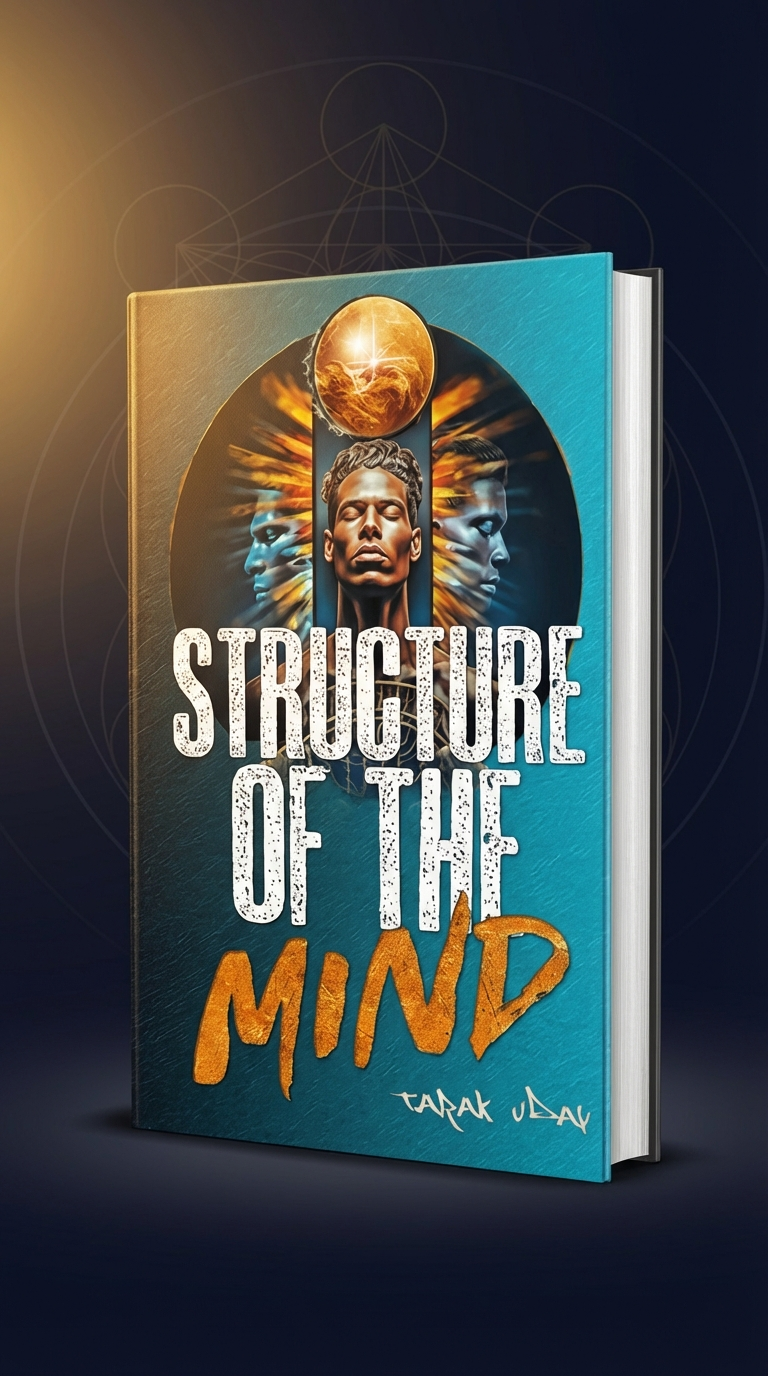
Understand Your Own Mind
"Structure of the Mind" reveals the three divisions of mind, seven levels of consciousness, and powers of mind that most people never learn to develop.

Learn The Language Your Dreams Speak
"Life Is But a Dream" teaches the Universal Language of Mind — how to read any dream symbol by what it is and what it does, so every dream becomes a message you can act on.

LUCID
You've tried every lucid dreaming technique. Most miss the root cause. LUCID reveals what they all skip.