
Face in Dreams: What Your Subconscious Is Really Telling You

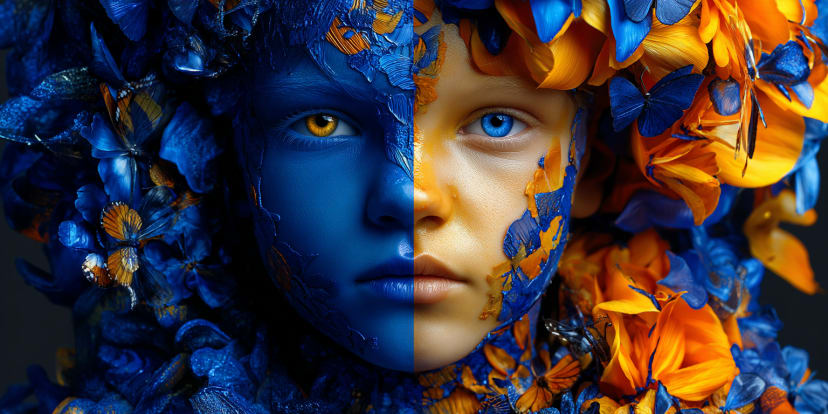
Some dreams stay with you because of what happened. Face dreams stay with you because of what didn't. You saw someone. You knew exactly who they were. And when you try to describe them the next morning, there's nothing there — a shape where the features should be, or a face that kept sliding into a different one every time you looked at it directly.
People usually treat that blur as a flaw in their recall. It isn't. Your memory didn't drop the detail. The detail was never rendered, because your subconscious mind wasn't trying to show you a person at all.
In the Universal Language of the Mind, a face means identity and self awareness.
That single definition reorganizes the whole dream. The obscured face isn't a face you failed to remember. It's an identity you can't currently see clearly — and since every figure in a dream is an aspect of the dreamer, the identity in question is usually your own.
A face is the image of identity and self awareness. What the dream does to the face — hides it, changes it, multiplies it — is what your mind is currently doing with how you know yourself.
Why does the Universal Language of the Mind read a face as identity?
Everything in this language runs on function. Ask what a thing does, and you have what it means.
A face is the one part of the body that identifies you. Your hands work, your legs carry you, your back holds you up — but your face is what tells the world which person is arriving. It's also the surface where your inner state becomes visible without your permission. So a face performs two jobs at once: it declares who you are, and it broadcasts what you're aware of feeling.
That's precisely the definition. Identity and self awareness, welded together in one image, because in your own experience they're welded together too. You can't separate who you think you are from what you're willing to notice about yourself.
Tarak Uday points out that this is why face dreams land harder than almost any other symbol. A dream about a car breaking down is about your physical vehicle. A dream about a flooded house is about your mind under emotional pressure. But a dream that does something to a face is operating directly on the question of who you are, and the body registers that as urgent even before the mind has a word for it.
So the discomfort you woke up with wasn't an overreaction. It was accurate. Something is moving in your sense of yourself, and the dream drew it on the only surface that carries that meaning.
It also explains a detail that confuses almost everyone. In waking life you recognize people by their faces, so you assume a dream face is there to tell you who someone is. It's the reverse. Your subconscious already knows who every figure is, because it built them. It uses the face to tell you what state that identity is in. The recognition isn't the message; the condition of the face is.
Once you're reading it that way, the whole category becomes usable. A face turned away is an identity you're refusing to meet. A face too close to focus on is an identity you're standing inside of and can't get perspective on. A face behind glass is one you can see and can't reach. None of these need interpretation in the loose sense where a symbol means whatever suits the reader. They mean what the arrangement does, and the arrangement is unambiguous once you know what a face is for.
What does it mean when you cannot see the face clearly?
The blurred, shadowed, or shifting face is the most common version of this dream, and the most misread.
An identity you cannot see clearly is an identity that hasn't resolved yet. When the figure is someone you feel you know but cannot picture, your subconscious is describing a quality that's active in you and not yet acknowledged as yours. You feel its presence — that's the strong sense of recognition — while the ownership hasn't landed, which is why the features refuse to fill in.
The face didn't blur because your memory failed. It blurred because the identity it belongs to hasn't been claimed yet.
A face in shadow works slightly differently. Shadow is the absence of light, and light in this language is awareness. So a face half in shadow says the identity is half known to you: you can see part of who you're becoming and the rest is still outside what you're willing to look at. The dream isn't being coy. It's drawing an exact ratio.
Then there's the face that morphs, cycling through several people while you watch. That's the image of an identity in active transition. Your mind is trying on versions, and it will keep cycling until one is chosen. People who get this dream repeatedly are almost always mid-decision about something that determines how they'll see themselves afterward — a career leaving, a relationship ending, a role they've outgrown and haven't put down.
Why is your own face different in the dream?
Seeing your own face wrong is the version that frightens people. Older. Younger. Scarred. Beautiful in a way you aren't. Or entirely someone else's, looking back at you from a mirror that shouldn't be lying.
Don't read it as a prediction about your body. Read the change itself, because the change is the sentence.
An older face is your mind showing you an identity carrying more weight or more authority than you consciously grant yourself. A younger face is the reverse — a part of your identity operating from an earlier stage, usually one that formed when something got decided about you and never got revisited. A damaged face points at a wound in how you know yourself, not at your appearance. And a face more radiant than you believe yours to be is not vanity. It's a report on a self awareness you have already developed and haven't accepted.
So the useful move is to name the difference in one word and then go looking for it in your waking life. Older. Harder. Softer. Unfamiliar. That word is the message, and it will match something specific that happened in the days before the dream.
The mirror deserves its own note, because it shows up constantly in these dreams and it isn't the same symbol as the face. A mirror reflects. It's the image your mind uses for self examination — the deliberate act of turning attention back on yourself. So a face seen in a mirror is identity under review, while a face seen directly is identity simply presenting itself. The difference matters. If you were examining yourself in the dream and the reflection came back wrong, your self examination and your actual self awareness aren't agreeing right now, and the gap between them is exactly what the distorted reflection is measuring.
Losing your face entirely — reaching up and finding nothing, or watching your features come away — sounds like a nightmare and reads as something more workable than that. It's the image of an identity dissolving, and identities dissolve for two reasons. Either something you were built on has been removed, or you've outgrown a version of yourself and it's coming apart on schedule. The dream doesn't tell you which one on its own. Your waking life does, and it usually tells you within about a week.
You have had face dreams you never decoded, and their meanings are still sitting there. CHITTA reads your dreams in the Universal Language of the Mind, night after night, so the pattern in how your identity is moving becomes something you can actually watch.
What are all those faces in the crowd telling you?
Crowds of faces, walls of faces, a room where everyone turns to look at you — this version has a very specific meaning, and it's not social anxiety.
Tarak Uday takes this further in Life Is But a Dream, his guide to reading every dream in the Universal Language of the Mind.
Many faces means many identities. Your mind holds more than one version of who you are: the one that shows up at work, the one your family gets, the one that only exists when you're alone. A crowd of faces is that plurality made visible. When the crowd feels threatening, those versions aren't integrated — they're competing, and the pressure you feel in the dream is the internal cost of maintaining several selves at once.
When the faces are all turned toward you, self awareness is the subject. Something has put your own identity under observation, and your mind is dramatizing the sensation of being seen. Ask who has been looking at you lately, and then ask the more useful question: what have you started noticing about yourself that you can't unnotice?
There's a variant worth naming here: the crowd where every face is the same face. That's a single identity that has taken over everything, and it usually arrives when one role — parent, provider, patient, professional — has expanded until it's crowding out the rest of you. The dream isn't criticizing the role. It's showing you the proportion.
Faceless figures in a crowd carry the opposite charge. That's identity that hasn't been individuated at all — the anonymous mass of habits and inherited assumptions you move through your day with. Nothing sinister. Just unexamined. So when a faceless figure speaks in a dream, listen closely, because an unexamined part of you just found a voice.
What do you do with a face dream the morning after?
Write it down before you're fully upright. Face dreams degrade faster than most, precisely because their central detail was never fully formed.
Then answer three things on paper. Whose face was it. What condition was the face in — hidden, changed, damaged, multiplied, radiant. And what you felt while looking at it, which is the piece people skip and the piece that carries the most information.
Now bridge it. Somewhere in the last few days, something happened that touched how you understand yourself. A compliment you deflected. A role you accepted that doesn't fit anymore. A moment where you heard yourself say something and thought, that's not who I am. The dream is a report on that event, drawn in the exact image your mind reserves for identity.
These are metaphysical mechanics, not fortune telling. The dream isn't warning you about a stranger you'll meet. It's describing the condition of your own self awareness on the night it was recorded, in the Universal Language of the Mind, with a precision that gets easier to read every time you do it.
So stop trying to identify the face. Start asking what your mind is doing to identity itself. That question has an answer, and it's about you.
Frequently Asked Questions


Books by Tarak Uday

Learn The Language Your Dreams Speak
"Life Is But a Dream" teaches the Universal Language of the Mind — how to read any dream symbol by what it is and what it does, so every dream becomes a message you can act on.
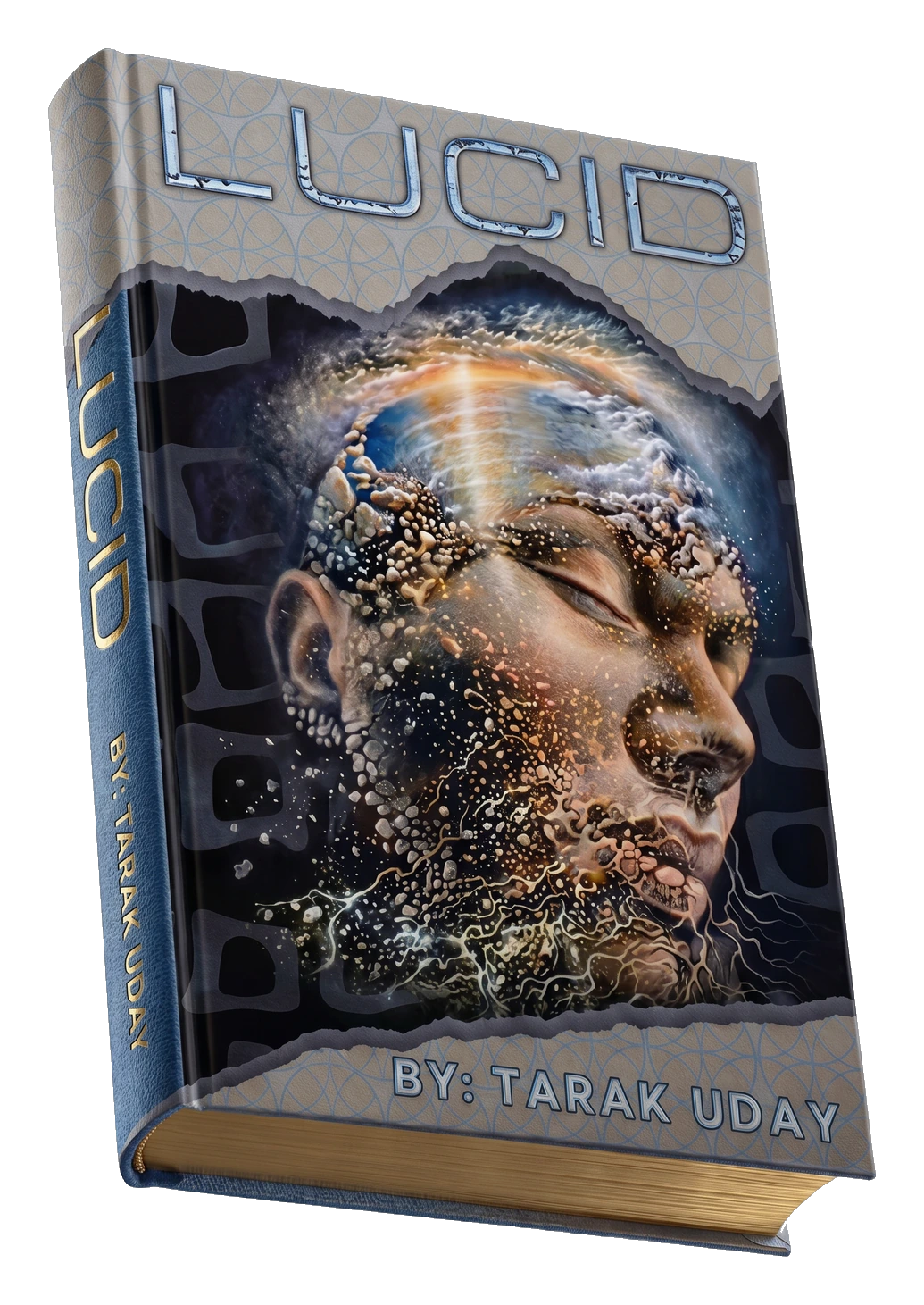
LUCID
You've tried every lucid dreaming technique. Most miss the root cause. LUCID reveals what they all skip.
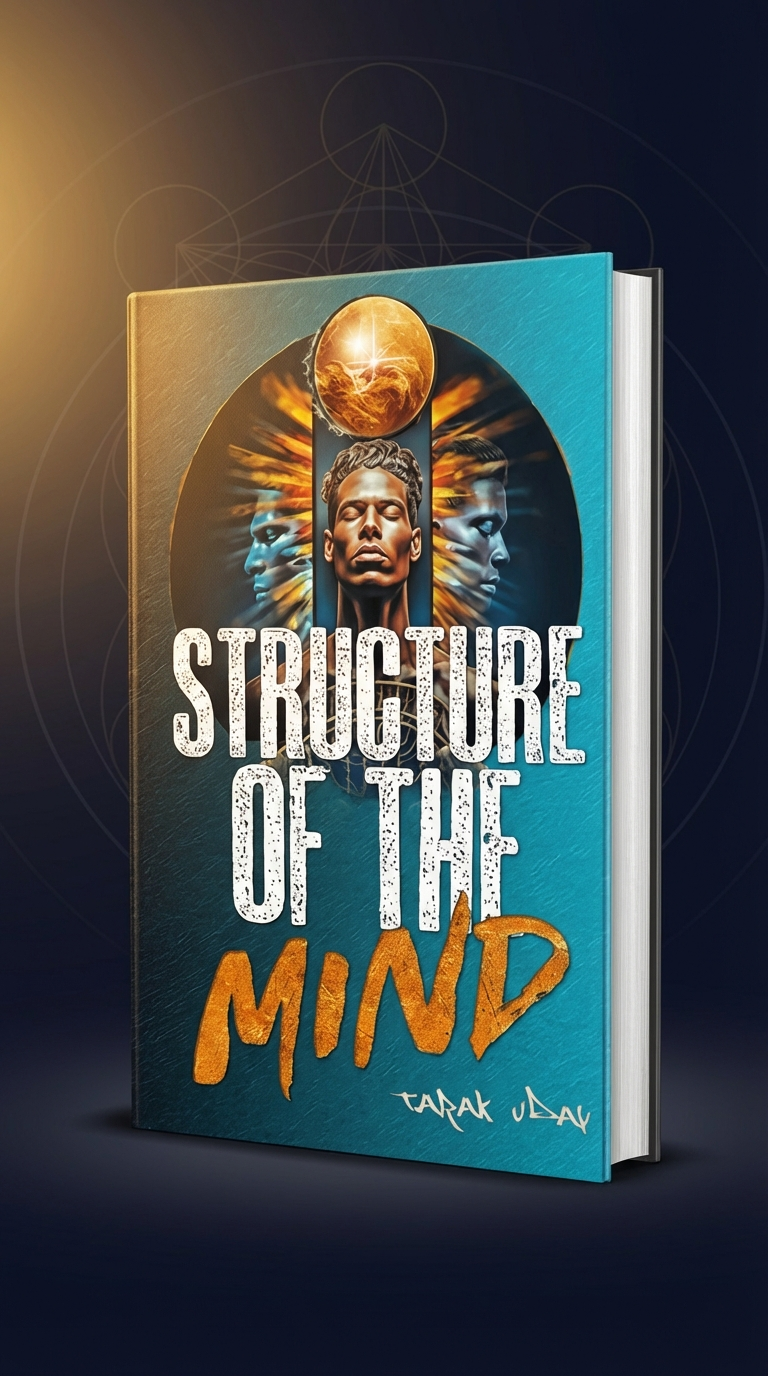
Understand Your Own Mind
"Structure of the Mind" reveals the three divisions of mind, seven levels of consciousness, and powers of mind that most people never learn to develop.